
Review · ANGKOR WAT TOURS
2-Day Angkor Wat, Banteay Srei & Floating Village Kampong Pluk
Angkor by sunrise changes your whole mood. This two-day private tour mixes sunrise at Angkor Wat, massive temple sights, and a real Tonle Sap day on Kampong Pluk. What makes it extra good is the early starts plus a route that keeps you moving through both the big icons and the quieter corners.
I love the way you get set up for comfort from the start, with hotel pickup and drop-off, an English license guide, and A/C during temple heat. I also love the photo-friendly pace, with guides like Bun and Chhay specifically called out for taking great shots and getting good angles. One thing to plan for is cost add-ons, since the Angkor temple pass and the floating village boat ticket are not included.
You should also know this is a busy two days. You will be up early for sunrise on day 2 and you will climb and walk more than you might expect, even if the timing feels smooth.
In This Review
- Key highlights you will actually care about
- Price and logistics, the real value check
- Day 1 in Angkor: Angkor Wat, Ta Prohm roots, and Angkor Thom’s face towers
- Angkor Wat: start with the world’s largest religious monument
- Ta Prohm: the Tomb Raider temple with living roots
- Ta Nei: a smaller stop that helps you breathe
- Victory Gate to Bayon: Angkor Thom in photo form
- Baphuon and the royal layers: reclining Buddha and older foundations
- Phimeanakas, Terrace of Elephants, Terrace of the Leper King
- Preah Palilay: a short wooded detour
- Phnom Bakheng at sunset: climb smart, and know you can skip the wait
- Day 2 starts early: Angkor Wat sunrise and Kampong Pluk on Tonle Sap
- Why sunrise at Angkor Wat is worth the alarm
- Kampong Pluk floating village: stilt houses and real lake life
- Pink Banteay Srei and the quieter temple chain after lunch
- Banteay Srei, the Ladies Temple made of pink sandstone
- Banteay Samre: a quieter twin of Angkor style
- Pre Rup: the turn-the-body funeral temple concept
- Banteay Kdei: the Ta Prohm and Bayon style echo
- What I’d do to make this tour feel easier on day one and two
- Should you book this two-day Angkor and Tonle Sap combo?
- FAQ
- What does the tour price include?
- Are temple and monument admission fees included?
- How much is the floating village boat ticket?
- What time is pickup for the Angkor Wat sunrise on day 2?
- Can I skip the Phnom Bakheng sunset waiting?
- Is this a private tour?
- What is the cancellation policy?
Key highlights you will actually care about
- Sunrise at Angkor Wat on day 2 gives you softer light before the big crowds and heat kick in.
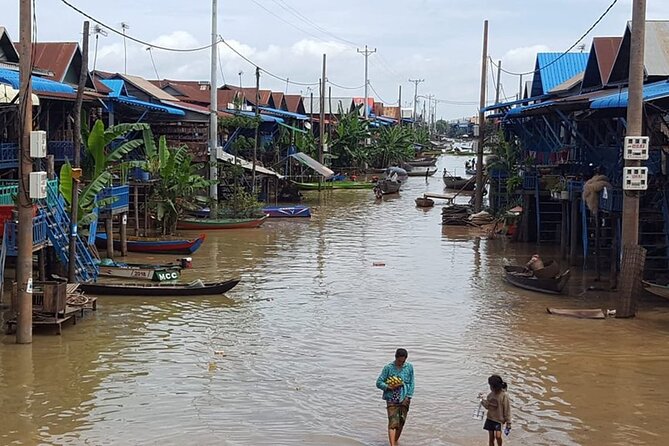
- Kampong Pluk by private boat lets you see the stilt houses and fishing life on Tonle Sap up close.
- Angkor Thom highlights in one loop includes Victory Gate and Bayon, with its 49 towers and 196 faces.
- Ta Prohm’s tree roots are timed well enough to feel wild, not just famous.
- Phnom Bakheng sunset climb is optional if you do not want to wait.
- Guide quality matters here, with several names mentioned, including Vanna, Lonn, Bun, and Chhay.
Price and logistics, the real value check
At $166 per person, this is priced like a full-service Angkor add-on plus a Tonle Sap experience, not just a checklist. It’s also a private setup, meaning your group travels together instead of being squeezed into a large shared bus.
What you get in the base price is practical: hotel pickup and drop-off, an A/C vehicle with a driver, parking and road tolls, plus cool drinking water and towels. You also get an English license guide, which matters a lot when you’re standing in places that can feel like stone puzzles.
Then there are the add-ons. The Angkor + All Temples pass is listed as $62 per person, and the Tonle Sap Lake or floating village ticket with a private boat ride is $20 per person. Lunch is listed as about $5 per person, depending on the menu, so a rough total to budget is about $166 + $62 + $20 + $5, or around $253 per person before souvenirs.
If that total still feels reasonable, this tour tends to be a good fit. You are covering two days of major sights without spending your energy coordinating tickets, transport, and timing.
More Angkor Wat tours in Siem Reap:
- Angkor Wat Sunrise or Sunset Tour with Guide from Siem Reap
★ 5.0 · 12,109 reviews - Siem Reap: Angkor Wat: Small-Group Sunrise or Sunset Tour
★ 5.0 · 9,444 reviews - Siem Reap: Angkor Wat 2-Day Tour with Sunrise and Sunset
★ 4.9 · 4,429 reviews
Day 1 in Angkor: Angkor Wat, Ta Prohm roots, and Angkor Thom’s face towers
Day 1 starts with pickup at 8:00am after breakfast. The schedule is built around big names first, then a more detailed Angkor Thom walk, ending with a sunset climb option later.
Angkor Wat: start with the world’s largest religious monument
You begin at Angkor Wat, the big one. Even if you have seen photos, standing there in person hits differently because the scale is hard to capture in a screen frame.
This tour treats Angkor Wat as both a landmark and a foundation. It sets your bearings for the rest of Angkor because once you understand its layout and symbolism, the surrounding temples make more sense.
Ta Prohm: the Tomb Raider temple with living roots
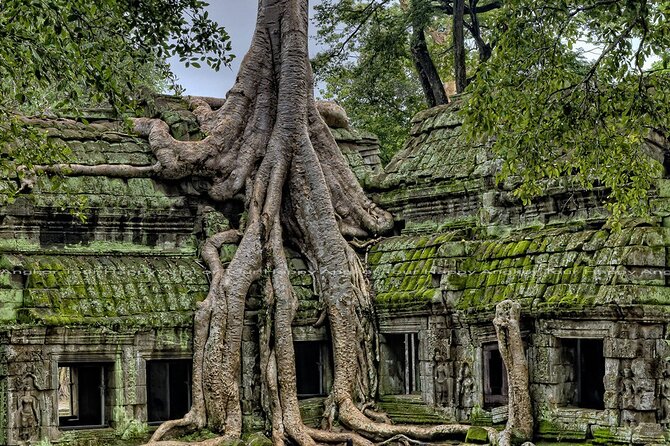
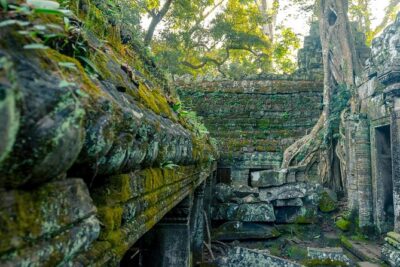
Next is Ta Prohm, the temple wrapped in gigantic tree roots. This is the site tied to Tomb Raider in Hollywood pop culture, but the real story is how nature reclaimed the stone.
There’s a good reason Ta Prohm is on most first-timer lists. It’s visually dramatic, and it gives you a “wow” moment that feels grounded in the real landscape, not a staged effect.
More Banteay Srei trips:
- Full-Day Banteay Srei & 4 Temples – Grand Tours Join-in Tour
★ 5.0 · 1,155 reviews - Siem Reap Tour: Angkor Wat Sunrise, Bayon, Ta Prohm, Banteay Srei
★ 5.0 · 931 reviews - 2-Day Angkor Wat With Small, Big Circuit and Banteay Srei Tour
★ 5.0 · 545 reviews - From Siem Reap: Banteay Srei Temple & Grand 5 Temple Tour
★ 4.8 · 262 reviews
Ta Nei: a smaller stop that helps you breathe
Then you shift to Ta Nei, described as small and with less restoration, surrounded by big trees. If you want a break from crowds and constant restoration scaffolding energy, this is a smart adjustment.
I like this kind of stop because it changes the tone. After the blockbuster temples, Ta Nei feels quieter, more intimate, and more like you are walking through a real archaeological space instead of a theme park queue.
Victory Gate to Bayon: Angkor Thom in photo form
From there, you pass The Victory Gate, on the east side of Angkor Thom, a well-known photography spot. It acts like a threshold, and once you enter the Angkor Thom complex, the mood shifts from open monuments to dense architecture.
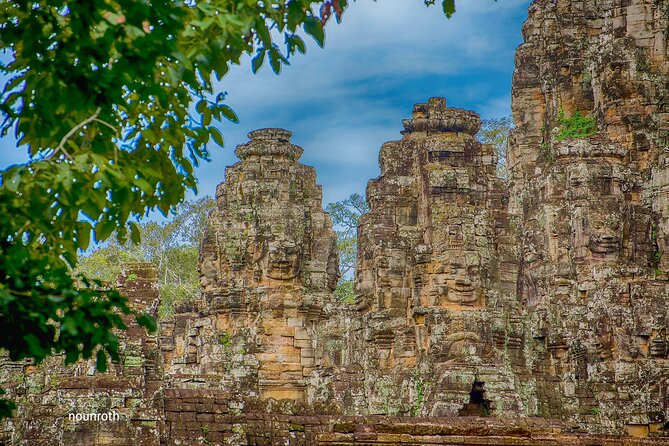
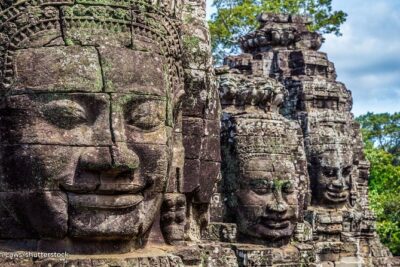
Next is Bayon, the temple with 49 towers and four faces on each tower, for a total of 196 faces of Avalokiteshvara. The trick here is to slow down just enough. Look at how the faces change based on your angle, and you’ll feel why this temple gets talked about so much.
You also visit other major Angkor Thom stops in the same spirit: not just “see it,” but “notice what it’s doing.”
Baphuon and the royal layers: reclining Buddha and older foundations
You continue to Baphuon, a Hindu temple built before Angkor Wat in the 11th century. The reclining Buddha behind it was built in the 16th century, which gives the complex a time-mix feel.
This is one of those places where the mix of periods becomes part of the experience. If you like seeing how cultures layer on top of each other over centuries, Baphuon rewards attention.
Phimeanakas, Terrace of Elephants, Terrace of the Leper King
Next is Phimeanakas, a pyramid Hindu temple built in the 10th century, located in the center of the old Royal Palace of Angkor Thom. It’s paired with the ancient Royal Enclosure Wall, so you are not just staring at one building, you are reading the old palace geography.
Then come the terraces. The Terrace of the Elephants is a platform used by kings to view victorious returning armies, and the walls feature elephant carvings. Close by is the Terrace of the Leper King, another platform on the north side, named for its carved figures.
These two stops are excellent for people who like details but do not want to get lost. You get a clear context for why the terrace mattered in the first place, and the carvings give your eyes something to do.
Preah Palilay: a short wooded detour
You finish the day’s Angkor Thom flow with Preah Palilay, a small Buddhist sanctuary in the wooded area north of the royal palace. It’s listed as worth the short detour, and that’s exactly the value of this kind of timing.
It also helps you reset before the final climb. When you end a long temple loop by breaking into trees, your energy does not crash as hard.
Phnom Bakheng at sunset: climb smart, and know you can skip the wait
The last stop on day 1 is Phnom Bakheng, a hill climb aimed at sunset views. The itinerary notes you can skip sunset waiting, so if you prefer to avoid a long line or want to conserve energy, you can.
This part is about effort versus payoff. From a height, you get that classic Angkor panorama feeling, but you also spend time climbing and then waiting for light to shift. I’d treat it like dessert, not like the main meal.
If you do go for sunset, bring a plan for pacing, like taking breaks and watching your footing. The climb is part of it, but slipping on uneven stone is not a fun travel souvenir.
Day 2 starts early: Angkor Wat sunrise and Kampong Pluk on Tonle Sap
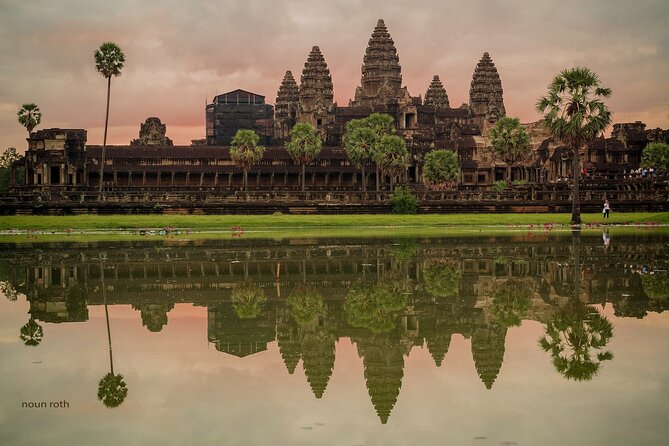
Day 2 is the most intense start. You get picked up at 5:00am to watch the sunrise at Angkor Wat, then you head back afterward and continue with breakfast before going to Tonle Sap.
Why sunrise at Angkor Wat is worth the alarm
This is the moment many people come for, but here’s the practical reason it works. Sunrise light makes the stone look warmer and softer, and it gives you a calmer pace before the later day crush.
It’s also a chance to compare with your earlier Angkor Wat visit. Daylight changes the mood, and the scale feels even bigger when the air is cooler.
Kampong Pluk floating village: stilt houses and real lake life
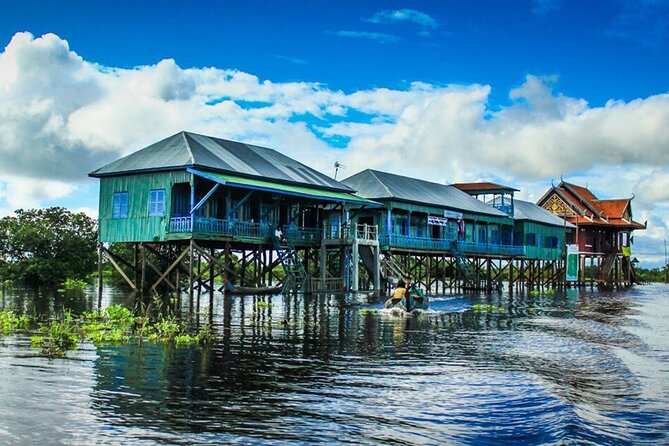
After breakfast, you head to Kampong Pluk Floating Village on Tonle Sap Lake. You take a private boat ride through stilt houses, seeing the fishing village life and lake geography from the water.
This stop is valuable because it breaks the Angkor-only bubble. Temples are amazing, but Cambodia is also about water systems and livelihoods, and Tonle Sap is a huge part of the country’s rhythm.
One practical note: the floating village part is labeled with a separate ticket and a private boat component that is not included in the base price. So when you budget, remember that $20 per person add-on.
You’ll likely spend a chunk of the day here, since it’s listed at about 4 hours. Plan to be a bit flexible with energy level, especially if the day is warm and sunny.
Pink Banteay Srei and the quieter temple chain after lunch
After your lake time, you get lunch break, then the afternoon becomes the temple refinement phase.
Banteay Srei, the Ladies Temple made of pink sandstone
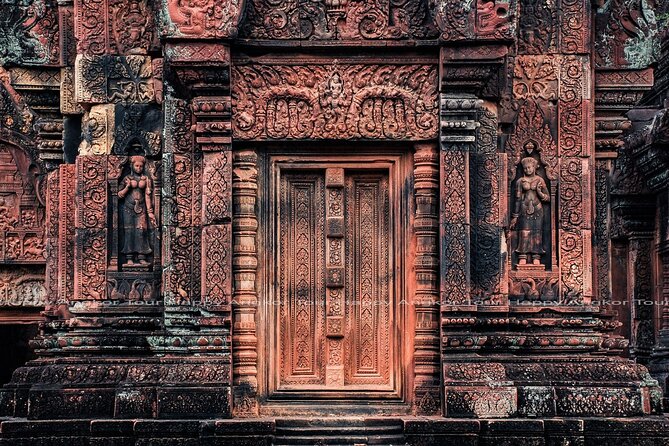
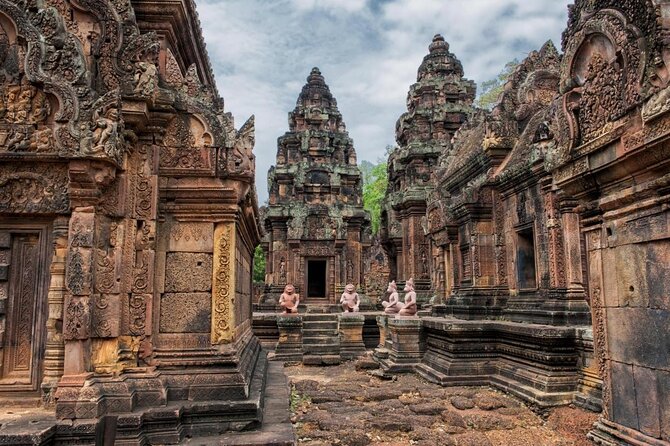
First is Banteay Srei, also called the Ladies Temple. It’s built from rare pink sandstone in the half of the 10th century by Hindu King Rajendravarman II, dedicated to the Trinity Gods.
This is a different look from many other Angkor temples. Instead of massive bulk, Banteay Srei feels more delicate, and the color adds a visual warmth that’s hard to fake with a phone camera.
Banteay Samre: a quieter twin of Angkor style
Next is Banteay Samre, a Hindu temple built in the 12th century. It’s described as having architecture that is believed to follow a similar model to Angkor Wat.
That means it can feel like a scaled relationship rather than a standalone spectacle. If you like spotting design echoes across sites, this helps you connect the dots.
Pre Rup: the turn-the-body funeral temple concept
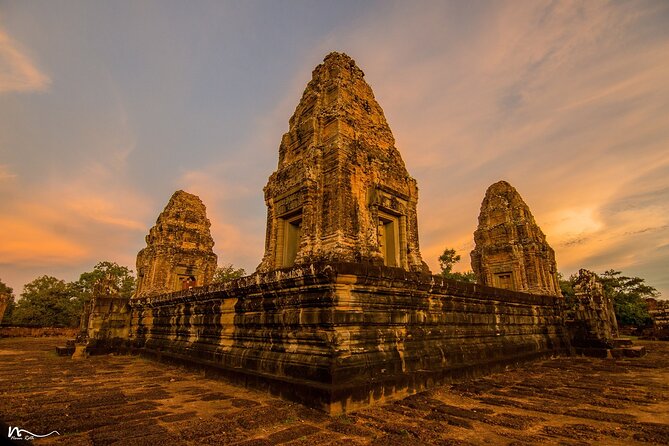
Then you go to Pre Rup, built in the late 10th century and dedicated to Hindu gods. The name is explained as meaning turn the body, reflecting Cambodian belief that funerals were conducted at the temple on the most distant place.
This is a great stop for meaning. Even if you’re not reading every carved panel, the cultural explanation gives you a reason why people valued this place, not just a reason why it looks old.
Banteay Kdei: the Ta Prohm and Bayon style echo
Finally, you visit Banteay Kdei, a Buddhist temple built in the 12th century. The structures are said to be very similar in style to Ta Prohm and Bayon.
That similarity matters because it gives you a sense of continuity. You finish the tour feeling like the temples were not random. They connect through design choices and religious transitions.
What I’d do to make this tour feel easier on day one and two
Two-day Angkor tours can feel like a sprint, even when the route is well planned. I like this one because the pacing has built-in variety, from big monuments to small wooded detours, and from stone to water.
Here are a few ways to make it smoother without changing the experience:
- Dress for humidity and late-day climbing. Lightweight clothes and good footwear help with Phnom Bakheng and temple stone surfaces.
- Bring a hat and something for sun protection. You are outdoors for long stretches, especially between early mornings and daytime walking.
- Use water breaks strategically. You get cool drinking water and towels included, so take advantage of them early instead of trying to push through thirst.
- Let your guide handle the photo timing. Multiple guides, including Bun and Chhay, are praised for photo results. If you want a clean set of pictures, ask for shot suggestions.
- Save your energy for Bayon faces and the terraces. Those stops reward a slower gaze, not rushing.
If you’re traveling with kids, the private group setup is a plus. You can keep the pace manageable while still hitting the major must-sees.
If you’re traveling solo or as a couple, you still get value because you’re not sharing time and attention with strangers in the same vehicle.
Should you book this two-day Angkor and Tonle Sap combo?
Book it if you want a full Angkor experience in two days plus a meaningful lake contrast at Kampong Pluk, and you like having a guide manage timing. The base includes pickup, A/C transport, water, towels, and an English license guide, and reviews highlight guides like Vanna, Lonn, Bun, and Chhay for making the day feel smooth and worth the early start.
Hold off if your budget is tight because you will likely add the Angkor pass ($62) and the floating village boat ticket ($20), plus lunch. Also, if early mornings and long temple walking are not your thing, this schedule will feel demanding.
If you can handle that, this tour is a solid way to see the big faces of Angkor, the root-wrapped drama of Ta Prohm, the pink sparkle of Banteay Srei, and then finish with Tonle Sap life on the water.
FAQ
What does the tour price include?
The price includes hotel pickup and drop-off, cool drinking water and towels, parking fees and road tolls, an English license guide, and an A/C vehicle with a driver.
Are temple and monument admission fees included?
No. The Angkor + All Temples pass is not included and is listed at $62 per person.
How much is the floating village boat ticket?
The Tonle Sap Lake or floating village ticket with a private boat ride is not included and is listed at $20 per person.
What time is pickup for the Angkor Wat sunrise on day 2?
Pickup for sunrise at Angkor Wat is at 5:00am.
Can I skip the Phnom Bakheng sunset waiting?
Yes. The itinerary notes that you can skip sunset waiting if you do not want to wait.
Is this a private tour?
Yes. It is described as private, so only your group participates.
What is the cancellation policy?
Cancellation is free up to 24 hours in advance for a full refund. If you cancel less than 24 hours before the start time, the amount paid is not refunded.
More floating village trips in Siem Reap
- From Siem Reap: Kampong Phluk Floating Village Tour by Boat
★ 4.9 · 6,979 reviews - Sunset tour of Kampong Phluk stilts home village on the Tonle Sap
★ 5.0 · 4,865 reviews - Siem Reap: Kampong Phluk Floating Village Tour with Boat
★ 4.9 · 3,843 reviews - Siem Reap Floating Village Kampong Phluk Sunset with Boat
★ 5.0 · 1,962 reviews
Newly listed around Siem Reap
- Sambor Prei Kuk Off Beaten Track★ 5.0 · 3 reviews
- Siem Reap Airport Taxi Transfer – City Center Hotels★ 5.0 · 5 reviews
- Short Cycling at Countryside★ 5.0 · 29 reviews
- Unveiling the Mystical Beauty of Phnom Kulen National Park★ 5.0 · 6 reviews
- Angkor Wat at Sunrise★ 4.0 · 7 reviews
- Bakong Temples & Floating Village Tour★ 4.5 · 3 reviews
- Rooftop Romantic Dinner – 4 Courses Set Meal & Wine★ 3.5 · 5 reviews
- Khmer Cooking Class in Cambodia★ 5.0 · 36 reviews
Angkor Wat Tours, compared.
Angkor Wat Sunrise or Sunset Tour with Guide from Siem Reap
Read our review →
Angkor Wat: Small-Group Sunrise or Sunset Tour
Read our review →
Angkor Wat 2-Day Tour with Sunrise and Sunset
Read our review →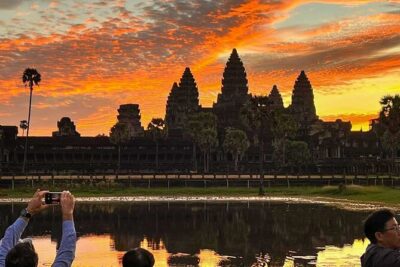
Angkor Wat Sunrise tour with Small – Group and Guide tours
Read our review →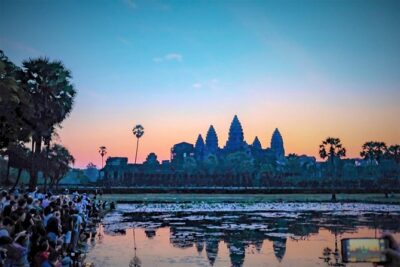
Angkor Wat Highlights and Sunrise Guided Tour from Siem Reap
Read our review →
Angkor Wat Sunset Small Group Tour with Lunch Included
Read our review →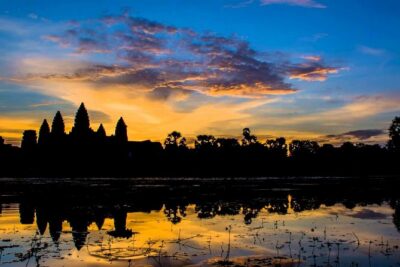
Full-Day Angkor Wat Sunrise Private Tour with Guide from Siem Reap
Read our review →Browse the lists this tour appears in