
Review · HISTORICAL TOURS
2 Days Guided Historical Tour in Angkor
Angkor Wat is better before the crowds wake up. This 2-day guided plan gets you into the Angkor World Heritage core early, with sunrise timing, guided history at the key sites, and a second day focused on temples most people skip. You also get the practical win of hotel pickup and an 11-temple route that feels more complete than the usual rushed day trips.
I especially like the small group size, capped at 15, which makes it easier to ask questions and keep the pace under control in the heat. I also like the comfort touches that matter in Cambodia, including cold water and a wet towel during the long days of temple walking.
One consideration: the temple entrance ticket is not included in the tour price, so you should budget $62 per person for admission. Also, the start is extremely early at 4:30 am, so you’ll want to be ready for an early wake-up and a lot of steps.
In This Review
- Key highlights before you go
- Price and what you truly get for $35
- The 4:30 am start, and why it changes your whole Angkor experience
- Day 1: Angkor Wat sunrise, Angkor Thom faces, Bayon, Ta Keo, and Ta Prohm
- Angkor Wat at sunrise, then inside the temple
- Angkor Thom South Gate: carved faces and a causeway approach
- Bayon Temple: the four smiling faces
- Ta Keo: the temple-mountain in sandstone
- Ta Prohm: trees, stones, and the Bayon style atmosphere
- Day 2: Pre Rup, Ta Som, Neak Pean, Preah Khan, and Phnom Bakheng at sunset
- Pre Rup: a state temple viewpoint with strong morning-to-afternoon energy
- Ta Som: smaller scale, same Khmer craftsmanship
- Neak Pean: the artificial island temple
- Preah Khan: built for Jayavarman VII and dedicated to his father
- Phnom Bakheng: the sunset temple-mountain finish
- The guides are the secret sauce (look for names like Sok, Vone, Sam, Heang)
- Comfort details that matter at Angkor heat
- Temple tickets and budgeting without surprises
- Who should book this 2-day Angkor Wat guided tour
- Should you book this 2-day Angkor tour?
- FAQ
- Is hotel pickup included?
- What time does the tour start?
- How big is the group?
- Are temple entrance tickets included in the tour price?
- How many temples does this tour cover?
- Are meals included?
- Does the tour include water or towels?
- Where does the tour start?
Key highlights before you go
- Sunrise and sunset timing for Angkor Wat views and better photo conditions
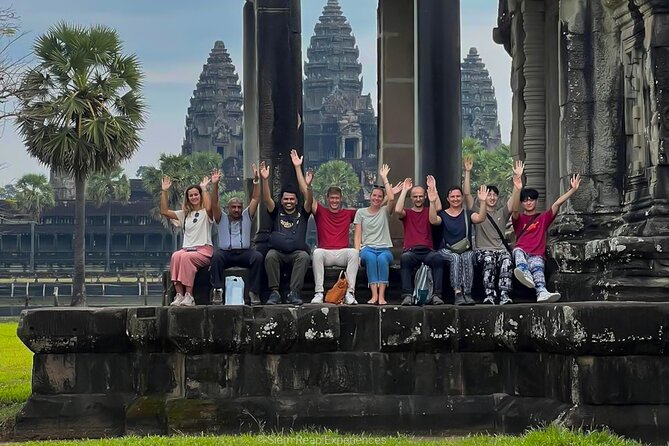
- Max 15 people so the guide can actually work the group, not just herd it
- Cold water and wet towel to take the edge off the midday heat
- Hotel pickup and drop-off so you spend less time sorting transport
- Two-day coverage of 11 temples with a mix of famous and quieter sites
Price and what you truly get for $35
At $35 per person, this tour is priced like a “logistics and guide” bargain. The big catch is that temple admission is separate. You’ll still pay $62 per person for the ticket, so your real day-1 and day-2 budget ends up around $97 all-in for entrance plus the guide and transport.
That extra money is not wasted. Your guide does the heavy lifting: where to stand, what to look for, why each temple looks the way it does, and how to move efficiently between sites. If you’re the kind of traveler who wants more than photos of stones, the history explanations are usually where the value lands.
Also, meals are not included. That’s common for Angkor tours, but it changes your planning. You’ll want to factor in breakfast timing on day one and lunch or other snacks on your own during breaks.
More History Tours in Siem Reap
- Siem Reap: Banteay Srei and Grand Circuit Heritage Tour
★ 4.9 · 163 reviews - Banteay Srei and Grand Circuit Heritage Tour from Siem Reap
★ 5.0 · 142 reviews - Angkor World Heritage with Sunrise – Small Group
★ 5.0 · 32 reviews
The 4:30 am start, and why it changes your whole Angkor experience
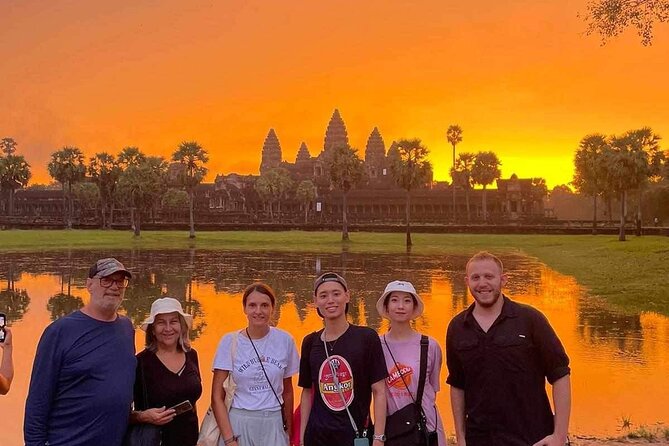
This tour kicks off at 4:30 am, which sounds brutal until you realize it’s the secret sauce. Start that early and you get to Angkor Wat while the light is soft, the temperatures are kinder, and the crowds are still forming.
You’ll likely also be in “pre-daylight mode,” so bring a little patience and a little hydration discipline. The tour includes cool water and a wet towel, which helps a lot once the sun comes up and you’re climbing and walking for hours.
And yes, you’ll be doing a lot of moving. Even with a vehicle between stops, Angkor is step-heavy and uneven. Think comfortable shoes, not fashion footwear. The tour is set up for a walking day, not a sit-and-stare cruise.
Day 1: Angkor Wat sunrise, Angkor Thom faces, Bayon, Ta Keo, and Ta Prohm
Day one is built around the “greatest hits,” but with guided context so it doesn’t feel like a checklist.
Angkor Wat at sunrise, then inside the temple
You’re picked up from your hotel and driven to Angkor Wat for sunrise. The guide then helps you explore inside, with explanations that connect what you’re seeing to the Khmer world that built and reshaped these spaces over centuries.
What makes this stop special is the timing plus the pacing. Sunrise gives you drama and atmosphere. The inside visit gives you meaning, like why the layout and carvings are arranged the way they are.
One practical note: admission ticket is not included, so you’ll want to handle that before you arrive at the gate. Also, you’ll want to move carefully early in the morning when it can still feel dark or dim.
A different kind of day in Cambodia:
- Angkor Wat Sunrise or Sunset Tour with Guide from Siem Reap
★ 5.0 · 12,109 reviews - Siem Reap: Angkor Wat: Small-Group Sunrise or Sunset Tour
★ 5.0 · 9,444 reviews - From Siem Reap: Kampong Phluk Floating Village Tour by Boat
★ 4.9 · 6,979 reviews - Sunset tour of Kampong Phluk stilts home village on the Tonle Sap
★ 5.0 · 4,865 reviews
Angkor Thom South Gate: carved faces and a causeway approach
Next comes the South Gate of Angkor Thom, a 12th-century gateway marked by carved faces and stone figures along the causeway. This is the kind of place where the guide’s pointing really helps. From the right angle, you can see how the gateway acts like a visual prologue to everything inside.
The drawback is simple: it’s a stop where you walk up, look, and move on. If you love long stays at each monument, you may feel you’re only scratching the surface here. But it’s an efficient transition into the denser core of the complex.
Bayon Temple: the four smiling faces
Then you head to Bayon Temple, famous for its towers crowned with faces and its link to Khmer-era Buddhism. It’s one of those sites where your brain starts “reading” symbols once you know what to look for.
Your time here is longer, and that matters. Bayon is busy visually, so having a guide to help you separate standout carvings from the surrounding maze of details makes the visit more rewarding.
Ta Keo: the temple-mountain in sandstone
After a breakfast break, you visit Ta Keo, described as a temple-mountain and possibly one of the first Khmer temples built entirely of sandstone. Climbing and approaching a sandstone structure gives you a different feel than laterite temples. It also changes how the light hits the surfaces.
The only downside is physical. You’re on your feet again, and Ta Keo can involve climbing stairs. Go steady. Don’t rush the steps just to “get it done,” because the views you want are earned slowly.
Ta Prohm: trees, stones, and the Bayon style atmosphere
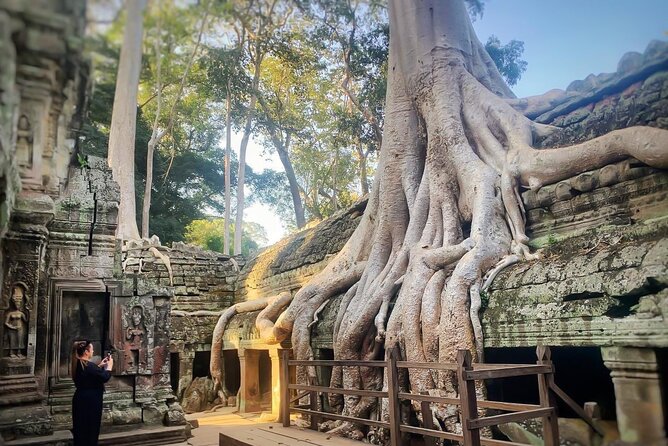
Day one ends with Ta Prohm, the temple known for dramatic tree roots and a “still in the process of nature taking over” vibe. The guide provides the context, while you get enough time to look around and take photos without feeling like you’re sprinting.
This is also one of the most crowded spots in the Angkor ecosystem. If you’re hoping for empty backgrounds, your second day is often a better bet for photos. Still, Ta Prohm is so distinctive that it earns its place on day one.
Day 2: Pre Rup, Ta Som, Neak Pean, Preah Khan, and Phnom Bakheng at sunset
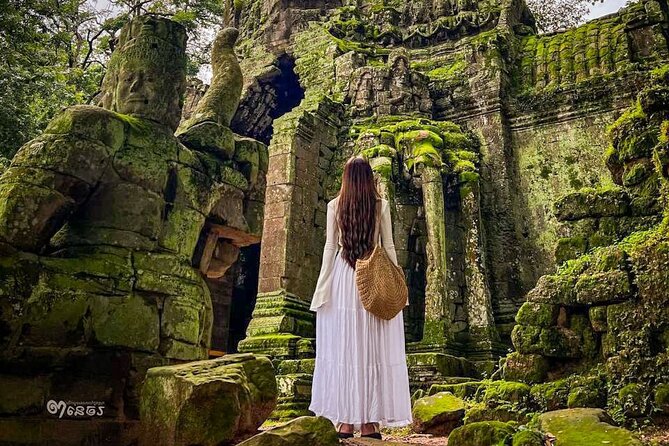
Day two is where the tour shifts from the most famous images to the parts of Angkor that often feel more relaxed and more personal.
Pre Rup: a state temple viewpoint with strong morning-to-afternoon energy
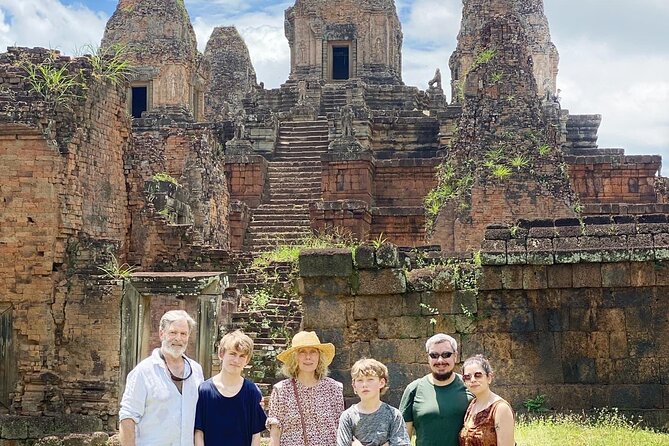
Pre Rup is a Hindu temple-mountain connected to Khmer king Rajendravarman and dedicated in the 10th century. It’s built for views, and the temple design gives you natural moments to pause and look over the surroundings.
The good part is that Pre Rup feels more “temple mountain” than “crowd magnet.” You’re not just staring at faces. You’re experiencing a stepped sacred structure with a sense of elevation.
Ta Som: smaller scale, same Khmer craftsmanship
At Ta Som, the scale is smaller and the mood shifts. This is a temple at the end of the 12th century for Jayavarman VII, and it can be a refreshing change after the bigger marquee sites.
Small temples reward slow looking. You can spend a few extra minutes on carvings and architectural details, and it can feel like the guide is less about a script and more about helping you notice things.
Neak Pean: the artificial island temple
Then comes Neak Pean, an artificial island concept tied to Jayatataka Baray, with a Hindu temple on a circular island. This one feels different because of the “water and island” setting idea, not just the stonework.
It’s also a good breather mentally. You’re still walking, but the scene helps you transition from one cluster of temples to the next.
Preah Khan: built for Jayavarman VII and dedicated to his father
Preah Khan is another 12th-century highlight tied to Jayavarman VII. The temple is positioned near the Jayatataka baray and is linked to honoring his father, which gives you a story thread beyond architecture.
This stop often works well for travelers who like the human side of ancient places. You see how dynasties use temple building to communicate power, memory, and faith.
Phnom Bakheng: the sunset temple-mountain finish
Finally, Phnom Bakheng is your closing act, a temple-mountain associated with Shiva built in the late 9th century. The best part is the sunset timing, which turns the view and the silhouettes into the kind of moment you remember later.
The only practical drawback: sunset at temple-mountains usually means crowded viewpoints and more stairs near the top. Start early within the window, and keep your footing. The view is worth it, but don’t trip for a selfie.
The guides are the secret sauce (look for names like Sok, Vone, Sam, Heang)
This tour stands or falls on the guide, and the strong pattern here is passion mixed with practical pacing. People have highlighted guides such as Sok, Vone (also referred to as Sam Vone), Ho Heang, Pheap, Sary, Sem, and Sayon.
What you want from a good Angkor guide is not just a recitation. You want someone who can explain why a door is placed a certain way, what the carvings relate to, and how each temple fits into the Khmer timeline. Multiple guides on this route are praised for exactly that combination, plus for answering questions.
You’ll also notice the tour tends to include time for your own exploring. That’s a big deal. A guided visit that leaves breathing room helps you absorb what you’re seeing instead of just rushing from spot to spot.
Comfort details that matter at Angkor heat
Angkor day two is not the time to forget small comfort facts.
This tour includes an air-conditioned vehicle, which helps you recover between temple stops. It also provides cold water and a wet towel, which is a lifesaver in sun-baked stone country.
There are also break moments built into the schedule. Day one includes a breakfast break before Ta Keo. You can also count on bathroom breaks during the long day, and you’ll want them. Angkor is a full-day commitment even when the itinerary looks like a series of neat blocks.
Bring smart basics even if you have water:
- sunscreen and a hat, because the tour starts early but the sun still wins
- comfortable closed-toe shoes
- a small towel or tissue for dusty areas
Temple tickets and budgeting without surprises
Since the entrance ticket is not included, make this a line item you handle upfront. The stated temple ticket cost is $62 per person.
Your tour ticket plus the guide and vehicle makes the day smoother, but only if you arrive with the admission handled. If you forget, you might lose time at the entrance and your early schedule can slip.
Also remember: meals are not included. That doesn’t mean you’ll be hungry the whole time, but it means you should plan for your own food during breaks.
Who should book this 2-day Angkor Wat guided tour
Book it if you want:
- a structured route across 11 temples in two days
- sunrise and sunset experiences without figuring out transport and timing
- a guide who explains the “why” behind the stones
- a smaller group, max 15, so it feels more personal
This is also a great choice if you’re short on time. A two-day plan is a middle ground between a day trip that hits only the icons and a longer stay where you can go slowly.
Skip it or consider alternatives if:
- you strongly dislike very early starts at 4:30 am
- you want meals included in the price
- you prefer independent exploring with no guide explanations
Should you book this 2-day Angkor tour?
I think this tour is worth booking if you’re coming to Angkor for more than postcards. The combination of early sunrise, guided stops across 11 temples, and small-group pacing makes it a solid value even with the separate ticket cost.
If you’re the type who enjoys understanding what you’re looking at, guides like Sok, Vone, Ho Heang, and the others mentioned in guide praise can turn “a famous temple” into a memorable story.
Just budget for the $62 admission, bring comfortable shoes, and treat the 4:30 am start like part of the experience, not a problem.
FAQ
Is hotel pickup included?
Yes. The tour includes pick up and drop off at your hotel, and you travel in an air-conditioned vehicle.
What time does the tour start?
The start time is 4:30 am.
How big is the group?
The group is capped at a maximum of 15 travelers.
Are temple entrance tickets included in the tour price?
No. The temple ticket is not included. The provided ticket cost is $62 per person.
How many temples does this tour cover?
It covers 11 temples over 2 days.
Are meals included?
No. Meals are not included in the tour price.
Does the tour include water or towels?
Yes. You get cool water and a wet towel.
Where does the tour start?
The start point is Siem Reap Pub Hostel, located behind Angkor Night Market in Siem Reap. Drop-off is done around Pub Street or at your required hotel area.
Newly listed around Siem Reap
- Sambor Prei Kuk Off Beaten Track★ 5.0 · 3 reviews
- Siem Reap Airport Taxi Transfer – City Center Hotels★ 5.0 · 5 reviews
- Short Cycling at Countryside★ 5.0 · 29 reviews
- Unveiling the Mystical Beauty of Phnom Kulen National Park★ 5.0 · 6 reviews
- Angkor Wat at Sunrise★ 4.0 · 7 reviews
- Bakong Temples & Floating Village Tour★ 4.5 · 3 reviews
- Rooftop Romantic Dinner – 4 Courses Set Meal & Wine★ 3.5 · 5 reviews
- Khmer Cooking Class in Cambodia★ 5.0 · 36 reviews
Historical Tours, compared.
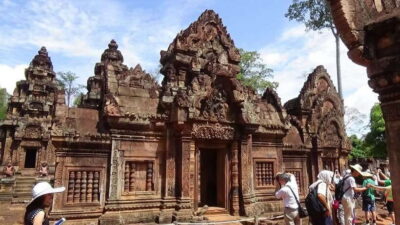
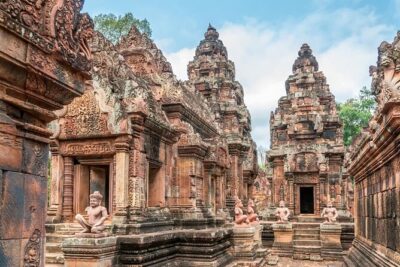
Banteay Srei and Grand Circuit Heritage Tour from Siem Reap
Read our review →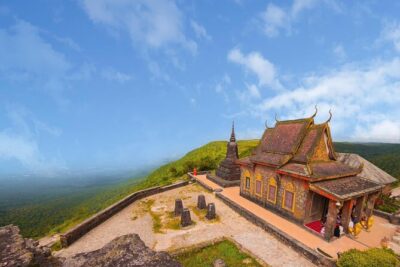
Bokor Mountain Adventure – History, Sights and Waterfalls
Read our review →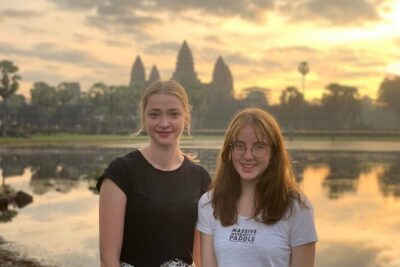
Angkor World Heritage with Sunrise – Small Group
Read our review →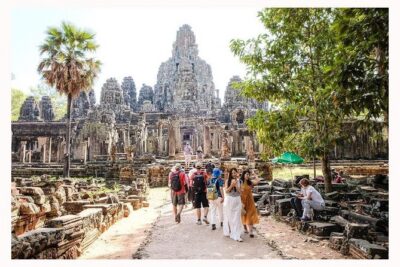
Private Angkor Wat Tour & Angkor Park/Heritage With Local Guide
Read our review →
Kulen Mountain Waterfall and Historical Wonders Private Tour
Read our review →
Browse the lists this tour appears in