
Review · FLOATING VILLAGE TOURS
3-Day ‘Temples & Tonle Sap’ Tour
Angkor in three days, with fewer logistics worries. This Temples & Tonle Sap tour strings together Angkor Wat, the quieter Tonle Sap floating villages, and a motorized boat ride, all with hotel pickup and drop-off and an English-speaking guide.
I love how the schedule is built for people who want big sights without charting a route all day. Two standouts for me are air-conditioned hotel transfers and a professional English guide who explains what you are looking at, not just where to stand for photos.
The main drawback to plan around is the pace. It is not suitable if you cannot walk normally or you have less than average fitness, and temple days mean real time on your feet.
In This Review
- Key things I’d bet on (before you book)
- Value and price reality check in Siem Reap
- The “transfers start at 8:30 am” advantage
- Day 1 Angkor’s big masterpieces, from Bayon to Angkor Wat
- Angkor Archaeological Park first, then passes sorted
- Bayon Temple, Jayavarman VII’s decorated heart
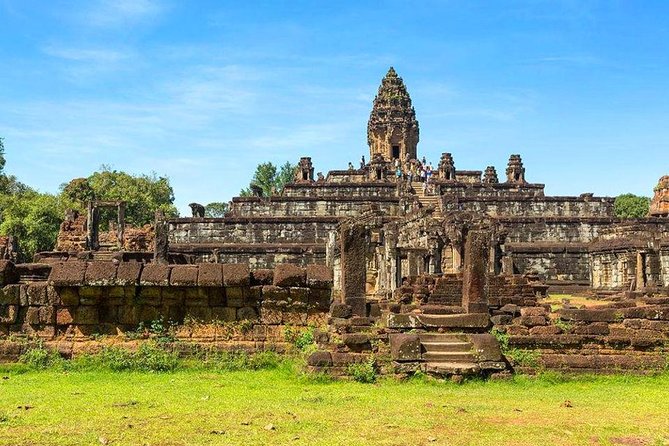
- Baphuon Temple, Udayadityavarman and Shiva
- Ta Prohm, the Bayon style temple you recognize instantly
- Terrace of the Elephants, royal boundaries
- Angkor Wat after lunch, the world-class centerpiece
- Phnom Bakheng, a temple mountain with Hindu and Buddhist identity
- Day 2 Angkor Wat sunrise and the tight cluster of temples
- Angkor Wat sunrise, then back for breakfast
- Preah Khan plus the temple cluster circuit
- Banteay Srei, the “ladies temple” and a 25 km detour
- Banteay Samre and Banteay Kdei to round out the day
- Day 3 Tonle Sap Kompong Phluk and the Roluos temples
- Kompong Phluk on Tonle Sap, stilt villages and wet season fishing
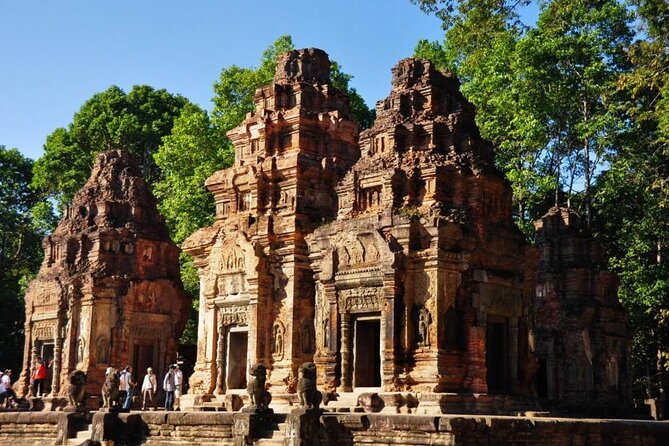
- Roluos temples, early Khmer permanent structures
- Phsar stops and Artisans d Angkor on the way back
- What’s included, what’s not, and how that affects your day
- The guide effect, and why English helps at Angkor
- Who this tour suits best (and who should rethink it)
- Should you book the Temples & Tonle Sap tour?
- FAQ
- What time does the tour start?
- Are hotel transfers included?
- Is the motorized boat ride included?
- Do I need to buy temple passes?
- What language is the guide?
- Are meals included?
- Is the tour suitable for kids?
- What is the cancellation window for a full refund?
Key things I’d bet on (before you book)
- Hotel transfers included: You start at 8:30 am from your hotel and end back there, which saves hours of stress.
- A real guide, not just a driver: The tour includes a professional English-speaking guide to give context across the Khmer sites.
- Motorized boat ride on Tonle Sap: A different side of Siem Reap, focused on the stilt villages at Kompong Phluk.
- Big Angkor plus quieter temples: You see major names like Bayon and Angkor Wat, plus the Roluos group temples.
- Early Angkor Wat return: Day 2 includes another visit specifically for sunrise, then breakfast back at the hotel.
Value and price reality check in Siem Reap
At $250 for 3 days, this tour is trying to solve one problem: time and logistics. In practice, that means you are paying for an organized circuit, transportation (including an air-conditioned vehicle for pickups, drop-offs, and tours), and a professional English-speaking guide.
Here is the part you must factor in up front. Temple passes are not included. You buy an Angkor pass at the Angkor Enterprise ticket office, and the tour information points to:
- USD 62 for a 3-day pass
- USD 72 for a 7-day pass
One pass per person.
So if you are doing the full 3 days, your trip cost is roughly $250 plus the 3-day pass, plus meals and soft drinks. Meals are not included, so budget for lunch stops you choose or snacks you bring. That is the trade.
Where the money feels well spent is the boat day and the transport. You are not only doing temples spread across the Angkor area. You are also getting to Kompong Phluk on the Tonle Sap and riding there by motorized boat, with a fee included. Cold towels and bottled water are also included, which sounds small until you are standing in heat.
More floating village trips in Siem Reap:
- From Siem Reap: Kampong Phluk Floating Village Tour by Boat
★ 4.9 · 6,979 reviews - Sunset tour of Kampong Phluk stilts home village on the Tonle Sap
★ 5.0 · 4,865 reviews - Siem Reap: Kampong Phluk Floating Village Tour with Boat
★ 4.9 · 3,843 reviews
The “transfers start at 8:30 am” advantage
This tour is built around pickup and drop-off. You are collected from your hotel at the tour start time, 8:30 am, and you return after each day’s circuit.
That matters more than people think. Angkor days get long, and Siem Reap timing can get messy fast. With transfers included, you skip the scramble of booking rides back and forth, coordinating drivers, and trying to solve timing with multiple sites in one day.
Also, the tour explicitly includes an air-conditioned vehicle for pickups, drop-offs, and tours. After a morning of stone and sun, it is a relief to have a cool reset between sites.
Just know the pace is active. The tour is not suitable if you cannot walk normally. Temple complexes can involve uneven ground and stairs. If you are unsure, plan on taking your time at viewpoints and bring footwear you trust.
Day 1 Angkor’s big masterpieces, from Bayon to Angkor Wat
Day 1 is packed, and it focuses on the “must see” Angkor Archaeological Park circuit plus a classic sunset viewpoint option.
Angkor Archaeological Park first, then passes sorted
You start at Angkor Archaeological Park, and the tour advises buying your Angkor passes at the Angkor Enterprise ticket office. The pass is per person, and the tour gives clear pricing for the 3-day or 7-day options.
If you arrive with the pass already solved, you move faster. If not, you will want to build in enough time and keep your eyes on your guide for the quickest route.
A different kind of day in Cambodia:
- Angkor Wat Sunrise or Sunset Tour with Guide from Siem Reap
★ 5.0 · 12,109 reviews - Siem Reap: Angkor Wat: Small-Group Sunrise or Sunset Tour
★ 5.0 · 9,444 reviews - Siem Reap: Angkor Wat 2-Day Tour with Sunrise and Sunset
★ 4.9 · 4,429 reviews - Siem Reap: Full-Day Angkor Wat Guided Tour with Sunset
★ 4.9 · 3,803 reviews
Bayon Temple, Jayavarman VII’s decorated heart
Bayon Temple sits at the center of Jayavarman’s capital, Angkor, and it is described as a richly decorated Khmer temple built in the late 12th or early 13th century for King Jayavarman VII. You get about an hour here.
This is one of the best “intro to style” stops. The guide time is especially useful because Bayon’s identity as Jayavarman VII’s state temple gives you a lens for what you are seeing, instead of treating it like a random pile of carvings.
Baphuon Temple, Udayadityavarman and Shiva
Next is Baphuon in Angkor Thom, northwest of Bayon. It is described as a mid-11th century three-tiered temple mountain, built as the state temple of Udayadityavarman and dedicated to Shiva.
You get about an hour. Baphuon is a good contrast stop after Bayon because it keeps the theme of Khmer rulers and Hindu dedication, but through a different architectural approach.
Ta Prohm, the Bayon style temple you recognize instantly
Then comes Ta Prohm. It is the modern name, originally called Rajavihara, built largely in the late 12th and early 13th centuries in the Bayon style. You get about an hour.
Ta Prohm tends to be memorable because it feels like time slowed down around the structures. It is also a good place to pause and take in scale. When the guide explains the name shift and the period, it helps you see it as part of the broader Angkor system, not just a single famous stop.
Terrace of the Elephants, royal boundaries
The Terrace of the Elephants and the Terrace of the Leper King form the eastern boundary of the Royal Palace grounds. They face the parade grounds used for processions and parades.
This stop is shorter, about 30 minutes, which makes sense because it is more about orientation and atmosphere than deep exploration.
Angkor Wat after lunch, the world-class centerpiece
After lunch, the itinerary hits Angkor Wat for about 3 hours.
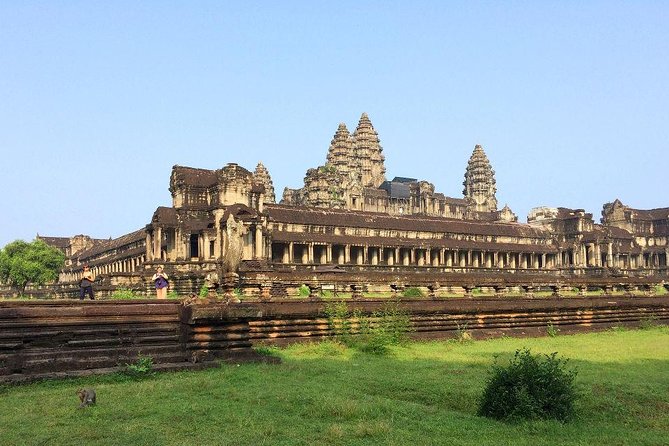
Angkor Wat is described as the largest religious monument in the world, on a site measuring 162.6 hectares. It was originally constructed as a Hindu temple dedicated to a god in the Hindu tradition (the tour text notes the Hindu origin).
For me, the key value here is time. Three hours gives you a chance to actually look, not just walk past. It also sets you up for Day 2, which revisits Angkor Wat for sunrise.
Phnom Bakheng, a temple mountain with Hindu and Buddhist identity
Finally, Day 1 includes Phnom Bakheng, a Hindu and Buddhist temple mountain dedicated to Shiva, built at the end of the 9th century during the reign of King Yasovarman (889 to 910). The stop is listed as up to 3 hours.
You are going up onto a hill, so this is where your shoes matter and where you feel the “not for low fitness” note in real life. But it is also a classic way to end an intense day.
Day 2 Angkor Wat sunrise and the tight cluster of temples
Day 2 is designed as a second Angkor push, but it changes the texture of the day.
Angkor Wat sunrise, then back for breakfast
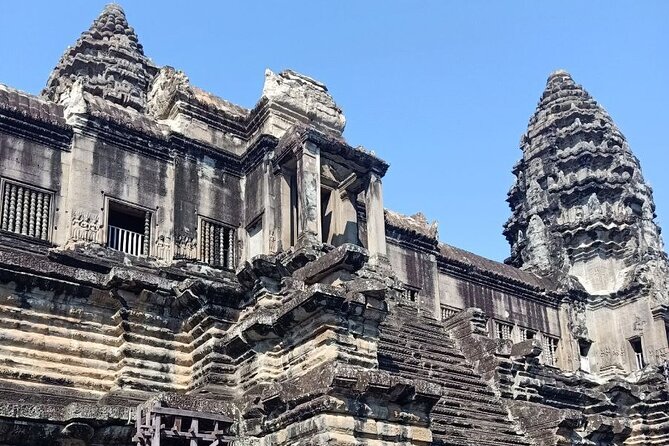
The tour revisits Angkor Wat to see sunrise, then returns to your guest hotel so you can have breakfast. The stop is listed as 3 hours.
Even if you do not care about sunrise for the dramatic sky factor, this gives you a different lighting mood for the same complex. It also feels like a smart pacing move because the tour then builds in breakfast at the hotel, instead of keeping you out through another long mid-day stretch without a break.
Preah Khan plus the temple cluster circuit
After breakfast, you visit Preah Khan, Neak Poan, Ta Som, and East Mebon temples. The itinerary notes they are clustered together and gives a total time of about 2 hours for this stop.
That “cluster” concept is valuable because it reduces transfer time. You are not spending the day bouncing between far-flung locations. You are moving temple to temple while your energy is still fresh.
Banteay Srei, the “ladies temple” and a 25 km detour
After lunch, you head to Banteay Srei, often called the ladies temple. The tour describes it as a 10th century Cambodian temple dedicated to Shiva, near the hill of Phnom Dei, about 25 km northeast of the main Angkor area. You get about 2 hours here.
This stop is a great example of why guided circuits help. You are getting more than the headline temples. You are adding a site that sits outside the most obvious walking route and depends on planning.
Banteay Samre and Banteay Kdei to round out the day
Then you move to Banteay Samre, described as located 400 meters east of the East Baray, built in the early 12th century during the reigns of Suryavarman II and Yasovarman II, and in the Angkor Wat style. Time is about 1 hour.
After that, Banteay Kdei is listed as 1 hour. It is described as a Buddhist temple built mid-12th to early 13th centuries, during the reign of the Khmer king described in the tour text (it is cut off, but it signals the era). It is southeast of Ta Prohm and east of Angkor Thom.
This is the part of the tour where the day feels less like “one icon, done” and more like an archaeology walk through different eras and religious themes. If you like understanding how Khmer architecture evolves, this segment will feel rewarding.
Day 3 Tonle Sap Kompong Phluk and the Roluos temples
Day 3 flips the story from temple mountains to living communities, then returns to ancient foundations.
Kompong Phluk on Tonle Sap, stilt villages and wet season fishing
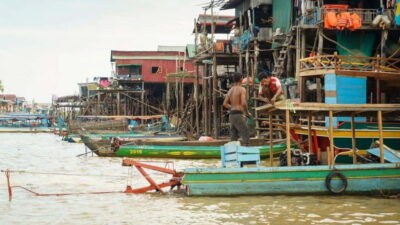
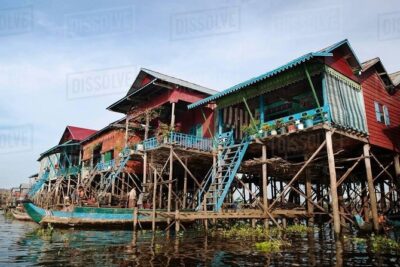
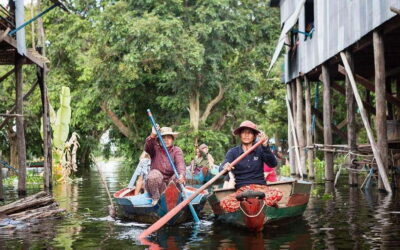
The tour stops at Kompong Phluk, described as a collection of villages largely built on stilts on the Tonle Sap. The name means Harbor of the Tusks. The itinerary also explains that the community depends on fishing, spending Cambodia’s wet season (May to October) fishing.
You get about 3 hours for Kompong Phluk.
This is one of the best ways to see Siem Reap beyond the temple ticket. The Tonle Sap portion is also where the motorized boat ride included in the tour becomes meaningful, because it is how you experience the villages in their watery setting.
Just be ready for the fact that this is not a single stone monument. Conditions can change, and you are out in the elements longer than at some indoor or shaded temple spots.
Roluos temples, early Khmer permanent structures
Next up is the Roluos group of temples, described as among the earliest permanent structures built by Khmer, dating to the late 9th century. Time is about 3 hours.
This is a strong move for first-timers. After spending two days on the big Angkor set pieces, you get a “beginning” feeling here, which helps you see Angkor as a timeline, not just a destination.
Phsar stops and Artisans d Angkor on the way back
On the return route, you take a look at Phsar Leur (top market), Phsar Chas (old market), and Artisans d Angkor. This is listed as about 2 hours, and Phsar Leur and Phsar Chas are marked as free.
This is not described as a full shopping spree, and it does not need to be. It is a chance to connect the temple days back to daily life in Siem Reap and to browse at your own pace.
What’s included, what’s not, and how that affects your day
Included in the tour:
- Hotel pickups and drop-offs
- Air-conditioned vehicle for pickups, drop-offs, and tours
- Professional English-speaking guide
- Fee for the motorized boat
- Bottled water
- Cold towels
Not included:
- Temple passes
- Meals, soft drinks, alcohol
You also get things that help on-the-ground:
- Mobile ticket
- Group discounts (the amount is not stated, but it is noted as available)
- Complimentary hotel pickup and drop off
This inclusion set is a practical win. When temple passes are separate and meals are separate, you control your budget and timing. But the heavy items, like transport, guide, and the boat fee, are handled for you.
The guide effect, and why English helps at Angkor
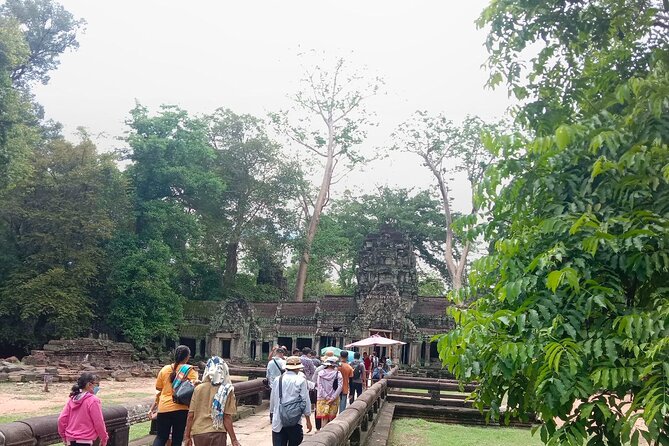
Angkor is not just “old rocks.” It is a mix of Khmer rulers, temple purposes, and changing religious influences. The tour information keeps naming who built what and for what purpose, like Bayon for Jayavarman VII, Baphuon dedicated to Shiva, and Phnom Bakheng under Yasovarman.
That is where an English-speaking guide earns their pay. You are not only standing on a platform looking at carvings. You are learning what a temple was for, and in what time period it fits. Even if your Cambodian Khmer history is rusty, you will get the threads.
Two things from the experience that I especially like in practice:
- The tour is designed to keep you moving between sites with context, so you do not feel like you are chasing trivia alone.
- The guide helps you interpret the differences, like Hindu dedication versus Buddhist identity, and why some temples feel like “state capital” centers.
Who this tour suits best (and who should rethink it)
This is a good match if:
- You have limited time in Siem Reap
- You want to cover major Angkor highlights plus less obvious sites like the Roluos group and Banteay Srei
- You like an organized pace with pickup and drop-off so your schedule stays predictable
- You want a mix of temples and a Tonle Sap boat village experience
This is not a good match if:
- You cannot walk normally or you have less than average fitness, because the itinerary is active and temple time can run long
- You are traveling with a child under 3 years old, since it is not available for children under 3
If you fall into the middle ground, you can still enjoy it, but go in with realistic expectations: you will be on the move most days, and the payoff is seeing a lot without planning every step.
Should you book the Temples & Tonle Sap tour?
If you want a clean, efficient way to see Angkor Wat, Bayon, Ta Prohm, and Phnom Bakheng, then follow it with Kompong Phluk on Tonle Sap and the Roluos temples, this tour makes sense. The value is in the included transport, the guide, and the motorized boat ride fee, plus the fact that hotel transfers remove a chunk of stress.
I would book it when:
- Your priority is coverage and context in 3 days
- You are comfortable buying your own Angkor pass separately
- You can handle a full schedule with walking
I would hesitate when:
- You prefer a slower, more flexible day-by-day plan
- You are sensitive to long temple days and physical walking demands
For many first-time Siem Reap visitors, this is a smart way to avoid turning your vacation into a logistics project.
FAQ
What time does the tour start?
The tour start time is 8:30 am, and the vehicle departs the guests hotel at that time.
Are hotel transfers included?
Yes. Hotel pickups and drop-offs are included, and the vehicle is used for pickups, drop-offs, and tours.
Is the motorized boat ride included?
Yes. The fee for the motorized boat is included in the tour.
Do I need to buy temple passes?
Yes. Temple passes are not included. You buy Angkor passes at the Angkor Enterprise ticket office, with 3-day and 7-day options listed.
What language is the guide?
The tour includes a professional English-speaking guide.
Are meals included?
No. Meals, soft drinks, and alcohol are not included.
Is the tour suitable for kids?
It is not available for children under 3 years old.
What is the cancellation window for a full refund?
Free cancellation is available, and you can cancel up to 24 hours in advance for a full refund.
Newly listed around Siem Reap
- Sambor Prei Kuk Off Beaten Track★ 5.0 · 3 reviews
- Siem Reap Airport Taxi Transfer – City Center Hotels★ 5.0 · 5 reviews
- Short Cycling at Countryside★ 5.0 · 29 reviews
- Unveiling the Mystical Beauty of Phnom Kulen National Park★ 5.0 · 6 reviews
- Angkor Wat at Sunrise★ 4.0 · 7 reviews
- Bakong Temples & Floating Village Tour★ 4.5 · 3 reviews
- Rooftop Romantic Dinner – 4 Courses Set Meal & Wine★ 3.5 · 5 reviews
- Khmer Cooking Class in Cambodia★ 5.0 · 36 reviews
Floating Village Tours, compared.
Sunset tour of Kampong Phluk stilts home village on the Tonle Sap
Read our review →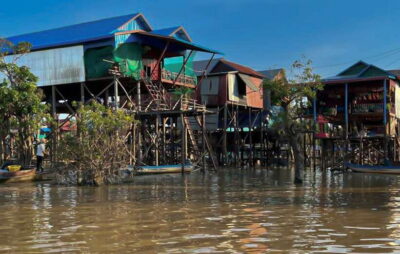
Kampong Phluk Floating Village Tour with Boat
Read our review →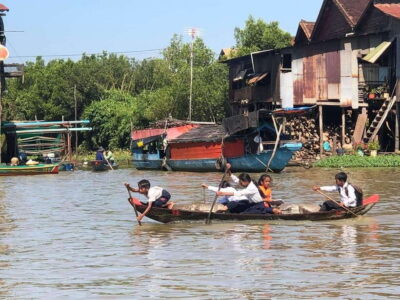
Siem Reap Floating Village Kampong Phluk Sunset with Boat
Read our review →
Kulen Mountain, Beng Mealea and Tonle Sap Tour
Read our review →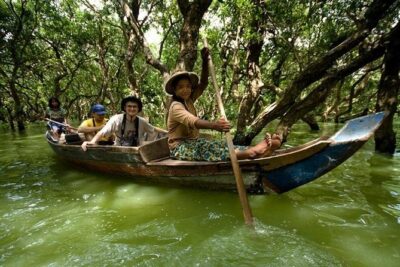
Tonle Sap Lake & Kampong Phluk Village Half-Day Tour
Read our review →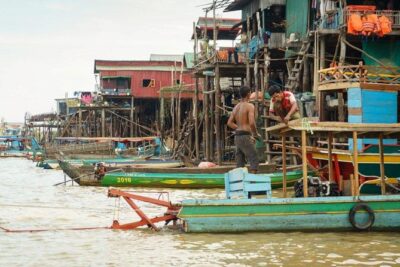
Browse the lists this tour appears in