
Review · ANGKOR WAT TOURS
4 Days | Angkor Wat & Preah Vihear Tours
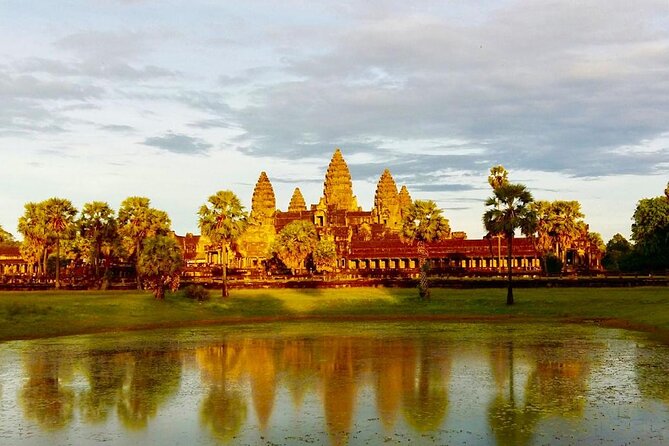
Temple mornings hit different in Cambodia. This 4-day Angkor Wat and Preah Vihear route strings together iconic Khmer sites and quieter jungle temples, with Angkor Wat sunrise timing built in. I also like the way the plan slips you toward Ta Nei’s calmer, forested ruins, away from the densest crowds.
You’ll move fast, but not randomly. Each day has a clear theme, from Angkor’s stone-faced gates to sacred mountains and remote temples, and you get hotel pickup plus an air-conditioned ride, with cool water and towels along the way.
One thing to weigh: the biggest sites require their own admission tickets. Angkor Wat and Preah Vihear tickets are not included, so plan to budget time and money for entry fees before you go.
In This Review
- Key Highlights
- Price and Logistics for a $444 Four-Day Temple Run
- Angkor Wat Day 1: Main Gates, Bayon Faces, and the Jungle Cool-Off
- Day 2 Angkor Wat Sunrise at 4:30am, Plus Banteay Srei and More Carvings
- Day 3 Phnom Kulen National Park and Beng Mealea’s “Don’t Touch” Adventure Feel
- Day 4 Preah Vihear at 5:30am, with Anlong Veng Stops and Koh Ker After
- Hok and the Kind of Service That Makes Early Starts Work
- Practical Tips: Tickets, Heat, Shoes, and Photo Spots That Save Time
- Should You Book This Angkor Wat and Preah Vihear 4-Day Tour?
- FAQ
- What is the price of the 4-day Angkor Wat and Preah Vihear tour?
- How long is the experience?
- Does the tour include hotel pickup?
- Are temple admission tickets included?
- What’s included in the tour price?
- What meals are included?
- What time does the Angkor Wat sunrise start?
- Can I cancel and get a full refund?
- What is the cancellation cutoff?
Key Highlights
- Angkor Wat at sunrise with a practical photo plan behind the reflecting pool
- Ta Nei temple in the jungle for a calmer stop, with birds and monkeys around the ruins
- Banteay Srei pink-stone carvings on the Angkor circuit after the early start
- Phnom Kulen sacred mountain stops like reclining Buddha, thousand Lingas, and bat cave area
- Preah Vihear early departure at 5:30am plus an Anlong Veng break for breakfast and refreshment
- Koh Ker group temples as a quieter follow-up to Preah Vihear
Price and Logistics for a $444 Four-Day Temple Run
At $444 per person for about four days, this tour is priced for people who want structure. What helps the value is that transport is included, plus you get a senior English guide, air-conditioned vehicle, and small comfort touches like cool water and towels. There are also some local snacks and beers listed, which makes the long days feel less like a grind.
That said, the price is not “all-in” for the temples. Angkor ticket, Preah Vihear ticket, and Koh Ker Temple ticket are all marked as not included. So when you compare value, add those entry costs in your head, and also leave a little time buffer for ticket lines and rules at each site.
This is also designed for early starts, not sleep-ins. Day 2 starts at 4:30am for sunrise at Angkor Wat, and Day 4 starts at 5:30am for Preah Vihear. If you hate waking up before the sun, this itinerary may feel like a forced march, even though it’s a very good one.
More Angkor Wat tours in Siem Reap:
- Angkor Wat Sunrise or Sunset Tour with Guide from Siem Reap
★ 5.0 · 12,109 reviews - Siem Reap: Angkor Wat: Small-Group Sunrise or Sunset Tour
★ 5.0 · 9,444 reviews - Siem Reap: Angkor Wat 2-Day Tour with Sunrise and Sunset
★ 4.9 · 4,429 reviews
Angkor Wat Day 1: Main Gates, Bayon Faces, and the Jungle Cool-Off
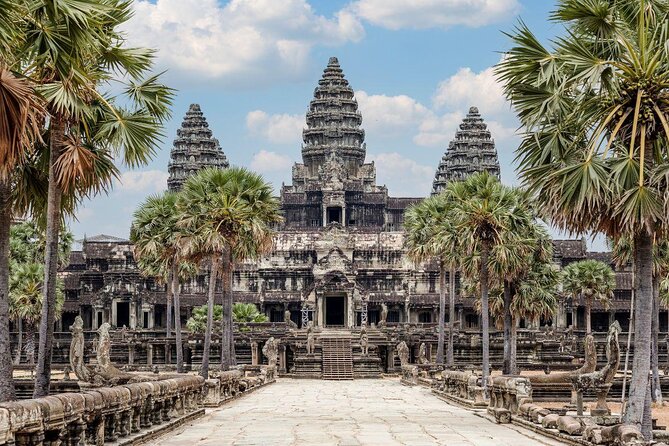
Day 1 is your big Angkor day, beginning with hotel pickup at 8:00am and a jump straight into Angkor Wat. Angkor Wat isn’t just famous, it’s also a top-tier example of Khmer temple design. The tour notes that it is the largest religious monument in the world and among the best preserved, built as a temple-mountain concept representing Mount Meru.
After that, you head to Angkor Thom South Gate. The city is defined by its massive wall and moat, with monumental gates and intricate carvings, and it helps you understand why people treat this area like a whole kingdom, not a single temple.
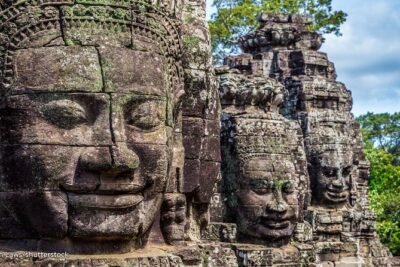
Next up is Bayon Temple, the one with the famous stone faces. You’re shown how Bayon uses 49 towers and the four smiling faces that look to the main directions. The tour explanation links those faces to religious meaning, and it’s one of those stops where you’ll either feel the magic or feel like you need a guide to translate what you’re seeing. If you have a guide who likes to explain details, this is a good place for it.
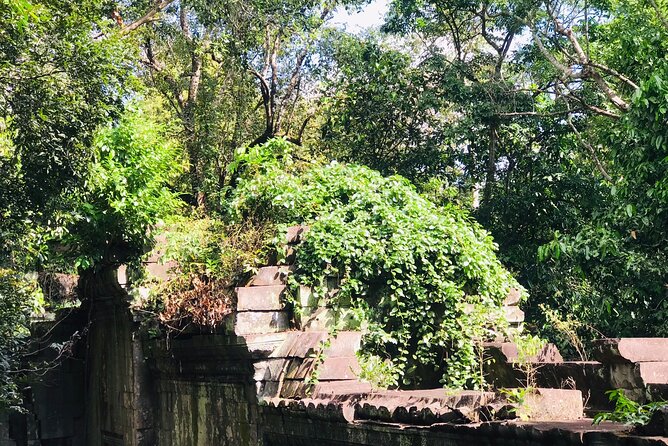
Then the itinerary turns the volume down with Ta Nei Temple. Ta Nei is described as being in the jungle and more peaceful, with less crowd pressure. You can also spot wildlife like gibbons, monkeys, and hornbills around the dense forest setting. That alone is worth the switch, because it breaks up the day after the most iconic, high-traffic Angkor blocks.
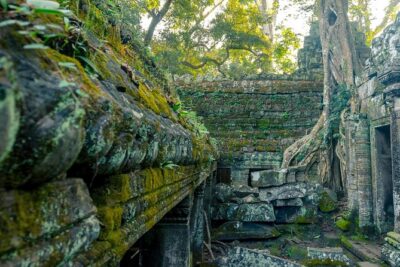
From there you go to Ta Prohm, the ruined temple where roots grab buildings and the atmosphere is pure “maze of stone and trees.” The tour notes the Tomb Raider connection, which gives you a pop-culture hook, but the real reason Ta Prohm works is that it shows how nature and architecture collided and kept colliding.
You finish Day 1 at Prasat Kravan, a brick temple dedicated to Vishnu. It’s a shorter stop, but it adds variety. If Angkor Wat and Angkor Thom feel like “big statement temples,” Kravan gives you a smaller, cleaner view of Khmer brickwork, symmetry, and wall carvings.
Potential drawback for Day 1: You’re walking a lot across multiple sites, and the day begins after a normal 8:00am start. If you also plan to do sunrise on Day 2, treat Day 1 as your warm-up day and conserve energy for the early wake-ups later.
Day 2 Angkor Wat Sunrise at 4:30am, Plus Banteay Srei and More Carvings
Day 2 is the reason people sign up for a multi-day Angkor program. The pickup is at an early 4:30am for sunrise at Angkor Wat. The tour gives you a very practical photo tip: aim for the reflecting pool area in front of the main temple, and position yourself behind it so the sky and light reflect in the water.
That “behind the reflecting pool” detail matters. Many visitors get there, wander, and spend the sunrise looking for a spot. Here you get a plan, so your time goes toward watching and photographing instead of hunting.
After sunrise, you return for breakfast and refreshment. That’s smart, because once the temples start, you’re basically on a treadmill of heat, dust, and stairs. Getting food back into your system right after sunrise helps you keep your head clear for the rest of the day.
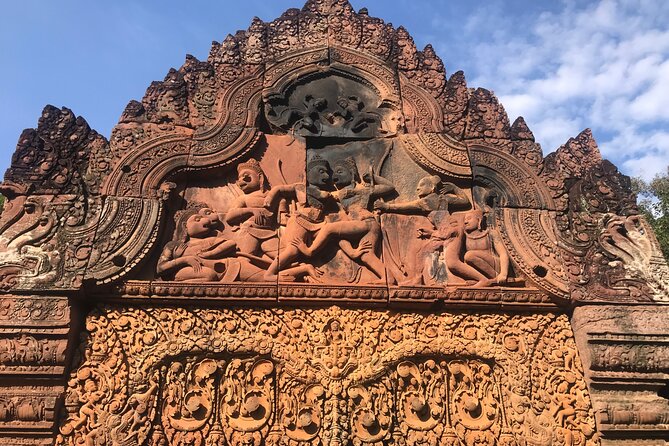
Then comes Banteay Srei, the famed pink-stone Lady Temple. The tour frames it as very well preserved, small in size but loaded with intricate carvings. It also mentions a local story that the carvings were made by women, which is the kind of folklore that gives the site a human flavor without changing the facts of the monument.
Next is Preah Khan, a sacred temple complex built by King Jayavarman VII and dedicated to his father, Dharanindravarman II, represented through Lokesvara. The tour highlights its scenic ruins setting and notes its historical role as a university of fine art and culture during Jayavarman VII’s reign.
After that you visit Neak Pean, a temple surrounded by water with a story tied to ancient medical beliefs. The tour describes four connected pools representing Water, Earth, Fire, and Wind, with a central tank and stone conduits associated with four animals. Even if you don’t memorize the symbolism, it’s a helpful reminder that these places weren’t only religious landmarks, they were also part of a worldview about balance and healing.
You then go to Ta Som, another tree-root gripping temple. The short description still points to what makes it special: the roots still “grab” the east gate, so you get that signature Angkor blend of stone and living growth.
Banteay Samre follows, described as a well-preserved Hindu temple in the Angkor Wat style, with a quiet, fresh atmosphere. The notes about restoration by Maurice Glaize from 1936 to 1944 are useful, because it signals this temple is cared for, not just left to the elements.
The day ends with Eastern Mebon, a temple mountain built by Rajendravarman II dedicated to Shiva. It also focuses on orientation and cardinal directions, which is exactly the kind of detail that makes Khmer architecture feel less random and more intentional.
Possible drawback for Day 2: You start at 4:30am and keep going through multiple sites. If you’re sensitive to fatigue, be ready for a shorter patience level by the afternoon. Bring water habits into your routine and pace your photos.
Day 3 Phnom Kulen National Park and Beng Mealea’s “Don’t Touch” Adventure Feel
Day 3 shifts the scenery from flat temple circuits to a sacred mountain zone: Phnom Kulen National Park. The tour describes it as a national park and historical archaeological area, and it also gives you the meaning of Phnom Kulen as Lychee Mountain.
This is tied to Khmer origins. The notes explain Phnom Kulen’s symbolic importance as the birthplace of the ancient Khmer Empire. You’ll hear that Jayavarman II proclaimed himself as the God King and began the Devaraja Cult, which turns this stop from sightseeing into understanding how power and religion were linked.
The itinerary lists a range of specific experiences inside the park: holy waterfalls, a reclining Buddha, a sacred river with thousand Lingas, Srash Damrei, and the Bat Cave area. Even without walking every single feature for hours, the variety is a big reason Day 3 feels like a fresh chapter.
After Phnom Kulen, you go to Prasat Beng Mealea, about 66 km from Siem Reap by road. Beng Mealea is described as remote and jungle-like, with ruins that still feel connected to nature. It also notes that it was opened to visitors in the early 2000 after land mines were cleared, which is the kind of historical context you should treat seriously.
The big practical thing here is the visit style. The tour emphasizes that Beng Mealea has not been restored in the same way as the most famous temples, so you’re walking in original ruins condition. That means uneven ground, fallen stones, and dark galleries. The tour explicitly says to exercise caution, and you should take that part seriously.
Then you end with a Siem Reap countryside stop. The focus is on daily life: farmers and fishermen, rice and fish, and the fact that Cambodia is one of the largest flooding countries in the world. The description also lists crops people grow, like bananas, mangoes, durian, peppers, and vegetables. It’s not a museum stop. It’s a perspective stop, and it helps your whole Angkor story feel more grounded.
More Preah Vihear trips:
- Preah Vihear: Full-Day Preah Vihear and Koh Ker Temple Tour
★ 4.9 · 263 reviews - Full-Day Preah Vihear, Koh Ker and Beng Mealea Private Tour
★ 4.4 · 101 reviews - Preah Vihear temple – Koh Ker & Other temple with Small Group
★ 5.0 · 96 reviews - Private Preah Vihear and 2 Temples Guided Tour
★ 5.0 · 42 reviews
Day 4 Preah Vihear at 5:30am, with Anlong Veng Stops and Koh Ker After
Day 4 starts early, with pickup at 5:30am. The tour asks you to request breakfast boxes from your hotel, and that’s a detail worth taking seriously if you want to avoid a headache later. You can also expect a stop at Anlong Veng town for breakfast and refreshment.
Anlong Veng is noted as a former stronghold capital of the Khmer Rouge army before 1998, and it mentions that Pol Pot died in this area. There’s also a visit planned to Ta Mok’s House. This is a heavy historical angle mixed into a temple tour, so if you prefer only upbeat cultural stops, Day 4 may feel emotionally intense.
After that, you drive on to Preah Vihear, the famous Hindu temple on top of the Dangrek Mountain Range near the Thailand border. The tour points out a key viewing element: you can see the Thai army from the Cambodian side. That’s not just a “wow view” detail, it also means security and sensitivities are part of the environment around the temple.
Preah Vihear is described as incredible and very close to the border, and the time spent there is listed as 3 hours. That’s a reasonable chunk, since you’ll need time for viewpoints and for absorbing what you’re looking at, especially after an early day.
Then the itinerary moves to Koh Ker Temple group. Koh Ker is framed as an ancient capital of King Jayavarman IV, who relocated his city from Angkor in 921 A.D. The tour notes names like Chhoarkoki or Lingapura and highlights that hundreds of Hindu temples were built under Jayavarman IV from 921 to 944.
Koh Ker is also a smart pairing because it expands your Khmer timeline. If Angkor can feel like one concentrated bubble, Koh Ker shows you how the empire reorganized and built new centers.
Potential drawback for Day 4: The day combines long travel, early wake-up, and a historical stop in Anlong Veng. If you’re prone to fatigue headaches or stress, you’ll want to hydrate early and keep snacks handy if you can.
Hok and the Kind of Service That Makes Early Starts Work
This tour is run by Hok Cambodia Journeys, and the standout pattern from past feedback is how Hok handles the human side of a tight schedule.
The praise I see clusters around three things: he’s flexible with the itinerary, he’s informative, and he’s genuinely kind. People also mention that he takes great photos, which matters because sunrise and viewpoint temples reward not just timing, but angles. If you want photos that look like you knew where to stand, having someone who pays attention to photo spots is a real advantage.
One more point that comes up is hospitality. There’s a story about Hok bringing people to his family home, which hints at a style of guiding that’s more personal than checklist tourism. Even if you don’t know how that would show up on your exact dates, the takeaway is clear: if you ask respectful questions and share what you like to photograph or learn, you have a better chance of getting a trip that fits you.
Practical Tips: Tickets, Heat, Shoes, and Photo Spots That Save Time
Here’s the practical stuff I’d plan around before your first morning.
First, handle tickets smartly. Angkor Wat admission ticket is not included, and the same goes for Preah Vihear and Koh Ker. That means your day could start with admin at the entrance. Plan to keep your schedule calm, and don’t show up right at the cutoff times without a buffer.
Second, protect yourself for the early starts. Day 2 begins at 4:30am and Day 4 at 5:30am. Even if it’s cool in the morning, you’ll likely be walking in sun later. The tour includes cool water and towels, which is helpful, but you still want your own basics like sunscreen and a cap.
Third, wear shoes you can trust. You’re visiting many temples with uneven stones and lots of walking. Beng Mealea especially is the kind of place where footing can be tricky, since it’s not heavily restored.
Fourth, use the tour’s photo cues. The sunrise guidance about positioning behind the reflecting pool at Angkor Wat is one of the most useful instructions in the whole plan. If you want photos, follow that simple rule and you’ll do better than most people who just wander around.
Finally, for Day 4, ask your hotel about breakfast boxes. The tour specifically tells you to request them, and it’s the easiest way to avoid a long morning with hunger making you grumpy.
Should You Book This Angkor Wat and Preah Vihear 4-Day Tour?
Book it if you want a serious mix of Cambodia’s top Khmer temple areas, without trying to DIY a complicated route. This itinerary covers the Angkor headline temples, adds quieter jungle stops like Ta Nei, and then takes you beyond Angkor with Phnom Kulen, Beng Mealea, Preah Vihear, and Koh Ker.
Also, book it if you value a guide who can manage early starts and keep the experience human. With Hok, the recurring theme is flexibility and clear explanations, and that’s what turns a temple list into an actual story.
Skip it or reconsider if you hate early mornings or you’d rather avoid long travel days. Day 4 in particular is a commitment, and the itinerary blends temple viewing with a historically heavy stop in Anlong Veng. And budget for tickets, because the big admissions are not included.
If you’re okay with waking up early and you want both iconic sights and lesser-crowded corners, this is a strong way to see a lot of Cambodia in four days.
FAQ
What is the price of the 4-day Angkor Wat and Preah Vihear tour?
The tour price is $444.00 per person.
How long is the experience?
It runs for 4 days (approximately).
Does the tour include hotel pickup?
Yes. Pickup from your hotel is included, including early departures.
Are temple admission tickets included?
No. Angkor tickets, Preah Vihear tickets, and Koh Ker Temple tickets are listed as not included.
What’s included in the tour price?
Included items are an air-conditioned vehicle, a senior English tour guide, cool water and towels, and some local snacks and beers.
What meals are included?
Meals are not included in the listing. For the 5:30am start on Day 4, you are asked to request breakfast boxes from your hotel, and there is a stop for breakfast and refreshment in Anlong Veng.
What time does the Angkor Wat sunrise start?
The sunrise day starts at 4:30am for Angkor Wat.
Can I cancel and get a full refund?
You can cancel up to 3 days in advance of the experience start time for a full refund, based on local time.
What is the cancellation cutoff?
The listing says you must cancel at least 3 full days before the experience’s start time for a full refund, and changes less than 3 days before the start time are not accepted.
Newly listed around Siem Reap
- Twilight Tastes of Siem Reap Include Dinner★ 5.0 · 13 reviews
- Ultimate Sunrise to Angkor Wat, Angkor Thom and Bayon Temple★ 5.0 · 3 reviews
- Trekking Tour at Phnom Kulen National Park from Siem Reap★ 5.0 · 3 reviews
- Angkor 2-Day Sunset & Sunrise Small-Group Tour★ 4.5 · 6 reviews
- 2-Day Siem Reap Angkor Bicycle Experience★ 5.0 · 7 reviews
- Unique Private Day Tours To Kompong Khleang Village & Tonle Sap Lake★ 5.0 · 5 reviews
- 6-hour Angkor Sunrise & Private Tour (Solo, Couple & Family )★ 5.0 · 5 reviews
- Professional Photo Shoot in Angkor Archaeological Park, Siem Reap★ 5.0 · 42 reviews
Angkor Wat Tours, compared.
Angkor Wat Sunrise or Sunset Tour with Guide from Siem Reap
Read our review →
Angkor Wat: Small-Group Sunrise or Sunset Tour
Read our review →
Angkor Wat 2-Day Tour with Sunrise and Sunset
Read our review →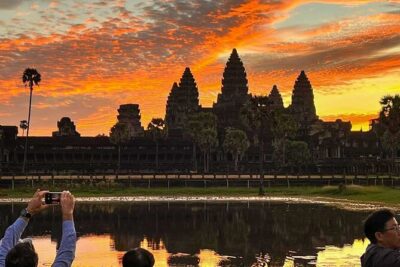
Angkor Wat Sunrise tour with Small – Group and Guide tours
Read our review →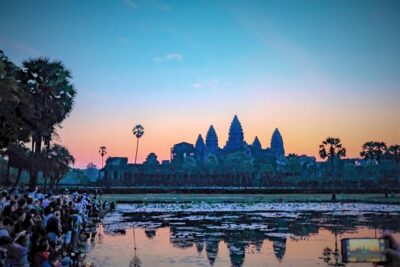
Angkor Wat Highlights and Sunrise Guided Tour from Siem Reap
Read our review →
Angkor Wat Sunset Small Group Tour with Lunch Included
Read our review →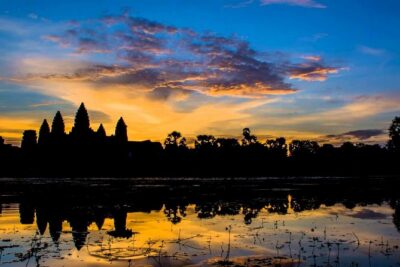
Full-Day Angkor Wat Sunrise Private Tour with Guide from Siem Reap
Read our review →Browse the lists this tour appears in