
Review · 4-DAY EXPERIENCES
4-Day(Tour Angkor Temple Complex, Temple in the Jungle, Local people life Style)
Four days is plenty time to fall for Angkor again. This private luxury-feel tour strings together the big-name sites plus lesser temples and countryside life, with an English-speaking guide and prearranged driving so you spend less time figuring things out. I especially like the private pacing and the way guides like Veasna and Vutha explain the Khmer stories so the carvings make sense. One possible drawback: the Angkor Archaeological Pass is not included, and you also need to handle lunch costs and a strict dress code at some temples.
What you get for the $215 per person is a smooth, air-conditioned day built around temple timing. You also get cool drinking water and wet towels, plus a mobile ticket, which helps when you are moving quickly between entrances. You should plan your day with sun protection and modest clothing, since several stops require shoulders covered and knees below the knees.
In This Review
- Key Highlights You’ll Feel Right Away
- Price and What Your $215 Actually Buys
- Day 1: Angkor Wat, the Roluos Trio, and Kompong Phluk by Tonle Sap
- Day 2: Preah Khan to Pre Rup, with temples that slow you down
- Day 3: Ta Prohm, Angkor Thom South Gate, and Bayon face towers
- Day 4: Banteay Srei, Banteay Samre, Silk Farm skills, and Siem Reap market time
- Dress Code, Heat, and How to Keep Your Day Comfortable
- Should You Book This Private 4-Day Angkor Tour
- FAQ
- Is the Angkor Archaeological Site entrance pass included?
- Are meals included on this tour?
- Do I need a boat ticket for Kompong Phluk?
- What time does the Angkor Wat visit start?
- Does the tour include pickup from my hotel?
- What is included in the price?
- Which admissions are included or free?
- What dress code should I follow?
- Is this tour private?
- What if the weather is bad?
Key Highlights You’ll Feel Right Away
- Private 4-day setup where the schedule can flex to your interests, not just a fixed group stampede
- Early start options at Angkor Wat so you can beat crowds and light gets dramatic
- Jungle temples in the same circuit, including Ta Prohm and other quieter ruins
- Tonle Sap life at Kompong Phluk, giving context beyond stone walls
- Real local skills at Angkor Silk Farm, training rural youth in handicraft production
- Strong guiding track record, with names like Veasna, Vutha, and Buntheun showing up in past experiences
Price and What Your $215 Actually Buys
At $215 per person for four days, this tour can be good value if you want comfort plus a guide who helps you connect the dots. You are paying for daily guiding, an English-speaking guide, and transportation in an air-conditioned vehicle with a professional driver. You also get practical extras like cool drinking water and wet towels, which matter in Siem Reap heat.
Just know what is not included, because it affects your real total. You must buy the Angkor Archaeological Site pass separately at the main gate, and that pass is required to enter the Angkor area sights. Lunch is excluded during the full-day tour on your own account, so you will choose where to eat each day. Also, the listing notes that boat ticket fees are not included, so if your Kompong Phluk stop uses a boat portion (common there), budget for that add-on.
One more money detail: you may see a mix of ticket situations during temples. Some sites are marked free in the plan (like Prasat Kravan and Old Market time), while other admission tickets are not included. The Angkor Silk Farm admission is included, which is a nice win on Day 4.
Others in Siem Reap worth putting side by side:
- Angkor Wat Sunrise or Sunset Tour with Guide from Siem Reap
★ 5.0 · 12,109 reviews - Siem Reap: Angkor Wat: Small-Group Sunrise or Sunset Tour
★ 5.0 · 9,444 reviews - From Siem Reap: Kampong Phluk Floating Village Tour by Boat
★ 4.9 · 6,979 reviews
Day 1: Angkor Wat, the Roluos Trio, and Kompong Phluk by Tonle Sap
Day 1 is built like a classic first day in Angkor: start with the headline temple, then move into early Khmer landmarks, then finish with life outside the stone bubble.
You begin at Angkor Wat in the morning, with a listed start at 8:00 am or 9:00 am. This is where timing matters. Even if you start later, you will still want a hat and sunscreen, because walking between galleries and viewpoints adds up fast. If you prefer the most magical light, ask about the earliest sunrise session at Angkor Wat, since past tours have included pre-dawn starts with guides like Buntheun.
Angkor Wat is not just about size. You will see the way Hindu mythology shaped the design, with the layout described as a universe model. Your guide can help you read those bas-reliefs and the story behind the five towers and the temple geometry, rather than just pointing at stones.
After that, you shift to the Roluos Group temples: Bakong, then Lolei, then Preah Ko. This part is short stops, but it is useful. Bakong gives you a sense of how early temples were built, and the plan notes these are brick temples with carved plaster reliefs, which feels different from the later stone-heavy look. Then Lolei and Preah Ko keep the circuit moving without exhausting you.
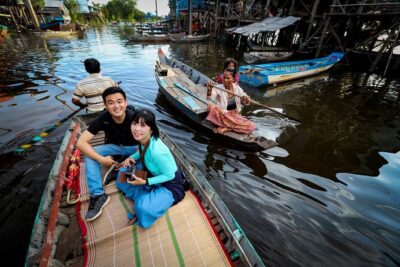
Finally, you head to Kompong Phluk on the Tonle Sap lake and river system. This is about context. You are not only photographing temples now; you are seeing how people earn their living through fishing around the water network. The plan also frames this area as an important UNESCO biosphere site, so it is more than scenic. Just remember the note about the boat ticket fee not included, since Kompong Phluk is often part of a water-based visit.
By the end of Day 1, you’ll likely feel temple fatigue in a good way. Your brain will start sorting the styles: early brick reliefs, later sandstone grandeur, and the way the landscape shapes daily life.
Day 2: Preah Khan to Pre Rup, with temples that slow you down
Day 2 is about variety and rhythm. You start with Preah Khan, a monastic complex originally serving as a Buddhist monastery and school for over a thousand monks. This matters because it changes the vibe. You are not only reading royal Hindu temple symbolism; you are moving through a place that once functioned like a learning center.
Next comes Neak Pean, a smaller temple connected to an idea of luxury and beauty in old Khmer tales. Even with a shorter visit, this stop tends to feel different from the biggest monuments. You can get closer to the quiet details, especially when the guide explains what you are looking at.
Then you move to Ta Som and Eastern Mebon. Ta Som is described as a small Bayon-style monastic complex with face tower gopuras and cruciform interior sanctuaries. Eastern Mebon is a larger temple-mountain ruin rising in three levels with five towers. Together, they help you see both the Bayon era’s architectural character and the wider temple-mountain tradition.
In the afternoon, you catch Pre Rup for sunset views. The plan explicitly calls it out as a temple-mountain with false doors and an excellent view of the surrounding countryside. If you love photographs, Pre Rup is one of the easier “why did they build it here” moments. The viewpoint helps you understand how these structures relate to fields and horizons.
Along the way, you also pass through Ta Keo, Banteay Kdei, Prasat Bat Chum, and the Victory Gate and temple areas around Angkor Thom. The itinerary keeps visits relatively short at many stops, which is smart for a four-day trip. Your guide can prioritize the best carvings and architecture at each one so you are not stuck in a long line only to see half the details.
One practical note: the plan states lunch is excluded. It also says you can enjoy lunch at a local restaurant near the temple area or head back to your hotel. In real life, that flexibility helps, because you can choose a quick meal when the heat feels heavy or a slower one when the day is running smoothly.
Day 3: Ta Prohm, Angkor Thom South Gate, and Bayon face towers
Day 3 is where the tour leans into the cinematic side of Angkor without losing historical structure.
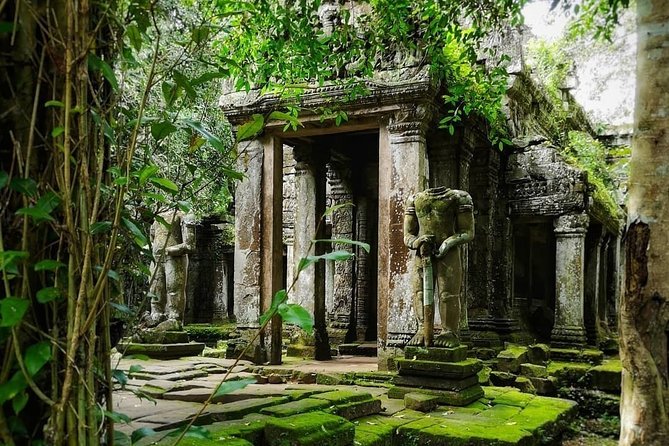
You start with Ta Prohm, the famous jungle temple where the complex is only partially cleared of overgrowth. The selling point is not only the iconic tree roots. It is the way the temple feels lived-in by nature. The plan also flags it as one of the best tree-in-temple photo opportunities. When the light shifts, those thick roots and shaded stone look totally different within minutes.
After Ta Prohm, you visit Ta Nei, described as reminiscent of Ta Som, and then Ta Keo, a sandstone temple-mountain dedicated to Shiva and noted as the first built wholly of sandstone. That sandstone note is useful. It helps you recognize why the surfaces look different, and why the details can feel sharper or more weathered depending on the material.
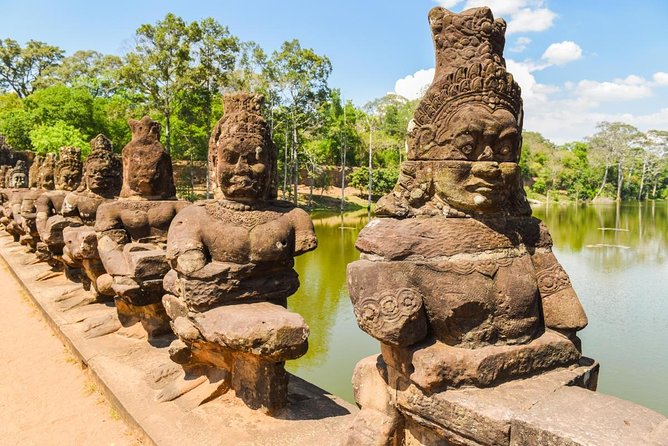
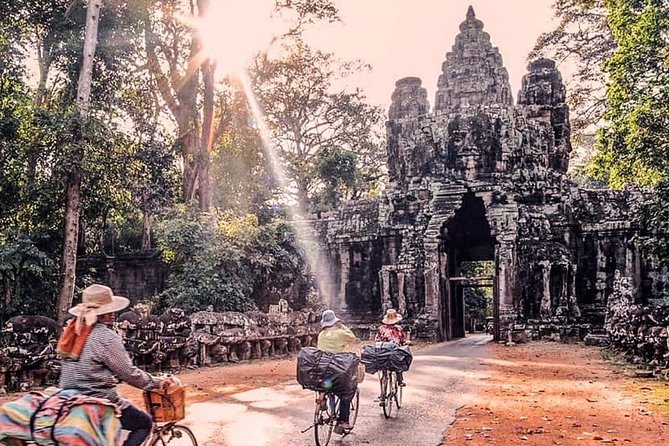
Then you move into the Angkor Thom zone, starting with the Victory Gate and the Southern Gate. The Southern Gate is described with 54 stone figures along the causeway, connected to the myth of the Churning of the Ocean. If you like mythology, this is a great place to slow down. The carvings are not just decoration, they are a narrative system.
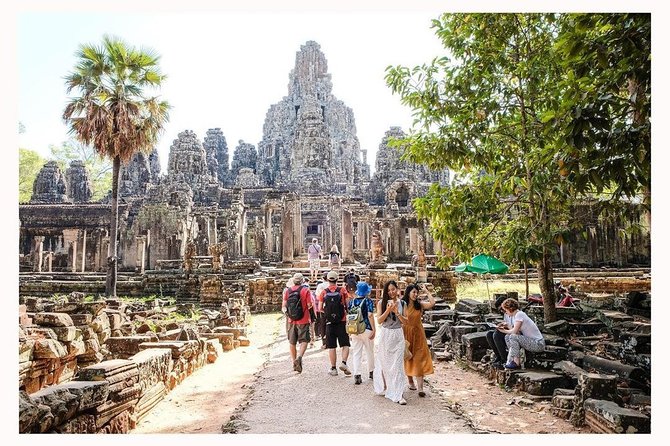
You finish with Bayon Temple, including the giant stone face towers. The plan highlights 37 standing towers, most with four carved faces oriented to the cardinal points. This is one of those sites where a guide can make the experience less random. You start noticing the repetition, the changes in expression from one face cluster to another, and how the temple’s layout guides your walk.
After Bayon, you include Baphuon and both Terrace of the Leper King and Terrace of the Elephants, plus Preah Palilay. One important detail here: the dress code note specifically mentions temples like Baphuon are strict. If you arrive in shorts or a shirt that exposes shoulders, you may get refused entry. I treat this as non-negotiable. Pack a light layer for your shoulders and wear pants or skirts that fall below the knees.
By the end of Day 3, you’ll feel the contrast between jungle atmosphere and carved stone storytelling. It also helps set you up to enjoy the smaller, more delicate temples on Day 4.
A different kind of day in Cambodia:
- Sunset tour of Kampong Phluk stilts home village on the Tonle Sap
★ 5.0 · 4,865 reviews - Siem Reap: Angkor Wat 2-Day Tour with Sunrise and Sunset
★ 4.9 · 4,429 reviews - Siem Reap: Kampong Phluk Floating Village Tour with Boat
★ 4.9 · 3,843 reviews - Siem Reap: Full-Day Angkor Wat Guided Tour with Sunset
★ 4.9 · 3,803 reviews
Day 4: Banteay Srei, Banteay Samre, Silk Farm skills, and Siem Reap market time
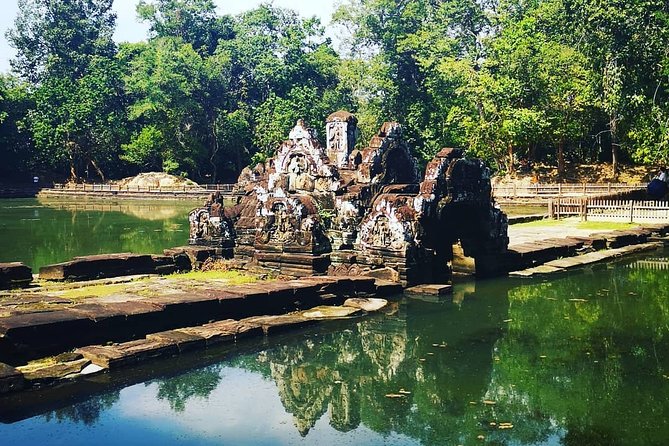
Day 4 shifts from the largest temple centers to places that feel finer and more intimate.
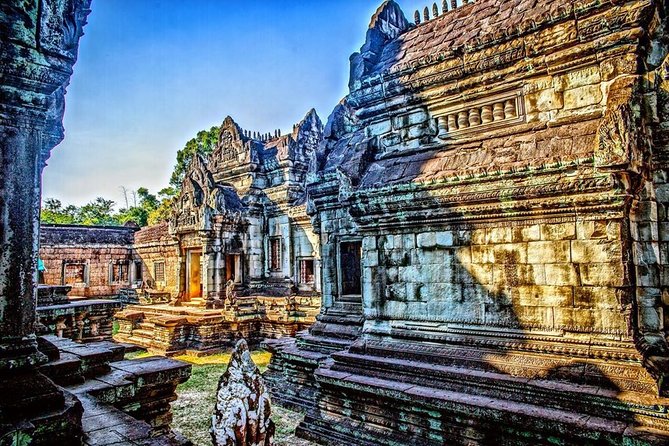
You start with Banteay Srei, often called the pink temple of women due to pink sandstone. It is 25 kilometers north of Angkor Wat and is known for small size, delicate carvings, and excellent preservation. This stop is a good palate cleanser after huge stone complexes. You can take your time with the fine detailing because the temple does not demand constant wide-angle walking.
Next is Banteay Samre, built in a style described as similar to Angkor Wat, with bas-reliefs noted as in very good condition. The plan also mentions restoration done by archaeologists by taking it apart and reconstructing it. That explanation is useful. It helps you appreciate why the carvings look so crisp compared to more heavily weathered sites.
After lunch, you head to Angkor Silk Farm, 15 kilometers from Siem Reap. The plan describes it as a training ground for rural youth between 18 and 22 years old in skills to make a living from handicraft production, with products available for sales only at the place or through Artisan d’Angkor. This is a strong addition because it turns your day from stone to skill. You can connect the trip to the real economy around Siem Reap.
Then the tour ends with Siem Reap time that includes stops like the Friendship Bridge of Cambodia-French, Phreah Angcheck and Phreah Angchom, and time at the Old Market. You get about two hours for the Old Market, which is described as having a deep selection of souvenirs and traditional crafts, including silks, silverworks, carvings, statuary, and more.
This last block is more than shopping time. It is where you can pick up practical reminders, like scarves, small carvings, or textile gifts, and it gives you a chance to see daily life beyond temple traffic.
Dress Code, Heat, and How to Keep Your Day Comfortable
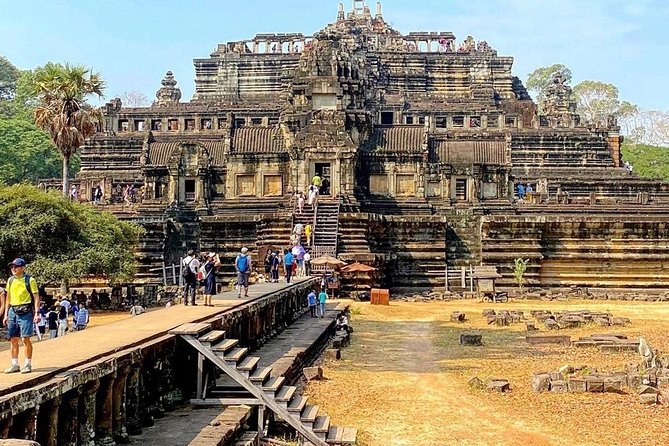
Angkor days can be physically demanding, even with a private vehicle. This is not a problem of toughness, it is a problem of conditions: sun, humidity, and long walks between gates.
Here’s what I’d follow from the tour notes:
- Wear clothes that cover shoulders and fall below the knees at strict sites like Baphuon.
- Bring sunglasses, a hat or cap, and high SPF sunblock, even if the sky looks cloudy.
- Use breathable clothing, then carry a light layer for temple entry rules.
- Protect electronics. The plan explicitly warns natural elements can damage devices, so keep your phone and camera wrapped and protected.
The tour also gives cool drinking water and wet towels, which helps a lot. I like that it is included daily, not something you have to track down yourself after every stop.
Also pay attention to the time you spend at each location. Some stops are around 30 to 40 minutes, while Angkor Wat is longer. That means you are rotating regularly. Use that to your advantage. If a temple is not holding your attention, your guide can point you to the best details quickly, and you move on without wasting hours.
Finally, remember your entry pass needs to be visible and carried. Since the Angkor Archaeological pass is not included, you should plan to buy it at the main gate and keep it handy for every entrance day.
Should You Book This Private 4-Day Angkor Tour
If you want a private Angkor experience that mixes must-sees with quieter temples and a slice of countryside life, I think this is a solid choice. The price works best when you value an English-speaking guide, air-conditioned comfort, and a schedule that does not feel like a cattle line.
I would book it if:
- you like having one guide who can connect mythology and architecture across multiple sites
- you want the big classics plus jungle temples like Ta Prohm
- you want Tonle Sap life at Kompong Phluk and a non-temple stop at Angkor Silk Farm
- you prefer a small, private group setup rather than a larger tour crowd
I would reconsider if:
- you hate tracking extra costs, because the Angkor pass and possibly a boat ticket are on you
- you might forget the dress code and think you can wing it with casual temple outfits
One of the best signals from past experiences is repeat praise for specific guides, including Veasna, Vutha, and Buntheun, with many people calling out how friendly and clear they were. If you match that with your own travel style, this four-day plan can be a very satisfying way to experience Angkor without feeling rushed or lost.
FAQ
Is the Angkor Archaeological Site entrance pass included?
No. The entrance pass to the Angkor Archaeological site is not included. You buy it at the main gate, and the pass gives access to sights in and around Angkor. The fees are charged in US Dollars, and children under 12 are free of charge.
Are meals included on this tour?
Lunch is excluded during the full-day touring time, so you pay for meals yourself. The plan suggests you can eat at a local restaurant in the temple area or return to your hotel for lunch.
Do I need a boat ticket for Kompong Phluk?
The tour notes that the boat ticket fee is not included. Since Kompong Phluk is on the Tonle Sap lake and river system, you should expect possible extra payment tied to any boat portion of the visit.
What time does the Angkor Wat visit start?
Angkor Wat is scheduled for a morning start at 8:00 am or 9:00 am. The tour information also supports early sunrise experiences, depending on how your day is arranged.
Does the tour include pickup from my hotel?
Return transfers apply only to customers staying in and inside Siem Reap. The tour also notes you must provide your correct hotel information if pickup and drop-off are included in the package.
What is included in the price?
Included items are a professional English-speaking guide, transportation in an air-conditioned vehicle with a professional driver, cool drinking water and wet towels, and all applicable taxes and service charges.
Which admissions are included or free?
The plan states the Angkor Silk Farm admission is included. It also lists some items as free, such as Prasat Kravan and a portion of Old Market time. Most other temple admissions are not included, and the Angkor pass is separate.
What dress code should I follow?
Some temples have strict rules, and the plan specifically mentions Baphuon as an example. Plan to cover shoulders and wear clothes that fall below the knees, and avoid shirts with obscene and disrespectful prints.
Is this tour private?
Yes. It is operated on a full private basis, so only your group participates.
What if the weather is bad?
The experience requires good weather. If it is canceled due to poor weather, you will be offered a different date or a full refund. Free cancellation is also available up to 24 hours in advance for a full refund.
Newly listed around Siem Reap
- Sambor Prei Kuk Off Beaten Track★ 5.0 · 3 reviews
- Siem Reap Airport Taxi Transfer – City Center Hotels★ 5.0 · 5 reviews
- Short Cycling at Countryside★ 5.0 · 29 reviews
- Unveiling the Mystical Beauty of Phnom Kulen National Park★ 5.0 · 6 reviews
- Angkor Wat at Sunrise★ 4.0 · 7 reviews
- Bakong Temples & Floating Village Tour★ 4.5 · 3 reviews
- Rooftop Romantic Dinner – 4 Courses Set Meal & Wine★ 3.5 · 5 reviews
- Khmer Cooking Class in Cambodia★ 5.0 · 36 reviews
4-Day Experiences, compared.
4-Day Excursion of Angkor, Koh Ker, Beng Mealea, Tonle Sap and Waterfalls
Read our review →
Private Four Days Angkor Complex with Kompong Phluk Village Tour
Read our review →
Private Tour Angkor Wat, 4 Day Tour – Beng Mealea
Read our review →
4 Day’s Mekong Delta With Tra Su Forest Exit Phnom Penh
Read our review →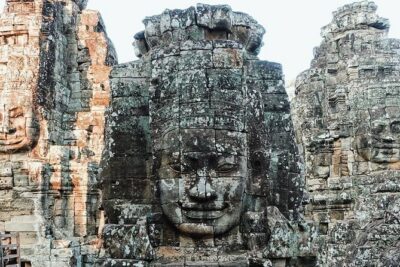
4-Day Tour(The Amazing Face, Jungle of Temple & Holy Clay)
Read our review →Browse the lists this tour appears in