Review · ANGKOR WAT TOURS
Afternoon Angkor Wat Private Tour with Sunset
Sunset at Angkor Wat is a whole mood. This afternoon-focused private tour strings together Angkor Wat, Ta Prohm, Bayon, and a Phnom Bakheng sunset, with a local English-speaking guide to make the carvings and layout actually make sense. I especially like the hotel pickup and drop-off and the way you get drinking water plus cold towels to keep going in the heat, but do note the temple admission tickets are not included and you’ll need to dress for the temples.
What makes the plan work is the pacing: you start with Angkor Wat, then move deeper into Angkor Thom (including the South Gate), and finish with sunset at Phnom Bakheng Mountain. If you’re the kind of traveler who wants a smooth route and fewer decision headaches, this format is ideal, especially since it’s a private group with just your party, not a crowded shuffle. The one “gotcha” is that sunset adds stairs and walking, so wear shoes that you can comfortably trust.
In This Review
- Key highlights to expect
- Why an afternoon Angkor Wat route makes sense
- Pickup, comfort, and how the guide experience plays out
- Dress and footwear reminders
- Angkor Wat: the 12th-century centerpiece, explained step by step
- The key thing to watch for
- Ta Prohm, also known as the Tree Temple
- One consideration
- Bayon and the Angkor Thom faces: what the eyes are doing
- A small practical tip
- Angkor Thom South Gate (Tonle Oum) and the gate names you’ll remember
- Watch your pace here
- Phnom Bakheng Mountain at sunset: where the day turns golden
- How to set yourself up for a better sunset
- Tickets, clothing rules, and a simple packing checklist
- Clothing and behavior rules you must plan around
- A “bring this, thank yourself later” list
- Price and value: is $59 per person a good deal?
- Who this tour fits best (and who should think twice)
- Should you book the Afternoon Angkor Wat Private Tour with Sunset?
- FAQ
- Are temple admission tickets included?
- How long is the afternoon tour with sunset?
- Do I need to dress a certain way for the temples?
- Is hotel pickup and drop-off included?
- What’s included for comfort during the tour?
- Is there free cancellation?
Key highlights to expect
- Angkor Wat, up close and explained by a local guide (including what the towers and bas-reliefs are telling you)
- Ta Prohm’s tree roots and stonework details at a relaxed, unhurried pace
- Bayon’s face towers inside and out, plus context for what you’re seeing
- Angkor Thom South Gate (Tonle Oum) with the wider city layout and gate names explained
- Sunset at Phnom Bakheng near Angkor Wat, so your golden-hour photos are close to the action
Why an afternoon Angkor Wat route makes sense
Most people plan Angkor Wat around early mornings, but an afternoon start can be more realistic for your day. The light shifts. Shadows stretch across carvings and bas-reliefs. You get time to move from one major site to the next without feeling like you’re racing the clock from dawn.
This specific tour is built around three big ideas. First, you see Angkor Wat at the start while you’re still fresh. Second, you transition into the Angkor Thom area, where the geometry of the city helps you understand why the temples are where they are. Third, you end with the Phnom Bakheng sunset, which is the payoff when the sky turns gold and the temple mountain becomes the backdrop.
The added bonus is practical: you’re not stuck figuring out timing, route order, or where to pause for photos. Your guide keeps the flow moving and explains what matters so you can spend your attention looking, not guessing.
More Angkor Wat tours in Siem Reap:
- Angkor Wat Sunrise or Sunset Tour with Guide from Siem Reap
★ 5.0 · 12,109 reviews - Siem Reap: Angkor Wat: Small-Group Sunrise or Sunset Tour
★ 5.0 · 9,444 reviews - Siem Reap: Angkor Wat 2-Day Tour with Sunrise and Sunset
★ 4.9 · 4,429 reviews
Pickup, comfort, and how the guide experience plays out
You’ll get hotel pickup and drop-off, plus an air-conditioned car and drinking water and cold towels. That matters more than people think in Siem Reap. Temple days involve heat, sun, and waiting in lines when you do it yourself. Having a comfortable ride between stops helps you keep the energy for the parts you actually came for.
The guide component is also the difference between seeing temples and understanding them. The tour’s format includes a local English-speaking guide who talks through history and meaning as you walk inside and around key areas. In my view, that’s the best use of a guided private tour. You’re paying for clarity, not just transportation.
One small but smart touch: your guide may start Angkor Wat from the less busy side first. In one experience with the guide Thom, that approach helped keep the initial entry calmer, and he also handed out cold towels along the way. If you’re sensitive to crowds, ask your guide if there’s a route option that reduces the crush at the first stop.
Dress and footwear reminders
This tour includes temple visits, so plan for the rules. You must cover your knees and shoulders when entering temples. Bring or wear something that fits that requirement without having to improvise mid-day.
And for shoes, listen to the simple advice you’ll hear from every Angkor guide: wear sneakers or other supportive walking shoes. Temple ground can be uneven, and you’ll be walking between areas, not doing one short stop and leaving.
Angkor Wat: the 12th-century centerpiece, explained step by step
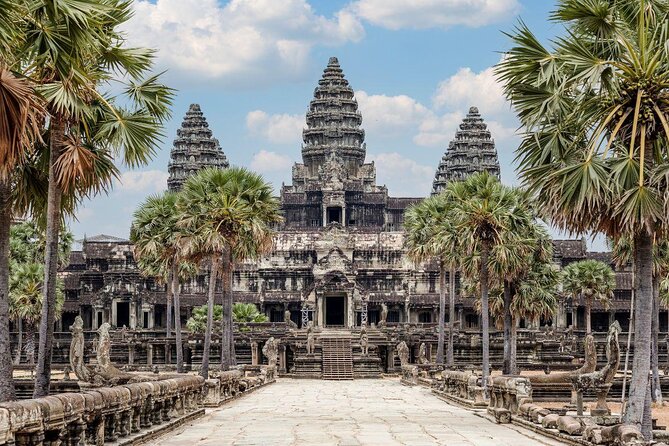
Angkor Wat is the headliner, and the tour treats it that way with about 2 hours at the temple. You get both an outside look and time inside, with history and design explained by your guide.
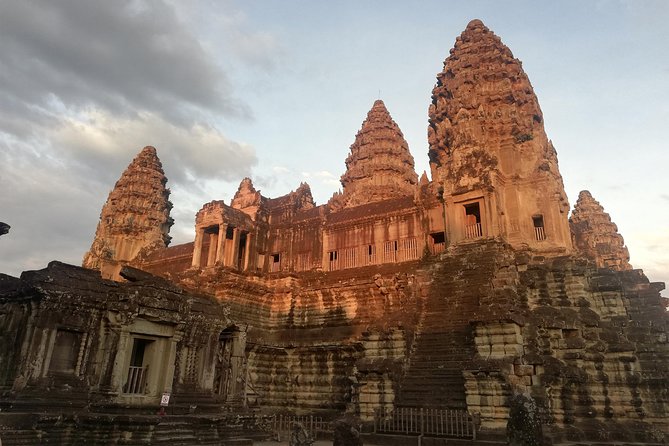
A few facts worth knowing before you arrive. Angkor Wat was built in the early 12th century by King Suryavarman II. It has three levels and five main towers, and it became the national symbol of Cambodia, even showing up on the national flag as a representation of the soul of the country.
In practical terms, here’s what a good guide does for you at Angkor Wat. Instead of making you wander randomly, they point out the design logic. You start to see how the levels guide your eye upward, and you begin to connect carvings and layout with the themes your guide is describing. That turns the temple from a big pretty building into something you can actually read.
A few more Siem Reap trips to compare
- Full-Day Angkor Wat Sunrise Private Tour with Guide from Siem Reap
★ 5.0 · 2,920 reviews - Siem Reap: Angkor Wat Private Tuk-Tuk Tour
★ 4.9 · 2,222 reviews - Angkor Wat Private Day Tour from Siem Reap
★ 5.0 · 834 reviews - Angkor Wat Private Tuk-Tuk Tour (sunrise Option) & more
★ 5.0 · 439 reviews
The key thing to watch for
When you’re inside, slow down when you reach the main structures and focus on alignment. Angkor Wat is famous for symmetry, and a guide helps you understand why it feels so deliberate. If you only snap photos quickly, you miss how the space is organized.
Also, keep in mind that Angkor Wat entry requires the temple admission ticket, which this tour does not include. Budget extra for it so you don’t get stuck at the gate deciding what to do next.
Ta Prohm, also known as the Tree Temple
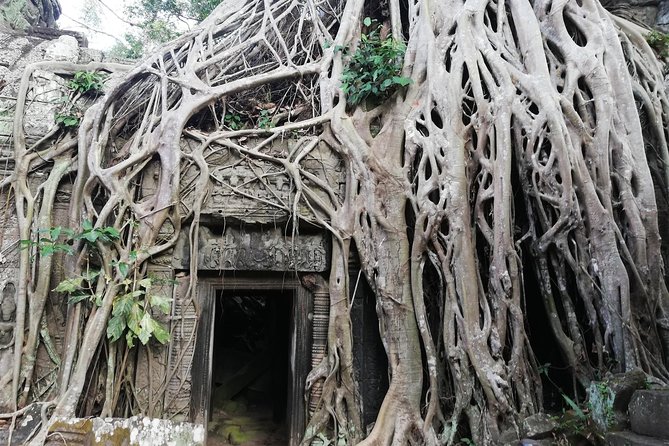
After Angkor Wat, you head to Ta Prohm, often called the Tomb Raider Temple because of its pop-culture fame. In real life, that name points to the most obvious feature: stone structures wrapped and stretched by tree roots.
You’ll have about 1 hour here, including time inside and outside with your guide’s explanation. Ta Prohm is a great match for an afternoon tour because it rewards patience. The roots and overgrown angles create photo-friendly scenes from multiple directions, and you don’t need to rush to get something good.
What I like about this stop in a private format is the focus. A guide can show you how to see the temple without just staring at the biggest root. You’ll notice smaller details too, like how the stone edges and doorways frame the greenery, and how the temple’s layout influences where you look next.
One consideration
Ta Prohm can feel a bit slower, especially if you enjoy photography. That’s not a flaw, but it does affect how much energy you have left for Bayon and the Angkor Thom stops. Plan your pace. If you’re aiming for more photos, don’t spend your whole hour only on the most obvious scene.
Bayon and the Angkor Thom faces: what the eyes are doing
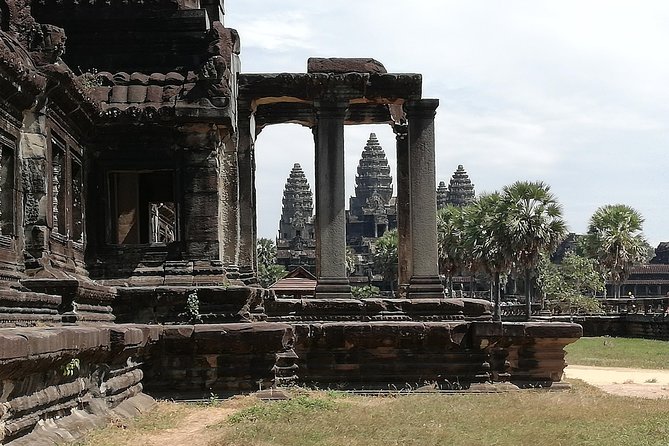
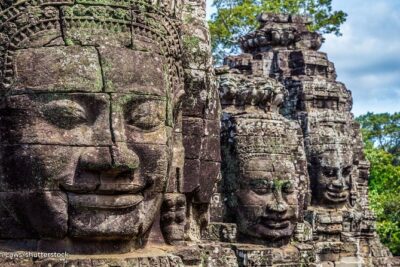
Next on the route is Bayon Temple, with about 1 hour. Bayon is famous for the face towers, and your guide will point out what you’re looking at and why it was built into the temple’s design.
Bayon works best when you treat it like a visual puzzle. From different angles, the faces look toward you differently. It’s one of those places where being aware of orientation makes the whole experience more satisfying. Your guide’s job here is to help you connect the architecture to the effect.
You’ll also visit the Bayon area inside and outside, which is important. The outside gives you scale and the overall face composition. The inside is where you can slow down and pay attention to the details and structure your guide is calling out.
A small practical tip
Keep your camera ready but your eyes busy too. If you rush Bayon, you’ll end up with lots of similar shots and no sense of how the place is meant to be experienced. Take a beat to understand the layout, then photograph the angles you actually care about.
Angkor Thom South Gate (Tonle Oum) and the gate names you’ll remember
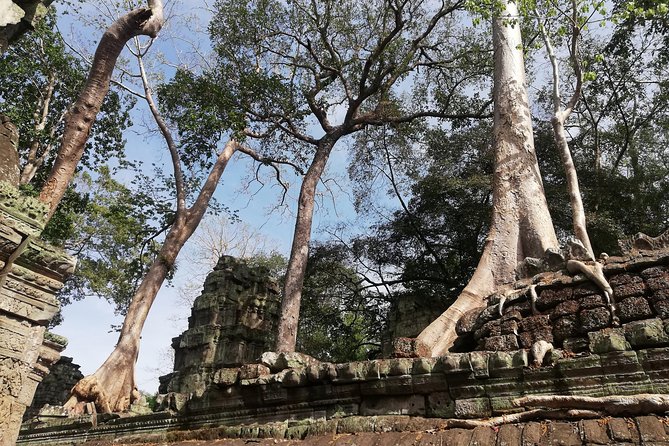
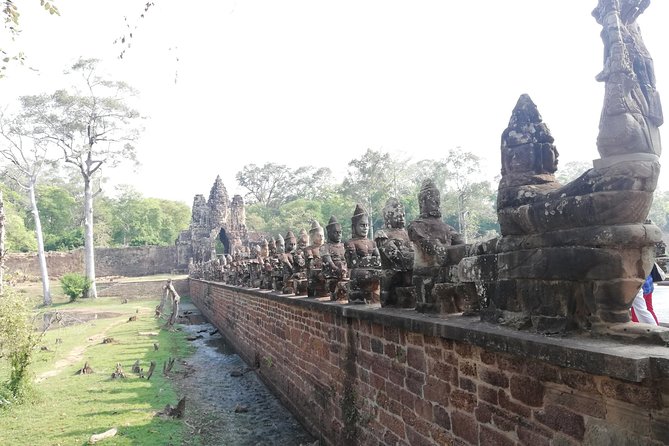
After Bayon, you move to Angkor Thom City, starting at the South Gate, known as Tonle Oum. This stop is shorter, about 30 minutes, but it’s a smart addition because it gives context for the larger temple complex.
Here’s what your guide can help you understand. Angkor Thom has five gates: the south gate, the ghost gate or gate of the dead, the victory gate, the dei chhnang gate or north gate, and the killing gate. The city itself is described as about 3 kilometers on each side.
Why is this a useful stop? Because when you reach Bayon, it can feel like you’re just seeing faces in stone. When you understand that you’re entering a city with multiple gates, a fixed layout, and symbolic directions, Bayon starts to feel less random.
Tonle Oum is specifically the South Gate, so you’re not just passing through. You’re learning the logic of where you are in the bigger system.
Watch your pace here
Because the South Gate stop is brief, it’s a good idea to keep your questions tight and focused. Use the time to ask about the gate symbolism or orientation and then move on. You’ll have more time later for the sunset piece.
Phnom Bakheng Mountain at sunset: where the day turns golden
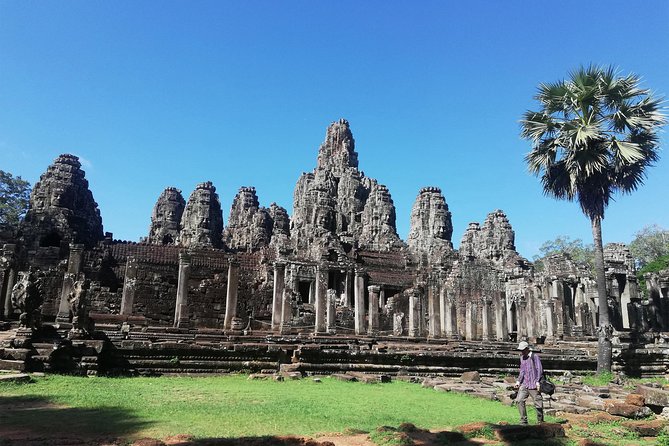
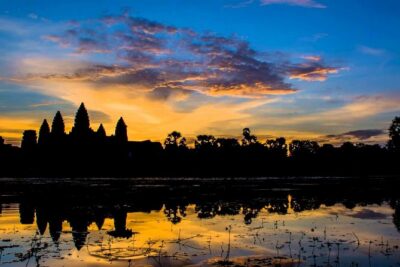
The final act is sunset at Phnom Bakheng Temple on Phnom Bakheng Mountain. This is near Angkor Wat, about 1.5 kilometers northwest, which keeps the logistics easier than if your sunset location were much farther away.
Phnom Bakheng is a Hindu temple mountain dedicated to Shiva. It was built in the 9th century by King Yasovarman I. That’s a detail your guide can tie back to what you saw earlier, helping you connect the different cultural layers across the greater Angkor area.
What you’re really going for at the end is the view. Sunset is when the temple silhouette and the surrounding scene start to look like the photos you’ve been saving. This is also where being part of a private tour helps. You’re not stuck standing in the wrong place because you followed the crowd to the one spot with poor sight lines.
How to set yourself up for a better sunset
Based on the practical advice that comes up again and again for Angkor sunsets, come prepared with water and comfortable shoes. Even though this tour includes drinking water, it still helps to pace yourself. Also, avoid dragging valuables around during temple time. The tour advises not to bring valuables with you, and that’s good common sense in busy tourist areas.
If you want calmer photos, time matters. Ask your guide about where to stand and when to move, and follow their lead so you’re not arriving too late for the best angles.
Tickets, clothing rules, and a simple packing checklist
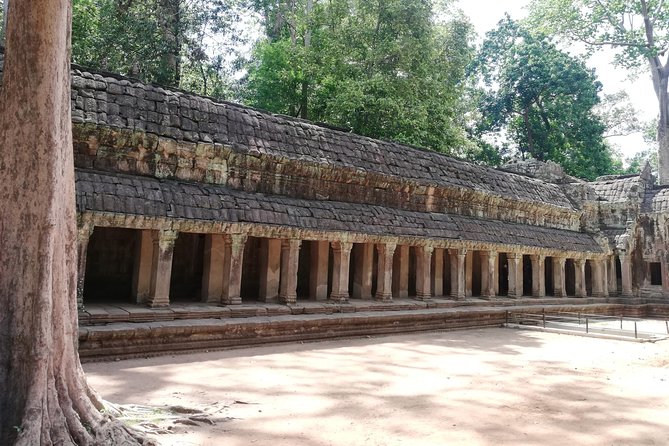
This is a private tour that includes the big comforts: hotel pickup and drop-off, air-conditioned car, drinking water, cold towels, and a local English-speaking guide. It does not include temple admission tickets.
That means your total cost depends on what you pay at the sites. If you’re budgeting, treat the $59 per person as the guided tour portion and plan extra for the temple entries.
Clothing and behavior rules you must plan around
The temple rule is straightforward: cover your knees and shoulders for entry. If you show up in shorts and a tank top, you’ll need to fix it on the spot. Do yourself a favor and wear temple-appropriate clothes from the start.
Also, the tour advises you not to bring valuables. Temple areas and crowded paths are not the best place for expensive cameras dangling from your neck all day.
A “bring this, thank yourself later” list
- Comfortable walking shoes, sneakers are a solid choice
- A light layer that covers shoulders if needed
- Water plus anything you want for sun protection
- A small bag that you can keep close in temple areas
- Your temple admission budget, since tickets are not included
Price and value: is $59 per person a good deal?
At $59 per person, this is priced like a true value option for a private guided Angkor day. Why? Because you’re not just paying for a driver and a car. You’re also paying for guided interpretation across multiple high-demand sites, plus convenience extras like pickup, drop-off, cold towels, and water.
Here’s the tradeoff. The tour doesn’t include temple admission tickets, so you need to add that to your estimate. But even with that, you’re still likely saving time and stress compared with handling everything yourself, especially if you want the guided history and don’t want to negotiate logistics mid-day.
Another value signal: it’s often booked about 30 days in advance, which usually means travelers know the timing works and the route hits the big anchors without feeling scattered.
If you’re a couple, this format can be a sweet spot because you share the price while still getting a private experience. If you’re traveling solo, it can still be good value if you care about a guide’s explanation rather than just transportation.
Who this tour fits best (and who should think twice)
This experience is ideal if you want a private Angkor route that includes multiple major temples plus a sunset finale. It also fits first-timers because you get guided context, not just monuments.
You’ll probably enjoy it if:
- You like structured days and don’t want to decide the route yourself
- You want history and meaning tied to what you’re seeing
- You care about a sunset plan that ends the day on a high note
- You appreciate air-conditioned comfort between stops
You might want to reconsider if you:
- Are trying to minimize extra spending, since temple admissions are not included
- Prefer total freedom with no guide pacing, since the route has set stops and time windows
- Have limited stamina for walking, since sunset viewpoints at Phnom Bakheng add physical effort
Should you book the Afternoon Angkor Wat Private Tour with Sunset?
Book this tour if you want the classic Angkor highlights in one smooth afternoon, with a guide who can explain what you’re looking at. The included comforts are real value, and the day’s structure makes sense: Angkor Wat first, then Ta Prohm and Bayon, then Angkor Thom context, then the sunset payoff at Phnom Bakheng.
Skip it or compare options if temple tickets and the sunset walking part of your day are a deal breaker for your budget or comfort. But if you’re okay planning for admissions and you’re dressed for temple entry, this is the kind of tour that turns a list of temples into a connected story you can actually remember.
FAQ
Are temple admission tickets included?
No. Temple ticket costs are not included in this tour.
How long is the afternoon tour with sunset?
The duration is about 5 to 7 hours.
Do I need to dress a certain way for the temples?
Yes. You must cover your knees and shoulders when entering the temples.
Is hotel pickup and drop-off included?
Yes. Hotel pickup and drop-off are included, along with an air-conditioned car.
What’s included for comfort during the tour?
You’ll get drinking water and cold towels, plus a local English-speaking tour guide.
Is there free cancellation?
Yes. You can cancel for a full refund up to 24 hours in advance of the experience start time.
Newly listed around Siem Reap
- Sambor Prei Kuk Off Beaten Track★ 5.0 · 3 reviews
- Siem Reap Airport Taxi Transfer – City Center Hotels★ 5.0 · 5 reviews
- Unveiling the Mystical Beauty of Phnom Kulen National Park★ 5.0 · 6 reviews
- Angkor Wat at Sunrise★ 4.0 · 7 reviews
- Short Cycling at Countryside★ 5.0 · 29 reviews
- Bakong Temples & Floating Village Tour★ 4.5 · 3 reviews
- Rooftop Romantic Dinner – 4 Courses Set Meal & Wine★ 3.5 · 5 reviews
- Khmer Cooking Class in Cambodia★ 5.0 · 36 reviews
Angkor Wat Tours, compared.
Angkor Wat Sunrise or Sunset Tour with Guide from Siem Reap
Read our review →
Angkor Wat: Small-Group Sunrise or Sunset Tour
Read our review →
Angkor Wat 2-Day Tour with Sunrise and Sunset
Read our review →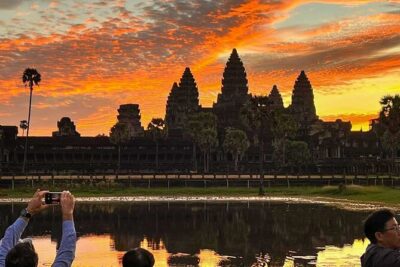
Angkor Wat Sunrise tour with Small – Group and Guide tours
Read our review →
Angkor Wat Highlights and Sunrise Guided Tour from Siem Reap
Read our review →
Angkor Wat Sunset Small Group Tour with Lunch Included
Read our review →