Review · SIEM REAP TOURS
Angkor and Waterfall
Angkor and a waterfall in the same trip plan can be a shock. In two packed days, you’ll move from towering temple carvings at Angkor Wat and Ta Prohm to the big Khmer story of Angkor Thom, then up to Phnom Kulen for a reclining Buddha, a river of thousand Lingas, and a waterfall.
I really like that this is guided, private transportation, with a small max group size that keeps you from feeling rushed. I also love the smart pairing of sites, because Angkor Wat and Angkor Thom give you two different temple vibes, and Phnom Kulen adds nature and religion in the same day.
One consideration: entrance fees and meals are not included, so your final spend is higher than the headline price. Also, you’ll do a lot of walking and climbing over long temple days, so bring a moderate-fitness game plan.
In This Review
- Key points to know before you go
- Two days that hit the big Angkor sites without the chaos
- Day 1: Angkor Wat and Ta Prohm in one long, meaningful block
- Day 1 afternoon: Angkor Thom, Bayon, and the old palace zone
- Day 2: Phnom Kulen for the reclining Buddha, thousand Lingas, and the waterfall
- How private transportation and small groups improve your Angkor day
- Price and what you still need to budget for
- What to pack for two long temple days and Phnom Kulen
- Who should book this tour (and who might want a different plan)
- Should you book Angkor and Waterfall with Angkor One Tour?
- FAQ
- What locations are included in this 2-day experience?
- How long is the tour?
- Is pickup included?
- Are entrance tickets included?
- Does the tour include meals?
- Is there a mobile ticket?
- What is included in the price?
- How large is the group?
- What fitness level do I need?
Key points to know before you go
- Small group (max 10) means easier pacing and more room to ask questions.
- Two full days, about 8 hours each covers Angkor Wat, Ta Prohm, Angkor Thom, and Phnom Kulen without feeling like you’re skipping everything.
- Private transportation + pickup offered helps you avoid the most annoying travel friction inside Siem Reap.
- Phnom Kulen adds natural sights like the reclining Buddha and waterfall, not just more temples.
- Admission tickets not included so budget for entrance fees and plan your own meals.
Two days that hit the big Angkor sites without the chaos
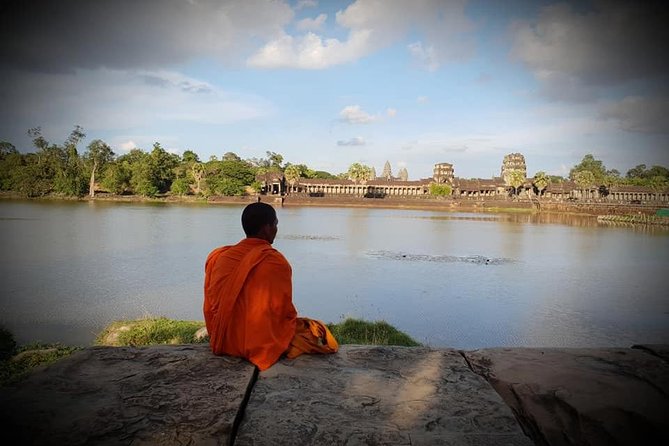
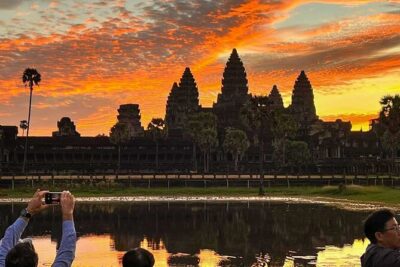
This is the kind of Siem Reap plan that makes sense if you want the classic hits, but you also want some breathing room in between. You’ll see the three major temple stops that most people come for: Angkor Wat, the sprawling complex of Angkor Thom, and the famous tree-rooted Ta Prohm. Then day two shifts the mood to Phnom Kulen National Park, where the focus is the reclining Buddha, river of thousand Lingas, and a real waterfall.
What makes the experience feel practical is the structure. You get a guide, private transportation, and a day-by-day route that keeps you moving in the right direction instead of guessing. And because the group stays small, your guide can adjust pacing when the heat or crowds get heavy.
Others in Siem Reap worth putting side by side:
- Angkor Wat Sunrise or Sunset Tour with Guide from Siem Reap
★ 5.0 · 12,109 reviews - Siem Reap: Angkor Wat: Small-Group Sunrise or Sunset Tour
★ 5.0 · 9,444 reviews - From Siem Reap: Kampong Phluk Floating Village Tour by Boat
★ 4.9 · 6,979 reviews
Day 1: Angkor Wat and Ta Prohm in one long, meaningful block
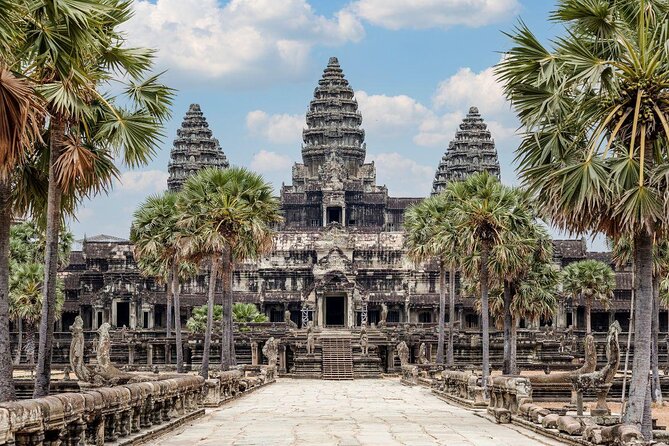
Day one starts with Angkor Wat, and you get about three hours there. That’s a good amount of time. It’s long enough to appreciate the layout and details, but not so long that you’ll be too exhausted to enjoy the next temple stop.
A key advantage is the flow. Your guide meets you at your hotel, then takes you to Angkor Wat as your first temple of the day. Starting strong matters here. Angkor is visually overwhelming if you land mid-morning. Getting oriented early helps you spot patterns, understand where you are in the complex, and read the carvings instead of just taking pictures and moving on.
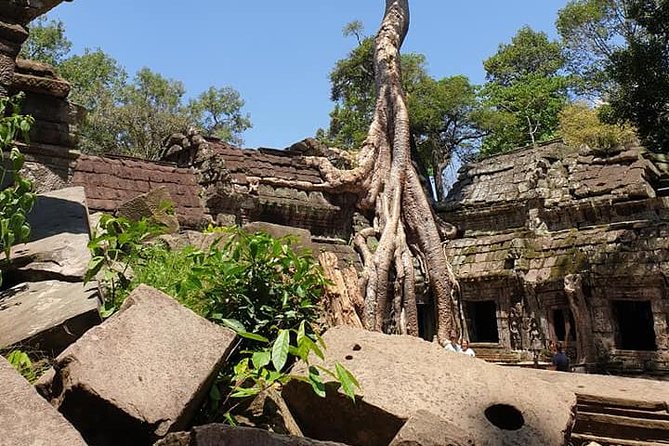
Then you continue to Ta Prohm. This is the temple where the roots can feel like they’re reaching into the stonework. The experience becomes less about perfect symmetry and more about atmosphere and texture. You’ll also get a lunch break nearby to the temples, which is a lifesaver on a day that can easily run long.
What you should watch for: temple heat and walking fatigue. Even with a guide, you’ll still cover ground, and Angkor stone can be slick. Wear shoes you trust and expect to use hands sometimes for balance on uneven steps.
Day 1 afternoon: Angkor Thom, Bayon, and the old palace zone
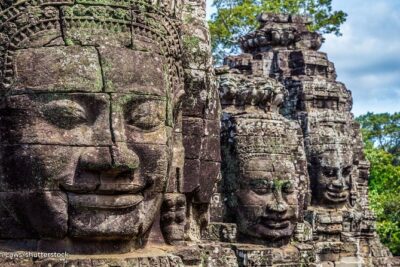
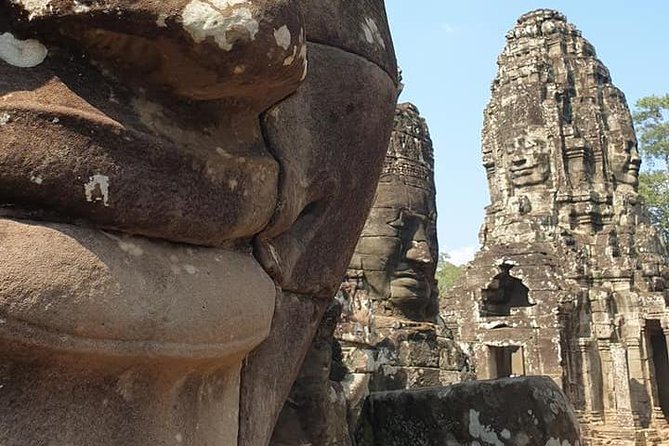
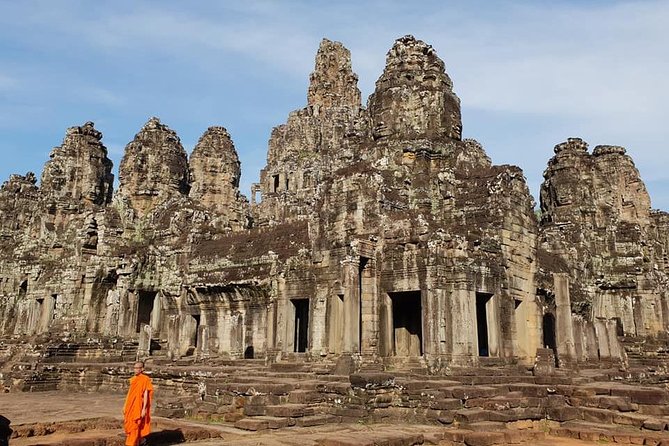
After lunch, you head into Angkor Thom, often described as the city of temples. This portion works because it’s a cluster, not one single stop. You’re not hopping around endlessly. Instead, you visit several major points that sit close together inside the larger Angkor Thom area.
The big names on the route include:
- Bayon
- Terrace of Elephant
- Phimean Akas
- Baphun
- the former locations of the Grand palace
Here’s why this matters. Angkor Thom helps you see the Khmer empire through a more urban lens. Angkor Wat can feel like a grand statement. Angkor Thom feels like a whole world: ceremonial spaces, platforms, and buildings grouped around the idea of power.
Your guide’s job becomes practical in this section. In a complex like Angkor Thom, being able to explain what you’re looking at improves the visit fast. You’ll also want help timing viewpoints and photo spots, because different sections can get busy at different moments.
If you’re sensitive to crowds, tell your guide your comfort level early on. A small-group format gives you a better chance to adjust on the fly than with larger buses.
Day 2: Phnom Kulen for the reclining Buddha, thousand Lingas, and the waterfall
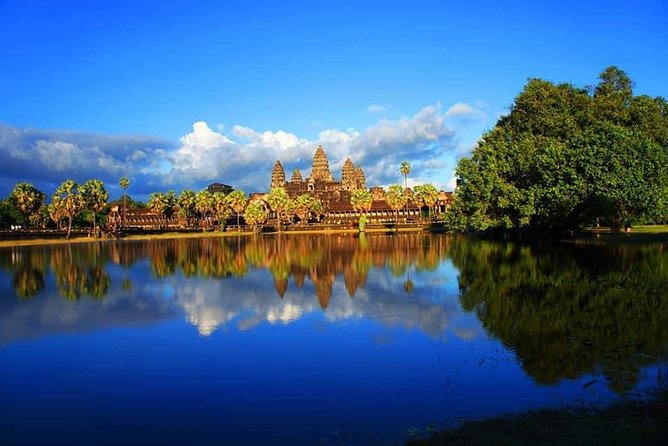
Day two takes you northeast of Siem Reap to Phnom Kulen National Park, about an hour and a half transfer time. That travel block is part of the value. Phnom Kulen feels like a reset from temple stone, and it also adds a more natural pace to your trip.
This day is guided through three main highlights:
- the large reclining Buddha carved on the mountain tip
- the river of thousand Lingas
- the waterfall
The reclining Buddha gives you a dramatic focal point. It’s the kind of sculpture where your brain says wow first, then your guide can help you slow down and notice the scale and placement.
The river of thousand Lingas is different. It’s not about one huge landmark. It’s about repetition and spiritual meaning. Standing there, you can feel how Khmer religious culture used sacred symbolism and arrangement, not just monumental size.
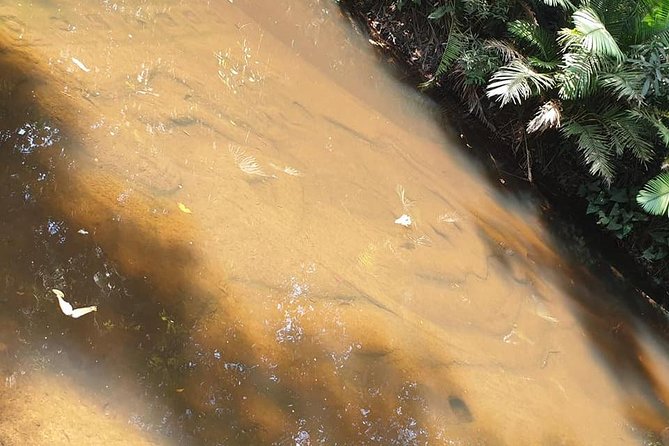
Then comes the waterfall, which turns the day from sacred viewing into a sensory break. Even if it’s not a perfect postcard scene at every moment, it’s still a real nature payoff after two days of temples.
Practical note: because you’re in a national park setting, you’ll want weather-ready clothing. You might find it changes the feel of the day quickly, and you’ll want shoes that handle wet or uneven ground.
A different kind of day in Cambodia:
- Sunset tour of Kampong Phluk stilts home village on the Tonle Sap
★ 5.0 · 4,865 reviews - Siem Reap: Angkor Wat 2-Day Tour with Sunrise and Sunset
★ 4.9 · 4,429 reviews - Siem Reap: Kampong Phluk Floating Village Tour with Boat
★ 4.9 · 3,843 reviews - Siem Reap: Full-Day Angkor Wat Guided Tour with Sunset
★ 4.9 · 3,803 reviews
How private transportation and small groups improve your Angkor day
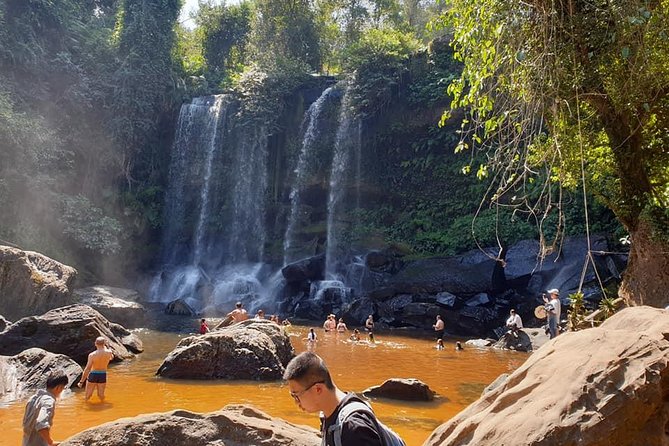
This tour includes private transportation and a tour guide, with a maximum of 10 travelers. That combination makes a bigger difference than it sounds like.
First, private transport reduces time lost to confusion. In Siem Reap, you don’t want your day to be a constant negotiation with tuk-tuks or waiting around for other parties. Pickup offered also helps you start each day smoothly.
Second, small groups mean your guide can actually manage pacing. Angkor isn’t a museum route where everything is spaced perfectly. It has steps, narrow paths, heat, and occasional crowd pinches. A guide can take a small group and move you through in a way that feels calmer.
One thing you’ll likely notice with a guide who knows the rhythm is flexibility. People have praised guides for being organized and responsive, and for keeping the tour flexible rather than forcing you into a rigid script. That matters most on long temple days, when energy levels can shift.
If you prefer a “just tell me where to go” style, this tour supports that. If you like asking questions and getting context, a trained guide can keep the information moving without turning it into a lecture.
Price and what you still need to budget for
The price is $79 per person for about two days. That’s a solid starting point, especially because the tour includes private transportation and a tour guide.
But here’s the key math: entrance fees and meals are not included. That means your final cost depends on the entry prices for Angkor Wat, Angkor Thom, Ta Prohm, and Phnom Kulen. You should plan to add those on top.
My practical advice: treat the $79 as the service cost for guide and transport, and budget separately for tickets and food. If you go in thinking meals are included, you’ll feel surprised. If you go in expecting to buy your own lunch and snacks, you’ll feel in control.
Also, you’ll likely benefit from carrying small cash for quick purchases, plus water. Some guides provide bottled water during the tour, but don’t rely on it. Bring your own too, especially on a day that can run about 8 hours.
What to pack for two long temple days and Phnom Kulen
You’ll cover a lot of ground across about 8 hours each day, including walking in temple complexes and moving around a national park. The tour also notes a moderate physical fitness level, so pack accordingly.
At minimum, I’d plan for:
- comfortable walking shoes you can grip on stone and uneven paths
- breathable clothing for heat, plus something light for sun coverage
- a hat, sunglasses, and sunscreen
- a refillable water bottle (and a backup snack)
For Phnom Kulen, you’ll also want shoes that handle damp conditions. Don’t wear brand-new soles that slip, and avoid footwear that makes you constantly adjust your stride.
If you tend to get dehydrated, tell your guide early in the day. In these experiences, having water available has been called out as a helpful detail.
Who should book this tour (and who might want a different plan)
This tour is a good match if you want:
- the classic Angkor trio, including Angkor Wat, Angkor Thom, and Ta Prohm
- the big add-on of Phnom Kulen with the reclining Buddha and waterfall
- a guide-led plan that reduces decision fatigue
- a small group experience, max 10, with pickup offered
It’s especially worth it if you feel overwhelmed by Angkor on your own. When a guide can help you connect the dots between sites, the temples stop feeling like disconnected photo stops.
You might consider a different plan if you dislike long days. Two days of 8-hour blocks, plus walking, is a lot. If you want a slow travel pace with minimal movement, you may feel rushed.
Should you book Angkor and Waterfall with Angkor One Tour?
I think you should book this if you want a practical, guided route that hits the headline temples and adds Phnom Kulen without turning your schedule into a puzzle. The small group cap, pickup offered, and private transportation help you spend your energy on the sights, not logistics. And the guide approach you’ll experience is built around organization and flexibility, which helps a lot at Angkor.
I’d also book it if you value context, not just landmarks. Angkor Wat, Ta Prohm, and Angkor Thom feel much more meaningful when someone can point out what you’re actually looking at, and Phnom Kulen brings a nature payoff that most temple-only itineraries miss.
Just go in with one mindset shift: entrance fees and meals are on you. If you budget for that upfront, this tour looks like strong value for two days in Siem Reap.
FAQ
What locations are included in this 2-day experience?
You’ll visit Angkor Wat, Ta Prohm, Angkor Thom (including Bayon, Terrace of Elephant, Phimean Akas, Baphun, and former Grand palace locations), and Phnom Kulen National Park with the reclining Buddha, river of thousand Lingas, and the waterfall.
How long is the tour?
The experience runs for about 2 days, with each day listed as about 8 hours.
Is pickup included?
Pickup is offered, and the tour starts in Krong Siem Reap, Cambodia. It ends back at the meeting point.
Are entrance tickets included?
No. Admission tickets and entrance fees are not included.
Does the tour include meals?
No. Meals are not included.
Is there a mobile ticket?
Yes, the tour uses a mobile ticket.
What is included in the price?
The experience includes private transportation and a tour guide.
How large is the group?
The tour has a maximum of 10 travelers.
What fitness level do I need?
The tour notes that travelers should have a moderate physical fitness level.
Newly listed around Siem Reap
- Sambor Prei Kuk Off Beaten Track★ 5.0 · 3 reviews
- Siem Reap Airport Taxi Transfer – City Center Hotels★ 5.0 · 5 reviews
- Short Cycling at Countryside★ 5.0 · 29 reviews
- Unveiling the Mystical Beauty of Phnom Kulen National Park★ 5.0 · 6 reviews
- Angkor Wat at Sunrise★ 4.0 · 7 reviews
- Bakong Temples & Floating Village Tour★ 4.5 · 3 reviews
- Rooftop Romantic Dinner – 4 Courses Set Meal & Wine★ 3.5 · 5 reviews
- Khmer Cooking Class in Cambodia★ 5.0 · 36 reviews
Siem Reap Tours, compared.
Angkor Wat Sunrise or Sunset Tour with Guide from Siem Reap
Read our review →
Angkor Wat: Small-Group Sunrise or Sunset Tour
Read our review →
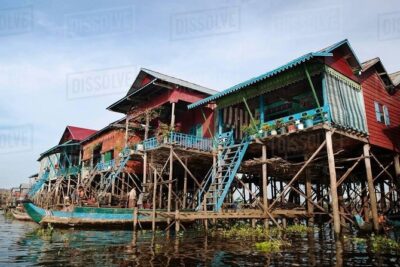
Sunset tour of Kampong Phluk stilts home village on the Tonle Sap
Read our review →
Angkor Wat 2-Day Tour with Sunrise and Sunset
Read our review →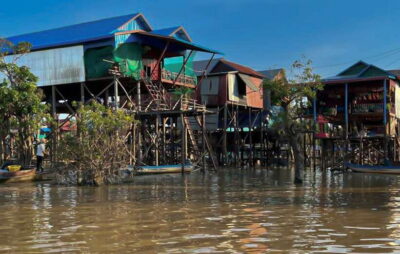
Kampong Phluk Floating Village Tour with Boat
Read our review →