
Review · CYCLING TOURS
Angkor Cycling Tour
Angkor by bike feels like a cheat code for seeing more, with less waiting around. This 7-hour ride blends 70% off-road jungle and countryside tracks with big-name temples across the Angkor complex. The day also adds a nature breather at Jayatataka Baray, where you’re likely to spot birds and other wildlife while you pedal at a calmer pace.
I especially like the way the route keeps switching gears, temple views and wall riding in the morning, then quieter forest paths later. I also appreciate the practical support: bike fitting before you roll, helmet and mountain bike included, plus water, snacks, and cold breaks at stops. One thing to consider, though, is that the temple pass is required and not included in the tour price, and the early start means you’ll feel the heat if you’re not prepared.
In This Review
- Angkor Cycling Tour, the quick version of what makes it work
- Why this Angkor cycling day feels different from the usual temple shuffle
- Timing and effort: 7 hours, 35 km, and a Medium level that you should respect
- Getting picked up and outfitted without friction
- First stop: Angkor Wat Temple, where the day earns its name
- Angkor Thom’s wall riding: the part that turns history into motion
- Bayon Temple and lunch at Elephant Terrace, when you trade effort for atmosphere
- Ta Nie Temple: the quieter stop that makes the route feel balanced
- Jayatataka Baray: birdwatching and wildlife breaks that slow your breath
- Ta Prohm, the “Tomb Raider” temple, where roots take over the frame
- The ride back into Siem Reap: winding single tracks and smooth lanes
- Price and value check: $65 for cycling, guides, lunch, and the temple pass catch
- What to pack so the day stays comfortable
- Who this tour suits best, and who might want a different plan
- Should you book this Angkor Cycling Tour?
- FAQ
- How long is the Angkor Cycling Tour?
- What time does the tour start, and how far do you cycle?
- Is the temple pass included in the price?
- What kind of riding is it, paved or off-road?
- What’s included in the tour price?
- Is it suitable for pregnant women?
Angkor Cycling Tour, the quick version of what makes it work
- 70% off-road riding means you’re not just on flat tourist roads, you’ll be on real trails through jungle and countryside.
- You hit the main monuments in a logical flow, starting with Angkor Wat and moving through Bayon, Ta Prohm, and more.
- There’s a built-in nature pause at Jayatataka Baray, with a chance at wildlife like kingfishers, ducks, and even freshwater otters.
- The tour uses a separate entrance to help you skip the usual temple line time.
- Food is planned in, lunch at Elephant Terrace plus water and snacks throughout, so you’re not hunting for meals mid-ride.
- You get real logistics help, pickups around Siem Reap city and free tuk tuk transfers.
Why this Angkor cycling day feels different from the usual temple shuffle
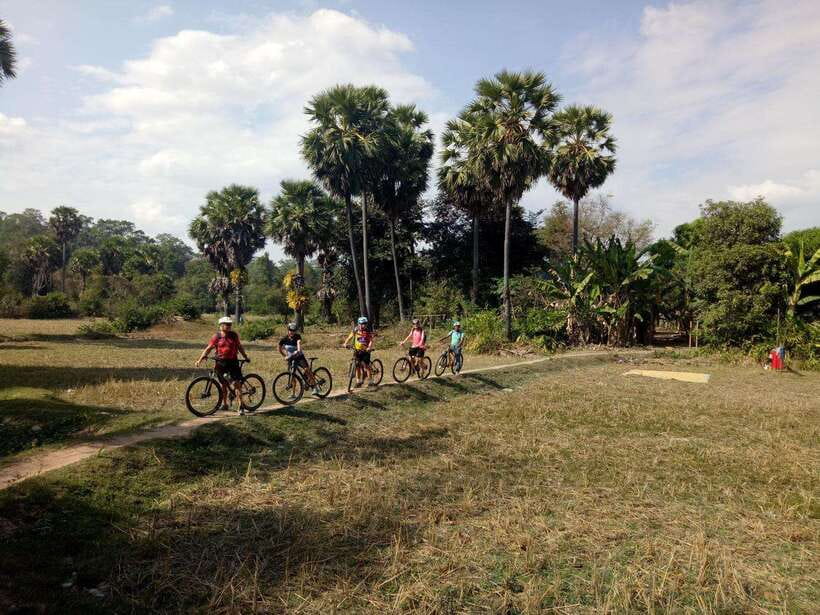
Angkor is famous for temples, but most days get swallowed by the same pattern: tuk tuk, short walks, a quick photo, then back on the road. This tour changes the pace. You spend a lot of the day actively moving, so the temples feel like stops in a route, not isolated picture locations.
The “value for money” angle is not just the price. It’s the mix. For $65 per person you’re getting a full 35 km cycling route in one day, a guided circuit with English support, and a lunch plus snacks. That’s a lot of ground covered while still making room for breaks.
The other key difference is the rhythm. You’ll start early, then you’ll ride through temple moats and historic walls, but you also get forest trails and wildlife time. That blend is what keeps the day from feeling like a checklist.
More Bike Tours in Siem Reap
- Siem Reap Countryside Bike Tour / E-Bike or Tuk Tuk
★ 5.0 · 935 reviews - Angkor Sunrise Bike Tour / E-Bike or Tuk Tuk
★ 5.0 · 615 reviews - Siem Reap: Bike the Angkor Temples – Full-Day 30km Tour
★ 5.0 · 463 reviews
Timing and effort: 7 hours, 35 km, and a Medium level that you should respect
The tour runs as a full-day experience with a 7:45 AM start. You’ll cover about 35 km, with the route split into roughly 30% paved roads and 70% off-road trails.
“Medium” here does not mean “easy.” Off-road riding in Cambodia typically means uneven ground, more balancing, and more heat. If you’re the type who likes steady exertion and you can handle some moderate sections, you’ll be comfortable. If you want a mostly flat, slow spin only, you might feel challenged by the off-road portion.
Also, the day is temple-paced. You’ll stop for guided exploration and temple breaks, so you won’t be riding nonstop. That helps, but you should still bring your sun protection and plan for effort during the mid-morning rides.
Getting picked up and outfitted without friction
The logistics are set up to get you rolling quickly. You’ll get picked up about 15 minutes before from hotels, apartments, and Airbnb lobbies in Siem Reap city. Depending on your group size, transport to the start area is via tuk tuk or minivan.
Once you meet the guide, there’s a quick bike fitting at the shop, then you ride out toward Angkor Wat, cycling past the Siem Reap River and into rainforest trails around the Angkor complex. That first stretch matters. It sets expectations: you’re going to be riding in and around greenery, not only on smooth lanes.
Included gear is straightforward and useful:
- Mountain bike (all sizes) and a helmet
- 1st aid kit and a bike spare part
- An English-speaking guide (and the tour also lists English and Spanish availability)
There’s also free tuk tuk transfers, so you’re not paying extra to make the day work.
First stop: Angkor Wat Temple, where the day earns its name
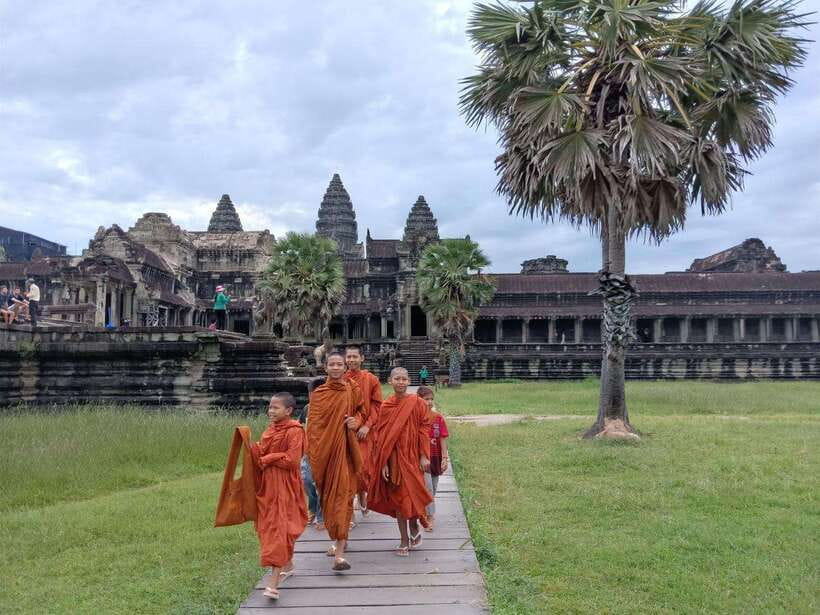
Angkor Wat is the obvious crown jewel. What makes it work in this tour is the timing and the guided focus. You’ll spend around two hours exploring with your guide, not just walking through and hoping you recognize the details.
Riding into Angkor Wat is also the hook. You don’t just arrive, you cycle in and feel the setting shift from town to temple grounds. You’ll also benefit from a separate entrance designed to help you skip the usual line time.
What to watch for during the visit: the way Khmer architecture looks different as you move. From courtyard to walkway, it’s easy to see how the carvings and layout guide your eyes. A guided explanation helps you connect what you’re looking at, especially if you’ve only seen Angkor Wat in photos.
A different kind of day in Cambodia:
- Angkor Wat Sunrise or Sunset Tour with Guide from Siem Reap
★ 5.0 · 12,109 reviews - Siem Reap: Angkor Wat: Small-Group Sunrise or Sunset Tour
★ 5.0 · 9,444 reviews - From Siem Reap: Kampong Phluk Floating Village Tour by Boat
★ 4.9 · 6,979 reviews - Sunset tour of Kampong Phluk stilts home village on the Tonle Sap
★ 5.0 · 4,865 reviews
Angkor Thom’s wall riding: the part that turns history into motion
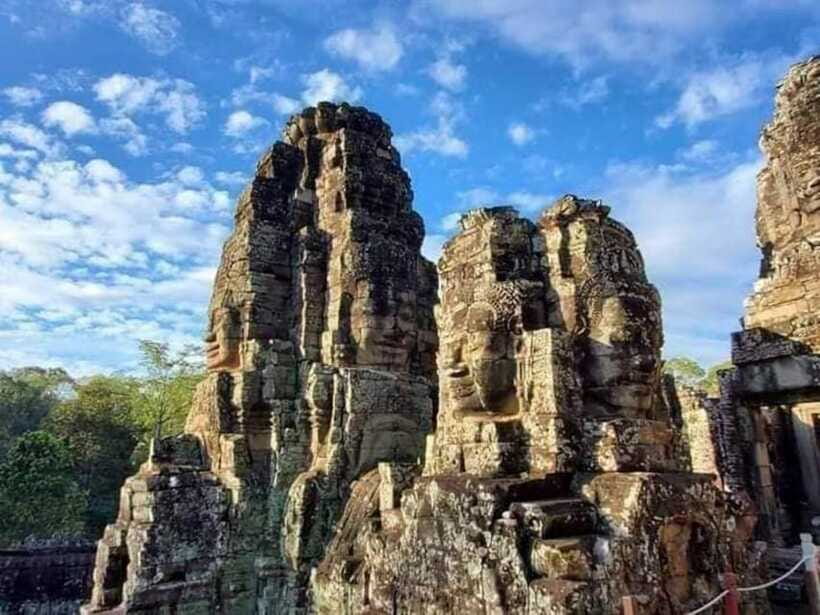
After Angkor Wat, you move toward Angkor Thom and the fortifications. This is one of the most exciting parts of the day because it combines temple geography with actual riding.
You’ll ride along the moat of Angkor Wat, then enter forest trails near Bakheng Hill. From there, you go in through the South Gate, climb onto the ancient wall, and cycle along the fortifications of Angkor Thom.
That “ride on the wall” element changes the way you see Angkor Thom. You get elevation and a moving viewpoint. It also helps you understand how the complex functions as a defensive and ceremonial space, not just a place with famous stone faces.
You stop at the Ghost Gate too, where the stories and photo moments add context. I like this kind of stop because it breaks up the physical effort with something mentally rewarding, and you don’t feel like you’re just squeezing in ruins.
Practical note: wall time is more exposed. Wear sunscreen and keep sunglasses handy. The heat can be the real challenge, not the technical riding.
Bayon Temple and lunch at Elephant Terrace, when you trade effort for atmosphere
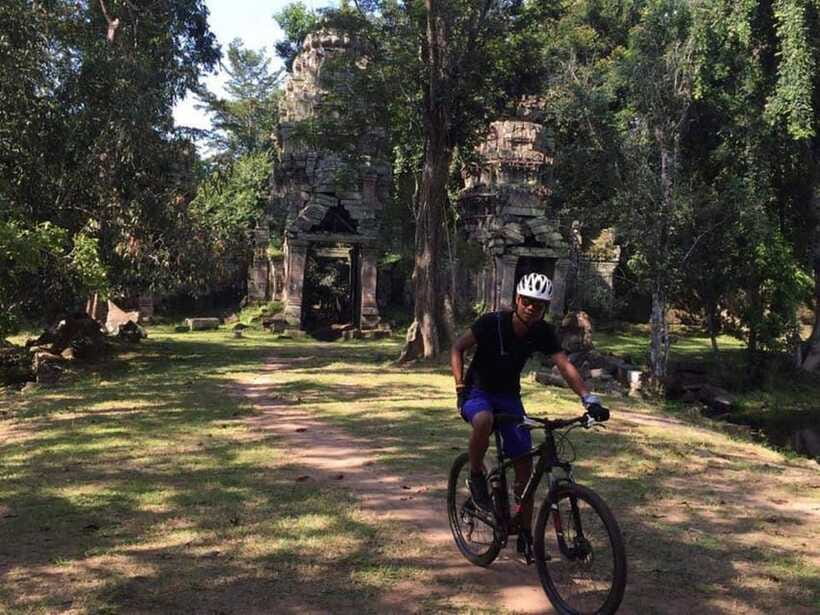
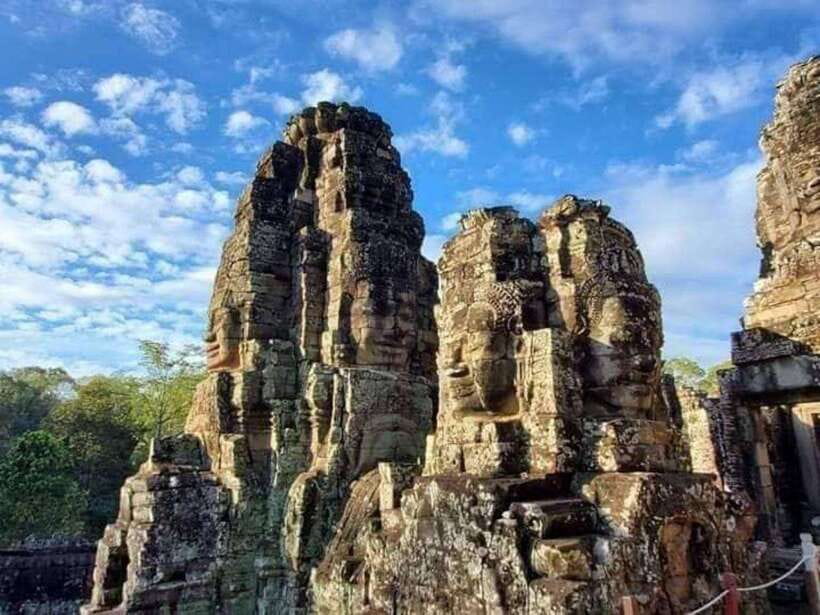
Bayon Temple is close enough to keep the day flowing. After your ride along the wall sections, you’ll reach Bayon, where the stone faces rise high above.
Your time here is supported by the guide’s storytelling. The faces are iconic, but what you gain from a guided stop is noticing how the carvings sit in relation to the wider space. You get that sense of a living city in stone.
Then comes a smart move: lunch at Elephant Terrace. You’ll cycle a short distance to eat while looking over the Elephant Terrace area. The lunch includes what matters after a morning of riding, fuel plus a break. It’s described as Khmer specialties at a local restaurant in front of Elephant Terrace, with water and snacks around the stop.
If you’re the type who needs food to keep your energy stable, this is well timed. You’re not trying to grab lunch later, you’re scheduled for it right when you’ll need it.
Ta Nie Temple: the quieter stop that makes the route feel balanced
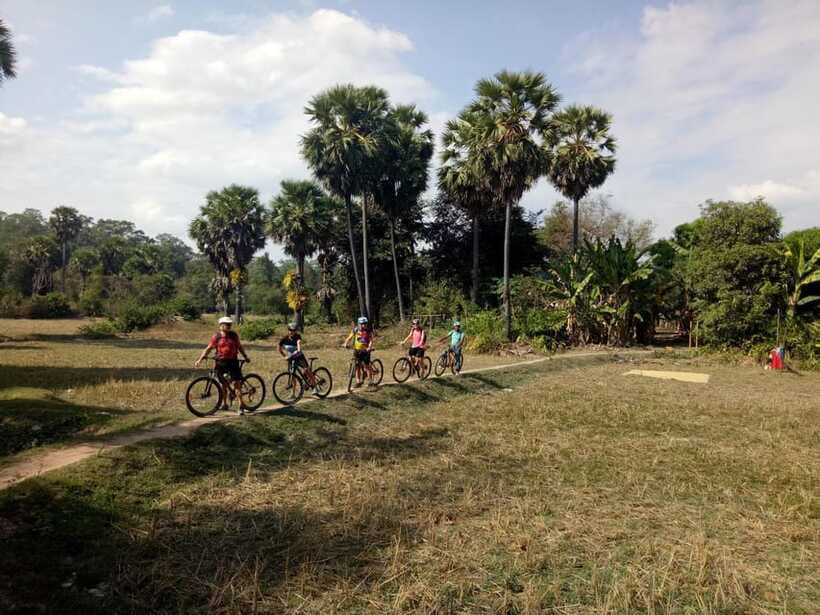
After Bayon, you head out of the city to Ta Nie Temple. This is one of the stops that balances the bigger crowd magnets. Instead of rushing through the most famous faces, you get a more secluded feel.
Ta Nie is described as a hidden sanctuary embraced by nature. That matters because it gives you a contrast to the wall and the dense temple clusters. You’ll be riding out into forest terrain, then visiting a temple that feels more removed from the main energy.
This stop also helps you pace the day. If you find you’re running out of patience for stone after a couple of big temples, Ta Nie is the kind of reset that keeps the day enjoyable.
Jayatataka Baray: birdwatching and wildlife breaks that slow your breath
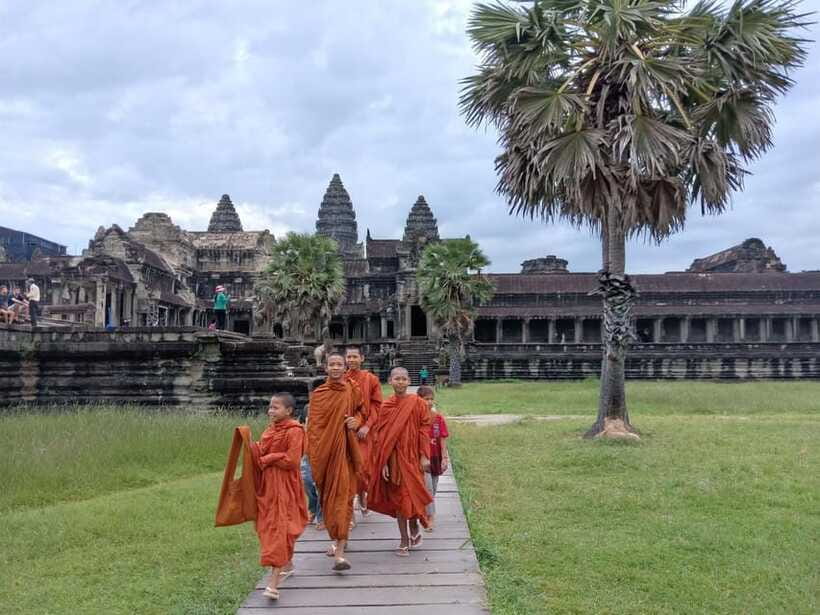
Jayatataka Baray is a highlight for a reason. The ride doesn’t end at temples. You pause at the baray for birdwatching, and the wildlife list is the kind of detail that makes a difference on the ground.
What you might see includes:
- cranes and egrets
- lesser whistling ducks
- kingfishers
- butterflies and monkeys
- and with luck, freshwater otters playing in the river
Even if you don’t spot every animal listed, this stop is still valuable because it gives you shade, a calmer moment, and a break from constant temple visuals. It also fits the tour’s bigger theme, the harmonious blend of nature and monuments.
There’s also mention of a peaceful tree nursery garden, which likely means you’re not just looking at water, you’re also getting greenery and a chance to rest your legs.
Ta Prohm, the “Tomb Raider” temple, where roots take over the frame
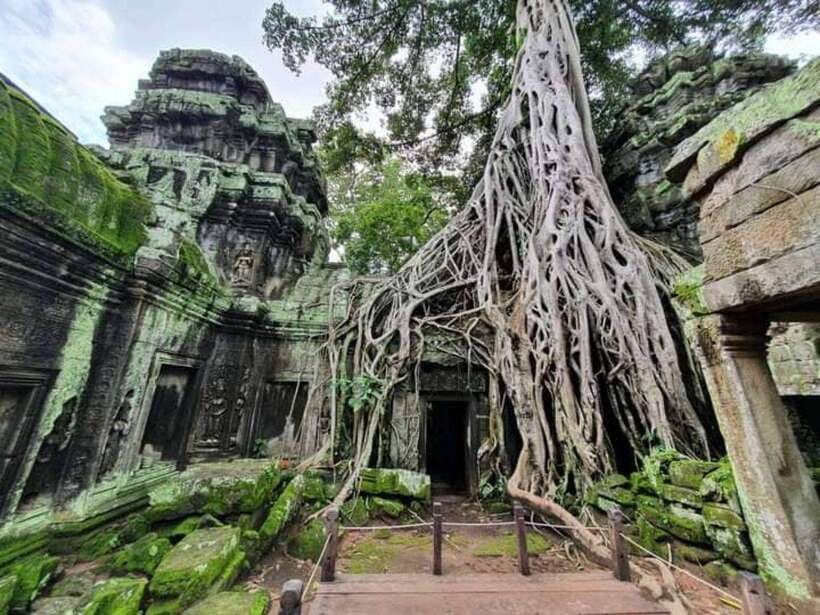
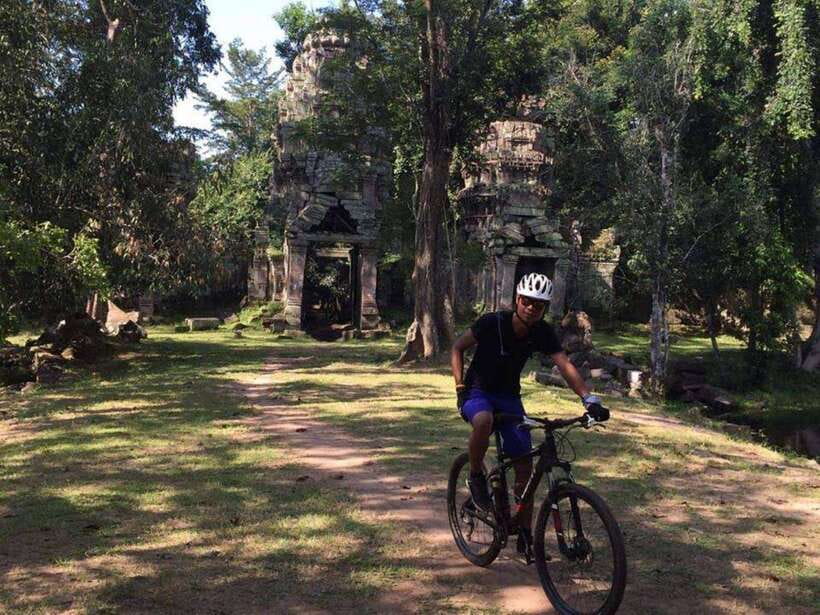
Ta Prohm is the famous one most people recognize instantly. You’ll arrive here after Ta Nie and Jayatataka Baray.
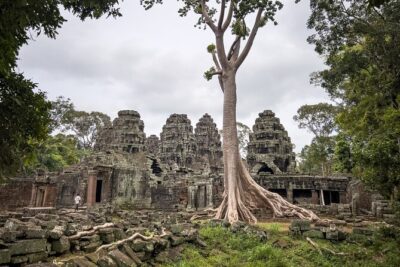
This stop is described as the legendary “Tomb Raider” temple, where colossal tree roots intertwine with ancient stone walls. You’ll spend time appreciating how nature and architecture mix in a way that feels almost alive.
From a cycling perspective, Ta Prohm also works because it’s a dramatic transition point. You’ve been riding forest tracks and moats, then you step into a scene where you can’t separate the jungle from the ruins. It’s the sort of place that makes photos look better simply because the setting has depth and texture.
Then you return to town with a planned ride section, which brings the day to a satisfying close.
The ride back into Siem Reap: winding single tracks and smooth lanes
On the way back, you don’t just get a straight transfer. You’ll do a 12 km return ride along winding single tracks and smooth bike lanes leading back toward town.
This matters because the final stretch keeps you in “tour mode” without tiring you out with constant off-road technical riding. It also gives you a moment to reflect on the day while still moving.
It’s a nice way to transition from high-focus temple time into a calmer ride. You’re not done with the experience, but you’re not stuck in the most intense portion either.
Price and value check: $65 for cycling, guides, lunch, and the temple pass catch
Let’s be honest about the math. The tour price is $65 per person and includes:
- Mountain bike and helmet
- English speaking guide
- Lunch at a local restaurant
- Water and snacks, plus seasonal fruits
- 1st aid kit and bike spare part
- Free tuk tuk transfers
- Temple support moments like cold water and snacks at each stop
What is not included is the temple pass, and you do need it because temple access is required for stops in the Angkor complex.
So the value is strong if you plan for that extra cost upfront. The tour includes a full day of guided riding and scheduled meals, not just a bike rental. It’s also priced like a day tour, not like a multi-day expedition.
For Cambodia, where temple days can add up quickly, the best value move is simple: buy or prepare for your temple pass early, then treat the $65 as the cycling and guiding package.
What to pack so the day stays comfortable
Heat and temple rules can make or break your experience, so pack like you’re visiting sacred sites, not just doing a bike ride.
Bring:
- Closed-toe shoes
- Sunscreen and sunglasses (strongly recommended)
- Light breathable clothing for biking
- Spare cloth for temple visits, especially since the tour notes you can wear shorts during biking but you should have extra fabric for temples
Wear rules:
- Loose clothing is not allowed.
Also, hydrate. The tour is in Cambodia sun, and you’ll be outdoors for most of the day. Water is provided, but you should still take it seriously and drink consistently.
Who this tour suits best, and who might want a different plan
This tour is a good fit for you if you want:
- a balance of adventure and culture
- a way to see Angkor without feeling trapped in a tuk tuk all day
- off-road trail riding with moderate sections, not pure beginner cruising
It’s also ideal if you like nature stops. Jayatataka Baray is not a token photo stop. It’s a birdwatching pause with a chance at wildlife.
It is not suitable for pregnant women, based on the tour’s own guidance.
If you have knee issues or you hate uneven ground, you might find the 70% off-road portion uncomfortable. And if you hate early mornings, the 7:45 AM start will feel like your day begins with a sprint.
Should you book this Angkor Cycling Tour?
I think you should book if you want a day that mixes Angkor Wat, Bayon, Ghost Gate, Elephant Terrace, Ta Nie, and Ta Prohm with real cycling time, not just quick stops. The best reason to choose it is the combination: temples plus jungle trails plus a wildlife-focused break at Jayatataka Baray.
Skip it, or at least rethink it, if you can’t handle the sun and off-road riding, or if you don’t want to deal with extra temple costs since the temple pass isn’t included.
If your goal is to see Angkor at a slower, more personal rhythm while still getting a workout, this tour has the structure to make that happen.
FAQ
How long is the Angkor Cycling Tour?
The tour lasts 7 hours.
What time does the tour start, and how far do you cycle?
Pickup happens around 7:45 AM, and the route is about 35 km.
Is the temple pass included in the price?
No. A temple pass is required and it is not included in the tour price.
What kind of riding is it, paved or off-road?
It’s 30% paved roads and 70% off-road trails, with a Level Medium difficulty.
What’s included in the tour price?
Included are a mountain bike and helmet, lunch, water and snacks, an English speaking guide, a 1st aid kit, a bike spare part, and free tuk tuk transfers.
Is it suitable for pregnant women?
No. The tour is listed as not suitable for pregnant women.
Newly listed around Siem Reap
- Sambor Prei Kuk Off Beaten Track★ 5.0 · 3 reviews
- Siem Reap Airport Taxi Transfer – City Center Hotels★ 5.0 · 5 reviews
- Short Cycling at Countryside★ 5.0 · 29 reviews
- Unveiling the Mystical Beauty of Phnom Kulen National Park★ 5.0 · 6 reviews
- Angkor Wat at Sunrise★ 4.0 · 7 reviews
- Bakong Temples & Floating Village Tour★ 4.5 · 3 reviews
- Rooftop Romantic Dinner – 4 Courses Set Meal & Wine★ 3.5 · 5 reviews
- Khmer Cooking Class in Cambodia★ 5.0 · 36 reviews
Cycling Tours, compared.
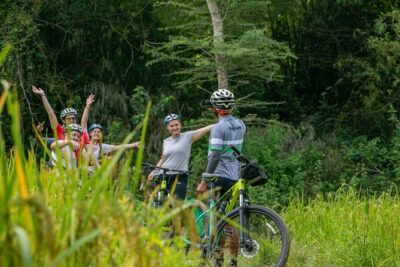
Siem Reap Countryside Bike Tour / E-Bike or Tuk Tuk
Read our review →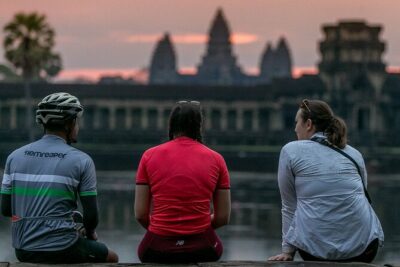
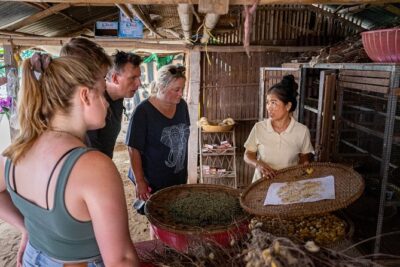
Phnom Penh Silk Island Bike Tour/ E-Bike or Tuk Tuk
Read our review →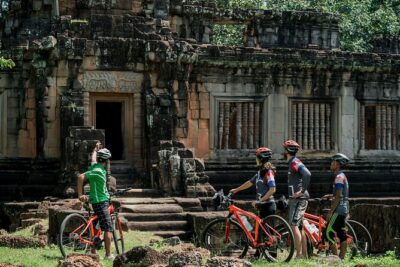
Angkor Wat Sunrise Bike Tour & Jungle Breakfast
Read our review →
Local Livelihood Half Day Bike Tour in Battambang
Read our review →Browse the lists this tour appears in