
Review · ANGKOR WAT TOURS
Angkor Wat 3-Day Temple Tours
Angkor temples hit different when you go early. This 3-day Angkor Wat temple tour is built for sunrise photos and smooth private tuk-tuk days, so you spend less time figuring out logistics and more time actually looking. You’ll roll through major sights like Angkor Wat, Angkor Thom, Ta Prohm, and Preah Khan, with practical stops that make the heat and crowds easier to manage.
Two things I really like: hotel lobby pickup each day, and the simple comfort touches of free cold water and cold towels to keep you moving. A possible consideration is that temple tickets, the boat entrance fee, and lunch near the temples are not included, so you’ll want to budget those separately.
One more practical note: the schedule includes an early sunrise window, but the stated start time is 8:00 am, so you should confirm whether your pickup is earlier on Day 1.
In This Review
- Key points before you go
- Private tuk-tuk hotel pickup makes Angkor feel doable
- Day 1: Angkor Wat sunrise and the Small Circuit’s biggest hits
- Angkor Wat: why the morning window matters
- South Gate of Angkor Thom: the entry you feel in your legs
- Bayon Temple: faces, symbolism, and busy stone
- Baphuon: the drama of weathered stone
- Terrace of Elephant and Terrace of the Leper King: carvings you can actually study
- Ta Prohm: the trees that took back the stones
- Banteay Kdei and Sras Srang: calmer endings for a long day
- Day 2: Roluos Group’s early capitals and Kampong Phluk on stilts
- Roluos Group: early Khmer architecture and the story behind it
- Kampong Phluk: Tonle Sap floating village and 6-meter stilt homes
- Day 3: Preah Khan, Pre Rup, Banteay Srei, and Kbal Spean
- Preah Khan: Holy Sword temple and its Khmer architecture
- Neak Pean and Ta Som: smaller, atmospheric stops with rhythm
- East Mebon and Pre Rup: the geometry and the viewpoints
- Banteay Samre and Banteay Srei: where the day slows just enough
- Kbal Spean: the final stop and a good day-ender
- Price and value: what $144 covers, and what you’ll still pay
- What the best guides do: punctual, friendly, and flexible
- Timing, dress code, and heat-proof habits that keep you happy
- Should you book the Angkor Wat 3-day temple tour?
- FAQ
- What is the price for the Angkor Wat 3-day temple tour?
- How long is the tour?
- Does the tour include hotel pickup and transport?
- Are temple tickets included in the price?
- Are boat entrance fees included for Kampong Phluk?
- What is included for comfort during the day?
- What time does the tour start?
Key points before you go
- Sunrise timing at Angkor Wat, with an early arrival plan for better light
- Private tuk-tuk hotel pickup, so you skip map stress and transfers
- Cold water and cold towels included, a small thing that matters in Siem Reap heat
- Kampong Phluk on Tonle Sap Lake, including the 6-meter stilt village setup
- A day-by-day temple rhythm, mixing big icons with quieter temple groups like Roluos
- Driver service reputation, including punctual, courteous experiences with guides like Vutha and Ly
Private tuk-tuk hotel pickup makes Angkor feel doable
Siem Reap is easy to overplan. When you add temple ticket lines, tuk-tuk haggling, and the time it takes to get from one “must-see” to the next, your day can evaporate fast.
This tour solves that by doing the basics well: pickup from your hotel lobby each day and a private tuk-tuk for your group. That means you can start where you want, keep your energy for temple walking, and avoid the scramble of coordinating multiple vehicles. It’s also private, so you are not boxed in with strangers who set a slower or faster pace than you do.
Small comfort perks help too. You get cold water and cold towels for free, which is the kind of thing you notice right away once the sun climbs. I also like that the tour is designed around heat and timing, not just a list of ruins.
More Angkor Wat tours in Siem Reap:
- Angkor Wat Sunrise or Sunset Tour with Guide from Siem Reap
★ 5.0 · 12,109 reviews - Siem Reap: Angkor Wat: Small-Group Sunrise or Sunset Tour
★ 5.0 · 9,444 reviews - Siem Reap: Angkor Wat 2-Day Tour with Sunrise and Sunset
★ 4.9 · 4,429 reviews
Day 1: Angkor Wat sunrise and the Small Circuit’s biggest hits
Day 1 is structured around the classic crowd-pleaser, Angkor Wat, but it is built with a key advantage: you are going early enough to aim for sunrise photos. That early light changes the whole mood of the temple, and it also helps you avoid starting your day already tired.
After that sunrise focus, you work through the Angkor Archaeological Park’s smaller-circuit style route, hitting a sequence of temples that are close enough to feel connected, instead of isolated stops.
Here’s what each stop does for the experience, and what to watch for.
Angkor Wat: why the morning window matters
Angkor Wat is the largest religious building in the world, and it shows in the way the whole complex feels staged and monumental. Going early is not just about photos, it’s about atmosphere. The temple edges look sharper in the morning, and the walkways feel more manageable before the busiest flow arrives.
South Gate of Angkor Thom: the entry you feel in your legs
After Angkor Wat, the route moves to the South Gate of Angkor Thom. This is one of those moments where the scale clicks. You’re stepping into the larger Angkor Thom zone, and you can feel how wide the historical city footprint is.
A different kind of day in Cambodia:
- From Siem Reap: Kampong Phluk Floating Village Tour by Boat
★ 4.9 · 6,979 reviews - Sunset tour of Kampong Phluk stilts home village on the Tonle Sap
★ 5.0 · 4,865 reviews - Siem Reap: Kampong Phluk Floating Village Tour with Boat
★ 4.9 · 3,843 reviews - Siem Reap: Full-Day Angkor Wat Guided Tour with Sunset
★ 4.9 · 3,803 reviews
Bayon Temple: faces, symbolism, and busy stone
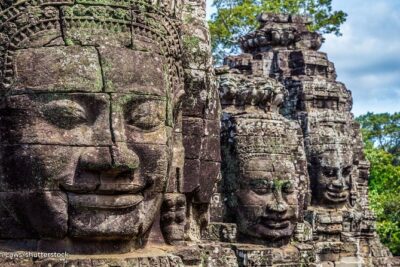
Bayon Temple is famous for its many stone faces, and that’s the point. In person, it’s not just a view, it’s a whole environment of expression. Plan on a bit of lingering time here, because it’s the kind of place where you’ll keep noticing new angles as you move around.
Baphuon: the drama of weathered stone
Baphuon is another centerpiece, but the vibe is different. The stone looks older, more worn, and more sculptural in texture. It’s a good contrast to the earlier feel of Angkor Wat and helps break up the day’s energy.
Terrace of Elephant and Terrace of the Leper King: carvings you can actually study
These terraces are where the tour earns its keep. Even if you only spend a few minutes per stop, the detail is worth it. You get a sense of Khmer artistry and storytelling without needing a lecture to appreciate the work in the stone.
A practical tip: wear something that dries fast and brings good traction. The walkways can be warm and uneven, and your feet do the noticing long before your eyes do.
Ta Prohm: the trees that took back the stones
Ta Prohm is the temple most visitors recognize instantly, and it’s for a reason. The huge roots and overgrowth create an almost cinematic feel, and it’s a relief after the more structured stone layouts elsewhere.
This is also a stop where you’ll want to pace yourself. It’s easy to get swept up in photos, then suddenly realize you’ve been standing in the sun too long. Use the shade when you see it, and keep moving.
Banteay Kdei and Sras Srang: calmer endings for a long day
Later on, Banteay Kdei and Sras Srang help you land the day. They don’t hit the same “headline” feeling as Bayon or Ta Prohm, but they give you that softer, lived-in temple texture. It’s a nice way to end Day 1 without turning every moment into a sprint.
Day 2: Roluos Group’s early capitals and Kampong Phluk on stilts
Day 2 is the perfect balance day. You start toward the Roluos Group, then head out to Kampong Phluk on Tonle Sap Lake, where life looks built around water.
This is also the kind of day that rewards going with a driver who understands pacing. You are covering a lot, but the stops have clear identities: early Khmer temple origins in the morning, and community life and scenery later.
Roluos Group: early Khmer architecture and the story behind it
The Roluos Group is about 13 km from Siem Reap’s Pub Street, and it matters historically because it connects to the first capital of the Khmer Empire, Hariharalaya. The story goes that King Jayavarman II established the capital on Mount Kulen in 802, then moved it to Hariharalaya again, likely for food or defense.
What you’ll notice here is the shift into the classical period of Khmer civilization, dating back to the late 9th century. The temples include Bakong, Lolei, Preah Ko, and smaller sites.
The architecture is a big clue: towers built from bricks, and carved stonework using sandstones, including columns, lintels, and decorative niches. Even if you are not a “temple architecture person,” you’ll feel the difference once you compare it to the more iconic Angkor Wat era shapes.
Kampong Phluk: Tonle Sap floating village and 6-meter stilt homes
After Roluos, you continue to Kampong Phluk, around 37 km from Angkor Wat. This floating village sits on Tonle Sap Lake, and it’s a change of scenery that keeps you from feeling stuck in just one type of tourist day.
The standout detail is how the houses are stabilized by 6-meter stilts. During the rainy season, the stilt design helps prevent flood damage, and in the dry season between December and April, motorbikes can travel through parts of the village. That practical detail turns your visit from sightseeing into understanding how people actually live with seasonal water.
Kampong Phluk also has clinics, pagodas, schools, restaurants, and churches, so it’s not just “boats and homes.” And if you have time and good light, you might also see floating forest areas and wildlife.
One budgeting note: boat entrance fees are not included, so if your plan includes any waterway viewing, you’ll want to factor that in.
Day 3: Preah Khan, Pre Rup, Banteay Srei, and Kbal Spean
Day 3 is the “temples with personality” day. You start with Preah Khan, then move through Neak Pean, Ta Som, East Mebon, Pre Rup, Banteay Samre, Banteay Srei, and finally Kbal Spean.
It’s a lot of stops, which means it can feel exhausting, but it is also a great use of time if you are only in Siem Reap for a short stretch. The best way to handle a busy day is simple: take breaks when you can, keep water within reach, and don’t try to over-photograph every single doorway.
Preah Khan: Holy Sword temple and its Khmer architecture
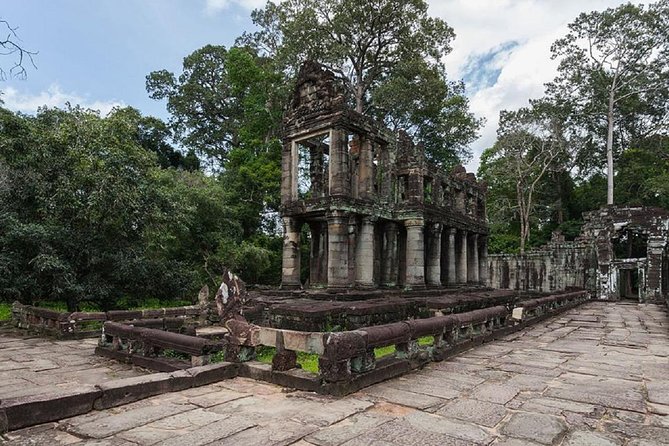
Preah Khan is called the Holy Sword temple, and the architecture style is from the Khmer Empire period. This stop gives you a more complex temple layout feel. You’re moving through spaces that feel carved for processions and ceremonial movement, not just sightseeing.
Neak Pean and Ta Som: smaller, atmospheric stops with rhythm
Neak Pean and Ta Som add rhythm. These are the sort of stops where you can slow down and notice that temples are built not only for the main view, but for the walk between views. If you like “in-between moments” more than headline moments, you’ll appreciate this section.
East Mebon and Pre Rup: the geometry and the viewpoints
East Mebon comes next, followed by Pre Rup. Pre Rup is one of those temples where the structure invites you to look around. Even without a formal lecture, you’ll understand why people used temple elevations as viewing points.
Plan for sun exposure here. If you are traveling in hot months, the midday light can flatten the mood, so it helps to be ready with water and shade breaks.
Banteay Samre and Banteay Srei: where the day slows just enough
Banteay Samre and Banteay Srei give you a breather. You’ll feel the pace shift, which helps you reset before the last major stop.
Banteay Srei is especially nice because it offers a different visual energy compared to some of the larger complexes. It can also be a relief after long walking stretches.
Kbal Spean: the final stop and a good day-ender
Kbal Spean is included at the end of Day 3. It’s the kind of destination that feels like a reward, because it breaks the pattern of temple-only views and gives you a final memory that feels separate from the earlier “stone city” vibe.
Because the details of what you do there are not spelled out in the schedule, I’d treat Kbal Spean as a potentially more outdoorsy final stop. Wear shoes you trust, and keep an eye on heat.
Price and value: what $144 covers, and what you’ll still pay
At $144 for 3 days, this tour is priced like a practical shortcut. You are paying for convenience: private tuk-tuk transport, daily hotel pickup, and those heat-saving extras like cold towels and cold water.
What is not included is equally important:
- Temple tickets
- Boat entrance fees
- Lunch near the temples
- An English tour guide
- Personal expenses
That means your real total will depend on how you handle tickets and lunch. If you already know you will buy tickets anyway and you want a driver to connect the dots, this can be good value. If you want an English guide for the whole day, check whether you need to arrange that separately, because English guiding is not listed as included.
The reason this matters: temple days are about timing. If you are paying with time and energy, it’s easy to lose hours to navigation and ticket lines. This tour pays you back in “less time wasted.”
What the best guides do: punctual, friendly, and flexible
One of the most consistently praised parts of this kind of Siem Reap day is not the temples. It’s the people who run the schedule.
In the experiences shared for Cambodia Golden Tours, the big themes are punctuality and courtesy. Drivers like Vutha and Ly are described as prompt, friendly, and professional, with fast communication through WhatsApp. You also get a practical benefit when your driver helps you avoid the heaviest crowd peaks, because it makes sunrise and midday temple time feel more humane.
A flexible driver also matters if your group has different walking speeds. This tour is private, so you can usually adjust the pace within the day’s overall plan.
If you care about deeper context and clear English explanations, you’ll want to plan for that. Since an English tour guide is not included, you might consider adding one if that is your style.
Timing, dress code, and heat-proof habits that keep you happy
Angkor is not a sit-and-stare museum. You’re walking, climbing, and standing in sun for long stretches.
The tour includes water and cold towels, which helps you stay functional. But you still need a simple routine:
- Bring a hat and breathable clothing (and follow the temple dress code rules)
- Use your breaks strategically, especially around the big open courtyards
- Keep hydration going, not just when you feel thirsty
Also, pay attention to the start time detail. The meeting start time is listed as 8:00 am, but the plan includes arriving early for Angkor Wat sunrise photos. Before Day 1, confirm whether your pickup is earlier than 8:00 am for sunrise.
Finally, think about how you want to do Kampong Phluk. If you want boat-related access, remember boat entrance fees are not included, so you should be ready to pay that on the spot.
Should you book the Angkor Wat 3-day temple tour?
If you want an efficient, first-timer friendly Angkor loop, I think this is a strong choice. You get a private tuk-tuk setup, hotel pickup each day, and the exact mix that makes sense for most short stays: Angkor Wat sunrise plus major Angkor highlights, early Khmer temple stops at Roluos, and then a real community experience at Kampong Phluk.
I’d only hesitate if you already have your own transport plans dialed in, or if you need an English guide as a must-have from start to finish. Since English guiding and most key fees are not included, your total budget could rise depending on your preferences.
For most people, though, the combination of convenience, heat comforts, and a day-by-day structure that does not require you to map your own route makes the $144 price feel fair.
FAQ
What is the price for the Angkor Wat 3-day temple tour?
The price is $144 for the 3-day experience (approx.).
How long is the tour?
It runs for about 3 days.
Does the tour include hotel pickup and transport?
Yes. You get picked up from your hotel lobby each day by your private tuk-tuk, and tuk-tuk transport is included.
Are temple tickets included in the price?
No. Temple tickets are not included.
Are boat entrance fees included for Kampong Phluk?
No. Boat entrance fees are not included.
What is included for comfort during the day?
The tour includes cold water and cold towels.
What time does the tour start?
The start time is 8:00 am. The plan also includes arriving early for Angkor Wat sunrise photos, so you should confirm timing for the sunrise portion.
Newly listed around Siem Reap
- Sambor Prei Kuk Off Beaten Track★ 5.0 · 3 reviews
- Siem Reap Airport Taxi Transfer – City Center Hotels★ 5.0 · 5 reviews
- Unveiling the Mystical Beauty of Phnom Kulen National Park★ 5.0 · 6 reviews
- Angkor Wat at Sunrise★ 4.0 · 7 reviews
- Short Cycling at Countryside★ 5.0 · 29 reviews
- Bakong Temples & Floating Village Tour★ 4.5 · 3 reviews
- Rooftop Romantic Dinner – 4 Courses Set Meal & Wine★ 3.5 · 5 reviews
- Khmer Cooking Class in Cambodia★ 5.0 · 36 reviews
Angkor Wat Tours, compared.
Angkor Wat Sunrise or Sunset Tour with Guide from Siem Reap
Read our review →
Angkor Wat: Small-Group Sunrise or Sunset Tour
Read our review →
Angkor Wat 2-Day Tour with Sunrise and Sunset
Read our review →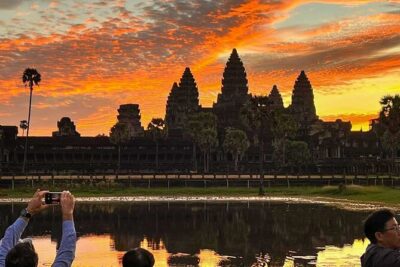
Angkor Wat Sunrise tour with Small – Group and Guide tours
Read our review →
Angkor Wat Highlights and Sunrise Guided Tour from Siem Reap
Read our review →
Angkor Wat Sunset Small Group Tour with Lunch Included
Read our review →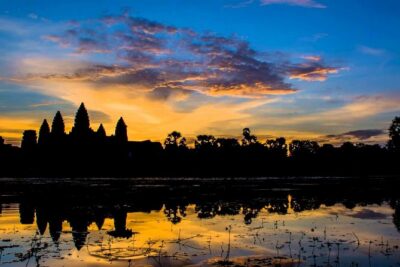
Full-Day Angkor Wat Sunrise Private Tour with Guide from Siem Reap
Read our review →Browse the lists this tour appears in