
Review · ANGKOR WAT TOURS
Angkor Wat Admission Ticket
Sunrise at Angkor is a race. This Angkor Archaeological Park pass gets your ticket handled in advance, with hotel delivery so you can focus on temples, not the ticket office.
You choose a 1-, 3-, or 7-day option based on your schedule, and the pass is valid from sunrise to sunset on your own timing, including stops across multiple temple circuits.
What I like most is how practical the setup is on a tight itinerary. First, you avoid the morning scramble at the ticket window, which matters a lot if Angkor Wat is your first stop at dawn. Second, the pass is designed for repeated entry checks, and in practice the included lanyard makes those guard checks quick and organized.
One thing to consider is price. This service costs more than the face value you’d pay at the Angkor ticket office, so if you enjoy risk and waiting in lines, you might not need it.
In This Review
- Key Highlights to Know Before You Go
- Why Pre-Booking the Angkor Pass Makes Sunrise Less Stressful
- The Hotel Delivery and Photo Rules That Keep Your Ticket From Getting Stuck
- How the Temple Day Flows: Angkor Wat, Angkor Thom, Bayon, and Ta Prohm
- Angkor Wat: the big first act
- Angkor Thom: the walled capital feel
- Ta Prohm: the movie temple, and the real forest effect
- Bayon Temple: faces, towers, and close-up detail
- The “Second Day” Energy: Preah Khan, Banteay Srei, Bakong, and More
- Preah Khan: an honored temple with a connected layout
- Banteay Srei: the “Ladies temple” that rewards careful looking
- Bakong: a classic early temple mountain
- Roluos and Small Temples: Short Walks, Big Payoff
- The Roluos trio: Preah Ko, Lolei, and more context
- Smaller stops that keep your eyes awake
- Farther Sites on Longer Passes: Kbal Spean, Phnom Bok, Beng Mealea, and the Practical Limits
- Kbal Spean: the bridgehead carvings stop
- Pre Rup and Ta Keo: temple-mountains with viewpoints
- Beng Mealea: the wild one
- Phnom Kulen and Koh Ker: plan a separate ticket
- Practical Tips for an Angkor Day That Doesn’t Beat You Up
- Price and Value: Is the $59 Ticket Delivery Fee Worth It?
- Should You Book This Angkor Wat Admission Ticket Service?
- FAQ
- When will the ticket be delivered to my hotel?
- What photo do you need for the ticket?
- How long is the pass valid?
- Is transportation to the temples included?
- Are Phnom Kulen and Koh Ker included with this pass?
- Can I get a refund or transfer the pass?
Key Highlights to Know Before You Go
- Skip the sunrise ticket line: Your pass is delivered to your hotel, so you can start your day earlier.
- Choose the right pass length: 1-day, 3-day, or 7-day coverage lets you pace the temples without rushing.
- Sunrise to sunset access: You control the timing, not a fixed group schedule.
- Hotel drop-off under your name: The ticket is delivered to the front desk, ready for checks at the gates.
- Built for multiple temple entries: The pass is checked repeatedly as you move around the park.
- Real-world support from the team: Communication happens fast, including reminders to send passport photos.
Why Pre-Booking the Angkor Pass Makes Sunrise Less Stressful

Angkor Wat sunrise is the moment everyone pictures. It’s also the moment everyone wants to be there at the same time. If you try to solve tickets on the morning of your early visit, you add unnecessary stress to an already early wake-up call.
With this pass, you can plan your temples like a pro. You’re not juggling ticket office hours, lines, or last-minute paperwork. Instead, the pass is delivered to your hotel front desk in the evening at 6 pm for the next following day visits. That means you can go straight to your first temple in the early morning, rather than spending precious hours figuring out tickets.
I also appreciate that the pass is built for “come back again” days. Angkor is spread out. Even if you hire a guide later, you still benefit from having your entry handled ahead of time so you can spend your energy on walking, viewing, and photographing the real details up close.
More Angkor Wat tours in Siem Reap:
- Angkor Wat Sunrise or Sunset Tour with Guide from Siem Reap
★ 5.0 · 12,109 reviews - Siem Reap: Angkor Wat: Small-Group Sunrise or Sunset Tour
★ 5.0 · 9,444 reviews - Siem Reap: Angkor Wat 2-Day Tour with Sunrise and Sunset
★ 4.9 · 4,429 reviews
The Hotel Delivery and Photo Rules That Keep Your Ticket From Getting Stuck
This is one of those travel services that feels easy when everything goes right, and annoying when it doesn’t. The reason is simple: your pass includes a photo, and the operator must have the right passport images before they can issue the ticket.
Here’s what you should plan for:
- You’ll need to email passport photos for every traveler in your booking after you book.
- If photos are not received, you may not get a ticket issued.
- The pass is delivered to your hotel the night before your visit window starts.
Why this matters for you: Angkor days are intense. You do not want to spend your morning emailing, re-sending documents, or trying to fix a photo issue while everyone else is already heading toward the temples.
A small but smart detail: your ticket must be kept and shown to the ticket controller when requested. The pass isn’t just a one-time wristband. It’s an identity-linked document, and the checks happen when you enter different temple zones.
How the Temple Day Flows: Angkor Wat, Angkor Thom, Bayon, and Ta Prohm
Think of Angkor like a set of neighborhoods. Your pass lets you hop across them over multiple days, but you still need a sense of flow so you don’t zigzag across the park all day.
Angkor Wat: the big first act
Angkor Wat is the largest religious monument in the world, set on a huge 162.6-hectare site. Expect it to take time, not because it’s hard to walk, but because it’s impossible to rush your eyes. You’ll typically plan around a couple hours here if you want to see the main areas without feeling frantic.
Go early if you can. The pass is set up to help you do that, because you’re not waiting on tickets. If you’re going for sunrise, that means your early start stays about sunrise, not admin.
A few more Siem Reap trips to compare
- Siem Reap: Phare, the Cambodian Circus Show Tickets
★ 4.9 · 1,850 reviews - Siem Reap: Angkor Wat Admission Ticket
★ 4.7 · 106 reviews - Ticket for Angkor Balloon Ride.
★ 3.7 · 46 reviews - Kulen National Park Ticket
★ 5.0 · 33 reviews
Angkor Thom: the walled capital feel
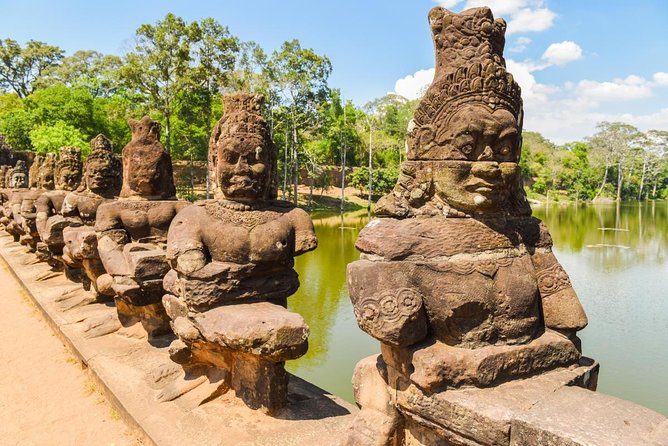
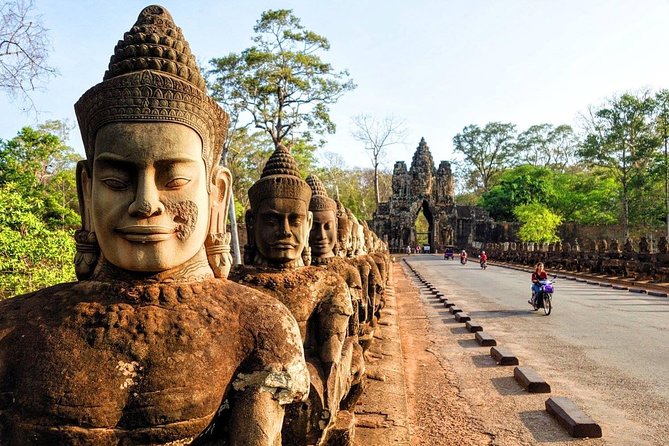
Angkor Thom was the last and most enduring capital of the Khmer empire. It’s anchored to the late 12th century, founded by King Jayavarman VII. This is where the vibe shifts from grand temple icon to whole-city layout.
You’ll likely spend about 1 hour 20 minutes here depending on how often you stop for photos and details. In plain terms, this is your “big orientation” stop. You start to understand the geometry of the Khmer city.
Ta Prohm: the movie temple, and the real forest effect
Ta Prohm is famous from pop culture, but it’s famous for a reason. It’s built in the Bayon style, mostly late 12th and early 13th centuries, and it’s visually chaotic in the best way. Massive roots and tree growth make it feel like the jungle is reclaiming stone.
Give it around an hour. You’ll see people sprint for perfect frames. You’ll enjoy it more if you slow down and watch the way the roots carve through towers and corridors.
Bayon Temple: faces, towers, and close-up detail
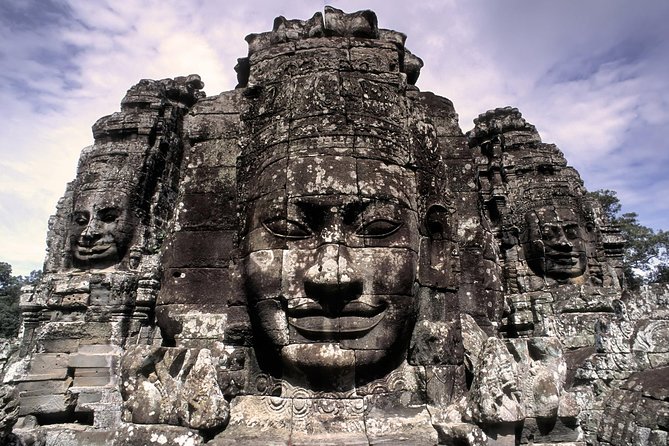
Bayon is richly decorated and serves as the state temple of the Mahayana Buddhist king Jayavarman VII. It sits at the center of the area you’ve been approaching all morning, and it’s a great place to settle into “this is why Angkor matters” mode.
Plan around an hour for Bayon, and don’t underestimate the time you’ll spend standing still. The faces and carvings invite repeat looks, even if you think you’ve got photos already.
The “Second Day” Energy: Preah Khan, Banteay Srei, Bakong, and More
If your schedule allows more than a day, this is where your trip improves fast. The first day can feel like a sprint between highlights. The second day is where the stones stop feeling like icons and start feeling like places you visited.
Preah Khan: an honored temple with a connected layout
Preah Khan was built in the 12th century for King Jayavarman VII to honor his father. It’s northeast of Angkor Thom and near the Jayatataka baray. You get a temple with structure and a sense of connection to the water and city planning around it.
Expect about 1 hour 20 minutes, enough time to understand the main layout without burning your legs.
Banteay Srei: the “Ladies temple” that rewards careful looking
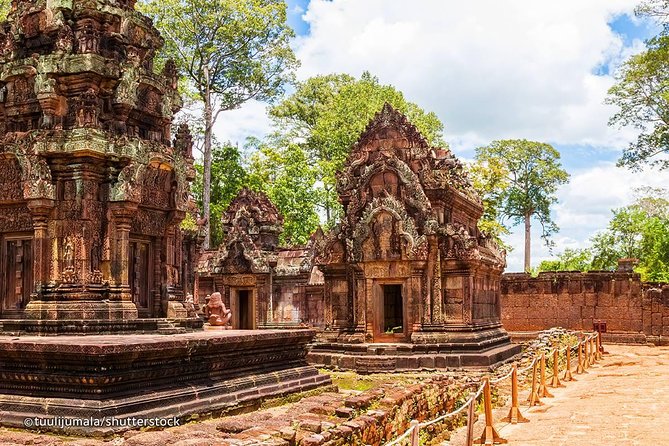
Banteay Srei, dedicated to Shiva, is known as the Ladies temple. It’s a 10th-century temple near Phnom Dei, about 25 km northeast of the main group. That distance alone helps you feel like you’re doing something special, not just repeating the same stones.
This stop is listed around 1 hour. If you’re into carvings and proportion, you’ll probably want a bit more time, because small details matter here.
Bakong: a classic early temple mountain
Bakong is the first temple mountain of sandstone constructed by Khmer rulers in the 9th century. It’s near modern Siem Reap, about 15 km from town.
Plan about an hour. Bakong is great for seeing how earlier Khmer design thinking sets the stage for the later, larger complexes.
Roluos and Small Temples: Short Walks, Big Payoff
Some of the best temple moments are the ones you can fit between bigger hits.
The Roluos trio: Preah Ko, Lolei, and more context
Lolei is the northernmost temple of the Roluos group, with Preah Ko and Bakong as the other members. It’s late 9th-century and Hindu. You’ll likely pair Lolei with other Roluos stops because the area is compact compared with the main Angkor group.
Preah Ko is listed as about 30 minutes. These smaller temples can feel easier on your schedule, especially after a long sunrise morning.
Smaller stops that keep your eyes awake
You’ll also find places like Baksei Chamkrong (about 30 minutes) and Ta Som (around 40 minutes) in the longer pass plan. These aren’t always the headline, but they’re the ones that prevent your day from becoming one long line of “biggest temple” comparisons.
If you want your Angkor photos to look varied, these stops help a lot.
Farther Sites on Longer Passes: Kbal Spean, Phnom Bok, Beng Mealea, and the Practical Limits
A 3-day or 7-day pass is not just more days. It’s more freedom to spread out. Longer passes let you include sites outside the tight main area so you don’t spend your whole trip stuck in traffic and repetition.
Kbal Spean: the bridgehead carvings stop
Kbal Spean is an archaeological site on the southwest slopes of the Kulen Hills. The plan here lists Kbal Spean as 3 hours and notes it as admission ticket free in the stop info.
If you’re chasing the more unusual Angkor experience, this is one. You’ll want to bring water, because longer walks and heat can surprise you.
Pre Rup and Ta Keo: temple-mountains with viewpoints
Pre Rup is a temple mountain with a 10th-century origin (built as the state temple of Rajendravarman). It’s listed around 30 minutes. Ta Keo, possibly the first sandstone temple built entirely of sandstone by Khmers in the 11th century, is around 40 minutes.
These are good “middle day” stops because they give you perspectives without demanding the full time of Angkor Wat.
Beng Mealea: the wild one
Beng Mealea is 40 km east of the main group and listed around 2 hours, marked as admission ticket free. This is a different kind of Angkor day. If you like exploring ruins that feel less curated, you’ll enjoy it.
Phnom Kulen and Koh Ker: plan a separate ticket
The pass you buy here is an Angkor National Park ticket, but it does not cover everything. The info you have says Phnom Kulen and Koh Ker require a separate ticket. So if those are on your must-see list, build that in early and don’t assume your Angkor pass will cover them.
Practical Tips for an Angkor Day That Doesn’t Beat You Up
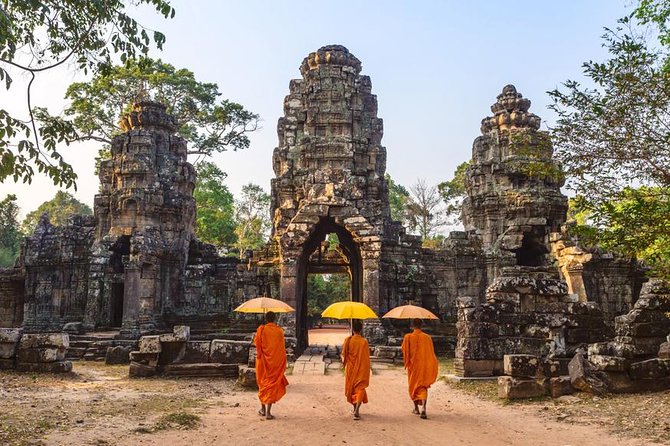
Angkor isn’t “difficult” in a technical sense, but it is demanding. Stone stairs plus walking plus heat equals sore legs. One review advice stands out: wear safe, comfortable shoes. You’ll thank yourself after the first couple temples.
Also:
- Plan your clothing like a respectful site visitor. Shoulders and knees should be covered.
- Expect repeated entry checks and keep your pass accessible.
- Don’t touch carvings, and avoid anything that gets you scolded at the gate.
- If you’re traveling with kids, note that children under 12 don’t need a ticket for the national park but need passport age proof.
If you want a more meaningful visit, consider pairing your pass with an actual guide. One name that comes up in this kind of setup is Bunthang Lim, and guides like Mr Ho, Sok Piseth, Bob, and Vantha are also specifically associated with great experiences. Even when you’re doing it self-guided, a guide can help you notice what you’d otherwise miss.
Price and Value: Is the $59 Ticket Delivery Fee Worth It?

Let’s talk value, not just numbers. You’re paying $59 per person, but the “official ticket price” baseline is listed as $37 for 1 day, $62 for 3 days, and $72 for 7 days, plus service fees. That means your service cost is essentially buying convenience and reduced risk.
So when is that value real?
- If Angkor Wat is your first stop and you don’t want to gamble on ticket lines.
- If sunrise is on your agenda, and you’d rather spend time at temples than standing in queue.
- If you want peace of mind that the pass is physically waiting at your hotel in time.
When might it feel less worth it?
- If your dates are flexible and ticket lines are manageable.
- If you’re comfortable buying tickets on-site and have a buffer in your schedule.
There’s also a review point worth taking seriously: one person felt they paid more because the online service fee added a noticeable surcharge compared to the face value. That can happen when you prioritize convenience. You just need to decide if that trade fits your travel style.
Should You Book This Angkor Wat Admission Ticket Service?
If you’re planning a sunrise visit, this is an easy yes. Pre-arranging your Angkor Archaeological Park pass means you spend less time dealing with the ticket office and more time doing the fun part, seeing Angkor while the light is good and the crowds are thinner.
I’d also recommend it if your schedule is tight and you can’t afford a ticketing hiccup. The pass is photo-linked and the delivery timing helps you stay on track.
Skip it or think twice if you’re mainly just buying flexibility and you don’t care about early access, and you’re comfortable handling ticketing yourself. Also, only book if you’ll actually send the required passport photos on time, because that’s what makes the whole “delivered to your hotel” promise work.
In short: if your top goal is efficient, low-stress entry into Angkor, this ticket delivery service is a strong fit.
FAQ
When will the ticket be delivered to my hotel?
The ticket is delivered to your hotel front desk under your name in the evening at 6 pm for your visit on the next following days.
What photo do you need for the ticket?
You must email passport photos of all travelers after booking. If photos are not received, you will not be issued a ticket.
How long is the pass valid?
Your pass validity is set from and to dates printed on it, and it is not valid after the validity date.
Is transportation to the temples included?
No. Transportation to the sites is not included (tuk tuk, car, minivan, or bus would need to be arranged separately).
Are Phnom Kulen and Koh Ker included with this pass?
No. Visits to Phnom Kulen and Koh Ker temples require a separate ticket.
Can I get a refund or transfer the pass?
Passes are not refundable and they are not transferable. The pass contains a photo of you, so it’s tied to the person it was issued for.
Newly listed around Siem Reap
- Sambor Prei Kuk Off Beaten Track★ 5.0 · 3 reviews
- Siem Reap Airport Taxi Transfer – City Center Hotels★ 5.0 · 5 reviews
- Short Cycling at Countryside★ 5.0 · 29 reviews
- Unveiling the Mystical Beauty of Phnom Kulen National Park★ 5.0 · 6 reviews
- Angkor Wat at Sunrise★ 4.0 · 7 reviews
- Bakong Temples & Floating Village Tour★ 4.5 · 3 reviews
- Rooftop Romantic Dinner – 4 Courses Set Meal & Wine★ 3.5 · 5 reviews
- Khmer Cooking Class in Cambodia★ 5.0 · 36 reviews
Angkor Wat Tours, compared.

Angkor Wat Sunrise or Sunset Tour with Guide from Siem Reap
Read our review →
Angkor Wat: Small-Group Sunrise or Sunset Tour
Read our review →
Angkor Wat 2-Day Tour with Sunrise and Sunset
Read our review →

Angkor Wat Sunrise tour with Small – Group and Guide tours
Read our review →
Angkor Wat Highlights and Sunrise Guided Tour from Siem Reap
Read our review →
Angkor Wat Sunset Small Group Tour with Lunch Included
Read our review →