Review · ANGKOR WAT TOURS
Angkor Wat & Banteay Srey Tour
Angkor Wat has a way of resetting your brain. This 7 to 10 hour tour packs Angkor Wat, Bayon, Ta Prohm, and then pushes out to the quieter, pink-stone beauty of Banteay Srei. What makes it especially workable is the straightforward plan: pickup from your hotel lobby, a quick stop to sort out the temples pass, and then a full circuit without you juggling ticket lines.
Two things I really like: you get A/C transportation plus cool towels and drinking water, which matters in Siem Reap heat, and you travel with a speaking guide and driver who can explain what you’re looking at. In the same day, you also get a mix of big iconic moments and slower, more delicate carvings, rather than only doing the same crowd-famous viewpoints.
One drawback to keep in mind: the entrance fees are not included, and the Angkor Wat stop is listed as having admission not included, with only some other temple stops marked free. So your final cost depends on the temples pass and onsite admission rules.
In This Review
- Key highlights you’ll feel right away
- Price and logistics: what $50 really buys
- Hotel pickup, A/C comfort, and the day rhythm
- Angkor Wat first: why it sets your standards for the day
- Bayon Temple and Angkor Thom: smiling faces, real damage history
- Ta Prohm: where trees called Spung take over
- Banteay Srei: pink sandstone carvings and the Lady Temple feel
- Banteay Samre: a simpler Hindu temple finish near East Baray
- Guides and the human touch: what good guiding changes
- Photography, heat, and walking tips that keep the day fun
- Who should book this tour, and who might want a different plan
- Should you book Easy Angkor Trip’s Angkor Wat and Banteay Srey tour?
- FAQ
- Is pickup from my hotel included?
- What’s included in the tour price?
- Are temple entrance fees included?
- Do I need to buy a temples pass?
- How long is the tour?
- Which temples are visited?
- Is sunrise included?
- Is this tour private?
- Can I cancel for a full refund?
Key highlights you’ll feel right away
- Hotel pickup that reduces stress, so you spend your energy on temples, not logistics
- Angkor Wat and Bayon in one flow, big scales first, then the smiling faces of Angkor Thom
- Ta Prohm’s tree-growth effect, where sandstone walls get visually overwritten by roots
- Banteay Srei, 35 km off the main circuit, plus a mid-way look at sugar palm products
- Small-group, private setup, since it’s your group only, not a mixed crowd shuffle
Price and logistics: what $50 really buys
At $50 per person, this tour feels like a decent value for a full-day temple route, mainly because the “day package” is handled for you. You’re paying for pickup, A/C transport, and a speaking guide and driver, plus the comfort extras like cool towels and bottled water.
What’s not included is the part everyone forgets until the last second: entrance fees and meals. The plan also notes a sunrise extra charge (so if you’re thinking of sunrise photos, budget separately). In other words, the tour cost covers the ride and guiding, while the temples pass and admissions are the variable.
Good to know: it’s listed as private, so you’re not crammed into a random schedule with strangers. Group discounts are also advertised, which can matter if you’re booking with friends or extended family and want a lower per-person price.
If you’re trying to keep the day smooth, the best strategy is to be ready with the money for the temples pass and admissions. The route includes a step where your guide or driver heads to the ticket office to buy your temples pass before you start temple time.
More Angkor Wat tours in Siem Reap:
- Angkor Wat Sunrise or Sunset Tour with Guide from Siem Reap
★ 5.0 · 12,109 reviews - Siem Reap: Angkor Wat: Small-Group Sunrise or Sunset Tour
★ 5.0 · 9,444 reviews - Siem Reap: Angkor Wat 2-Day Tour with Sunrise and Sunset
★ 4.9 · 4,429 reviews
Hotel pickup, A/C comfort, and the day rhythm
The tour begins with pickup from your hotel lobby at the time you selected during booking. That matters in Siem Reap because timing drives everything: temples start early, heat ramps up fast, and parking and entrance lines can feel chaotic if you’re doing it alone.
Once you’re in the vehicle, you get A/C transportation plus cool towels and drinking water. It sounds like small stuff, but it’s the difference between enjoying the day and feeling drained by stop two or three. For long temple days, I treat these as “health supplies,” not freebies.
You’ll also be on a schedule that uses practical stop lengths: Angkor Wat first (listed as 3 hours), then Bayon (2 hours), Ta Prohm (2 hours), Banteay Srei (2 hours), and Banteay Samre (1 hour). That gives you enough time to see the main highlights at each site without the day dragging into a half-sleep blur.
Angkor Wat first: why it sets your standards for the day
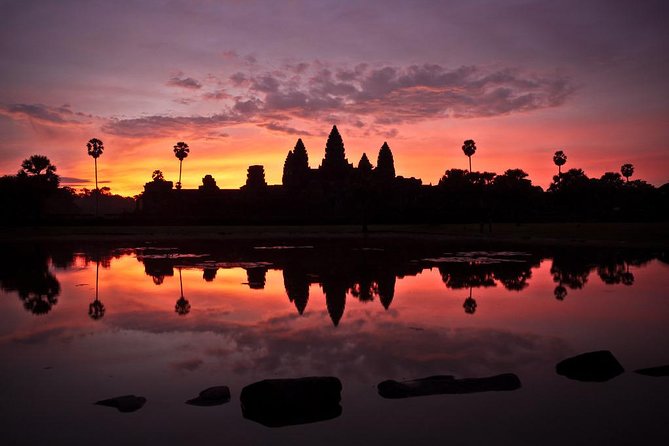
Angkor Wat is the main event, and the itinerary puts it at Stop 1 for a reason. Built in the 12th century, between 1113 and 1150, during Suryavarman II’s reign, it’s the largest and most famous Khmer temple complex. The plan notes the temple stands 65 meters high and sits within a moat, called Ko Tek.
On your first stop, focus on two things: scale and surface detail. This is where you really get the sense of “temple as architecture plus artwork.” The exterior and interior walls are covered with base-reliefs, so you’re not just looking at buildings. You’re reading stone stories.
A practical note on ticket costs: the Angkor Wat admission is listed as not included. So plan on paying that onsite or via the temples pass purchase at the ticket office. If you arrive thinking everything is already covered, you’ll feel annoyed instead of thrilled.
What to watch for while you’re there
- Take a moment to orient yourself around the moat and main levels. The complex is big, and your brain works better with a quick map in mind.
- Don’t try to rush every relief. Pick a few sections and read them slowly. It’ll make the later temples more meaningful because you start recognizing styles.
Bayon Temple and Angkor Thom: smiling faces, real damage history
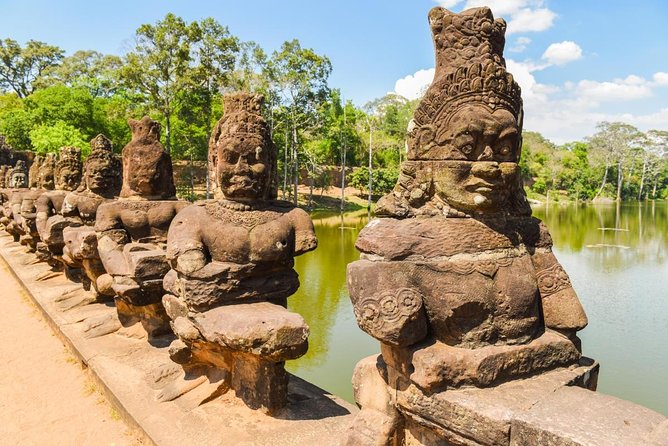
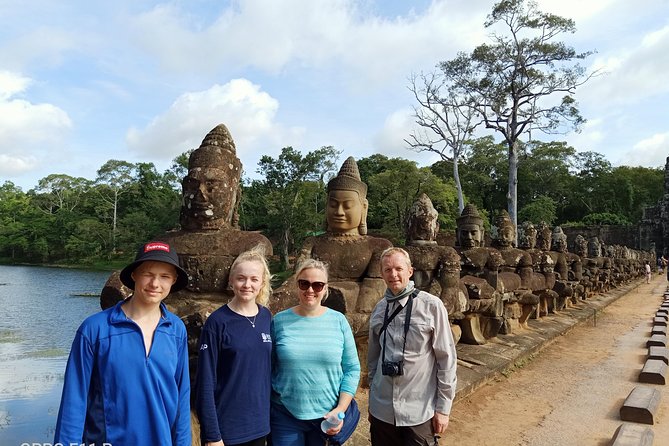
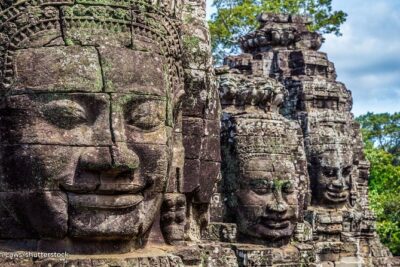
After Angkor Wat, you move to the Bayon Temple, also called Prasat Bayon or Angkor Thom. This is a Buddhist-style temple built in the late 12th or early 13th century by Jayavarnam VII. The key visual feature is the 54 towers, which represent the 54 provinces before and during the Khmer empire.
And then there are the faces. The plan describes over 200 smiling faces carved on the towers. That sounds like a marketing line until you’re standing there and realizing how the same expression changes with your angle and the light.
The Bayon also comes with a reminder that history includes breaks, not just beauty. It notes that Bayon was damaged in 1811 by Cham invaders. I like that your guide can frame this as part of the site’s story, not only as a “fun fact.”
Why this stop works after Angkor Wat
Angkor Wat is all grandeur and precision. Bayon shifts the mood toward human presence, with faces you can almost track as you walk. If you’re worried about sensory overload, Bayon is the relief break where your eyes finally get a clear focal point.
A different kind of day in Cambodia:
- From Siem Reap: Kampong Phluk Floating Village Tour by Boat
★ 4.9 · 6,979 reviews - Sunset tour of Kampong Phluk stilts home village on the Tonle Sap
★ 5.0 · 4,865 reviews - Siem Reap: Kampong Phluk Floating Village Tour with Boat
★ 4.9 · 3,843 reviews - Siem Reap: Full-Day Angkor Wat Guided Tour with Sunset
★ 4.9 · 3,803 reviews
Ta Prohm: where trees called Spung take over
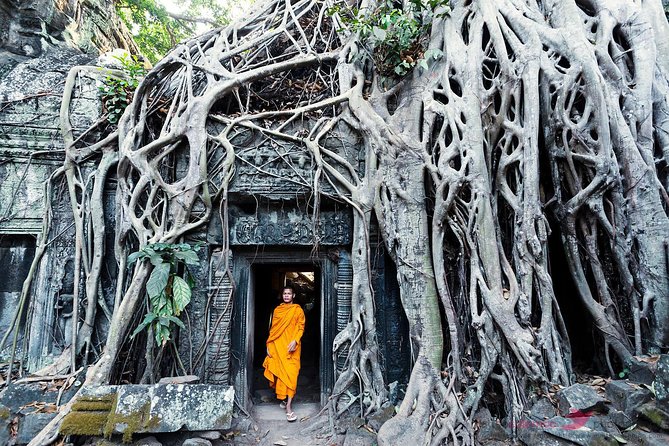
Next comes Ta Prohm, or Prasat Ta Promh, built in the late 12th century by Jayavarnarman VII and dedicated in 1186 to his mother. The important thing here is transformation. The plan says it originally had a Buddhist background, then later converted to Hindu, and some Buddhist galleries were destroyed and replaced with Hindu symbols such as Yoni and Lingam.
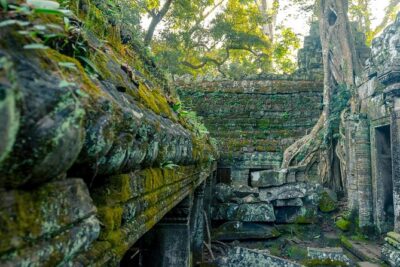
Then comes the reason Ta Prohm is a film and photo magnet: the trees. You’ll hear about the trees called Spung growing strongly up, on, and over the sandstone block walls. The result feels less like a ruin you visit and more like a living structure you stumble into.
What makes Ta Prohm special
- The temple and the vegetation share the same frame. It’s hard to take a boring photo here because the scene already has drama.
- You’ll notice the stone surfaces look different when roots and leaves frame them. That’s why the relief details sometimes feel more intimate than at Angkor Wat.
A consideration: take your time, but don’t plan on endless wandering. The route gives this stop 2 hours, which is often enough to see the main spreads and capture a few angles without turning Ta Prohm into your entire day.
Banteay Srei: pink sandstone carvings and the Lady Temple feel
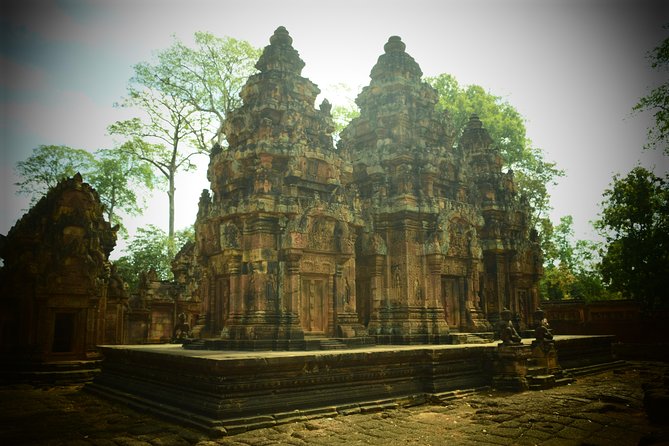
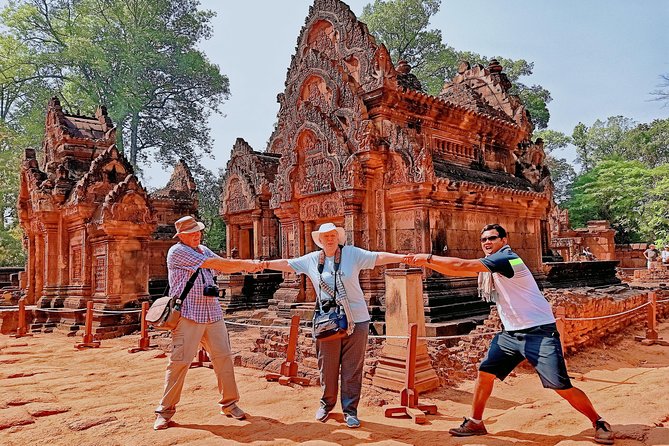
Banteay Srei is where the day turns from “big famous circuit” into “craft lover’s paradise.” The plan calls it the most beautiful pink sandstone temple with detailed carving, sometimes known as the Lady Temple because of the delicacy of its work.
This stop is also a distance breather. The itinerary notes it’s 35 kilometers away from the grand tour site, meaning you’ll spend some time traveling. For many people, that travel time is worth it because it changes the atmosphere and gives you a chance to breathe between crowds.
The itinerary also adds a small local detour mid-way: you can stop to see locals making natural sugar products from the sugar palm. Since this is not guaranteed to be a long, ticketed attraction, it’s more about what you might learn in passing. If you’ve never seen sugar palm processing up close, this is a moment that feels real and local, not a constructed show.
What you’ll want to do at Banteay Srei
- Look for fine carving rather than only overall structures. This is the site where “close-up attention” pays off.
- Keep your pace steady. Delicate carvings reward slow looking.
Banteay Samre: a simpler Hindu temple finish near East Baray
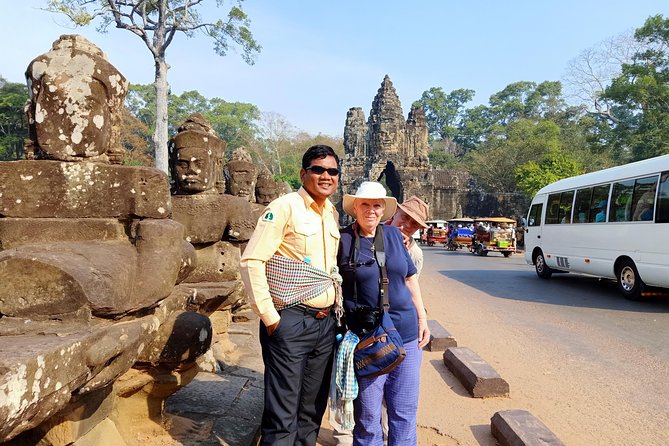
The last temple on the plan is Banteay Samré, located 400 meters east of the East Baray. It’s a Hindu temple built during the reign of Suryavarman II and Yasovarman II in the early 12th century, and the plan notes it follows the Angkor Wat style.
This stop is shorter, listed as 1 hour. That makes sense. By the end of the day, you’ve already hit the top “wow” visuals. Banteay Samré can feel like a clean closing chapter, the kind that confirms how varied Khmer temple design could be within a similar timeframe.
Practical take: treat this as a reset. Don’t force it to compete with Angkor Wat. Instead, let it be a quick way to round out your understanding of the complex Angkor world.
Guides and the human touch: what good guiding changes
The biggest reason people rate this kind of Angkor day highly is not the temples alone. It’s the guide.
From what’s commonly associated with this operator’s guiding style, you should expect friendly, attentive service and a guide who brings the sites to life with both history and present-day context. Names that show up often in this operator’s experience include Mr Oun Kosorl, and in at least some cases guides like Sinann or Kosorl step in. In plain terms, you get someone who cares about doing the day well, not someone who just recites a script.
There’s also a practical element: help with comfort and movement. One story tied to this operator includes support for a guest who was doubtful about climbing steep steps due to arthritic knees. That doesn’t mean everyone will have the exact same access path, but it signals the team’s willingness to adjust and assist within reason.
If you want a smooth day, ask your guide one simple question early, like what the easiest route is for the viewpoint you care about most. A good guide will have an answer that saves you time and energy.
Photography, heat, and walking tips that keep the day fun
Even with A/C and a planned route, Angkor is still a walking day. Here are the tactics I’d use so you don’t burn out before you get the shots you came for.
1) Start with your must-photograph list
At Angkor Wat and Bayon, pick one or two signature angles. Then explore beyond that. The day goes faster when you’re not trying to photograph everything at once.
2) Use the comfort extras early
Don’t wait until you feel awful. Take sips of water regularly and use cool towels when you first notice you’re overheating.
3) Pace yourself at Ta Prohm
Ta Prohm rewards lingering, but your legs will complain if you treat it like a marathon. Plan to slow down for 15 to 20 minutes, then do a faster loop, so you get both atmosphere and coverage.
4) Banteay Srei is for close looking
At pink stone and delicate carvings, speed can ruin the experience. Slow down here and you’ll remember it longer.
Who should book this tour, and who might want a different plan
This is a great fit if you want:
- A single-day route that covers Angkor Wat plus several key nearby temples
- Hotel pickup and A/C transport so the day feels organized
- A guide who can explain what you’re seeing, not just point at buildings
- A mix of major monuments and a more delicate, out-of-the-way temple stop
You might consider another plan if:
- You’re strictly budget-only and want entrance fees included in the upfront price
- You only want one or two temples and would rather spend the rest of the day at your own pace
- You’re planning a sunrise visit. The plan lists sunrise as having an extra charge, so it’s not folded into the standard cost.
Should you book Easy Angkor Trip’s Angkor Wat and Banteay Srey tour?
Yes, if your goal is a well-paced, guided Angkor circuit that includes Banteay Srei’s pink sandstone and that keeps logistics handled. The $50 price is best seen as paying for pickup, A/C comfort, water and towels, and guiding, while the temples pass and entrance fees handle the onsite access.
I’d book it if you want a day that feels balanced: iconic Angkor Wat at the start, Bayon and Ta Prohm for their distinct styles, then Banteay Srei for the craftsmanship and the short local sugar palm stop mid-way. If that mix matches your travel style, this tour is a practical way to see a lot without turning the day into a stressed scramble.
If you want more freedom, you can always create your own route. But if you’d rather focus on temples and photos, let the guide do the thinking.
FAQ
Is pickup from my hotel included?
Yes. Pickup is offered from your hotel lobby at the time you selected during booking.
What’s included in the tour price?
The tour includes A/C transportation, cool towels, cool drinking water, and a speaking guide and driver.
Are temple entrance fees included?
No. Entrance fees are not included. The Angkor Wat stop is listed as having admission ticket not included, while other stops are marked free on the itinerary.
Do I need to buy a temples pass?
Yes. The plan includes going to the ticket office to buy your temples pass.
How long is the tour?
It’s listed as 7 to 10 hours approximately, depending on the day and the schedule.
Which temples are visited?
You’ll visit Angkor Wat, Bayon Temple (Angkor Thom), Ta Prohm, Banteay Srei, and Banteay Samre.
Is sunrise included?
Sunrise is not included in the standard plan. Sunrise has an extra charge.
Is this tour private?
Yes. It’s listed as private, with only your group participating.
Can I cancel for a full refund?
Yes. You can cancel up to 24 hours in advance for a full refund. If you cancel within 24 hours of the start time, no refund is offered.
Newly listed around Siem Reap
- Sambor Prei Kuk Off Beaten Track★ 5.0 · 3 reviews
- Siem Reap Airport Taxi Transfer – City Center Hotels★ 5.0 · 5 reviews
- Short Cycling at Countryside★ 5.0 · 29 reviews
- Unveiling the Mystical Beauty of Phnom Kulen National Park★ 5.0 · 6 reviews
- Angkor Wat at Sunrise★ 4.0 · 7 reviews
- Bakong Temples & Floating Village Tour★ 4.5 · 3 reviews
- Rooftop Romantic Dinner – 4 Courses Set Meal & Wine★ 3.5 · 5 reviews
- Khmer Cooking Class in Cambodia★ 5.0 · 36 reviews
Angkor Wat Tours, compared.
Angkor Wat Sunrise or Sunset Tour with Guide from Siem Reap
Read our review →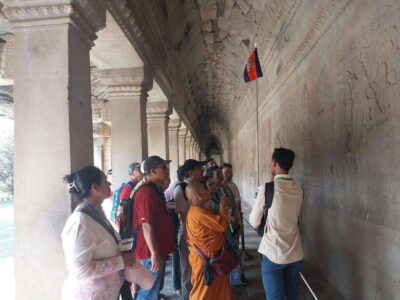
Angkor Wat: Small-Group Sunrise or Sunset Tour
Read our review →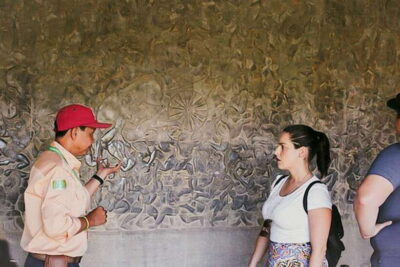
Angkor Wat 2-Day Tour with Sunrise and Sunset
Read our review →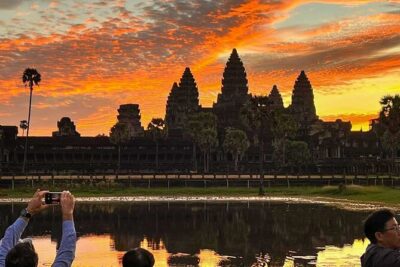
Angkor Wat Sunrise tour with Small – Group and Guide tours
Read our review →
Angkor Wat Highlights and Sunrise Guided Tour from Siem Reap
Read our review →
Angkor Wat Sunset Small Group Tour with Lunch Included
Read our review →