
Review · FLOATING VILLAGE TOURS
Bakong Temples & Floating Village Tour
Temple pyramids and floating homes, all in one day. I like how this Siem Reap outing pairs Bakong temple-mountain roots of the Khmer style with the real-world rhythm of Kampong Phluk on Tonle Sap. You also get pickup, an air-conditioned ride, and an English guide who can explain what you are seeing instead of just pointing.
What I love most is the temple focus at Prasat Bakong: the five-tier sandstone pyramid, the Mount Meru symbolism with moats and walls, and the early Naga causeway details you can still recognize. The other big win is the guide energy, with examples like Mr Oun Kosorl and Mr K, who make the Khmer story feel human, including moments such as a school stop where kids learn English.
One consideration: the tour price does not cover all admission, so you may add some extra cash for entry at certain sites (and the floating village).
In This Review
- Quick hits you will remember
- Getting there in comfort: pickup, AC, and how long it really feels
- Lolei Temple: a quiet Roluos stop that sets your eye
- Preah Ko and Hariharalaya: where the Khmer story links to the past
- Prasat Bakong: the temple-mountain prototype and the Naga causeway
- Kampong Phluk floating village: water seasons, boats, and real community life
- Price and value: what $45 covers, and what might cost extra
- What the guides add: history you can actually use
- Who should book this tour (and who should skip it)
- Final decision: should you book Bakong Temples & Kampong Phluk?
- FAQ
- How long is the Bakong Temples & Floating Village Tour?
- What is the price per person?
- Does the tour include pickup and drop-off?
- Is admission included for all stops?
- What’s included in the tour price?
- Is it a private tour?
- What ticket format do you get?
- How far in advance is it commonly booked?
- What is the cancellation policy?
Quick hits you will remember
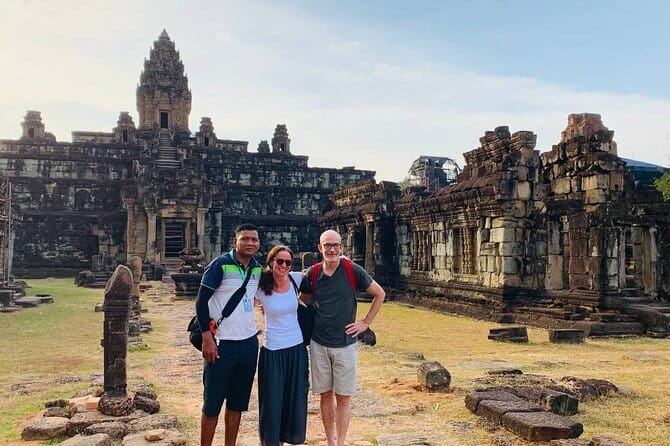
- Bakong’s Mount Meru layout helps you read Khmer temple design fast, even if you are not a temple expert.
- Lolei and Preah Ko give you a calmer start than the main Angkor crowd, with different eras and settings.
- Elephant and lion guardian statues on Bakong’s lower levels add a very physical, tactile feel.
- Kampong Phluk is built for water seasons, with homes either floating or raised on stilts in the dry season.
- English-speaking guides like Mr Oun Kosorl and Mr K can turn the day into a story, not a checklist.
Getting there in comfort: pickup, AC, and how long it really feels
This is a 6 to 8 hour outing, which is a sweet spot in Siem Reap. You get pickup and drop-off, plus cold drinking water in the car, so the day starts easier than the usual hot scramble to meet a driver.
The route also makes sense: you spend the morning moving through temple sites (Lolei, Preah Ko, and Bakong), then shift to Tonle Sap for the floating village part. That flow matters because the floating village experience is visual and sensory, so you will want your energy to be decent when you arrive.
Do note the obvious practical point: you are outside for multiple stops. Wear sun protection and comfortable shoes, especially if any walking paths get slick near water areas.
More Countryside & Village Tours in Siem Reap
- From Siem Reap: Kampong Phluk Floating Village Tour by Boat
★ 4.9 · 6,979 reviews - Siem Reap: Kampong Phluk Floating Village Tour with Boat
★ 4.9 · 3,843 reviews - Kampong Phluk Floating Village Tour by Boat
★ 5.0 · 1,020 reviews
Lolei Temple: a quiet Roluos stop that sets your eye
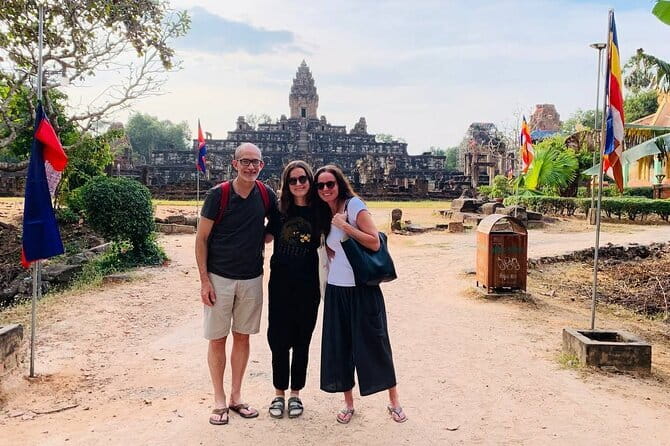
Lolei is the northernmost temple in the Roluos group, and it comes from the late 9th century Hindu temple era. The feel here is different from the bigger, later complexes: you get a more intimate sense of scale, and you can actually look at stonework instead of constantly dodging crowds.
At this stop, expect about an hour on site. Admission is not included here, so if you are using an Angkor Pass, you will want to confirm what it covers before you go. If you do not have the pass, plan for entry costs.
The value of Lolei is not just that it is a temple. It is that it gives you a baseline for the older style before you move into the Bakong temple-mountain approach, which has its own strong design logic.
Preah Ko and Hariharalaya: where the Khmer story links to the past
Preah Ko is connected to an older, now-defunct city called Hariharalaya, about 15 kilometers southeast of the main Angkor temple cluster. That distance detail matters because it helps you understand Khmer rulers were building networks of important places, not only one famous site.
You get about an hour here too, and admission is free. That makes Preah Ko a smart stop if you are trying to keep costs predictable.
What I like about Preah Ko is how it acts like a bridge. You see earlier temple-building ideas, then later you get to Bakong, which feels like a clearer prototype for the temple-mountain concept that people associate with Angkor’s most famous architecture.
Prasat Bakong: the temple-mountain prototype and the Naga causeway
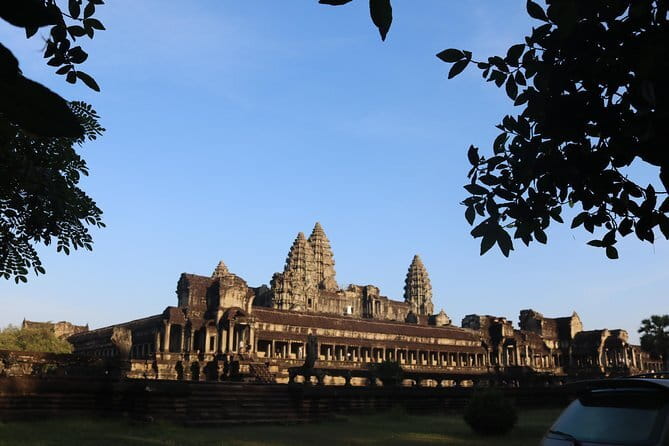
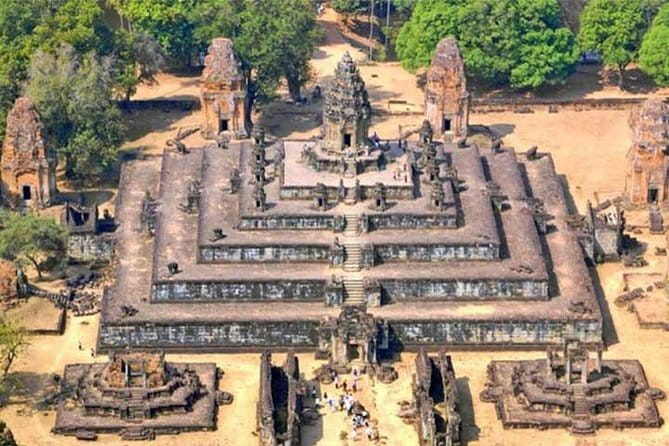
Bakong, built in 881 AD under King Indravarman I, is the first Khmer temple-mountain of the Khmer Empire at Angkor near modern Siem Reap. If you want one reason to care about Bakong, it is this: it is treated as the prototype for later temple-mountain structures like Angkor Wat.
You are on site for about two hours, and admission is free here. That is a big value point because the stop is long enough to really read the design instead of just snapping photos and moving on.
Here is what you should focus on as you walk:
- The five-tier sandstone pyramid shape, which gives a strong sense of rising hierarchy.
- The symbolic layout of Mount Meru, with moats and enclosing walls that frame the sacred space.
- The earliest known example of a Naga causeway in Khmer architecture, a design detail that you can learn to spot with your guide’s help.
- The large guardian statues on the lower levels, including elephants and lions, which bring the temple to life with animal power.
Two hours might sound like a lot until you do it. In practice, it is perfect for catching the design logic and learning how the tiers relate to the surrounding structure. It also gives you time to step back, look at angles, and understand why temple-mountain plans made such an impact on later Khmer builders.
More floating village trips in Siem Reap:
- Sunset tour of Kampong Phluk stilts home village on the Tonle Sap
★ 5.0 · 4,865 reviews - Siem Reap Floating Village Kampong Phluk Sunset with Boat
★ 5.0 · 1,962 reviews - Siem Reap: Kulen Mountain, Beng Mealea and Tonle Sap Tour
★ 5.0 · 1,483 reviews - Tonle Sap Lake & Kampong Phluk Village Half-Day Tour
★ 5.0 · 1,045 reviews
Kampong Phluk floating village: water seasons, boats, and real community life
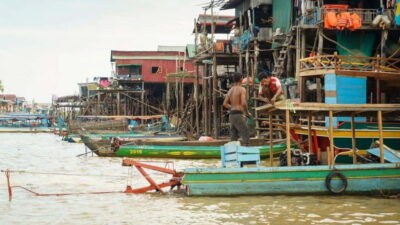
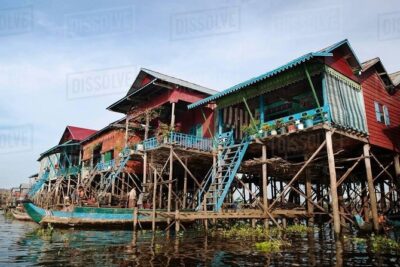
Kampong Phluk is the big floating village stop, and it is tied to Tonle Sap Lake, the large lake system that supports life across several provinces in Cambodia. The village is not a single fixed style. It is an entire community infrastructure built on water, including homes, schools, and shops.
This stop is about three hours. Admission is not included, so you will likely add extra costs depending on what you are covering with any pass.
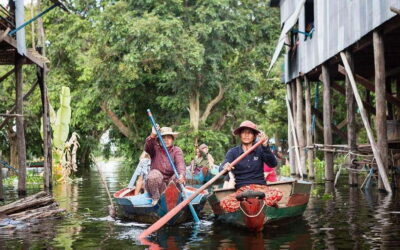
The central idea to understand is seasonal change. Kampong Phluk adapts as water levels rise and fall. Some structures float directly on the water, while others are built on stilts that rise high above the ground during the dry season. When you watch the village design like that, everything starts to make sense, even if you have never seen a floating settlement before.
You will likely include some boat time to reach parts of the village area, and the ride itself is part of the experience. It is also a good reminder to dress for practical comfort. Water and wind can affect how long you want to stand or move around, so keep your layers light and your shoes stable.
One of the most meaningful moments, from what guides can include, is a visit to a school for grade school children where learning English is part of daily life. Even if that specific stop is brief, it adds context. You see the village not only as a photo scene but as a working place with routines and goals.
And yes, life can look difficult. People can seem happy anyway, and that contrast is part of why the floating village hits harder than temples alone. It is not a neat, postcard story. It is people adapting their whole built environment to the lake’s changes.
Price and value: what $45 covers, and what might cost extra
At $45 per person, this tour is priced like a half-day convenience plus guided context. For that, you get an English-speaking tour guide, pickup and drop-off, cold drinking water, and an air-conditioned vehicle. You also benefit from the fact it is private for your group, not mixed with strangers you did not choose.
The value calculation gets clearer when you separate the guide and transport from admissions. Several sites are free, including Preah Ko and Prasat Bakong. But admission is not included for Lolei and Kampong Phluk.
So the real total cost depends on whether you already have an Angkor Pass and which parts it covers. The tour notes an Angkor Pass figure around $37 per person for admission under it, but the key point is simple: check what your pass includes before you assume everything is covered.
If you are the type of traveler who benefits from a good narrative, you will feel the value. If you only want to wander and take photos, you might decide you could do it cheaper on your own. But for most people, the guide helps you see why Bakong matters and why the floating village is engineered for water, not just built on it.
What the guides add: history you can actually use
A strong guide can change the whole day. In the feedback, guides such as Mr Oun Kosorl and Mr K get praised for charm and insight on the history of Siem Reap and the temples, and that matters.
What does that look like in practice?
- You understand why Bakong is called a prototype, not just why it is old.
- You learn what the symbolic elements are meant to represent, like Mount Meru and the role of moats and walls.
- You notice architecture details such as the Naga causeway instead of missing them because they do not jump out immediately.
- At the floating village, you see daily life with better context, including school education and how the community organizes around the seasons.
If your guide is good, you spend more time looking and less time guessing. That is the best kind of value.
Who should book this tour (and who should skip it)
This tour is a good fit if you want a combined day with both Khmer temple-mountain design and a living water-based community. It also works well if you like structure and explanation, because the day has clear stops and a guide-led flow.
You may want to pick something else if:
- You only care about the most famous Angkor sites and want the day packed with those.
- You hate boat time or you get uncomfortable moving around near water areas.
- You are already confident in Khmer temple symbolism and want a self-guided approach.
The sweet spot is people who like learning as they move, then relaxing into the visual payoff of Tonle Sap.
Final decision: should you book Bakong Temples & Kampong Phluk?
I would book this tour if you want two different kinds of wow in one day: the geometry and symbolism of Bakong, plus the seasonal engineering of Kampong Phluk. The free admission at Prasat Bakong and Preah Ko helps, and the guide quality seems to be a major highlight, including names like Mr Oun Kosorl and Mr K.
If you are budget-focused, just plan for admissions that are not included, especially Lolei and Kampong Phluk. Once you account for that, the $45 price makes sense because you get guided interpretation, transport, and a half-day rhythm that keeps you from wasting time.
FAQ
How long is the Bakong Temples & Floating Village Tour?
The tour lasts about 6 to 8 hours.
What is the price per person?
The price is $45 per person.
Does the tour include pickup and drop-off?
Yes, pickup and drop-off are included.
Is admission included for all stops?
No. Admission fee is not included. Lolei and Kampong Phluk are listed as not included, while Preah Ko and Prasat Bakong are listed as free.
What’s included in the tour price?
An English speaking tour guide, pick up and drop off, cold drinking water, and an air conditioned vehicle are included.
Is it a private tour?
Yes. Only your group will participate.
What ticket format do you get?
The tour uses a mobile ticket.
How far in advance is it commonly booked?
On average, it is booked 12 days in advance.
What is the cancellation policy?
You can cancel for a full refund up to 24 hours in advance. If you cancel less than 24 hours before the start time, you will not be refunded.
Newly listed around Siem Reap
- Sambor Prei Kuk Off Beaten Track★ 5.0 · 3 reviews
- Siem Reap Airport Taxi Transfer – City Center Hotels★ 5.0 · 5 reviews
- Short Cycling at Countryside★ 5.0 · 29 reviews
- Unveiling the Mystical Beauty of Phnom Kulen National Park★ 5.0 · 6 reviews
- Angkor Wat at Sunrise★ 4.0 · 7 reviews
- Rooftop Romantic Dinner – 4 Courses Set Meal & Wine★ 3.5 · 5 reviews
- Khmer Cooking Class in Cambodia★ 5.0 · 36 reviews
- Private taxi transfer Siem Reap to Phnom Penh★ 5.0 · 4 reviews
Floating Village Tours, compared.
Sunset tour of Kampong Phluk stilts home village on the Tonle Sap
Read our review →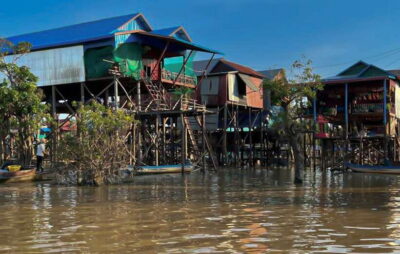
Kampong Phluk Floating Village Tour with Boat
Read our review →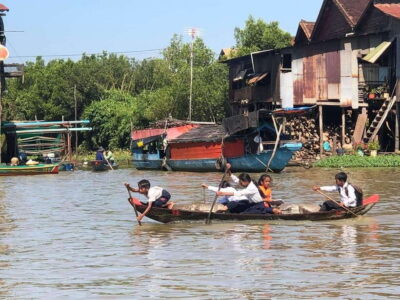
Siem Reap Floating Village Kampong Phluk Sunset with Boat
Read our review →
Kulen Mountain, Beng Mealea and Tonle Sap Tour
Read our review →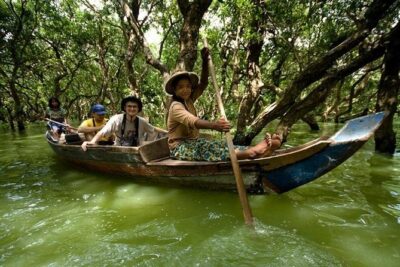
Tonle Sap Lake & Kampong Phluk Village Half-Day Tour
Read our review →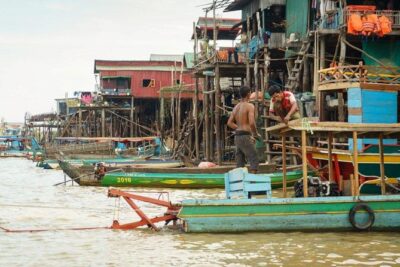
Browse the lists this tour appears in