
Review · DAY TRIPS FROM SIEM REAP
Cambodia 7 Days Tour from Siem Reap to Battambang and Phnom Penh
Temples, bat caves, and genocide sites in one week. I love two things about this Siem Reap to Phnom Penh tour: the English-speaking guide who makes each stop make sense, and the fact that daily breakfasts and admission fees are included. The only downside is pacing, several days run long, so you need comfy shoes and a steady heart once Phnom Penh turns to Khmer Rouge history.
Logistics matter, and this trip tries to handle them for you. In past departures, guides like Mr Sara and careful drivers like Mr Art are singled out for calm, attentive service, which helps when you are bouncing between temples, villages, and memorial sites.
In This Review
- Key takeaways before you go
- Price and what you really get for about $1,025 per person
- Day 1: Siem Reap airport pickup and a smooth start
- Day 2: Angkor Thom south gate, Ta Prohm, Angkor Wat, and Phnom Bakheng
- Banteay Chhmar: the jungle-quiet temple contrast
- Day 3: Tonle Sap and Kampong Phluk, plus Artisans Angkor and Wat Bo
- Day 4: Battambang bamboo train (nory), pagodas, museums, and bat caves
- Day 5: Toward Phnom Penh, Udong Mountain, and a Vipassana meditation stop
- Day 6: Royal Phnom Penh plus Khmer Rouge sites you will not forget
- Day 7: Airport transfer from Techo International Airport
- The guided format: why this works as a private 7-day circuit
- Who should book this tour?
- Should you book this Cambodia Siem Reap to Phnom Penh tour?
- FAQ
- How long is the Cambodia 7 days tour from Siem Reap to Phnom Penh?
- Where does the tour start and where does it end?
- What is included in the price?
- Are daily breakfasts included?
- Are admission fees included?
- What is not included in the tour price?
- Is this tour private or shared?
- What hotels are included in each city?
- How much extra is there for a single room?
- What is the cancellation policy?
Key takeaways before you go
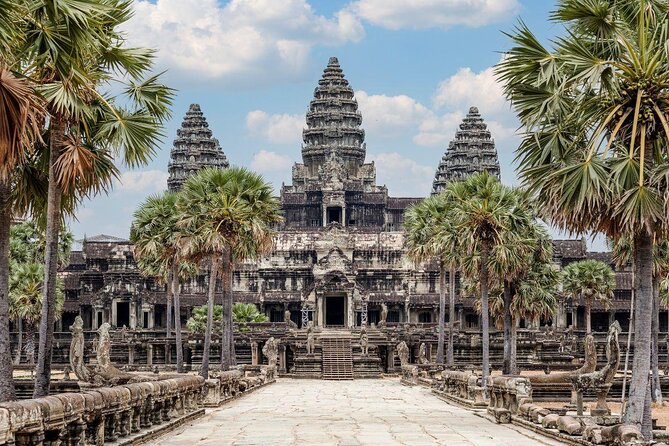
- Angkor Wat and Angkor Thom, plus a late-day temple-mountain view option for big wow factor
- Banteay Chhmar, an older temple set deep in the jungle, a quieter contrast to the main Angkor circuit
- Tonle Sap and Kampong Phluk, where you see daily life tied to the lake and mangroves
- Battambang by bamboo train (nory) and the bat spectacle at Phnom Sampeau
- Phnom Penh history you cannot skip, with Tuol Sleng and the killing-field sites
Price and what you really get for about $1,025 per person
At $1,025.05 per person for roughly 7 days, this is not the budget-in-a-backpack option. It can still be good value if you want fewer hassles and more guided context.
Here is what your money covers, based on what is included: hotel accommodation for 6 nights (double or twin), private transport, an English-speaking tour guide, entrance fees, bottled water, and 6 breakfasts. You also get pickup on arrival in Siem Reap and a guided tour flow through Tonle Sap, Battambang, and Phnom Penh, then transfer to Techo International Airport on departure.
Why that matters: Cambodia is spread out. Temple days, floating village days, and memorial days all work better when you have transport handled and tickets taken care of. If you tried to self-plan the whole route, you would likely spend a lot of time coordinating drivers, buying admission tickets, and dealing with last-minute timing.
The tradeoff is that you are on a schedule, not wandering freely. If you want slow mornings and lots of unplanned stops, you may feel boxed in.
More of Battambang:
- Battambang Full Day Tour from Siem Reap – Bamboo Train, Killing Cave & Sunset
★ 5.0 · 101 reviews - From Siem Reap: Battambang Day Trip Return or to Phnom Penh
★ 4.9 · 73 reviews - Battambang Day Trip from Siem Reap-Bamboo Train, Bats Cave
★ 5.0 · 48 reviews
Day 1: Siem Reap airport pickup and a smooth start
Most people start Cambodia overwhelmed by logistics. This day is designed to prevent that. After you arrive at Siem Reap Angkor International Airport, your guide and driver meet you and transfer you into Siem Reap.
Then it is straight to your hotel. Included accommodation choices are:
- Royal Crown Hotel & Spa (3-star) or similar
- Regency Angkor Hotel (4-star) or similar
- Angkor Paradise Hotel (5-star) or similar
This first day is light on sightseeing, which is smart. You need a breather after flights, and Siem Reap is busy enough without adding jet lag temple marathons.
Day 2: Angkor Thom south gate, Ta Prohm, Angkor Wat, and Phnom Bakheng
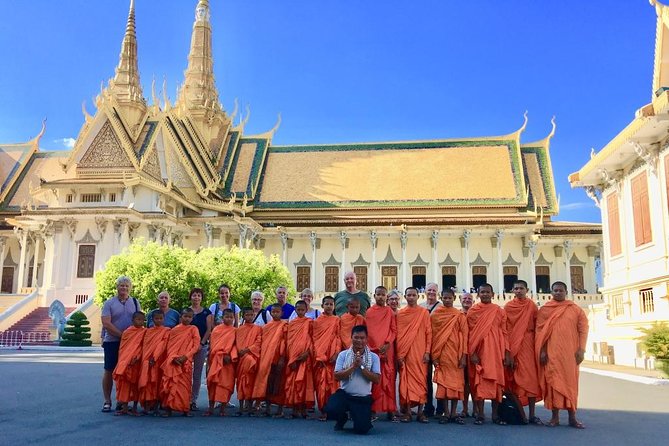
This is the big temple day, the one that sets your mood for the whole trip.
You start at Angkor Thom South Gate, then move through the cluster that defines Angkor-era royal power:
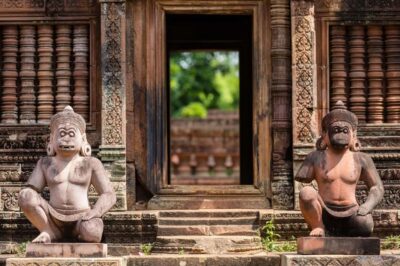
- Bayon Temple: famous for its late-12th-century stone faces, built as part of the royal city core.
- Baphuon Temple: a stepped temple structure on a sandstone base, known for its distinctive level design.
- Phimeanakas: positioned near the Royal Palace area, once described as having a golden pinnacle.
- Terrace of the Elephants and Terrace of the Leper King: both are about bas-relief storytelling, with the palace-era reign theme carried in the stone work.
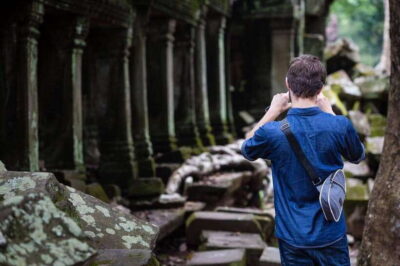
- Ta Prohm: the temple many people remember because trees and roots have taken over. The site is not just ruins, it is a living-feeling scene shaped by nature and preservation choices.
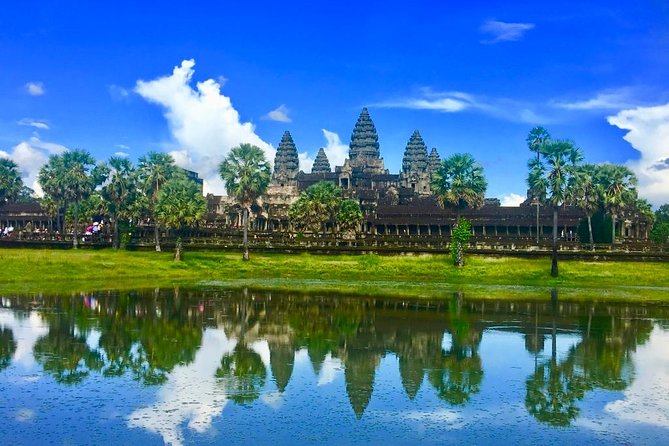
- Angkor Wat: the crown jewel, the largest and best preserved of the Angkor group, with famous attention to composition and sculpture.
- Phnom Bakheng: a temple-mountain on a 60-meter hill, one of the older Angkor sites and a natural place to catch views if timing works out.
What I like about this routing is the variety. You get royal-city planning at Angkor Thom, you get the tree-temple experience at Ta Prohm, then you end with Angkor Wat, which is so carefully built that it almost forces you to slow down.
Possible drawback: it is a long day with a lot of walking. Plan for heat, bring a hat, and use breaks when you can. Also, dress modestly. You will be in temples that expect shoulders and knees covered.
Banteay Chhmar: the jungle-quiet temple contrast
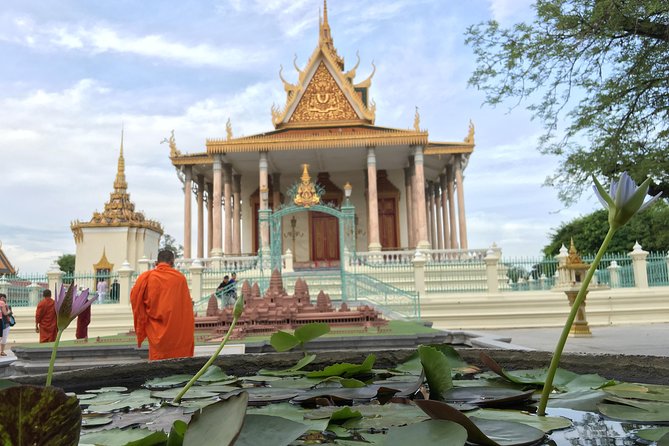
Your tour is also positioned to include Banteay Chhmar, highlighted as an ancient temple hidden in the jungle. That is a big deal because Angkor’s main zones can feel like a high-speed crowd circuit.
A jungle temple stop changes the feel of the trip. Instead of polished visitor flow, you get a sense of remoteness and time passing. It is the kind of place that makes you appreciate why conservation and careful access matter.
If this is the specific stop you care about most, treat it like a priority. Cambodia’s weather can shift fast, so staying flexible and respecting the guide’s timing calls helps.
More day trips out of Siem Reap:
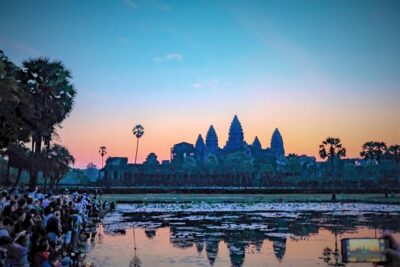
- Angkor Wat Sunrise or Sunset Tour with Guide from Siem Reap
★ 5.0 · 12,109 reviews - From Siem Reap: Kampong Phluk Floating Village Tour by Boat
★ 4.9 · 6,979 reviews - Angkor Wat Highlights and Sunrise Guided Tour from Siem Reap
★ 5.0 · 3,213 reviews - Full-Day Angkor Wat Sunrise Private Tour with Guide from Siem Reap
★ 5.0 · 2,920 reviews
Day 3: Tonle Sap and Kampong Phluk, plus Artisans Angkor and Wat Bo
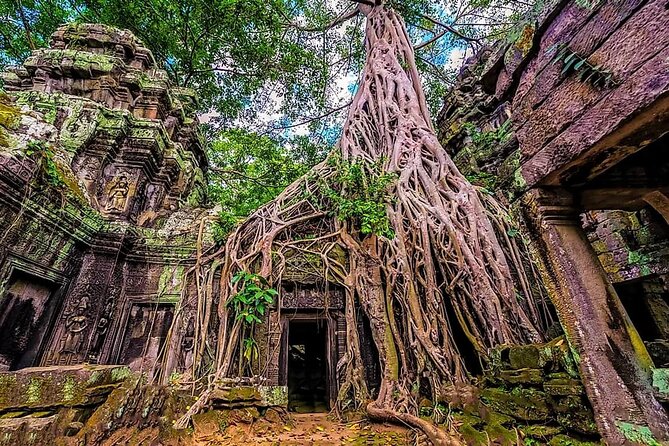
Day 3 shifts you away from stone monuments and into water, work, and craft.
First up: Tonle Sap Lake. It is the largest freshwater body in Southeast Asia and supports a major carp-breeding and carp-harvesting industry. That connection between environment and livelihood is the heart of what you are seeing here.
Then you visit Kampong Phluk Floating Village, which is also described as tied to a mangrove forest. This is where the lake stops feeling like scenery and starts feeling like home for the people living around it.
After the water-side day, you get a culture-and-craft stop at Artisans Angkor. It is a Cambodian social business that creates job opportunities for young people in rural areas while reviving traditional Khmer craftsmanship. The practical value: it gives you a way to support modern Cambodians while learning the skill behind the souvenirs.
Next: Wat Bo Temple, known for well-preserved wall paintings from the 19th century, plus the Royal Residence area in Siem Reap when the King is visiting.
Why this day works: you are not just collecting landmarks. You are learning how Cambodia’s geography shapes daily life. The lake and the crafts give you context for everything you saw in Angkor.
Downside to consider: you will be in the sun. Even with breaks, this is not a shade-heavy schedule.
Day 4: Battambang bamboo train (nory), pagodas, museums, and bat caves
Battambang is often the surprise favorite on Cambodia trips, and this itinerary leans into what makes it different from Siem Reap.
You start with the bamboo train, also called nory. The descriptions emphasize it as simple, essential transport, fast, and fun, and it is said to run regularly compared to the old passenger train. The point is not comfort. It is charm, local ingenuity, and a change of pace from temples.
Then you have Battambang Central Market time to browse and absorb how people shop and move through town.
You also visit:
- White Elephant Pagoda (Wat Tahm-rai-saw): an architectural landmark and also a known place for spiritual focus.
- Cambodia Peace Gallery (Cambodia Peace Museum): a recovery-focused museum centered on peace efforts and the idea that Cambodian history includes survival and rebuilding.
- Ek Phnom Pagoda: an atmospheric, partly collapsed 11th-century temple, surrounded by laterite wall remains and an ancient baray area.
- Phnom Sampeau: the “Ship mountain” shaped hill with a 100-meter-high feel.
- Battambang Bat Caves: described as millions of bats pouring out as the sun sinks, which is exactly the kind of spectacle you do not want to miss.
- Ta Dumbong Kro Aung Statue: a local legend marker, tied to the story of a cow herder and a magic black stick.
This day has a classic Cambodia balance: hands-on fun (bamboo train), spiritual sites (pagodas), and serious reflection (the peace museum and the memorial energy of the region).
Possible drawback: it is full. You will be moving through multiple stops, so wear shoes you can walk in all day.
Day 5: Toward Phnom Penh, Udong Mountain, and a Vipassana meditation stop
This is a transition day, but not a boring one.
You leave Battambang and head toward Phnom Penh, with an early stop in Pursat for a brief itinerary moment, then the big spiritual pause at Udong Mountain. Udong was a royal capital site from the 17th to the 19th centuries, and you get views and ruins tied to the monarchy era.
Next is a stop identified as QQW7+WQH, centered around Vipassana meditation techniques. The description notes that you can wander the gardens and grounds and enter the main temple. The usefulness here is mental, not just visual. After intense temple days and water days, this gives you a chance to reset before the heavy Phnom Penh history.
This day is ideal if you like contrast. You are physically traveling, but the itinerary also nudges you to shift your headspace.
Day 6: Royal Phnom Penh plus Khmer Rouge sites you will not forget
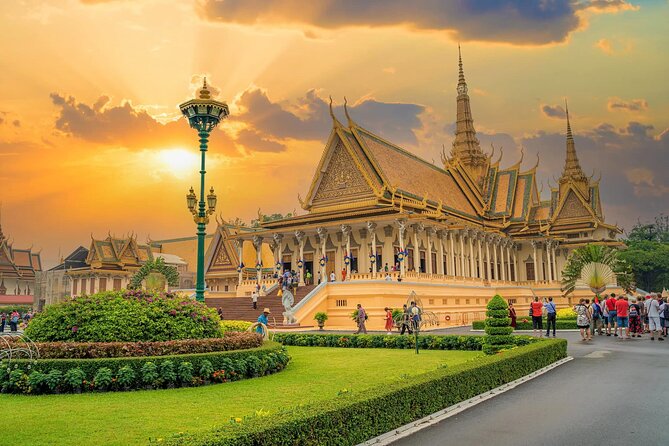
Phnom Penh can feel like two different cities in one day: glittering palace architecture, then memorials that strip the glamour away.
You start at Cheung Ek Killing Field, described as a historic site tied to what happened during the Khmer Rouge regime. From there you move into:
- Royal Palace: construction began in 1886 after the capital moved to Phnom Penh, completed before World War I.
- Silver Pagoda: next to the Royal Palace, with a garden and a beautiful interior.
- Wat Phnom: the only hill in town, set on a tree-covered knoll 27 meters high, with a legend tied to 1373 and four Buddha statues.
- Independence Monument: built in 1958 to memorialize independence from France in 1953.
- Statue of King Father Norodom Sihanouk: a memorial under a 27 meter high structure.
- Wat Ounalom: one of the five original monasteries, dating to 1422, and connected to libraries and Buddhist scholarship.
- Tuol Sleng Genocide Museum: a former secondary school used as Security Prison 21.
- Choeung Ek Genocidal Center: an orchard and mass grave site for victims killed between 1975 and 1979, about 17 kilometers south of the city.
- Central Market: a large 1937 dome-shaped market with four arms and countless stalls.
How to handle this day: go in prepared to feel uncomfortable. This is not entertainment history. It is evidence, trauma, and the human cost of political control.
Practical tip: build in emotional pacing. If you are the type who freezes or gets numb in museums, tell yourself you can slow down and take breaks. You still want to process it, not just rush through it.
Day 7: Airport transfer from Techo International Airport
Your last morning includes free time at the hotel, then transfer to Techo International Airport (KTI) with no guide. This setup is practical. It gives you space to pack, grab water, and handle last-minute errands without thinking about tour timing.
After one week of temples and memory sites, you will probably be tired. That is normal. Just keep your airport transfer time in mind so you do not cut it close.
The guided format: why this works as a private 7-day circuit
One reason people love tours like this is simple: it reduces decision fatigue. You get a schedule of high-value stops, transport between them, and someone who can explain what you are looking at.
From the feedback included here, guide personalities matter. Names like Vany, Meng, and Chany come up for their fluency in English and their ability to connect Khmer history and temple meaning in a way that feels human, not robotic. The driving gets praise too, including careful service from Mr Art. That matters on Cambodia roads, where the difference between stressful and calm can be a big part of the trip.
Because this is private (only your group participates), you are not sharing the day with strangers. That can make it easier to take small breaks, ask questions, and move at a pace that fits you.
Who should book this tour?
I think this tour fits best if you:
- Want a guided circuit that hits the core sights plus countryside add-ons like Tonle Sap and Battambang
- Like history that ranges from royal Khmer architecture to Khmer Rouge memorial sites
- Prefer having transport and admission fees handled
- Are comfortable with a few long days and some walking
This may not be ideal if you:
- Want a totally relaxed pace with lots of free time
- Prefer to avoid heavy museum and killing-field visits
- Only want light temple sightseeing and none of the political tragedy context
Should you book this Cambodia Siem Reap to Phnom Penh tour?
Yes, if your ideal Cambodia week looks like this: big temples, real daily life around Tonle Sap, a change-of-pace adventure in Battambang with bamboo train and bat caves, then Phnom Penh with both beauty and hard truth.
No, if you need a slow, restful itinerary or if you would rather handle Khmer Rouge history on a separate trip with more time to process.
If you book, do two things. First, pack for long temple days and sun. Second, mentally budget for emotional weight on Day 6, because that is where the trip stops being only sightseeing and becomes something you carry home.
FAQ
How long is the Cambodia 7 days tour from Siem Reap to Phnom Penh?
The tour is listed as 7 days (approx.), with 6 nights of accommodation included.
Where does the tour start and where does it end?
It starts in Siem Reap at Siem Reap Angkor International Airport and ends at Techo International Airport (KTI) in Phnom Penh.
What is included in the price?
Accommodation (double or twin), transport, an English speaking tour guide, entrance fees, bottled drinking water, and breakfast for 6 days are included.
Are daily breakfasts included?
Yes, breakfast is included for 6 days during the tour.
Are admission fees included?
Yes, entrance fees for the included stops are included.
What is not included in the tour price?
Tipping for the guide and driver is not included.
Is this tour private or shared?
This is a private tour/activity. Only your group will participate.
What hotels are included in each city?
Siem Reap hotel options include Royal Crown Hotel & Spa (3-star), Regency Angkor Hotel (4-star), or Angkor Paradise Hotel (5-star) or similar. Battambang options include Classy Hotel & Spa (3-star), Cambana La Riviere Hotel (4-star), or Maisons Wat Kor (5-star) or similar. Phnom Penh options include Mahasakor Inn Phnom Penh (3-star), Sun & Moon Urban Hotel (4-star), or Sun & Moon Riverside (5-star) or similar.
How much extra is there for a single room?
For a single room stay, there is an extra charge of 40% of the total tour price per person.
What is the cancellation policy?
You can cancel up to 6 days in advance for a full refund. Cancel 2 to 6 full days before for a 50% refund. Cancel less than 2 full days before for no refund.
More transfers between Siem Reap and Phnom Penh
- Siem Reap to Phnom Penh by Private Car or Minivan
★ 5.0 · 189 reviews - Siem Reap City to Siem Reap Angkor Airport by Shuttle Bus
★ 5.0 · 65 reviews - Taxi Siem Reap to Phnom Penh-English Speaking Driver
★ 5.0 · 62 reviews - Private Taxi Siem Reap to Phnom Penh, Reliable Driver, Transfer
★ 5.0 · 45 reviews
Newly listed around Siem Reap
- Twilight Tastes of Siem Reap Include Dinner★ 5.0 · 13 reviews
- Ultimate Sunrise to Angkor Wat, Angkor Thom and Bayon Temple★ 5.0 · 3 reviews
- Trekking Tour at Phnom Kulen National Park from Siem Reap★ 5.0 · 3 reviews
- Angkor 2-Day Sunset & Sunrise Small-Group Tour★ 4.5 · 6 reviews
- 2-Day Siem Reap Angkor Bicycle Experience★ 5.0 · 7 reviews
- Unique Private Day Tours To Kompong Khleang Village & Tonle Sap Lake★ 5.0 · 5 reviews
- 6-hour Angkor Sunrise & Private Tour (Solo, Couple & Family )★ 5.0 · 5 reviews
- Professional Photo Shoot in Angkor Archaeological Park, Siem Reap★ 5.0 · 42 reviews
Day Trips from Siem Reap, compared.
Angkor Wat Sunrise or Sunset Tour with Guide from Siem Reap
Read our review →
Angkor Wat Highlights and Sunrise Guided Tour from Siem Reap
Read our review →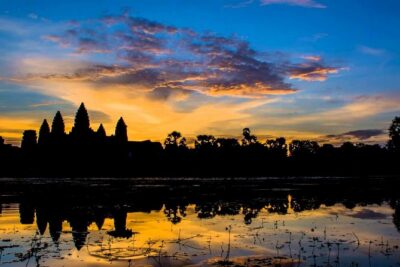
Full-Day Angkor Wat Sunrise Private Tour with Guide from Siem Reap
Read our review →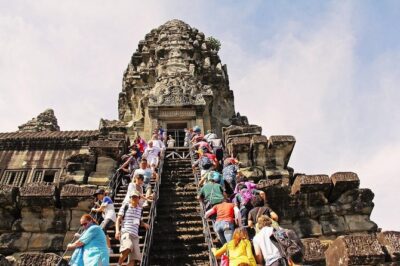
Browse the lists this tour appears in