
Review · MUSEUMS
Chiso temple, Neang khmao, and Taprum temple historical site Tour
A day of Khmer temples plus big views.
This tour strings together Phnom Chisor for wide rice-field panoramas, then shifts to Prasat Neang Khmau where Angkor-era brick towers sit beside an active pagoda.
I especially liked how practical the visit feels. You get a full English-speaking guide experience, and when our guide, Soapheak, talked through the pagoda lifestyle and how the surrounding structures work, it made the ruins feel lived-in instead of just old stone.
The main drawback is simple: it is a packed, full-day route. If you want a super slow pace, you may feel a bit rushed hopping between sites.
In This Review
- Key highlights to watch for
- Phnom Chisor: galleries, sculptures, and a view that explains everything
- Prasat Neang Khmau: Shiva-era brick towers beside a living pagoda
- Tonle Bati: a small lake stop that feels local, not touristy
- Ta Prohm Temple: smaller than Angkor, still full of character
- Yeay Pov Temple: the quieter closing stop
- The drive, the timing, and why the private group format matters
- Price and what $190 per group really buys you
- Who should book this tour, and who might pass
- Should you book it? My honest take
- FAQ
- What is the duration of the Chiso temple, Neang khmao, and Taprum temple historical site tour?
- What time does the tour start, and where does it meet?
- Does the tour include pickup and return transportation?
- Is this a private tour, and how large is the group?
- Is there an English-speaking guide?
- Are entrance tickets included for the stops?
- Is food included?
- Will I need to tip?
- What is the cancellation policy?
Key highlights to watch for
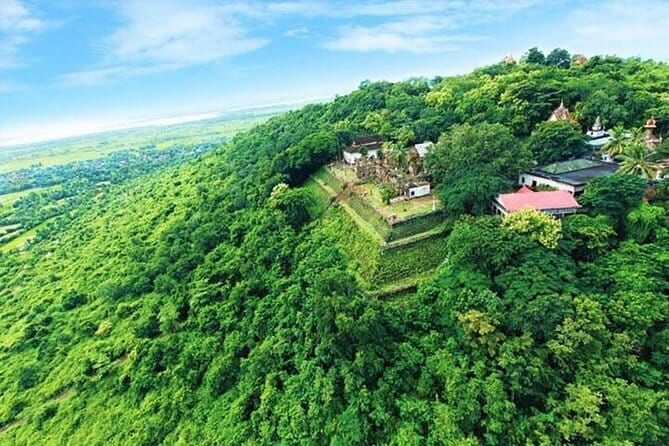
- Phnom Chisor’s back-view photo spot, with rice fields stretching out toward the countryside
- A straight-line visual alignment from Phnom Chisor toward an avenue linking major temple features and a moat
- Prasat Neang Khmau’s Shiva-era brick towers, built in the Angkorian period under King Jayavarman IV
- An active pagoda next to deteriorating prasats, so you see worship happening in real time
- Ta Prohm Temple’s distinct art, similar vibe to Ta Prohm of Angkor but smaller and different
- Tonle Bati as a local break, a small lake around 30 km south of Phnom Penh
Phnom Chisor: galleries, sculptures, and a view that explains everything
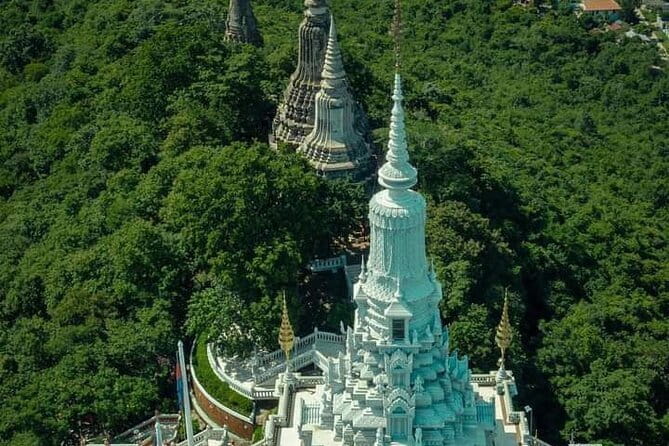
Start with Phnom Chisor, a temple complex from the 11th century where the sculptures are still prominent. I like the feeling here because you are not just standing in front of one façade. You can walk through the different galleries and even enter the place of worship, so you get a sense of how people would have moved through the space.
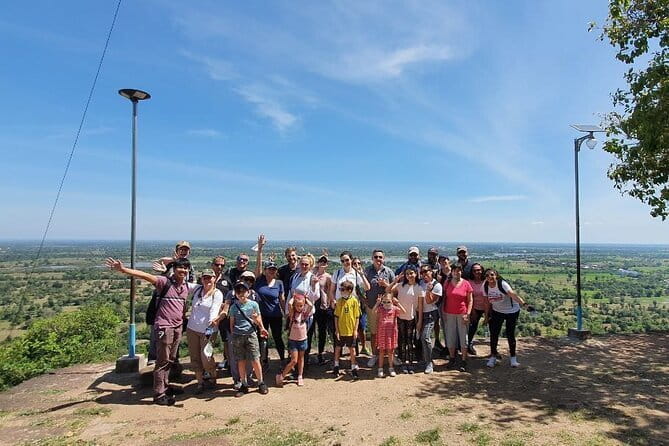
The best payoff comes at the back of the temple. There is a prime spot for views and pictures where you can see a vast plain of surrounding rice fields and countryside. That scene is not just scenic. It helps you understand why this site would have mattered, because you can literally look out over the agricultural region it served.
I also enjoyed the way the guide frames the temple’s layout. From Phnom Chisor, looking toward the east, you can see an avenue that forms a straight line connecting three main features, including two outer temples with a cruciform ground plan and a moat. It is one of those details that clicks fast when someone points it out, and it makes the complex feel planned instead of random.
Practical note: bring comfortable shoes. Even without any extreme effort, walking through galleries takes time, and you will be on your feet more than you might expect for a “temple stop.”
More Museum Visits in Phnom Penh
- The Killing Field and Toul Sleng Genocide Museum (S21) Tour
★ 5.0 · 1,977 reviews - Killing field and Toul Sleng genocide museum Tour
★ 5.0 · 610 reviews - Private Half Day To Killing Field & S21 Genocidal Museum in Phnom Penh
★ 5.0 · 137 reviews
Prasat Neang Khmau: Shiva-era brick towers beside a living pagoda
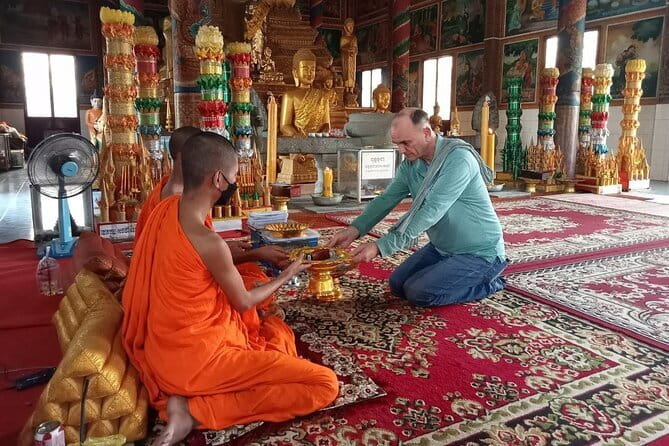
Next you are up close to Prasat Neang Khmau, which the name points to as an active pagoda area. This stop is especially memorable because you see the contrast between old, deteriorating structures and ongoing religious use.
What you are looking at here are two deteriorating brick prasats, basically two tower-like elements, built in the Angkorian era in the 10th century A.D. Under King Jayavarman IV, they were originally dedicated to the Hindu god Shiva. The site probably once included at least one more prasat, and maybe as many as three additional towers, which adds a layer of imagination to what remains.
The tone of the visit shifts because you are not dealing with a completely abandoned ruin. You are standing next to an active pagoda, and that makes the atmosphere feel different from a pure archaeology stop. When our guide Soapheak explained the surrounding structures and the pagoda lifestyle, it gave me a clearer sense of how these spaces can stay relevant long after the original building period.
Photography is more challenging here than at Phnom Chisor because it is not all open panorama. Still, that is part of the appeal. You get more intimate views of brickwork, decay, and religious continuity in one place.
Tonle Bati: a small lake stop that feels local, not touristy
Between temples, the route includes a break at Tonle Bati, a small lake about 30 km south of Phnom Penh. This is a popular weekend destination for local people, and it is also a popular fishing spot.
I like adding a non-temple pause to a temple day. Even if you only spend about an hour here, it helps you reset your brain and gives you a different kind of Cambodia scene. You are looking at everyday life tied to the water, not just stone monuments.
It is also a good moment to stretch your legs and plan your next section of the day. The tour includes cool water, but you will still want to pace yourself so you can enjoy the next temples rather than rushing through them.
Because this is a lake area, you might find it breezier and a bit brighter than the temple shade. If you are sensitive to sun, plan sunglasses and sunscreen as a normal “day out” item.
Ta Prohm Temple: smaller than Angkor, still full of character
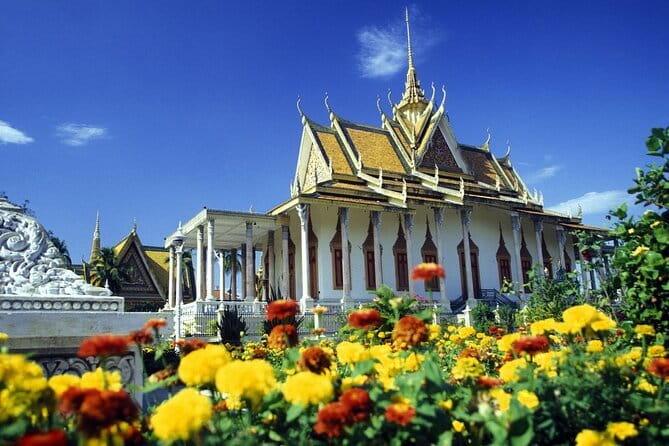
After Prasat Neang Khmau, you continue to Ta Prohm Temple. This is described as built during the reign of King Jayavarman VII, in the late 12th or early 13th century.
If you know Ta Prohm from Angkor, this stop gives you a similar theme but with a different scale. It is smaller than the Ta Prohm of Angkor, but it is noted for having a lot of unique art. That matters, because you are not just collecting a “been there” stamp. You are looking at a different expression of Jayavarman VII-era design choices and decorative work.
The value of a smaller Ta Prohm is that you can actually see more. You tend to spend more time noticing details because you are not trying to cover everything in a giant, fame-heavy setting. Even when you are not an art specialist, unique carvings and layout elements become easier to take in when the space is manageable.
Try to move slowly through the areas you can access and let the guide connect the artwork to the site’s story. That is where a good guide earns their keep, and Soapheak’s style of pointing out how parts relate to each other really fit this kind of visit.
A different kind of day in Cambodia:
- Phnom Penh: Sunset Cruise with Unlimited Beers & BBQ Buffet
★ 4.5 · 727 reviews - Aroma Therapy Massage, Relaxation therapeutic aromatherapy oil massages.
★ 5.0 · 645 reviews - Phnom Penh Full Day Private Tour Included All Admission Tickets
★ 5.0 · 585 reviews - Phnom Penh: Sunset Cruise with Unlimited Beer &Fruit platter
★ 4.7 · 515 reviews
Yeay Pov Temple: the quieter closing stop
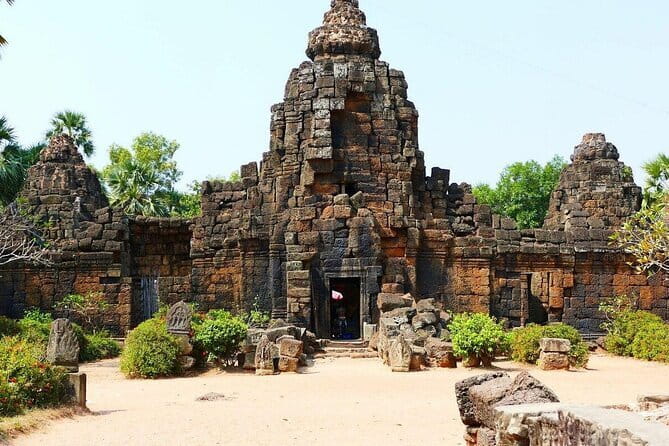
The last destination is Yeay Pov Temple. There is less specific detail provided here compared with Phnom Chisor and Prasat Neang Khmau, so I treat this as your “finish strong” moment rather than expecting the same level of named architectural breakdown.
That said, ending on another temple can be satisfying because you get to compare vibes across stops. By this point, you have seen 10th century brick prasats, 11th century temple planning, and a Ta Prohm-era artistic focus. Yeay Pov becomes a final lens to catch how Khmer sacred spaces can feel consistent in purpose while still varying in expression.
I recommend using this stop for what it does best: take your photos, look at the overall feel of the complex, and listen for how the guide ties it back to the day’s themes. If you have been rushing, this is your chance to slow down and appreciate the last set of stone details.
The drive, the timing, and why the private group format matters
This is an 8-hour day with pickup offered from a central meeting point in Phnom Penh: River Crown Restaurant, 357, St. 178, Prehsisovath Quay, Phnom Penh 12206. The tour starts at 8:00 am and ends back at the meeting point.
The group size is private, limited to up to 5 people, and that changes the value in a big way. With a small group, you tend to get quicker Q and A moments and less waiting around. It also helps if you have questions about how to read what you are seeing, because you are not competing with a large crowd for attention.
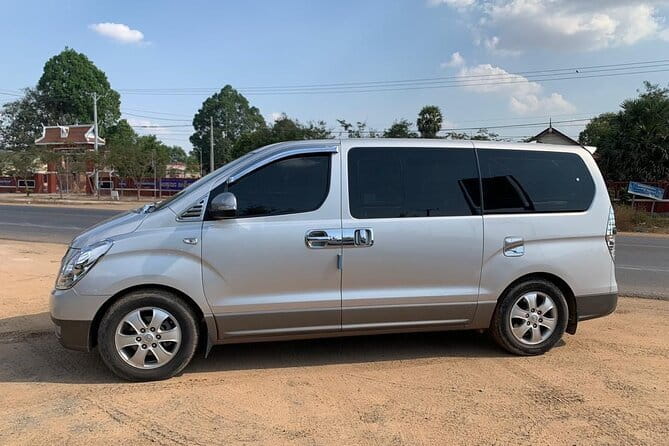
Transportation is provided by an air-conditioned vehicle described as clean and hygienic, plus there is a friendly driver and cool water. Those “small” comforts add up on a full-day route, especially when you are going from open viewpoints to more shaded areas and back again.
As for pacing, here is what the timing info signals: Phnom Chisor is a 2-hour stop, Prasat Neang Khmau is 1 hour, and Tonle Bati is 1 hour. The day is then completed with the remaining temple time and travel between sites, which is why it stays an all-day experience.
Price and what $190 per group really buys you
The price is $190 per group (up to 5). That is not the cheapest way to see a few temples, but it is often fair for a private, guided, air-conditioned day with included fees and taxes.
Here is how I think about the value:
- If you fill the group with 5 people, it can work out to about $38 per person, which is strong for a private vehicle plus an English-speaking guide.
- If it is just 1 or 2 people, your effective per-person cost rises. In that case, it can still be worth it if you really want private pacing and direct conversation with the guide.
You also get the practical inclusions that make a day like this easier: transportation (air-conditioned), all fees and taxes, cool water, and a guide in English. Entry is listed as free at the stops shown for the tour information, which reduces the “surprise cost” feeling.
Food is the only clear gap. Food and beverages are not included, so plan snacks or a meal on your own. Tipping for the local guide and driver is also not included, so it helps to carry some cash for that.
If you are trying to keep the day comfortable and simple, this package fits the bill. If you are trying to keep costs ultra-low and you do not care about a guide, you can likely DIY part of the route. But DIY is rarely as efficient for interpretation, and that is where this tour scores.
Who should book this tour, and who might pass
This tour fits best if you like temples but also like context. The best moment for me was when the guide connected viewing angles, layout, and what you are actually seeing on the ground, like the straight-line avenue toward temples and the moat from Phnom Chisor.
It is also a great choice if you want a day that combines sacred sites with a real-life Cambodian break at Tonle Bati. If you get tired of temple after temple with no pause, the lake stop helps.
You might consider passing if you want a “big-name only” sightseeing day focused on one world-famous area. This route is not that kind of day. It is about smaller, near-Phnom Penh sites with strong local relevance, especially around Prasat Neang Khmau where the pagoda is active.
Should you book it? My honest take
I would book this tour if you want Khmer temple architecture with a guide who can explain what you are looking at in plain language. The Phnom Chisor viewpoint and the Prasat Neang Khmau Shiva-era brick towers are the two anchors, and the fact that you end with another temple plus a local lake stop makes the day feel balanced rather than repetitive.
I would think twice before booking if your priority is maximum cost-efficiency for a solo trip. The price is for a group, so the private format makes the most sense when you can share it.
If you show up ready to walk a bit through galleries, take in open views, and ask questions, you will get your money’s worth.
FAQ
What is the duration of the Chiso temple, Neang khmao, and Taprum temple historical site tour?
The tour is approximately 8 hours.
What time does the tour start, and where does it meet?
It starts at 8:00 am. The meeting point is River Crown Restaurant, 357, St. 178, Prehsisovath Quay, Phnom Penh 12206, Cambodia.
Does the tour include pickup and return transportation?
Pickup is offered, and the activity ends back at the meeting point.
Is this a private tour, and how large is the group?
Yes, it is a private tour/activity. Only your group participates, with up to 5 people.
Is there an English-speaking guide?
Yes. The tour includes an English speaking tour guide.
Are entrance tickets included for the stops?
Admission tickets are listed as free for the stops shown, and all fees and taxes are included.
Is food included?
No. Food and beverages are not included.
Will I need to tip?
Tipping service to the local tour guide and driver is not included.
What is the cancellation policy?
You can cancel for a full refund up to 24 hours in advance of the experience’s start time. Free cancellation is available if you cancel at least 24 hours before local start time.
More History Tours in Phnom Penh
- Udong Historical Site Tour
★ 5.0 · 8 reviews - One Day Private Guide Tours History in Phnom Penh Incl. admission
★ 4.5 · 7 reviews - ( Free eSim) Phnom Penh Historical Full Day Tour
★ 5.0 · 7 reviews - Learn about a dark period of Cambodian history by expert guide
★ 5.0 · 3 reviews
Newly listed around Phnom Penh
- The killing field and Toul Sleng Genocide museum (S21) Tour★ 4.5 · 19 reviews
- Watch Live Khmer Traditional boxing in Phnom Penh★ 5.0 · 46 reviews
- Udong Old Capital Tour★ 4.5 · 3 reviews
- S-21 Prison and Killing Fields★ 5.0 · 8 reviews
- Warm Stone Massage★ 5.0 · 23 reviews
- Private Taxi Between Phnom Penh – Siem Reap Stop Sightseeing★ 5.0 · 23 reviews
- Udong Historical Site Tour★ 5.0 · 8 reviews
- The Mekong Silk Island Guided Cruise (Private tour)★ 4.5 · 20 reviews
Museums, compared.
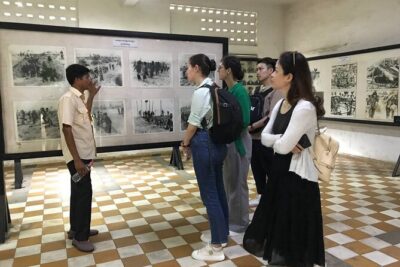
The Killing Field and Toul Sleng Genocide Museum (S21) Tour
Read our review →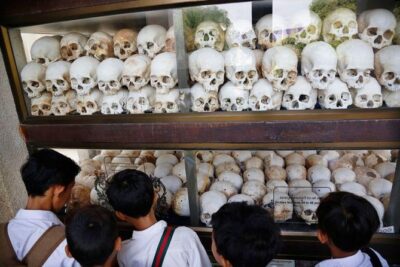
Killing field and Toul Sleng genocide museum Tour
Read our review →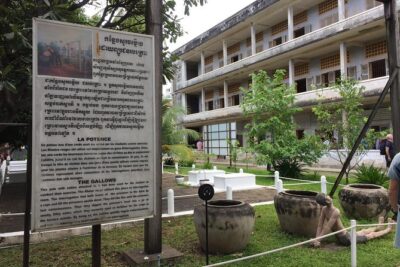
Private Half Day To Killing Field & S21 Genocidal Museum in Phnom Penh
Read our review →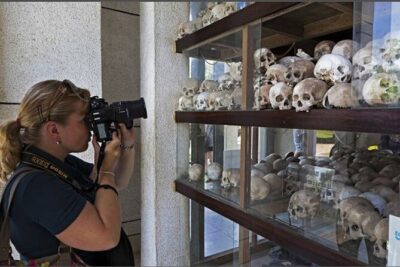
Tuol Sleng Genocide Museum (S-21) and Choeung Ek Killing Fields Tour
Read our review →
Phnom Penh City Tour, Silver Pagoda, Genocide Museum, Killing Fields
Read our review →
Bantey Srei, Kbal Spean and Landmine museum Private Tuk-Tuk
Read our review →The killing field and Toul Sleng Genocide museum (S21) Tour
Read our review →
Private Tour: HERO Rats & Angkor National Museum
Read our review →Browse the lists this tour appears in