
Review · ANGKOR WAT TOURS
Discover Angkor Wat Temples And Phnom Kulen
Angkor is big. This 3 day route makes it feel doable, with an English speaking guide and A/C car that keeps you moving (without roasting). I like the way the itinerary mixes iconic stops like Angkor Wat with quieter temples that change the mood fast. The main thing to consider is that temple and national park admission fees are not included, so your final budget will be a bit higher than the $170 base price.
I also love the practical touches: cold mineral water, cold face towels, and an early start at 8:00 am that helps you get cracking before the hottest hours. You’ll be covering a lot of ground, so the day is long, but the pacing is structured and you get context at every major site. The one real drawback to plan around is physical effort, especially where the guide may decide whether you can climb (some temples are steep).
In This Review
- Key Things I’d Focus On Before You Go
- Price and Logistics: Is This Route Worth $170?
- Quick sanity check
- Day 1: Angkor Wat and Angkor Thom in One Big Sweep
- Angkor Wat: the world’s largest religious temple
- Bayon Temple: 116 smiling faces
- Baphuon and the climbing question
- Phimeanakas, the royal meeting place
- Terrace of the Elephants and Terrace of the Leper King
- Prasat Suor Prat: small towers, big symbolism
- Ta Keo: the unfinished giant temple
- Ta Prohm: Tomb Raider roots and dramatic ruins
- Day 2: Preah Khan, Banteay Srei, and quieter Angkor momentum
- Preah Khan: a huge ruined temple with a calm feel
- Neak Pean: the hospital temple and weekend lake vibes
- Banteay Srei: orange sandstone carvings
- Banteay Samre: calm and a break from crowds
- Pre Rup: five towers and ancestor symbolism
- Ta Som: the octopus-shaped tree
- Eastern Mebon: elephant statues at corners
- Day 3: Phnom Kulen National Park, tickets in the city, and the big three sights
- Waterfall area
- Giant reclining Buddha statue
- 1000 Shiva’s Linga in the river bed
- What to Pack and How to Survive Temple Heat
- Who This Tour Suits Best, and Who Might Prefer Something Else
- Should You Book This Angkor Wat and Phnom Kulen Trip?
- FAQ
- What is the start time and duration of the tour?
- What is included in the price?
- Are admission tickets included for Angkor Wat and other temples?
- Do we buy Phnom Kulen tickets during the tour?
- Where does the tour start and end?
- What is the dress code?
- Is the tour dependent on weather?
Key Things I’d Focus On Before You Go
- Early 8:00 am starts on all three days, with a tight, efficient temple route
- Full Angkor circuit across Day 1 and Day 2, hitting Angkor Wat, Angkor Thom, and beyond
- Phnom Kulen northward outing with waterfall views and the reclining Buddha area
- Practical comfort included, A/C car plus cold mineral water and cold face towels
- Dress code is strict (covered knees and shoulders), so pack accordingly
- You buy Phnom Kulen tickets in the city before heading out
Price and Logistics: Is This Route Worth $170?
At $170 per person for three days, the big value is not just “seeing Angkor.” It is the way you get there and how you get your bearings. You are paying for an A/C car, fuel, an English speaking tour guide, and the cooling extras (cold mineral water and cold face towels). That matters in Siem Reap, because temple days are long and the heat stacks up fast.
What is not in that $170 is the admission ticket costs and taxes. Every Angkor stop listed says admission tickets are not included, and Phnom Kulen is handled slightly differently because you buy tickets in the city first. So think of the price as a “guided transport and interpretation package,” then add the official entrance fees on top.
The tour is described as private in the sense that only your group participates, which often feels smoother than a free-for-all pickup. You’ll still be moving through busy, famous areas, but you get a guide who is working for your group, not a random crowd.
More Angkor Wat tours in Siem Reap:
- Angkor Wat Sunrise or Sunset Tour with Guide from Siem Reap
★ 5.0 · 12,109 reviews - Siem Reap: Angkor Wat: Small-Group Sunrise or Sunset Tour
★ 5.0 · 9,444 reviews - Siem Reap: Angkor Wat 2-Day Tour with Sunrise and Sunset
★ 4.9 · 4,429 reviews
Quick sanity check
If you hate paying “extras later,” this may not be the best match. If you are okay budgeting for official temple and park tickets, the included guiding and comfort make this route feel like good value.
Day 1: Angkor Wat and Angkor Thom in One Big Sweep
Day 1 is all about the Angkor heart, starting at 8:00 am. You begin with Angkor Wat, then work through Angkor Thom highlights like Bayon and several royal terraces, and end with Ta Prohm, famous for the way trees and roots take over parts of the temple.
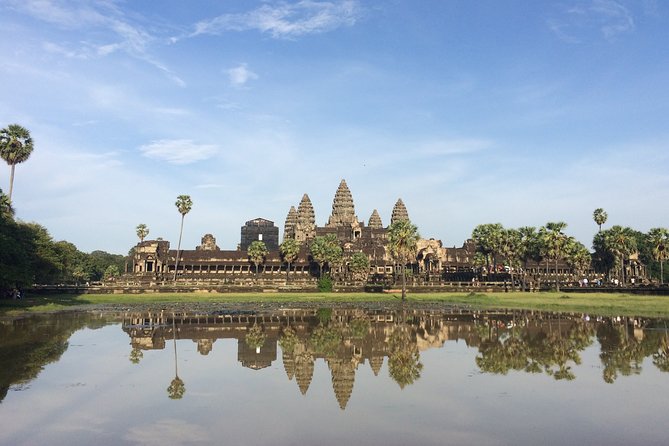
Angkor Wat: the world’s largest religious temple
Angkor Wat is the headline. You’ll get a guided explanation of the myths and history tied to the temple, plus time aimed at getting the best photo angles of this enormous structure. The route also frames it as more than architecture by connecting it with the royal tomb story of Surya Varaman II.
You should plan for the practical reality: this is a massive site, and photos take time. Even though the stop time listed is about 1 hour 40 minutes, you can easily spend a few extra minutes walking for the best viewpoints if you enjoy photography.
More Kulen Mountain trips:
- Kulen Waterfall Join-in Tour (local Picnic lunch)
★ 5.0 · 2,434 reviews - Kulen Mountain: Small-Group Tour and Picnic lunch
★ 4.9 · 1,802 reviews - Siem Reap: Kulen Mountain, Beng Mealea and Tonle Sap Tour
★ 5.0 · 1,483 reviews - Phnom Kulen Waterfall & the Sacred 1000 Lingas (with Lunch)
★ 4.8 · 974 reviews
Bayon Temple: 116 smiling faces
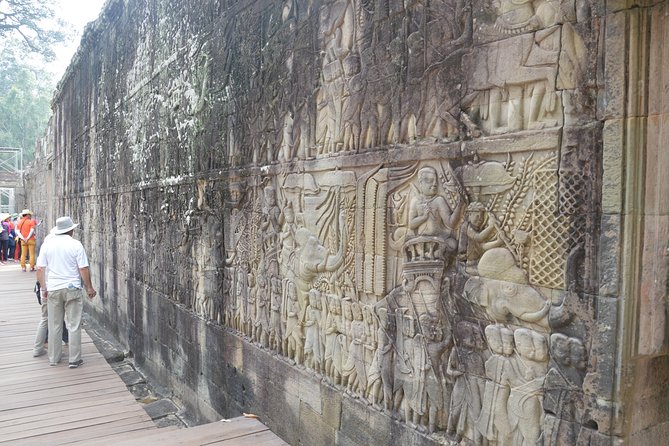
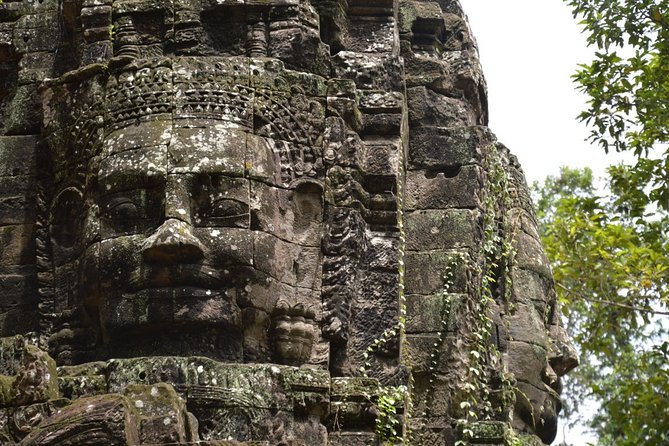
Bayon’s draw is immediate: the 116 Buddha smiling faces and the carvings that show everyday life. What you get from the guide is the meaning behind carvings, not just a quick scan. That’s the difference between seeing stone and understanding what you are looking at.
Bayon is shorter here, about 50 minutes, so you’ll want to decide early whether your focus is faces, carvings, or best viewpoint angles. If you like close observation, you’ll spend that time carefully.
Baphuon and the climbing question
Baphuon is steep. The guide may decide whether to allow you to climb based on your physical condition. That is a detail I appreciate, because it means the tour is thinking about safety and comfort, not forcing everyone up.
Expect it to feel dramatic, especially with its solid structure and a big Buddha figure on the back. The stop is about 30 minutes, which is enough to appreciate the view without rushing.
Phimeanakas, the royal meeting place
Phimeanakas is the sacred spot used as a meeting place between king and god during the Angkor period. Here, the stop is brief, about 15 minutes, so treat it as a high-impact context stop. You’ll probably feel like you’re moving quickly, but that is how you keep the day from collapsing into traffic and heat.
Terrace of the Elephants and Terrace of the Leper King
Two terraces are easy to miss if you’re only chasing the big names. The Terrace of the Elephants is tied to royal watching platforms for games and festivals. The Terrace of the Leper King is linked to royal cremation, with a statue locals call the leper king.
These are short stops (roughly 10 minutes each), but I like them because they add human scale to royal Angkor life. They feel more grounded than the tallest towers, and they are quick breaks in the walking rhythm.
Prasat Suor Prat: small towers, big symbolism
Prasat Suor Prat is front of the Elephant Terrace with twelve towers representing twelve years of the lunar calendar. You do not need to be an astronomy expert to appreciate the pattern once you are standing there. It’s about 5 minutes, so it works well as a “set it in your brain” stop between bigger scenes.
Ta Keo: the unfinished giant temple
Ta Keo is described as a giant temple that remains unfinished. You may get a short photo stop, about 5 minutes. This one is for travelers who like contrast, the way a site can feel both monumental and incomplete.
Ta Prohm: Tomb Raider roots and dramatic ruins
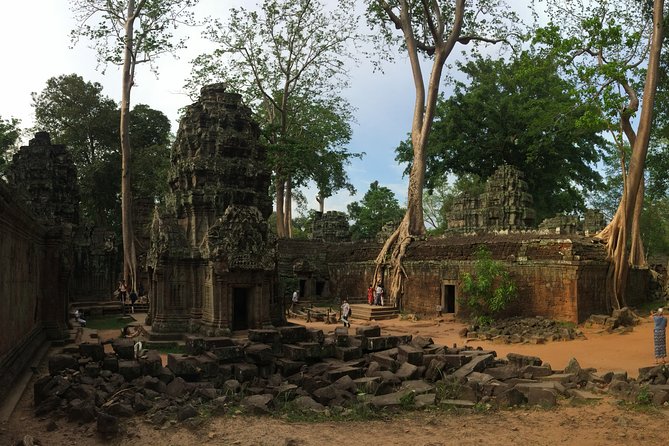
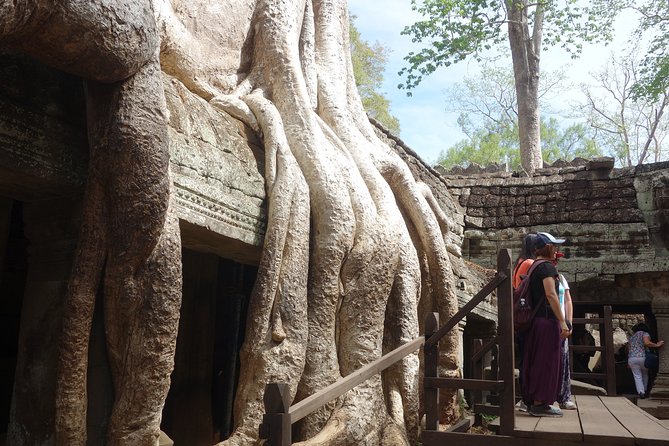
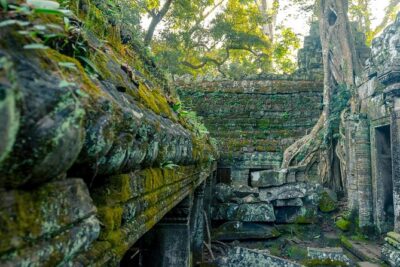
Ta Prohm is the close-out highlight of Day 1. It is known as the Tomb Raider temple because Angelina Jolie’s movie was filmed here. The visual payoff is huge: giant trees, roots growing over parts of the temple, and a guided story that ties the compassion theme to the temple.
You’re given about 1 hour here, which is the right amount for letting the scenery soak in. Also, Ta Prohm often rewards patience, so you do not need to sprint through it just to keep the timetable.
Day 2: Preah Khan, Banteay Srei, and quieter Angkor momentum
Day 2 keeps your 8:00 am start, but it shifts the emotional temperature. Instead of repeating the biggest billboard sites, you get a mix of major ruins, a carved masterpiece, and a few calmer temples that give your legs a breather.
Preah Khan: a huge ruined temple with a calm feel
Preah Khan is the second largest temple in the Angkor complex. It was used as a temporary capital in the 12th century, and it is connected to the king’s father temple. The description emphasizes that it feels calm and fascinating to many tourists, which I read as code for: this one can feel less rushed than the top crowds.
Stop time here is about 1 hour, so you can slow down, walk the edges, and take in carvings without feeling like you are sprinting.
Neak Pean: the hospital temple and weekend lake vibes
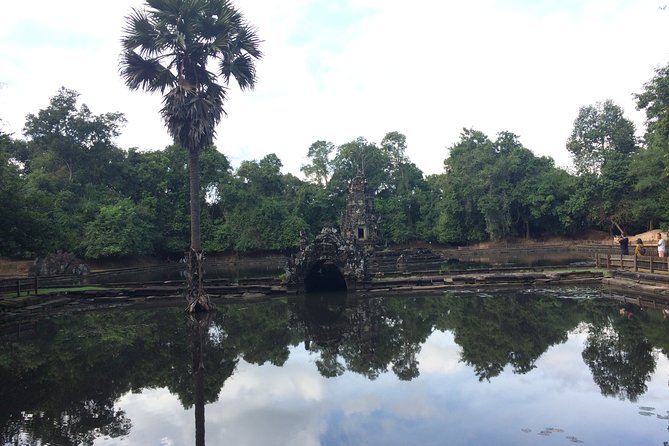
Neak Pean is set on an artificial island. It was used as a hospital in the Angkor era, and the setting is part of the experience. It is also popular for locals on weekends because of the artificial lake around the temple.
Your stop is about 30 minutes, and that’s perfect for a “walk in, take photos, and understand the setting” rhythm. You do not need to spend more time than that unless you are especially into the symbolism.
Banteay Srei: orange sandstone carvings
If you like detailed stonework, Banteay Srei is your day’s “wow for close-up people.” It is 30 kilometers north of the Angkor area, and it is known for intricate carvings with orange sandstone. The guide also includes stories about a civilian who built the temple, which helps the site feel human.
This stop is listed at about 50 minutes. Give it that full time. Carving details are the type of thing where you get more on the second lap than on the first.
Banteay Samre: calm and a break from crowds
Banteay Samre is described as quieter, meant to refresh your feeling from the bigger crowds at most temples. Architecturally, it has Angkor Wat style features.
It’s about 30 minutes, and it works well as a palate cleanser before you move to the more tower-heavy Pre Rup.
Pre Rup: five towers and ancestor symbolism
Pre Rup is a 10th century temple with a grand tall profile and five towers representing god and the king’s ancestors. The guide will explain a popular belief that it was used as a king’s cremation and funeral place.
Time is about 30 minutes. If you like viewpoints, you might try to linger slightly, because towers naturally invite looking around.
Ta Som: the octopus-shaped tree
Ta Som is built in one ling setup with Preah Khan and Neak Pean. The tour also notes religious conversion evidence. But your eyes will go straight to the big attraction: an octopus-shaped tree covering the back gate.
Stop time is about 20 minutes. I like this because it is short and visual, and you do not need extra stamina to enjoy it.
Eastern Mebon: elephant statues at corners
Eastern Mebon is a mixed bricks and sandstone 10th century temple dedicated to the king’s ancestors. The elephant statues at the corners of each level are called out as a key feature.
You get about 30 minutes, which is enough to examine the corner statues without turning it into a long detour.
Day 3: Phnom Kulen National Park, tickets in the city, and the big three sights
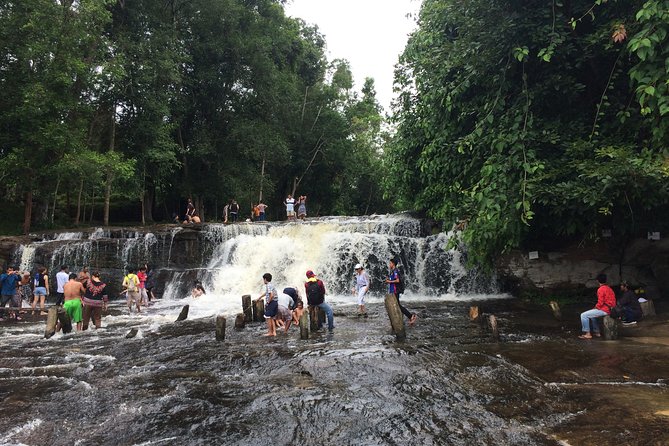
Day 3 turns north. You buy Phnom Kulen tickets in their office in the city, then head to Phnom Kulen National Park, which takes about one and a half hours to reach the top.
Phnom Kulen is not just a “one photo stop.” The mountain is covered with lychee trees, and the name relates to lychee. The tour also warns you that thick woods and road condition mean only a couple of attractions are easy to access.
Waterfall area
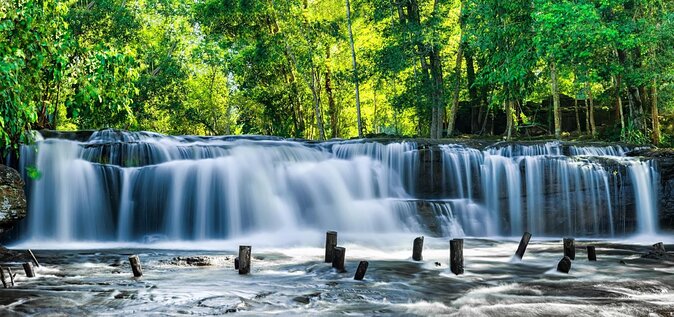
The waterfall is one of the main impressions. The stop is listed at about 2 hours total for Phnom Kulen, so you should treat waterfall time as part of a short, focused visit rather than a full hiking day.
Giant reclining Buddha statue
You also go to the area with the giant statue of the reclining Buddha. This is a signature view that gives Phnom Kulen its identity beyond Angkor.
1000 Shiva’s Linga in the river bed
The third major element is the 1000 Shiva’s Linga carved in the river bed. This is a very specific stop, and that kind of specificity is one reason this tour feels more than a standard Angkor repeat.
If you like religious art and ritual symbolism, this is likely the most memorable moment of the day.
What to Pack and How to Survive Temple Heat
You have a dress code, and it is not optional. For worship sites and selected museums, knees and shoulders must be covered for both men and women. No shorts or sleeveless tops. If you show up unprepared, you might get refused entry, which is the worst possible start to a temple day.
On top of clothing, prepare sunscreen. The itinerary is packed with outdoor ruins, terraces, and walks. Even with an A/C car between stops, your time outside adds up.
The good news is the tour includes cold mineral water and cold face towels, which helps a lot during transitions. I treat those as a free reset. Use the water when you feel yourself getting slowed down, not only when you feel thirsty.
And if climbing is part of your plans, remember Baphuon may involve a climb decision based on physical condition. If you have mobility limits, tell the guide early so they can steer your experience.
Who This Tour Suits Best, and Who Might Prefer Something Else
This route is ideal if you want a structured way to see major Angkor temples across two full days, then top it with Phnom Kulen without having to plan transport. It is also a strong fit if you appreciate explanations, because the schedule repeatedly points to the guide covering carvings, meaning, and stories.
It also works well for photography fans, especially at Angkor Wat and Ta Prohm where viewpoint time is built in. If you like architecture plus symbolism, the terraces and tower temples give you variety.
Consider something different if you:
- dislike budget uncertainty from ticket fees since admission tickets and taxes are not included
- want a slower pace with more optional time at fewer temples
- are extremely sensitive to steep steps, since at least one temple (Baphuon) may involve climbing that depends on your condition
Should You Book This Angkor Wat and Phnom Kulen Trip?
If your goal is to see most of the important things in Siem Reap across three days, this tour is a solid match. The included A/C transport, English guide, and cooling extras make the biggest difference on a packed itinerary, and the Phnom Kulen add-on gives you something you cannot get from Angkor alone.
I’d book if you can handle official entrance fees and you can follow the dress code. If you can, you’ll get a well-rounded Angkor overview plus a memorable national park visit.
FAQ
What is the start time and duration of the tour?
The tour starts at 8:00 am, and the itinerary runs for 3 days (approximately).
What is included in the price?
The package includes an A/C car, fuel, an English speaking tour guide, cold mineral water, and cold face towels.
Are admission tickets included for Angkor Wat and other temples?
No. Admission tickets are not included, and all fees and taxes are excluded.
Do we buy Phnom Kulen tickets during the tour?
Yes. On Day 3, you will buy Phnom Kulen tickets in their office in the city before heading to Phnom Kulen National Park.
Where does the tour start and end?
The tour starts in Krong Siem Reap, Cambodia, and it ends back at the meeting point.
What is the dress code?
A dress code is required for places of worship and selected museums. Knees and shoulders must be covered, so avoid shorts and sleeveless tops.
Is the tour dependent on weather?
Yes. The experience requires good weather. If it’s canceled due to poor weather, you are offered a different date or a full refund.
Newly listed around Siem Reap
- Sambor Prei Kuk Off Beaten Track★ 5.0 · 3 reviews
- Siem Reap Airport Taxi Transfer – City Center Hotels★ 5.0 · 5 reviews
- Angkor Wat at Sunrise★ 4.0 · 7 reviews
- Short Cycling at Countryside★ 5.0 · 29 reviews
- Unveiling the Mystical Beauty of Phnom Kulen National Park★ 5.0 · 6 reviews
- Bakong Temples & Floating Village Tour★ 4.5 · 3 reviews
- Rooftop Romantic Dinner – 4 Courses Set Meal & Wine★ 3.5 · 5 reviews
- Khmer Cooking Class in Cambodia★ 5.0 · 36 reviews
Angkor Wat Tours, compared.
Angkor Wat Sunrise or Sunset Tour with Guide from Siem Reap
Read our review →
Angkor Wat: Small-Group Sunrise or Sunset Tour
Read our review →
Angkor Wat 2-Day Tour with Sunrise and Sunset
Read our review →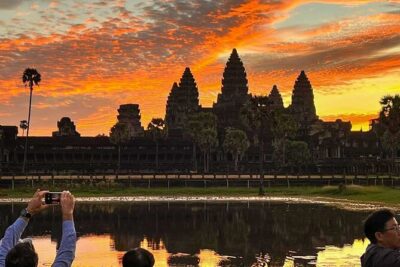
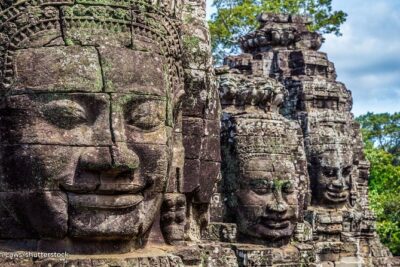
Angkor Wat Sunrise tour with Small – Group and Guide tours
Read our review →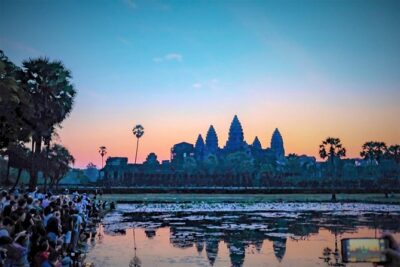
Angkor Wat Highlights and Sunrise Guided Tour from Siem Reap
Read our review →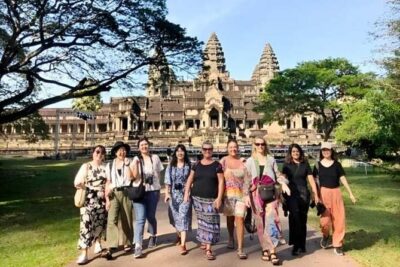
Angkor Wat Sunset Small Group Tour with Lunch Included
Read our review →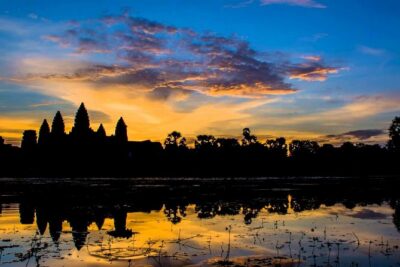
Full-Day Angkor Wat Sunrise Private Tour with Guide from Siem Reap
Read our review →Browse the lists this tour appears in