
Review · DAY TRIPS FROM SIEM REAP
Discover Cambodia 8 Days from Siem Reap to Koh Trong -Phnom Penh
Cambodia in eight days is a fast story, not a slow one. You start with Angkor’s most dramatic temple faces, then shift to Koh Trong on the Mekong, and finish in Phnom Penh with both palace glamour and hard historical sites. This itinerary is built so you keep moving, but you also get breaks for local places that add texture to the journey.
What I like most is the mix of big icons and everyday life. You get temple time that feels big and complete, then you also spend time on the river and in smaller towns, with stops like a floating village visit on Tonle Sap and a village market in Kratie (Sammaki Market). I also like the practical pacing: private air-conditioned car travel between regions, plus an English-speaking guide who can connect the dots as you go.
One drawback to consider: the trip is full, with a lot packed into each day. If you want lots of free time to wander alone, or you get tired from long road days, you may find it too structured.
In This Review
- Key points that make this route worth your attention
- Private 8 days that stitches temples, Mekong life, and Phnom Penh history
- Arriving in Siem Reap, getting oriented fast, and settling in at a 4-star base
- Angkor Thom south gate to Ta Prohm and Angkor Wat, built for maximum impact
- Tonle Sap and Kampong Phluk, plus artisans and West Baray for contrast
- Road days that still feel active, from Siem Reap to Kratie and the Mekong crossing
- Koh Trong Island, car-free biking, and temple visits with dolphin-area time
- Kampong Cham, Cheung Kok Village, and Skun Spider Sanctuary
- Phnom Penh royal palace, Silver Pagoda, and a serious history double-feature
- Price and value: what $1,223.10 covers, and what to watch for
- How to pace yourself on this type of 8-day Cambodia route
- Should you book this Siem Reap to Koh Trong to Phnom Penh tour?
- FAQ
- Does this tour include pickup?
- Is this a private tour?
- Are sightseeing entrance fees included?
- What accommodations are included?
- What meals are included?
- Do I get an English-speaking guide?
- How do transfers work between the main regions?
- What are the included days in Phnom Penh?
- Is tipping included?
- What is the cancellation policy for a full refund?
Key points that make this route worth your attention
- Private driver, air-conditioned transport for an easy start-to-finish flow, not bus-style logistics
- Angkor Thom plus Ta Prohm and Angkor Wat makes Day 2 feel like a greatest-hits temple circuit
- Koh Trong Island stays car-free so your “adventure” is mostly walking and biking, not driving
- Tonle Sap and Kampong Phluk add a real sense of how seasonal water shapes life
- Phnom Penh includes Tuol Sleng and Choeung Ek alongside palace highlights, so you get the full emotional range
- Strong guide reputations for clear English and storytelling, including names like Mr. Sara (Siem Reap) and Mr. Tokk (Phnom Penh)
Private 8 days that stitches temples, Mekong life, and Phnom Penh history
This is the kind of Cambodia trip that doesn’t try to do everything at random. It builds a route that makes sense: Angkor first, then the Mekong river world, then Phnom Penh as the final chapter. You start in Siem Reap, move east through the countryside to Kratie, spend time on Koh Trong, then continue to Kampong Cham before landing in Phnom Penh.
Why this design works for you: you see Cambodia’s “center of gravity” change. Angkor is stone and centuries. The Mekong region is river rhythms and community. Phnom Penh is governance, art, and memory. If you like travel that feels like a story with real transitions, this layout fits that style.
This is also a good format if you prefer comfort and clarity. Your tour includes private participation only for your group, and you get an English-speaking guide plus private transfers by air-conditioned vehicle. That matters because Cambodia’s sights are spread out, and knowing what you are looking at turns a photo stop into a real visit.
More day trips out of Siem Reap:
- Angkor Wat Sunrise or Sunset Tour with Guide from Siem Reap
★ 5.0 · 12,109 reviews - From Siem Reap: Kampong Phluk Floating Village Tour by Boat
★ 4.9 · 6,979 reviews - Angkor Wat Highlights and Sunrise Guided Tour from Siem Reap
★ 5.0 · 3,213 reviews
Arriving in Siem Reap, getting oriented fast, and settling in at a 4-star base
Day 1 is all about setup. You are met at Siem Reap Angkor International Airport, then transferred to your city-center hotel. Along the way, your guide gives context so you are not showing up at temples with blank pages in your head.
You stay at Regency Angkor Hotel, 4-star, or another similar property. That matters because the next days are structured and sightseeing-heavy. A comfortable hotel bed is not a luxury here. It is what helps you wake up ready for Angkor’s long viewing blocks.
One small practical note: if you land and want to keep exploring after check-in, this kind of tour still gives you that option, but it is smarter to plan for an early night. You are going to be outdoors for Temple Day 2.
Angkor Thom south gate to Ta Prohm and Angkor Wat, built for maximum impact
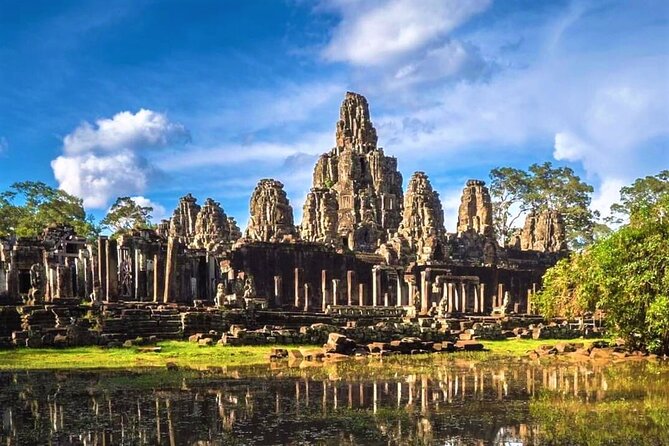
Day 2 is the temple core. You start at Angkor Thom South Gate, a fully restored gateway scene with many faces still in place. From a visitor standpoint, this is a good opener because it snaps your brain into Angkor mode quickly. You see the scale and the craftsmanship right away.
Then you work through a sequence that gives you a rounded Angkor Thom experience:
- Bayon Temple: famous for its sculpted faces and its “royal city at the center” feel
- Angkor Thom: the main complex area that ties the cosmology and city layout together
- Baphuon and Phimeanakas: palace-adjacent temples that help you understand the Angkor court geography
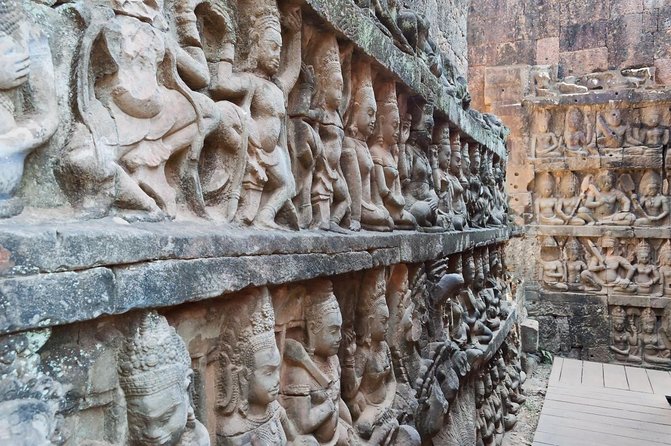
- Terrace of the Elephants and Terrace of the Leper King: carved terraces that make the royal-era theater feel tangible
- Ta Nei: smaller and harder to find, so it feels more like a quiet discovery
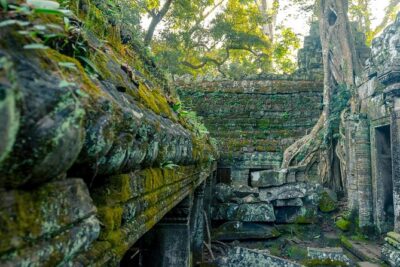
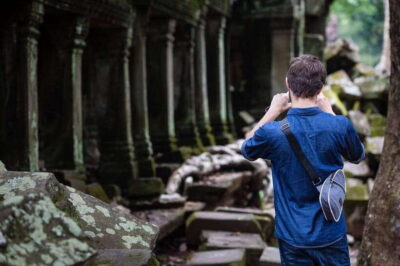
- Ta Prohm: the famous tree-growing-in-temples moment that people remember for a long time
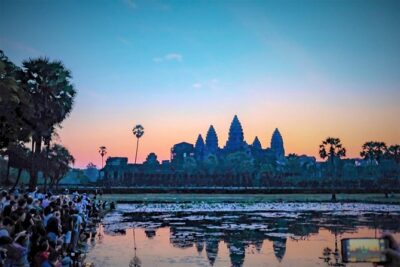
- Angkor Wat: the best-preserved crown jewel and the most photogenic centerpiece of the Angkor group
What I like here is not just the big names. It is the logic of the route. You are moving from city gates and royal terraces toward the iconic, and your guide can connect why these spots matter beyond the postcard angle.
Possible drawback: this is a long day of standing and walking. The itinerary includes a “moderate physical fitness level” note, and you will feel that on Day 2. If you have mobility issues, ask your guide in advance how much flexibility you get to slow down or add short breaks.
Tonle Sap and Kampong Phluk, plus artisans and West Baray for contrast
Day 3 softens the Angkor intensity with river-based life and local craft. You start with Tonle Sap Lake, described as the largest freshwater in Southeast Asia, with dimensions that shift between monsoon and dry season. That seasonal breathing is key to understanding why Cambodia’s river communities are built around water changes.
Next comes Kampong Phluk Floating Village. The visit uses a traditional wooden boat, and the point is to see how households and daily life adapt to living with the lake. This is also one of those “photos are good, but context makes it better” stops. If your guide is strong, you will come away understanding why people build where they do.
You also visit Wat Preah Prom Rath, a pagoda with colorful wall paintings and a river-side setting. That adds a calmer pace after the lake and boat time.
Then you get Artisans Angkor, a Cambodian social business focused on Khmer craftsmanship and job opportunities. This is a useful stop if you want to bring something home that has meaning, not just a souvenir.
Finally, you include West Baray, an expansive man-made water reservoir. For many people, reservoirs are not the first thing they think of in Cambodia, but they are part of how Angkor’s water systems worked. It is a nice bridge between “river now” and “engineering long ago.”
More transfers between Siem Reap and Phnom Penh:
- Siem Reap to Phnom Penh by Private Car or Minivan
★ 5.0 · 189 reviews - From Siem Reap: Battambang Day Trip Return or to Phnom Penh
★ 4.9 · 73 reviews - Siem Reap City to Siem Reap Angkor Airport by Shuttle Bus
★ 5.0 · 65 reviews - Taxi Siem Reap to Phnom Penh-English Speaking Driver
★ 5.0 · 62 reviews
Road days that still feel active, from Siem Reap to Kratie and the Mekong crossing
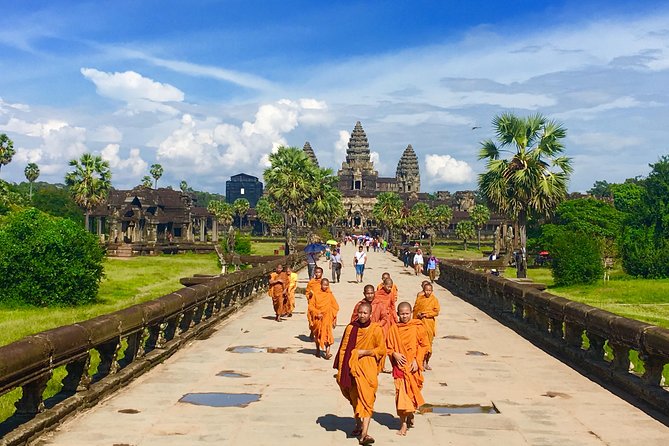
By Day 4, the trip changes gears. You head from Siem Reap area toward Kratie, with planned stops so you are not simply trapped in the car.
You begin with Spean Praptos, also known as a Naga bridge area tied to the Angkor period. Even though it is a shorter stop, it helps you break up the long drive with something culturally connected.
Then you pass through Kampong Thom city and stop for a visit related to stone-cutting, plus village walking and statue-making in that area. This type of stop is great if you like seeing how people work, not only where they worship or pose. Just keep your expectations realistic: these are not museum galleries, they are places where people live and work, so the experience is more about observation than big ticket moments.
Next comes a stop at Provincial Road 222 area with a rubber tree plantation at Stueng Trang, described as the largest rubber plantation in Cambodia. The plantation view is one of the most practical ways to understand Cambodia’s modern economy, even if it is not the “romantic postcard” theme.
Then you reach Kratie Town (noted as Sambor Town), and you take the boat to cross the Mekong to Koh Trong. The boat crossing is not just transport. It is part of the point, because the next days are designed around the island and the river pace.
You overnight at Mekong Dolphin Hotel or similar.
Koh Trong Island, car-free biking, and temple visits with dolphin-area time
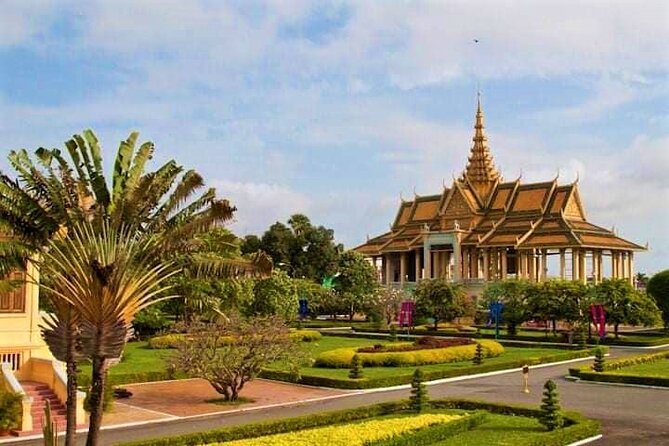
Day 5 is where this tour earns its name. You spend time on Koh Trong itself, on the Mekong River. The itinerary notes the island is about 7 km long and 1 km wide, with around 500 families living there, and that there are no cars.
That means your sightseeing style shifts. Instead of hopping in and out of vehicles for every view, you bike around the island after breakfast. For many people, this becomes the most “Cambodia feeling” day, not because it is the most famous, but because it is the most local in rhythm.
You also visit Kratie Sammaki Market, a daily-life market with regional products and surrounding colonial-style buildings. This is one of those stops where you can snack, ask questions, and watch how trade and daily routine work without it turning into an organized performance.
Then you go to Phnom Sambok Pagoda, followed by the 100-Column Pagoda. Even if you are not a temple-trivia person, both stops give you variety in architecture and local religious space beyond the Angkor brand.
Finally, you include Mekong Dolphins conservation-area time. The itinerary describes the dolphins as critically endangered. You go by boat to the conservation area for the chance to see them. Reality check, because it is important: dolphin sightings are never guaranteed on a schedule, but a conservation visit adds weight because you are seeing how the region tries to protect a fragile species.
Kampong Cham, Cheung Kok Village, and Skun Spider Sanctuary
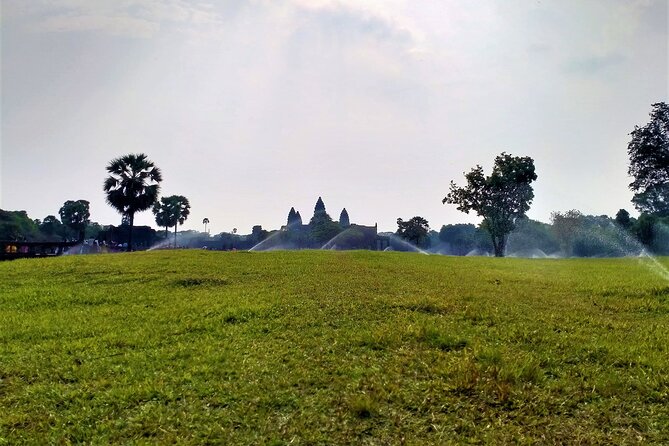
Day 6 slows down just enough to feel like you are moving away from major tourism hubs. You go to Kampong Cham, described as Cambodia’s third-largest city, though much of the area remains rural in feel.
You start with Dei Doh Pagoda, with preserved sandstone lions. You might notice how the grounds are concreted and built over, which can change how clearly you can read the older layers. That is still valuable, because it reflects how Cambodian sites remain active even as they get modified over time.
Then you visit Cheung Kok Village, supported by a French NGO called Amica, with a focus on sustainable rural life. You are told the villagers grow rice and harvest is limited to a single crop per year, which is a reminder that what you see on the ground is shaped by environment and timing.
After that comes Skun Spider Sanctuary. This is a very distinct stop because it focuses on an unusual local market item, spiders, rather than generic souvenir shopping. It is the kind of place you either find memorable or you skip certain components of the experience. Either way, it creates a real sense of “only in this place,” which is often what people want from a longer Cambodia itinerary.
Overnight is at Sun & Moon Urban Hotel, 4-star or similar.
Phnom Penh royal palace, Silver Pagoda, and a serious history double-feature
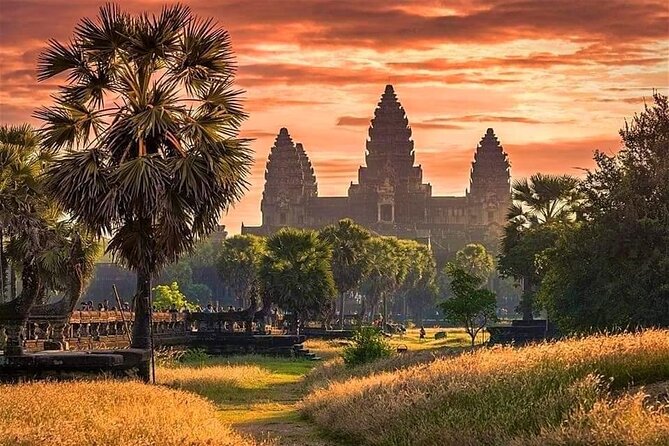
Day 7 is the big-city pivot, and it is split between beauty and burden. Phnom Penh sits at the junction of the Mekong and Tonlé Sap rivers, and the plan shows you why the city matters historically and spiritually.
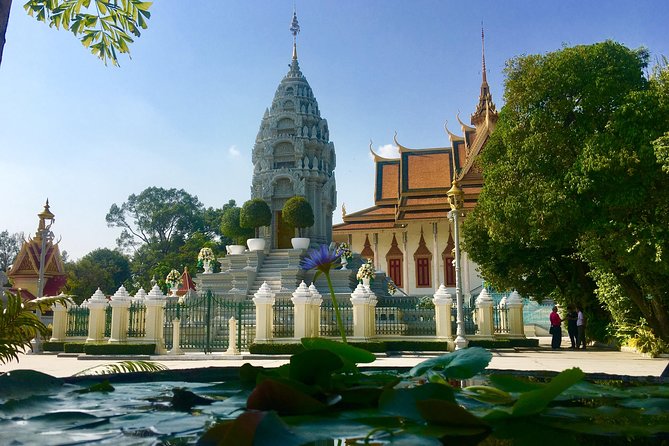
You start with the Royal Palace, constructed beginning in 1886 after the royal capital moved to Phnom Penh. The Silver Pagoda follows next, right beside it, with a garden and important interior spaces that you can see as part of the palace complex.
Then you shift to Wat Phnom, on a tree-covered knoll and described as the only hill in town. The setting makes it feel like a pause from the city’s pressure, even though it is still central and busy by comparison.
You also include the Independence Monument, built in 1958 to memorialize independence from France in 1953, and you visit a Norodom Sihanouk memorial statue housed under a tall stupa-like structure.
Next up is Wat Ounalom, one of the original monasteries, with a library and Buddhist institute mentioned in the itinerary description. Then the tour turns serious.
You visit Tuol Sleng Genocide Museum (Security Prison 21) and then Choeung Ek Genocidal Center, described as mass graves from the Khmer Rouge era between 1975 and 1979. This is the kind of pairing that can be emotionally heavy, so I suggest you plan for slower breathing after each stop. Bring water, and if you feel overwhelmed, give yourself permission to sit for a minute.
This day can be a lot. But if you want to understand Cambodia beyond temples and scenery, these stops do the job.
You overnight again at Sun & Moon Urban Hotel, 4-star or similar.
Price and value: what $1,223.10 covers, and what to watch for
At $1,223.10 per person for an 8-day private tour, the value comes from what’s included, not just the sightseeing list. Your package includes:
- Accommodation in double or twin sharing rooms, plus two nights in a traditional Khmer house and the rest in 4-star hotels (or similar)
- Entrance fees for the sightseeing stops
- English-speaking guide throughout
- Private air-conditioned transport with your driver
- Breakfast for 7 days
That bundle matters because Angkor, palaces, and museum entry tickets add up. Private transport also changes the feel of the trip. You are not negotiating group timing, and you can usually move at the pace your guide sets.
The main cost-related thing not included: tips for the guide and driver. If you budget for tips ahead of time, you avoid a late-stage stress spike.
So, is it worth it? If you want a guided, comfortable route that covers the big Angkor names, adds real Mekong island time, and ends with Phnom Penh’s historical weight, this price can make sense. If your priority is only Angkor, you might find cheaper ways to do it. If your priority is learning and comfort while covering multiple regions, this is priced in a way that reflects that.
How to pace yourself on this type of 8-day Cambodia route
This trip is structured. That is good, but it has rhythm you should respect. Here is how I would pace it as the days unfold.
- Plan for early starts on temple days. Day 2 is intense, with many stops that move from gate and city to terraces and then to Ta Prohm and Angkor Wat. Wear shoes you can stand in, and expect sun and uneven paths.
- Use the river days to reset your feet and head. Tonle Sap and Kampong Phluk on Day 3, plus the Koh Trong bike day on Day 5, are built for a different kind of travel energy.
- Treat Phnom Penh history as a full day, not a checklist. Tuol Sleng and Choeung Ek are not light stops. Give yourself a slower mental pace during and after.
- Keep a little flexibility in mind. The tour is private, and in past experiences some guides have adjusted timing for special additions when possible. That is not guaranteed, but private guiding usually gives you more room than fixed group tours.
Also, you should have moderate physical fitness. The itinerary includes walking and biking on Koh Trong. If you have concerns, ask your guide how much flexibility you can get in daily schedules.
Should you book this Siem Reap to Koh Trong to Phnom Penh tour?
I would book this if you want a Cambodia trip with three ingredients in one package: Angkor depth, Mekong river life, and Phnom Penh context. The private transport and included tickets also make it easier to spend your energy on the places, not the planning.
I would think twice if you dislike busy days with packed stops, or if you know you will struggle with long museum visits on emotionally heavy subjects. This itinerary does not treat history as optional.
If you do book, you will get the most out of it by going in with two mindsets: first, look at Angkor and Phnom Penh as stories, not screenshots. Second, let the Mekong days be slow and sensory, especially the car-free Koh Trong biking and the river boat time.
FAQ
Does this tour include pickup?
Yes. Pickup is offered, with arrival-day meeting at Siem Reap Angkor International Airport and transfers to your hotel. The tour also includes driver meeting in the final day for the transfer to the airport.
Is this a private tour?
Yes. It is listed as a private tour/activity, with only your group participating.
Are sightseeing entrance fees included?
Yes. All sightseeing entrance fee are included.
What accommodations are included?
The tour includes 4-star hotels and two nights in a traditional Khmer house, with rooms based on double or twin, triple sharing.
What meals are included?
Breakfast (7) is included.
Do I get an English-speaking guide?
Yes. The tour includes an English speaking tour guide.
How do transfers work between the main regions?
Transfers are handled by private air-conditioned vehicle for the sightseeing travel days, plus boat crossings where the itinerary calls for it, such as crossing the Mekong to Koh Trong.
What are the included days in Phnom Penh?
Phnom Penh sightseeing includes the Royal Palace, Silver Pagoda, Wat Phnom, Independence Monument, a Norodom Sihanouk memorial statue, Wat Ounalom, Tuol Sleng Genocide Museum, Choeung Ek, and Central Market.
Is tipping included?
No. Tips for the guide and driver are not included.
What is the cancellation policy for a full refund?
You can cancel up to 6 days in advance for a full refund, and cancellation must be at least 6 full days before the experience start time.
Newly listed around Siem Reap
- Sambor Prei Kuk Off Beaten Track★ 5.0 · 3 reviews
- Siem Reap Airport Taxi Transfer – City Center Hotels★ 5.0 · 5 reviews
- Unveiling the Mystical Beauty of Phnom Kulen National Park★ 5.0 · 6 reviews
- Angkor Wat at Sunrise★ 4.0 · 7 reviews
- Short Cycling at Countryside★ 5.0 · 29 reviews
- Bakong Temples & Floating Village Tour★ 4.5 · 3 reviews
- Rooftop Romantic Dinner – 4 Courses Set Meal & Wine★ 3.5 · 5 reviews
- Khmer Cooking Class in Cambodia★ 5.0 · 36 reviews
Day Trips from Siem Reap, compared.
Angkor Wat Sunrise or Sunset Tour with Guide from Siem Reap
Read our review →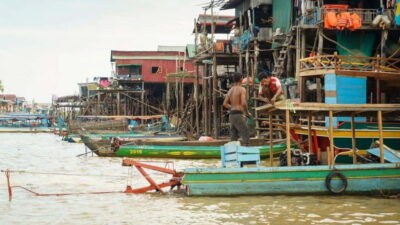
Angkor Wat Highlights and Sunrise Guided Tour from Siem Reap
Read our review →
Full-Day Angkor Wat Sunrise Private Tour with Guide from Siem Reap
Read our review →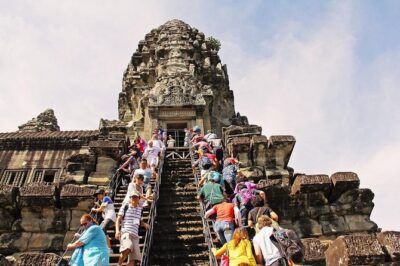
Browse the lists this tour appears in