Review · ANGKOR WAT TOURS
Four-day tour Angkor Wat, Banteay Srey, Beng Melea and Siem Reap discovery
Angkor Wat in four days is a lot to process, but it stays orderly with a smart route. This private, English-guided circuit strings together major Angkor sites and countryside stops, with time built in for softer moments like temple ruins and daily life on Tonle Sap. I like that the guide tries to manage the schedule to reduce crowds, so you spend less time fighting people and more time looking closely.
What I really like is the mix of styles: sunrise at Angkor Wat, then Buddhist and Hindu stories woven through places like Bayon, Ta Prohm, and Preah Khan. I also love the variety beyond the core temples, especially Kbal Spean’s river carvings and the far feel of Beng Mealea.
One possible drawback: entrance tickets and meals are not included, so you’ll want to budget extra and plan for long, warm days outdoors.
In This Review
- Key highlights in plain terms
- How this 4-day Angkor Wat plan stays worth your time
- Day 1: From Angkor Thom faces to Ta Prohm’s roots
- Bayon Temple and the South Gate of Angkor Thom
- Ta Prohm, the jungle temple
- Banteay Kdei
- Angkor Wat at the end of the day
- Day 2: Kbal Spean’s under-water carvings, Banteay Srei’s pink stone
- Kbal Spean and the river of 1,000 lingas
- Banteay Srei, Angkorian art at close range
- Eastern Mebon and Neak Pean
- Preah Khan, the monastery complex
- Day 3: Beng Mealea’s lost temple feel and the calmer Roluos trio
- Prasat Beng Mealea, the lost temple of Angkor
- Roluos temples: Bakong, Lolei, and Preah Ko
- Day 4: Tonle Sap life at Kompong Phluk, museum lessons, and a stone-carving workshop
- Kompong Phluk on Tonle Sap
- Angkor National Museum
- Artisans Angkor workshop and stone carving
- Guide quality is the secret sauce, especially for Hindu and Buddhist context
- Price and what you should budget beyond $202.57
- Who this tour is best for
- Should you book this 4-day Angkor Wat and Siem Reap lifestyle tour?
- FAQ
- How long is the tour and when does it start?
- What’s included in the price?
- Are entrance tickets included?
- Are meals included?
- What sites are visited during the four days?
- Is this tour private, and can children join?
- What if I need to cancel?
Key highlights in plain terms
- Crowd-aware timing: your guide works the schedule to help you avoid the densest rushes.
- English-speaking guides who connect myth to stone: past guests specifically praised guides like Sa and Praim Hear for clear explanations.
- Sunset at Angkor Wat: a classic moment, timed for the big temple’s atmosphere.
- Not just the headline temples: Kbal Spean, Banteay Srei, and Neak Pean add variety that many shorter tours skip.
- Beng Mealea’s explorer vibe: a more secluded Angkor ruin that feels rougher and freer.
- Real Cambodia day-life stops: Tonle Sap at Kompong Phluk, plus the museum and an NGO workshop.
How this 4-day Angkor Wat plan stays worth your time
Siem Reap temple days can get repetitive fast if all you do is tick boxes. This tour works better because it groups sites by feel, then gives you a step-by-step flow. You start with the Angkor core, then branch out into the countryside and Tonle Sap, and finish with culture you can actually take home, like the Angkor National Museum and a hands-on stone-carving workshop.
The value also comes from the basics being handled: an air-conditioned vehicle, an English tour guide, and simple comforts like cold water and a cold towel. When you spend hours in the heat, those details matter more than you think.
That private format helps too. It means your guide can react to pace and focus, rather than everyone getting marched along on a fixed timetable. From the feedback, the guide matters a lot here, and you will feel that difference in how the temples make sense.
More Angkor Wat tours in Siem Reap:
- Angkor Wat Sunrise or Sunset Tour with Guide from Siem Reap
★ 5.0 · 12,109 reviews - Siem Reap: Angkor Wat: Small-Group Sunrise or Sunset Tour
★ 5.0 · 9,444 reviews - Siem Reap: Angkor Wat 2-Day Tour with Sunrise and Sunset
★ 4.9 · 4,429 reviews
Day 1: From Angkor Thom faces to Ta Prohm’s roots
The first day is built around Angkor’s visual extremes. You get faces, jungle stonework, and then the grand symmetry of Angkor Wat, all in one continuous arc.
Bayon Temple and the South Gate of Angkor Thom
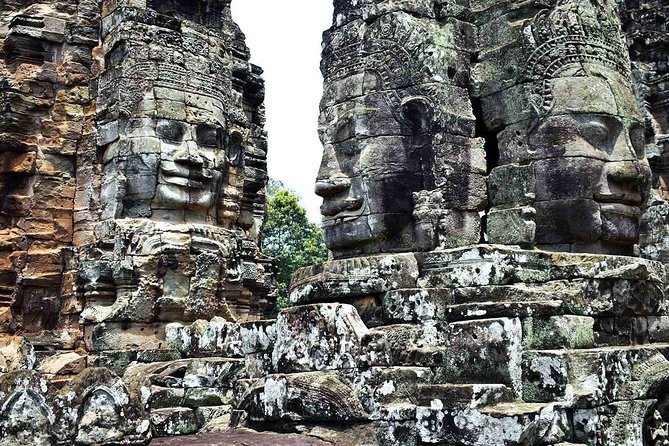
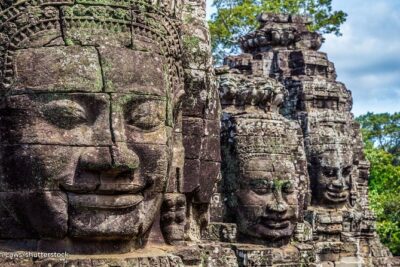
You’ll start at the South Gate of Angkor Thom and then move through Bayon Temple. Bayon is known for its many towers and repeating faces, described as 54 towers and 216 faces of Avalokesvara. That number detail helps you understand why Bayon hits so hard. The temple feels like it is watching you from every angle.
Practical tip: give yourself a few minutes to stand still. Bayon is one of those places where your eyes adjust in phases. Early on, you’ll notice the faces. After that, you’ll start seeing how the stonework and passageways guide you around.
Ta Prohm, the jungle temple
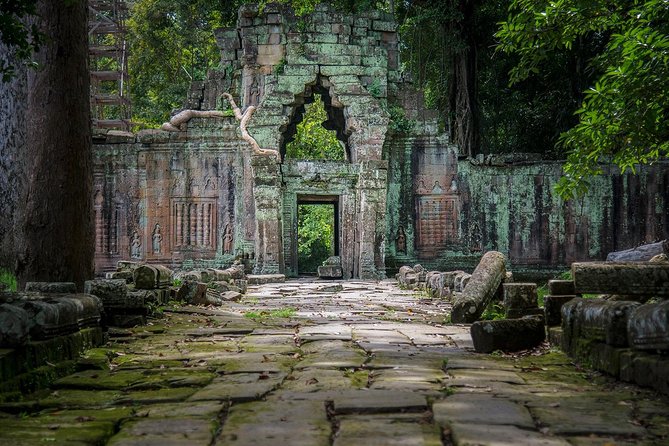
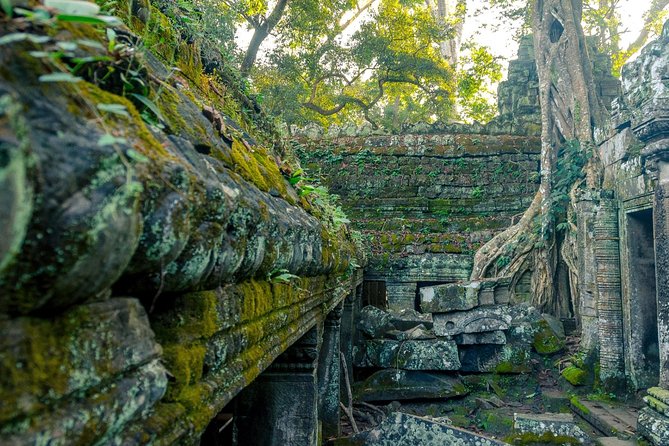
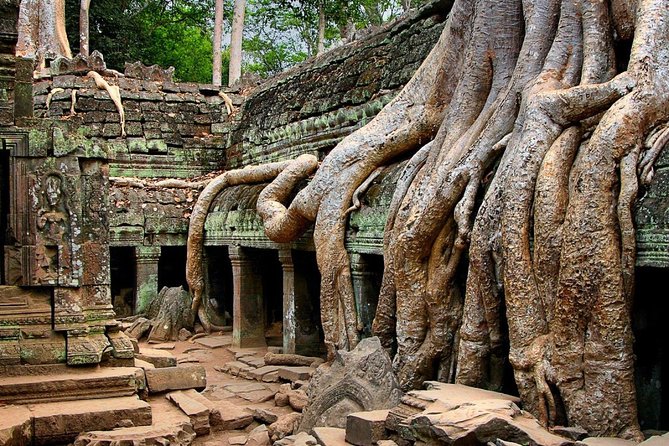
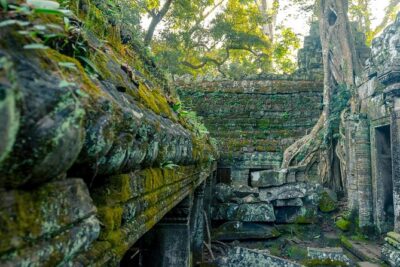
Next is Ta Prohm, often called the jungle or tree temple. The point here is not just the trees. It is the way the roots and ruins make the architecture feel alive. You’ll see how nature and human craft now occupy the same space.
A drawback for some people: Ta Prohm can be busy when tours stack up. That’s where schedule management matters. If the guide is doing crowd avoidance well, Ta Prohm becomes more magical and less like a photo line.
A different kind of day in Cambodia:
- From Siem Reap: Kampong Phluk Floating Village Tour by Boat
★ 4.9 · 6,979 reviews - Sunset tour of Kampong Phluk stilts home village on the Tonle Sap
★ 5.0 · 4,865 reviews - Siem Reap: Kampong Phluk Floating Village Tour with Boat
★ 4.9 · 3,843 reviews - Siem Reap: Full-Day Angkor Wat Guided Tour with Sunset
★ 4.9 · 3,803 reviews
Banteay Kdei
Then you move to Banteay Kdei, a temple built under King Jayavarman VII in the late 12th century. This stop is a useful breather between the biggest name sites. You get a different temple mood, and you also get practice reading the Angkor layout without the pressure of the most famous photo spots.
Angkor Wat at the end of the day
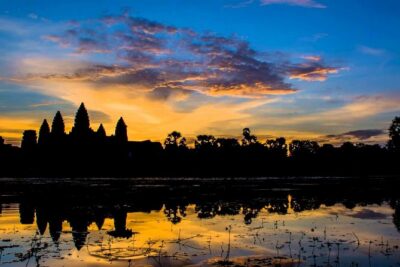
You finish with Angkor Wat, built in the early 12th century under King Suryavarman II, and associated with the Vishnu tradition in its original dedication. You will also end with a sunset over Angkor Wat and surrounding temples, which is the perfect payoff for a long day.
Sunset value, in real terms: during daylight you see details. In late light you understand the scale. The stones turn warmer, the temple looks more sculptural, and the wider complex starts to feel like one connected artwork rather than separate monuments.
Day 2: Kbal Spean’s under-water carvings, Banteay Srei’s pink stone
Day two shifts the tone away from the biggest complexes and into smaller, more story-driven stops. It also brings in Kbal Spean, which is a great way to break the temple rhythm.
Kbal Spean and the river of 1,000 lingas
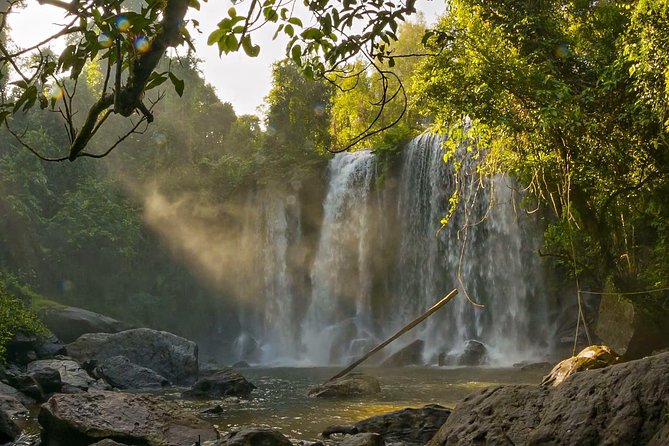
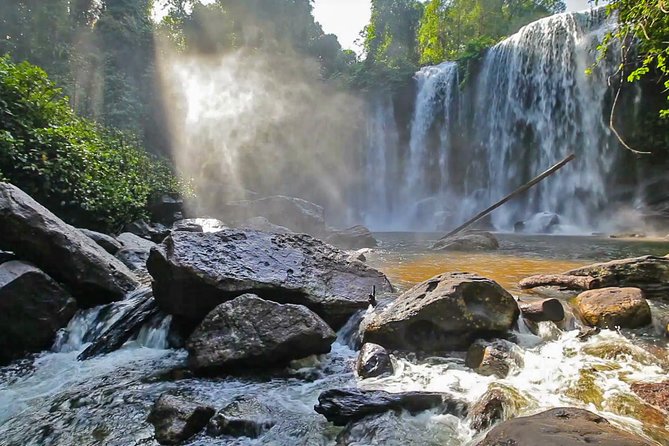
Kbal Spean is described as a waterfall area with carvings under the water showing Vishnu and Brahma gods. The phrase river of 1,000 lingas gives you a mental target: you are looking for repetition and symbolism, not just scenery.
A practical consideration: water sites can be affected by conditions. Even if the carvings are there, your ability to see them can depend on how water is moving and where you stand. Go with patience and let the guide point out what you should notice.
Banteay Srei, Angkorian art at close range
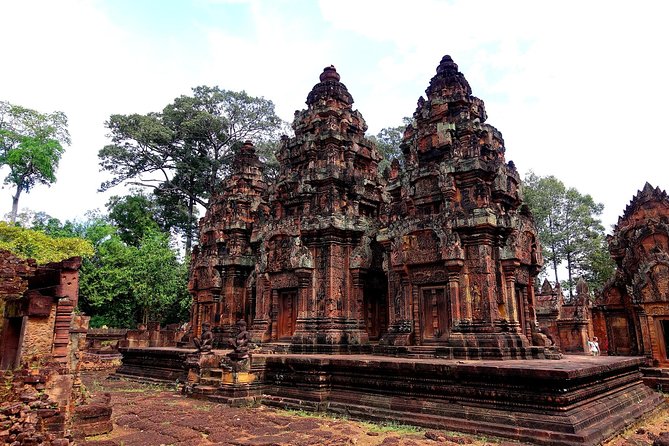
After Kbal Spean, you visit Banteay Srei, about an hour from Siem Reap. It is described as the jewel in the crown of Angkorian art, cut from a pinkish-hued stone. The value of Banteay Srei is that it feels more delicate and detailed compared to the huge temple mounds. It rewards slower looking.
This is also one of the stops where a good guide helps you understand what you are seeing. Visitors praised guides like Sa for explaining Buddhist and Hindu mythology and tying Khmer stories to the carvings. When that clicks, you stop treating the temple like a backdrop and start treating it like a message.
Eastern Mebon and Neak Pean
You then return to the Angkor area for Eastern Mebon, described as a large temple-mountain-like structure, followed by Neak Pean.
Neak Pean is especially interesting because it is described as rising three levels and crowned by five brick towers. It sits on an artificial island in the middle of a last Baray, an ancient water reservoir, said to be constructed by the king.
Why this matters for you: Neak Pean gives your brain a different puzzle. It is more about geometry, water, and elevated viewpoints than it is about only doors and towers. If you like understanding how the water system worked, this stop adds real context.
Preah Khan, the monastery complex
You end this day at Preah Khan, described as a huge and explorative monastic complex. This is where Angkor starts to feel less like pure temple tourism and more like a lived-in spiritual landscape, with spaces that suggest long-term use.
The biggest practical tip for days like this: build your photos around moments. Do not shoot everything from the same angle. With a guide explaining the layout and symbolism, the best views often shift from the obvious ones.
Day 3: Beng Mealea’s lost temple feel and the calmer Roluos trio
Day three is the day for breathing room from the main circuit. It also has two different kinds of “less crowded” energy: one is far and rough, the other is compact and close to town.
Prasat Beng Mealea, the lost temple of Angkor
Prasat Beng Mealea is about 70 kilometers northeast of Siem Reap and is described as the lost temple of Angkor. The secluded location gives you a sense of being out there discovering something on your own, not just entering a highlight reel.
In a good way, Beng Mealea feels less managed. That is why it can be a favorite for people who want a more rugged ruin experience. The downside is also predictable: you might feel a bit more physically exposed here than at fully restored sites. Wear shoes that can handle uneven ground.
Roluos temples: Bakong, Lolei, and Preah Ko
Then you visit the Roluos group, including Bakong, Lolei, and Preah Ko, described as about 11 kilometers southeast of the Siem Reap market. They are close together, so your day is efficient.
These temples often work well as a “contrast day” after Beng Mealea. You get variety without driving all the way back into the busiest Angkor zones.
Practical tip: do not rush them. When you’ve seen one complex after another, it is easy to treat these as filler. But Roluos can be satisfying because you can compare styles and layout choices across stops.
Day 4: Tonle Sap life at Kompong Phluk, museum lessons, and a stone-carving workshop
The final day does something smart: it expands your idea of what a Siem Reap visit can include. You see the lake life, then move into a museum context, and finish with a craft activity that connects the region’s traditions to real people today.
Kompong Phluk on Tonle Sap
You head to Kompong Phluk on the Tonle Sap lake, described as the biggest fresh water lake in Southeast Asia and about a 45-minute drive from Siem Reap. Kompong Phluk is where you get insight into real Cambodian life tied to the water system.
The real value here is perspective. After days of stone temples, you see another kind of infrastructure, the way people live with seasonal changes and lake rhythms. It turns your trip from only ancient monuments into a living snapshot of how Cambodia functions now.
Angkor National Museum
Next is the Angkor National Museum, featuring a major collection of Buddha statues and relics assembled in one gallery. Even if you can already identify temple styles, museum time helps you make sense of what you saw out in the sun.
Museum value is simple: it reduces guessing. You can map symbols, materials, and religious themes to what the guide has been explaining all along.
Artisans Angkor workshop and stone carving
You then visit Artisans Angkor, described as a local NGO that supports disadvantaged Cambodians from rural areas. You’ll enter their workshop and you can craft your own stone carving.
This is a great way to make the trip stick in your mind. A souvenir is nice, but a small project is better because you physically engage with the idea of craft.
If you are worried about doing a hands-on activity in the heat, know that the workshop time is likely short compared to temple walking, and the reward is personal.
Guide quality is the secret sauce, especially for Hindu and Buddhist context
The most consistently praised element in the feedback is the guide. English communication matters, but the deeper part is how clearly the guide connects Hindu and Buddhist symbolism to what you see.
Names that came up directly include Sa and Praim Hear. People highlighted that their English was strong and their explanations covered Khmer history in a way that made the temples easier to understand. Stories about daily life and even folk tales were also mentioned, which helps when you are standing in places that were built centuries ago.
Here’s the practical takeaway for your trip: if you want the temples to feel meaningful, not just impressive, bring a curious mindset. Ask questions early, and then let the guide’s explanations shape your later observations. Bayon’s faces, Ta Prohm’s roots, Neak Pean’s water connections, and Preah Khan’s monastery layout all become easier to read once you understand the story behind them.
Price and what you should budget beyond $202.57
The listed price is $202.57 per person for a roughly four-day private tour. That sounds like a bargain compared to what you would pay for separate drivers and guide time, and you are getting value through the structure: multiple Angkor zones plus countryside stops, all handled with an air-conditioned vehicle and an English guide.
But do not plan as if tickets and meals are included, because they are not. Entrance fees and meals are listed as not included, so you need to budget separately. For meals, you can keep it simple by grabbing lunch on the go when you can, but you should still plan for breaks, hydration, and the fact that mornings start around 8:30 am.
Also note: entrance tickets are not included, so your total cost depends on which days and sites you’re charged for. If you want smoother budgeting, set aside extra money on day one so you are not stuck estimating halfway through.
Who this tour is best for
This is a good match if you want a guided, organized way to see Angkor while still getting variety. It suits:
- First-time Siem Reap visitors who want the highlights plus some smart extras like Kbal Spean and Beng Mealea
- People who care about religious symbolism and want it explained clearly
- Travelers who would rather avoid crowds than fight through them
It might be less ideal if you hate long days. Even with a private setup, you are spending hours at sites and moving between them. You’ll also want footwear ready for uneven ground, especially if you spend time at Beng Mealea.
Should you book this 4-day Angkor Wat and Siem Reap lifestyle tour?
If you want a structured four-day plan that mixes major temples with countryside and daily-life stops, this is a solid choice. The guide-driven storytelling seems to be the key strength, and the schedule focus on crowd avoidance is a real quality-of-life upgrade at Angkor.
I’d book it if your priority is seeing more than just the main headline temples, and you want the religious and historical context to feel understandable. I’d think twice if you want meals and site tickets included in the base price, because you’ll be planning and paying extra once you’re in Cambodia.
If you book, I’d also do one simple thing: bring a curious attitude and ask the guide questions early. On a trip like this, that is what turns impressive stone into something you actually remember.
FAQ
How long is the tour and when does it start?
The tour is listed as approximately 4 days and starts at 8:30 am.
What’s included in the price?
Included features are an air-conditioned vehicle, an English tour guide, and cold water with a cold towel.
Are entrance tickets included?
No. All entrance ticket fees are not included.
Are meals included?
No. Meals, including breakfast, lunch, and dinner, are not included.
What sites are visited during the four days?
Stops include Bayon Temple, Ta Prohm, Banteay Kdei, Angkor Wat, Kbal Spean, Banteay Srei, Eastern Mebon, Neak Pean, Preah Khan, Prasat Beng Mealea, Roluos Temples, Kompong Phluk, Angkor National Museum, and Artisans Angkor.
Is this tour private, and can children join?
It is a private tour with only your group participating. Children must be accompanied by an adult.
What if I need to cancel?
Free cancellation is available up to 24 hours in advance for a full refund. If you cancel less than 24 hours before the start time, you will not receive a refund.
Newly listed around Siem Reap
- Sambor Prei Kuk Off Beaten Track★ 5.0 · 3 reviews
- Siem Reap Airport Taxi Transfer – City Center Hotels★ 5.0 · 5 reviews
- Short Cycling at Countryside★ 5.0 · 29 reviews
- Unveiling the Mystical Beauty of Phnom Kulen National Park★ 5.0 · 6 reviews
- Angkor Wat at Sunrise★ 4.0 · 7 reviews
- Bakong Temples & Floating Village Tour★ 4.5 · 3 reviews
- Rooftop Romantic Dinner – 4 Courses Set Meal & Wine★ 3.5 · 5 reviews
- Khmer Cooking Class in Cambodia★ 5.0 · 36 reviews
Angkor Wat Tours, compared.
Angkor Wat Sunrise or Sunset Tour with Guide from Siem Reap
Read our review →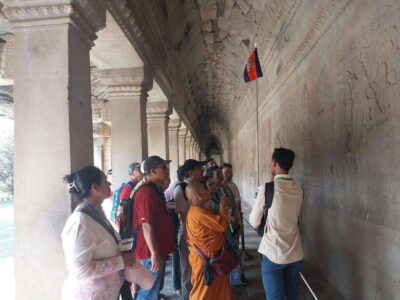
Angkor Wat: Small-Group Sunrise or Sunset Tour
Read our review →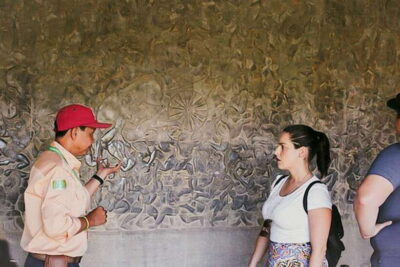
Angkor Wat 2-Day Tour with Sunrise and Sunset
Read our review →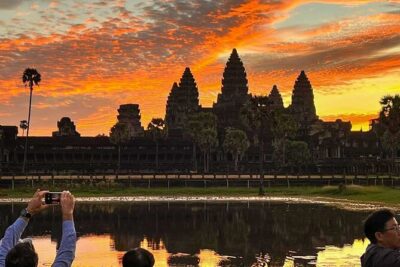
Angkor Wat Sunrise tour with Small – Group and Guide tours
Read our review →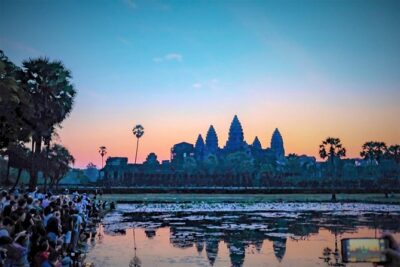
Angkor Wat Highlights and Sunrise Guided Tour from Siem Reap
Read our review →
Angkor Wat Sunset Small Group Tour with Lunch Included
Read our review →