
Review · BAMBOO TRAIN TOURS
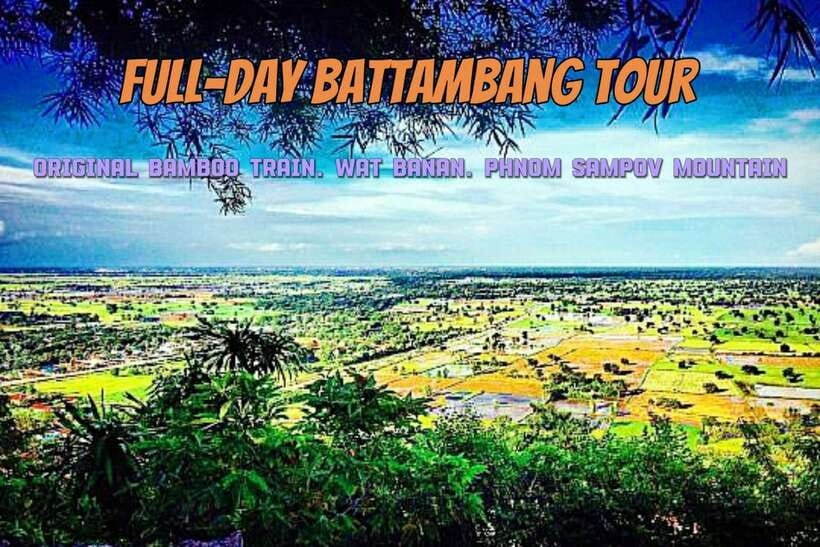
Full-day: Original bamboo train, Wat Banan, Phnom Sampov
A long tuk tuk day can feel like a blur, unless it’s built right. This one strings together Battambang’s sights, countryside rides, temple climbs, and an evening bat cave stop into a smooth 10-hour route with a live English guide. You get real local time, not just photo stops.
I especially like the mix of city culture first (colonial-era Battambang Provincial Hall, shrines, a local school stop) and then big countryside energy once the day turns toward the original bamboo train. I also like that you’re not only watching, you’re walking and learning, from village life and Buddhism stops to a serious climb at Wat Banan.
One thing to consider: it is a full day with walking and stairs, including an ancient-stair climb at Wat Banan and time around the Khmer Rouge history site at Phnom Sampov. If heat, steep steps, or emotional history hit hard, plan accordingly.
In This Review
- Key things I’d prioritize on this Battambang day
- Battambang by tuk tuk, and why the 10 hours feel doable
- Battambang Provincial Hall, shrines, and the morning culture setup
- The statue stop and the hanging bridge over the Sangke river
- Cham and Javanese village life, with snacks and bamboo sticky rice
- Bamboo Train, the $5 add-on, and what makes it worth it
- Wat Banan Temple and the ancient stairs to the top
- Phnom Sampov Mountain and the Killing Cave history stop
- Bat Cave at sunset, and how to handle the beer moment
- Price and logistics: what $15 covers, and the cash you should plan
- Who should book this Battambang day, and who should skip it
- Should you book? My call on value and fit
- FAQ
- What does the $15 per person price include?
- How long is the tour?
- Is the bamboo train fee included?
- Are meals included?
- What should I bring?
- What language is the guide?
- Who is this tour not suitable for?
- What is the cancellation policy?
Key things I’d prioritize on this Battambang day
- Original bamboo train ride plus a longer run at Our Solar village (often the part people remember most)
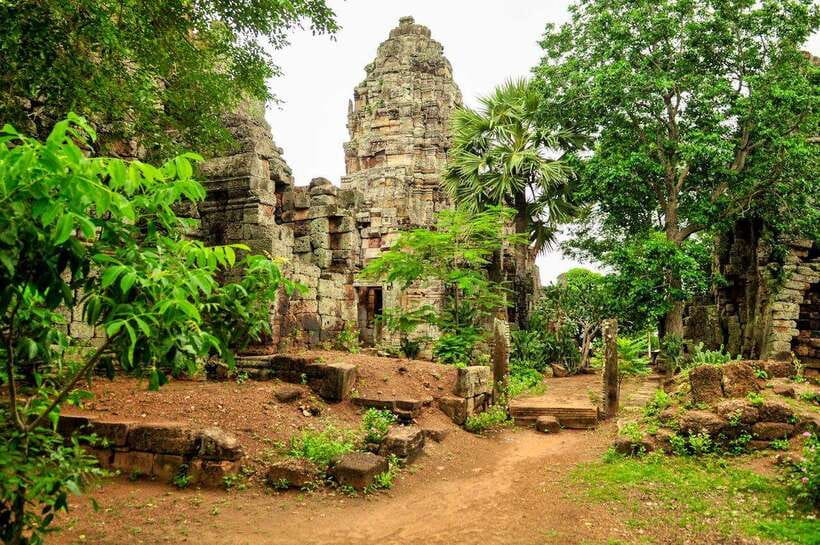
- Wat Banan Temple climb up ancient stairs to the top with fruit bats around the area
- Sunset bat cave stop, timed for the end of the day, when the views and atmosphere are best
- Hanging bridge and river crossing for classic Battambang photos over the Sangke river
- Cham and Javanese village time, with local snacks and glimpses of daily work
- Tuk tuk pacing that keeps the day varied without constant backtracking
Battambang by tuk tuk, and why the 10 hours feel doable
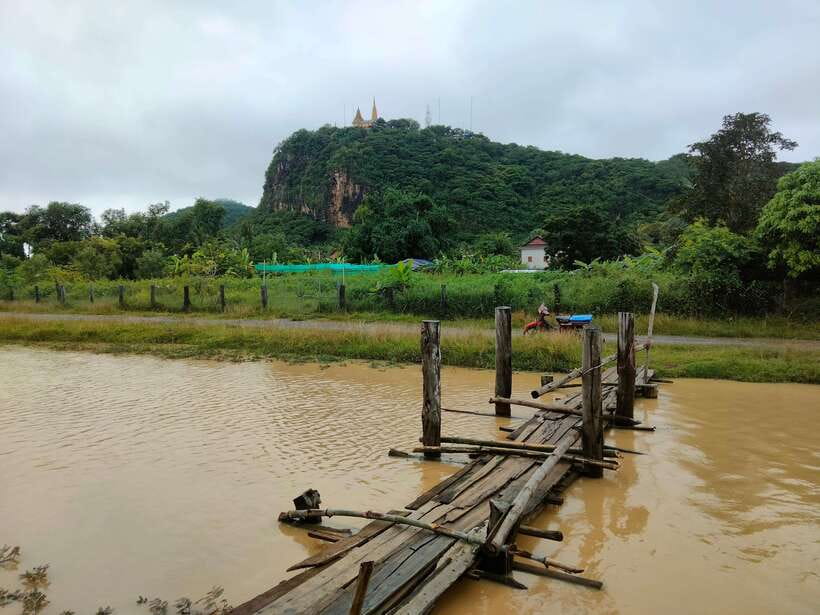
This is built around a tuk tuk loop that covers a lot of ground, but it doesn’t feel like nonstop rushing. The day runs about 10 hours total, and your driver doubles as the live guide. That matters, because Battambang’s highlights can be scattered, and you’ll want someone to connect the dots between a shrine, a bridge, a pagoda, and a mountain site.
You’ll start with pickup in Krong Battambang, then move in short hops. Expect plenty of small stops, not one or two giant ones. The pace works well if you like a “see it, taste it, walk a bit” style of travel day.
Practical tip: wear shoes you trust. Even when you’re not climbing, you’re usually on uneven paths or stepping between viewpoints. Also bring a hat and sunscreen, because you’ll be outside for bridge photos, countryside time, and mountain walking.
More bamboo train rides:
- Battambang: Tuk-Tuk, Bamboo Train, Killing/Bat Caves, Sunset
★ 4.9 · 1,436 reviews - Afternoon tour by tuk tuk to bamboo train,bat cave,killing cave,countryside.
★ 5.0 · 344 reviews - Battambang: Bamboo Train, Bat Cave, Killing Cave by Tuk Tuk
★ 5.0 · 182 reviews
Battambang Provincial Hall, shrines, and the morning culture setup
The first part of the tour leans into Battambang’s local texture. You’ll visit Battambang Provincial Hall (about 20 minutes). It’s a good way to ground your day in the place, and it also sets the tone for why the rest of the route works: the tour isn’t only about the countryside, it’s about how communities and faith show up in everyday spaces.
After that, you’ll make a quick tuk tuk transfer to a shrine stop, Lok Ta Dambong Kra Nhoung Shrine (about 20 minutes). Then there’s another city stop for Madrasah tahfiz AL Bashir (about 40 minutes). This is the kind of stop that gives context, even if you’re not there to “do” anything. You’re there to watch how learning and religion coexist in daily life.
One review experience note that matches what this itinerary aims for: guides often take small detours around local streets when you’re still in town. It can turn a short visit into something you remember.
If you prefer pure sightseeing without any faith-related stops, this first half may feel like a lot. But if you enjoy understanding what you’re seeing, the morning setup pays off later.
The statue stop and the hanging bridge over the Sangke river
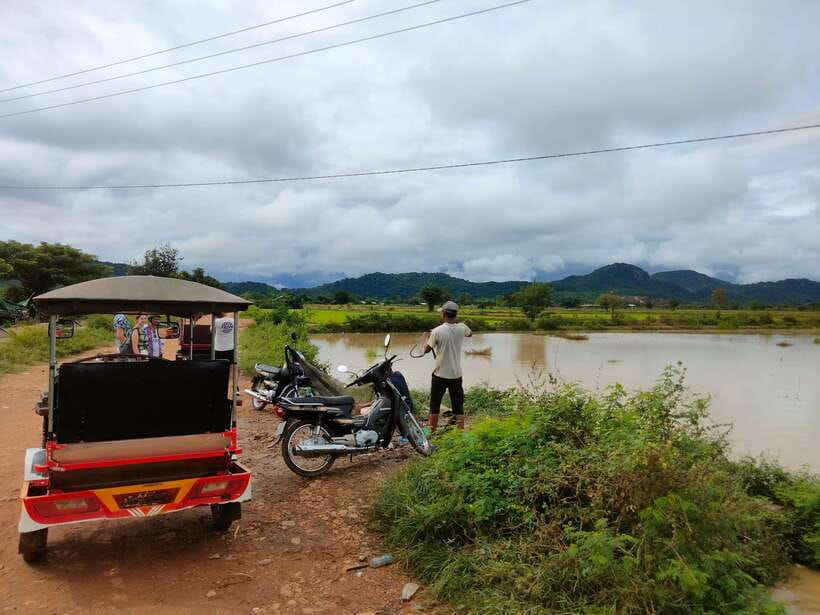
One of the most photogenic early highlights is the hanging bridge. You’ll spend about 1.5 hours here, long enough to take photos, cross, and just watch. You’ll also cross the Sangke river, which helps break up the day and gives you a sense of Battambang’s geography.
The tour also includes Tadam Bong Kro Aung statue (time built into the morning sequence). It’s there to anchor the historical and cultural thread, so the bridge and river crossing don’t feel random.
After the bridge, you’ll learn about Buddhism at Kampon Pile Pagoda. This is the kind of stop where the guide’s explanations really matter, because the value is in understanding what the symbols and rituals mean to the community around you.
What I like about this section for you: you’re doing “easy movement” travel. You’re not exhausted yet. You’re in town, then you step outside for big views and then return to a calm walking pace.
Cham and Javanese village life, with snacks and bamboo sticky rice
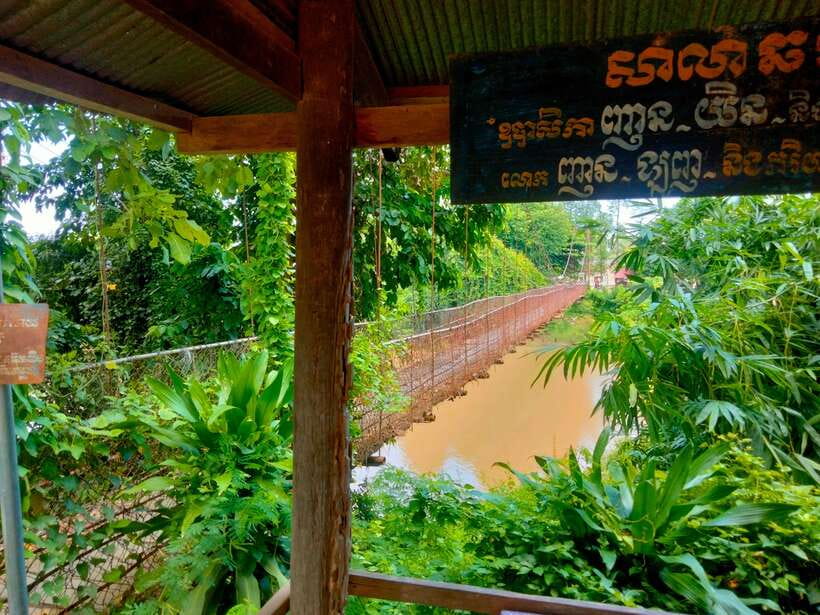
A standout part of this day is the village and culture time. The tour includes walking around Cham and Javanese ethnicity villages, where you learn about their culture and religion and spend time seeing how people live.
This is also where the itinerary leans into taste. You’ll get snacks and local food experiences during the village sequence. In at least some departures, you may stop to watch how Khmer people bake bamboo sticky rice. That’s a small detail, but it’s exactly the kind of hands-on food story that turns a cultural stop into a real memory.
You might also get chances to observe fruit bats hanging from trees while you’re in the temple and countryside areas later in the day. That fits the theme: Battambang has a way of linking nature, faith, and local routine in the same scenes.
If you’re traveling with kids, this section is usually more “watch and talk” than “sit still,” which keeps it engaging. If you’re very time-driven and dislike village walks, plan for it anyway. This part is one of the reasons the tour feels different from a basic highlights circuit.
A few more Cambodia trips to compare
- Full Day tour .City tour.Countryside.Bamboo Train.Secret Bat Cave
★ 5.0 · 178 reviews - Battambang Full Day Tour from Siem Reap – Bamboo Train, Killing Cave & Sunset
★ 5.0 · 101 reviews - Afternoon Tour: Bamboo Train, Killing Cave &Bat Cave
★ 5.0 · 73 reviews - Battambang: Bamboo Train, Bat Cave and Killing Cave Tour
★ 4.9 · 58 reviews
Bamboo Train, the $5 add-on, and what makes it worth it

The bamboo train portion is the headline, but it’s also where budgeting matters most.
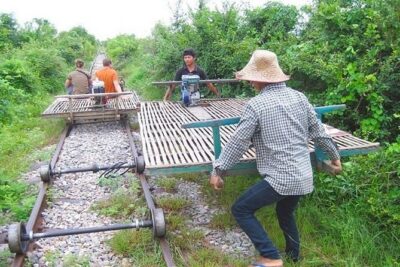
Your tour includes time at Bamboo Train Ou Srauo Laou (about 80 minutes total), and the ride itself is listed as around 1 hour. However, the bamboo train fee is not included, and you should expect about $5 per person.
The ride itself is the core experience: you’ll be on an original bamboo train, moving through countryside views. It’s not a theme park ride. It’s practical, noisy, and scenic, and it’s exactly why people like it. You feel the speed, you watch fields and villages slide past, and it feels closer to local transport than a staged attraction.
Value check: even with the extra $5, this portion can still be good value if you care about authentic local travel moments. You also get additional context, since the tour mentions driving you to Our Solar village for a longer ride distance. So you’re not only doing a short “quick photo” run.
One fair caution: if you’ve only got interest in “must-see temples,” the bamboo train might feel like a detour. Some people rate it as okay rather than a life-changing highlight. But if you like countryside travel and unusual transport, it’s hard to beat.
Wat Banan Temple and the ancient stairs to the top
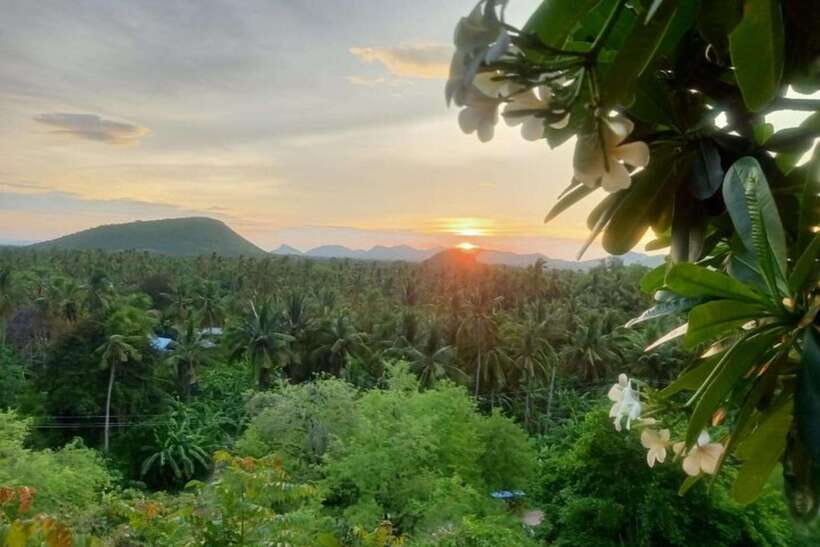
In the afternoon, the tour shifts into mountain territory with Wat Banan (Phnom Banan). You’ll spend about 2 hours around the temple.
This is the part with the workout. You have to climb up a mountain through ancient stairs to reach the top. Bring your stamina, and start slow. The climb is also where the guide’s pace and explanations matter, because you’ll want a moment to catch your breath and a moment to look at the views.
During this area, you may also connect with food culture again, since the itinerary mentions visiting locals who bake bamboo sticky rice while traveling. That means the day keeps returning to local daily life, not just scenery.
A special nature note: fruit bats can be part of this temple circuit. You may see them hanging from trees in the area, which makes the whole experience feel alive, not purely architectural.
Safety and comfort note: the tour is not marked as suitable for people with mobility impairments, wheelchair users, or pregnant women. Even if you’re generally fit, the stairs at Wat Banan and walking on uneven ground are real factors.
Phnom Sampov Mountain and the Killing Cave history stop
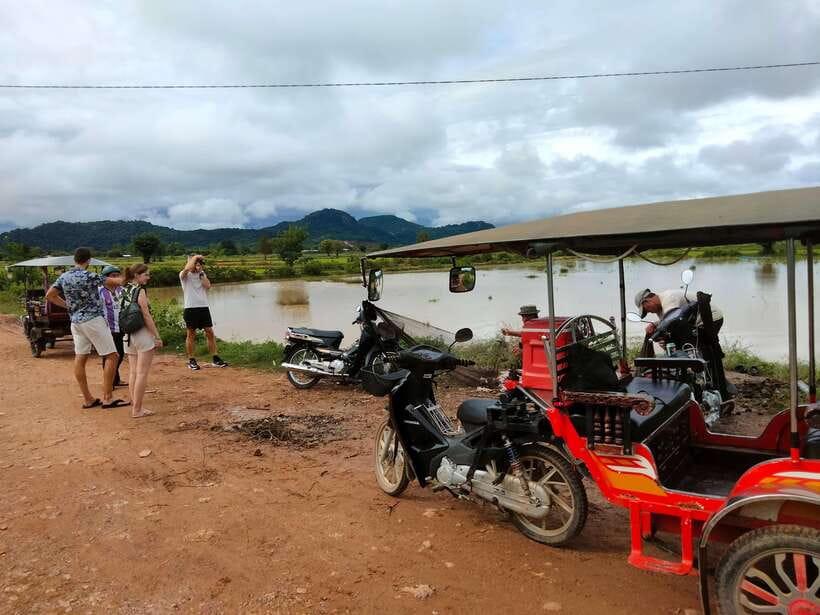
After Wat Banan, you move toward Phnom Sampov Mountain. You’ll see scenic countryside, including rice fields and farmers working in the fields. This is a calmer, open-view transition after the temple climb.
Then comes a heavier stop: the Killing Cave (Sampov Mountain). The tour describes seeing victims’ skulls and learning more about the Khmer Rouge. This is not a casual sightseeing moment. It’s history with real weight.
If you’re sensitive to difficult historical content, treat this as the emotional centerpiece of the day. I’d mentally prepare yourself for it, and if you need breaks, ask your guide to slow down or pause.
From a value perspective, this section is why the tour is more than a list of landmarks. You’re connecting Battambang’s landscapes to Cambodia’s modern history, and the guide’s explanations can make the difference between reading about tragedy and truly understanding why it happened where it did.
Bat Cave at sunset, and how to handle the beer moment
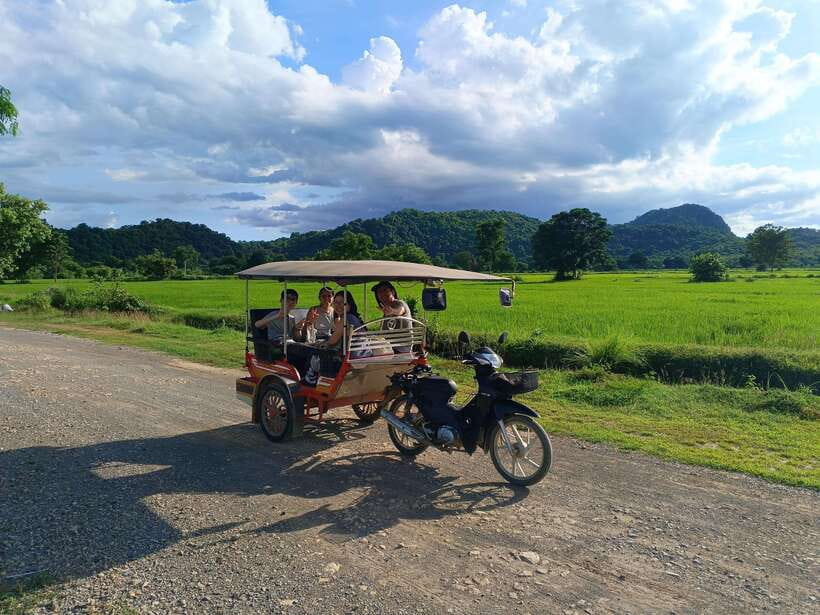
The day ends with a sunset atmosphere at the Bat Cave. The itinerary frames it as a watch-the-sunset moment with a cold beer.
One thing to keep in mind: the tour rules you’ll be given say alcohol is not allowed. So follow what your guide and the activity rules state at the time. If beer is offered in your group, it should be aligned with their current policy.
Even without the beer detail, the sunset bat cave stop is why people sign up. Timing matters here. You’ll want your camera ready and your hat handy, because dusk brings cooler air but you may still be outside.
In at least one guide style noted in recent experiences, you might be taken to a bat cave setting that feels less touristy than the most obvious option, and with more bats visible. That’s the kind of practical advantage you can only get with a local guide approach.
Price and logistics: what $15 covers, and the cash you should plan
On paper, the price is $15 per person for a full-day tour lasting around 10 hours with hotel pickup and drop-off. That’s a strong baseline value because it includes transportation by tuk-tuk, a live English guide (tuktuk driver), unlimited mineral water and a cold towel, plus snacks and entrance fee (Bat cave, Killing cave).
But there are important gaps that affect your real total cost:
- Bamboo train fee: about $5 per person (not included)
- Meals: not included, so plan where you’ll eat or rely on snacks plus a lunch purchase
- Personal expenses: not included
- Some site-related costs beyond the listed entrance fees can come up in practice, so keep cash for small payments
This is why I tell friends to treat $15 as the “door price,” not the “final price.” It’s still a bargain if you want the full route and you budget a bit for the bamboo train ride and any extra site charges your guide asks for during the day.
Also note the walking and climbing. If you’re traveling light, bring the basics: comfortable shoes, hat, sunscreen, camera, and cash.
Who should book this Battambang day, and who should skip it
This tour is a great fit if you want:
- A full-day overview of Battambang province, not a half-day checklist
- A mix of culture, food, and countryside travel
- The bamboo train ride as an authentic “how people move through the landscape” experience
- A sunset finish with nature, plus temple and mountain views
You might want to skip or choose something gentler if:
- You have mobility limitations, since Wat Banan includes a significant stair climb
- You’re traveling with someone who is pregnant, since the tour is not suitable in that case
- You prefer light history content, since the Killing Cave stop includes graphic remnants and Khmer Rouge context
If you love chatting with a guide, this kind of private day can be especially good, because the route is flexible and the driver is also your translator and storyteller.
Should you book? My call on value and fit
I’d book this tour if you want a single day that feels like Battambang, from colonial-era bones in town to rice fields and mountain temples, with a real countryside transport ride in the middle. The inclusion of pickup, cold water, cold towel, snacks, and a live English guide makes the $15 starting price feel fair.
I’d hesitate only if you’re worried about stairs or heavy history. Wat Banan’s ancient steps and the Killing Cave stop are not optional vibes. They are part of the experience.
If you fit the walking, the emotional history, and the “full day outside” style, you’ll likely leave with more than photos. You’ll have stories about daily life, faith, and a side of Battambang that most people miss when they only do river overlooks.
FAQ
What does the $15 per person price include?
It includes hotel pickup and drop-off, unlimited mineral water and cold towel, transportation by tuk-tuk, a live English guide (your tuktuk driver), snacks for local food, and entrance fees for the Bat cave and Killing cave.
How long is the tour?
The total duration is about 10 hours.
Is the bamboo train fee included?
No. The bamboo train fee is listed separately at about $5 per person.
Are meals included?
No. Meals are not included.
What should I bring?
Bring comfortable shoes, a hat, a camera, sunscreen, and cash.
What language is the guide?
The live guide is English.
Who is this tour not suitable for?
It is not suitable for pregnant women, people with mobility impairments, and wheelchair users.
What is the cancellation policy?
Free cancellation is available up to 24 hours in advance for a full refund.
Newly listed around Cambodia
- Sambor Prei Kuk Off Beaten Track★ 5.0 · 3 reviews
- Siem Reap Airport Taxi Transfer – City Center Hotels★ 5.0 · 5 reviews
- Short Cycling at Countryside★ 5.0 · 29 reviews
- Unveiling the Mystical Beauty of Phnom Kulen National Park★ 5.0 · 6 reviews
- Angkor Wat at Sunrise★ 4.0 · 7 reviews
- Bakong Temples & Floating Village Tour★ 4.5 · 3 reviews
- Rooftop Romantic Dinner – 4 Courses Set Meal & Wine★ 3.5 · 5 reviews
- Khmer Cooking Class in Cambodia★ 5.0 · 36 reviews
Bamboo Train Tours, compared.
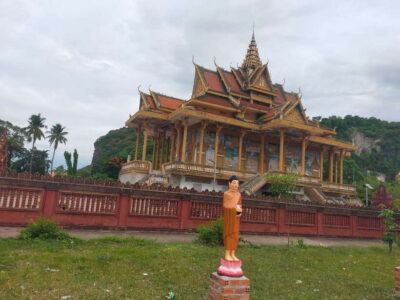
Tuk-Tuk, Bamboo Train, Killing/Bat Caves, Sunset
Read our review →
Afternoon tour by tuk tuk to bamboo train,bat cave,killing cave,countryside.
Read our review →
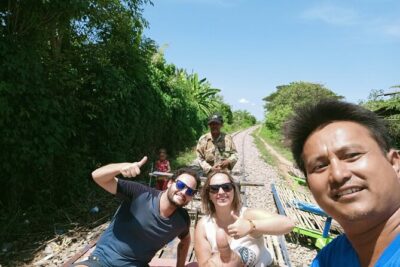
Full Day tour .City tour.Countryside.Bamboo Train.Secret Bat Cave
Read our review →
Battambang Full Day Tour from Siem Reap – Bamboo Train, Killing Cave & Sunset
Read our review →
Afternoon Tour: Bamboo Train, Killing Cave &Bat Cave
Read our review →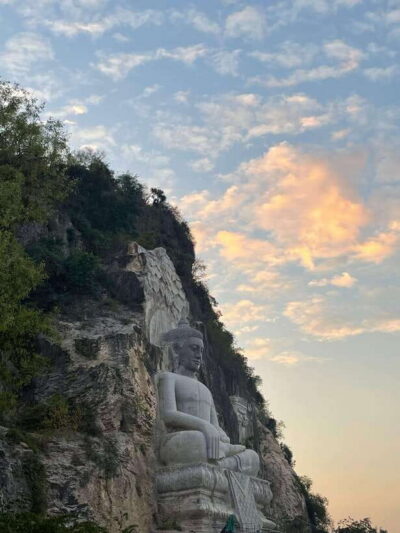
Full Day From Siem Reap – Bamboo Train, Killing Cave & Sunset
Read our review →Browse the lists this tour appears in