
Review · ANGKOR WAT TOURS
Full-Day private Tour in Lost City & Angkor Wat from Siem Reap
A temple day can feel like sensory overload, but this one has shape. You start with Angkor Wat from the lesser-used eastern side, then wind through Angkor Thom’s gates, towers, and terraces, ending at Ta Prohm where trees grab the stones.
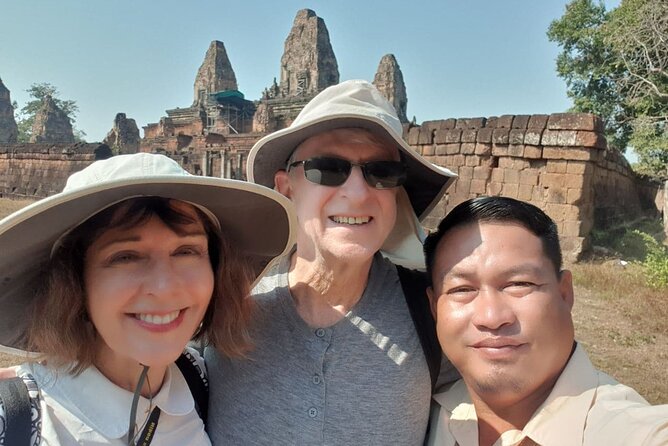
I especially like the private guide attention (English speaking, plus you move at your pace) and the way the route mixes the famous hits with quieter moments. Getting a guide like Rith or Sim also helps, because they connect the carvings and structures to how people lived and believed centuries ago.
One thing to plan for: Angkor Wat admission isn’t included, so you will need to buy the e-ticket (the guide sends a link ahead of time). If you forget this step, you’ll lose time at the start of the day.
In This Review
- Key Things I’d Watch for on This Tour
- Angkor Wat from the Eastern Side, and Why That Matters
- Angkor Thom South Gate and Bayon Faces, Fast But Not Rushed
- Baphuon to Phimeanakas: The Royal Palace Circuit
- Terrace of the Elephants and Leper King, What Each Platform Told
- Two Surprise Stops in Angkor Thom and Ending at Ta Prohm
- Price, Pace, and What You Really Get for $30
- The Practical Stuff: What to Wear and How to Handle the Heat
- Who This Private Tour Fits Best
- Should You Book This Full-Day Private Angkor Tour?
- FAQ
- Is hotel pickup and drop-off included?
- What about the Angkor Wat admission ticket?
- How long is the tour?
- Do I need to follow any dress rules?
- What temples and stops are included?
- Is this a private tour or shared group?
Key Things I’d Watch for on This Tour
- Eastern entrance at Angkor Wat helps you dodge some of the heaviest foot traffic
- A private comfortable vehicle keeps energy for walking and photos
- Bayon’s 200+ faces come with context, not just posing for pictures
- Royal enclosure stops like Phimeanakas feel more intimate than the big crowds
- Flexible pacing is part of the experience, including time to reset if you need a break
- Ta Prohm’s jungle framing is the perfect finale when the light turns
Angkor Wat from the Eastern Side, and Why That Matters
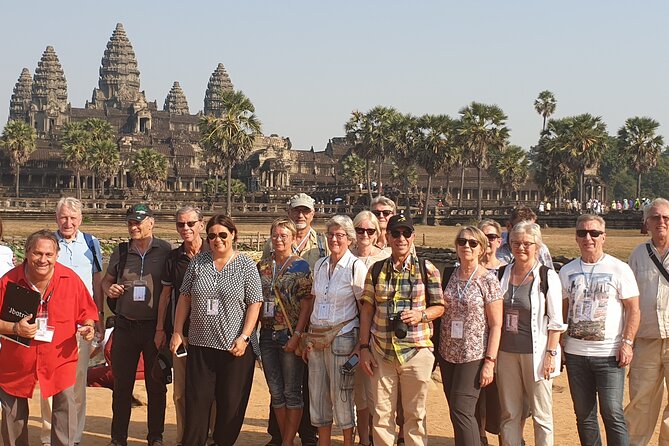
Angkor Wat is the big one, built in the early 12th century and still holding steady as a major religious center. What makes this tour’s approach feel different is the eastern side entry, a route that leads you onto temple paths with more atmosphere and fewer crowds than the busiest approaches.
Inside, you spend about two hours focusing on the heart of the temple. You walk from the entrance area toward a jungle path, and the day’s rhythm is built around actually seeing details. You’ll head toward the North Ancient Library pool area, then move onward to the central chambers where the carvings do a lot of the storytelling.
Here’s the part I’d call out: the guide doesn’t treat the bas-reliefs like decoration. They explain myths and histories shown in stone, and you get time to look at the longest stretch of bas-relief carving described for the site. If you’ve visited temples where it felt like “look, then move on,” this is where the difference shows up. You pause, you get a thread to follow, and the stones start making sense.
Practical tip: Angkor Wat has sacred spaces, and you will need clothes that cover your knees and shoulders. Bring something light but compliant, and wear flat shoes you can walk in for real.
More City Tours in Siem Reap
- Siem Reap: City Walking Tour
★ 4.6 · 583 reviews - Angkor Wat Sunrise & Ancient City Discovery
★ 5.0 · 124 reviews - Siem Reap City Walking Tour
★ 4.5 · 114 reviews
Angkor Thom South Gate and Bayon Faces, Fast But Not Rushed
After Angkor Wat, you shift into Angkor Thom, the ancient capital area of the Khmer Empire. You begin at the South Gate, one of the main gates flanked by stone figures. It’s a short stop at about 20 minutes, but it’s the kind of place where a guide’s explanation helps you “read” the structure instead of just taking a quick photo.
Then you move to Bayon, typically around one hour. This is where the towers become the show. Bayon is famous for its many serene, smiling faces, with the course highlighting more than 200 huge faces across the towers.
What makes Bayon worth your time is that it isn’t only faces. There are bas-reliefs in two zones that cover different themes. The outer gallery faces toward mythological and historical scenes, while the inner gallery focuses more on mythological events. You’re not just standing in front of a view, you’re seeing how the temple communicates.
If you care about the “human side” of Angkor, Bayon’s combination of myth and everyday life scenes makes it especially satisfying. You can stand back, then step in closer for the smaller details, without feeling herded.
Baphuon to Phimeanakas: The Royal Palace Circuit
Next, you head to Baphuon for about one hour. This temple is located within Angkor Thom, northwest of Bayon, and it’s described as a three-tiered temple mountain. It has an impressive base footprint and a height once the original tower is considered, which is one reason guides often point out how scale changes depending on what’s standing today.
You’ll get history and architectural context, including the way medieval visitors described the area. Even if you only catch a few of these references, it helps you understand why people treated these temples as statements of power, devotion, and engineering, not just religious art.
Then you continue to Phimeanakas (also spelled Vimeanakas in some places) for about one hour. This one is inside the walled enclosure of the royal palace area in Angkor Thom. The tour frames it as a temple with layered meaning: you’ll hear about it being built at the end of the 10th century during Rajendravarman’s reign, then completed by Suryavarman I.
What I like about this phase of the day is pacing. After Bayon’s crowd energy, Phimeanakas feels more “contained.” You get a sense of what the royal compound might have been like, and the sacred placement helps you visualize how the Khmer kings organized space.
One note: because some areas are sacred, always keep your outfit rules in mind. If your shoulders or knees are uncovered, you might be turned away from certain spaces.
Terrace of the Elephants and Leper King, What Each Platform Told
Now you get two of the most memorable platforms in Angkor Thom, both about 40 minutes each.
First is the Terrace of the Elephants, a long structure known for ceremonial and public audience use under King Jayavarman VII. Locals even call it the Ancient Khmer Stadium, which is a fun mental image because it reminds you that this was meant for gatherings, announcements, and spectacle.
This is where I think a good guide matters most. The stones look symbolic and dramatic, but the explanation connects them to how power and public life worked. When you understand it as a “stage” for events, the terrace shifts from a photo backdrop to something you can imagine with people.
Then comes the Terrace of the Leper King. It’s U-shaped and thought by some to have served as a royal cremation site. The modern name comes from a sculpture discovered at the site, depicting Yama, the Hindu god of death.
I find this stop fascinating because it shows how names can change over time. The structure itself is part of Jayavarman VII’s era, but the story people tell later can reshape how we talk about it today. A guide’s role here is to keep the structure’s original context clear while explaining why the nickname stuck.
More Angkor Wat tours in Siem Reap:
- Angkor Wat Sunrise or Sunset Tour with Guide from Siem Reap
★ 5.0 · 12,109 reviews - Siem Reap: Angkor Wat: Small-Group Sunrise or Sunset Tour
★ 5.0 · 9,444 reviews - Siem Reap: Angkor Wat 2-Day Tour with Sunrise and Sunset
★ 4.9 · 4,429 reviews - Siem Reap: Full-Day Angkor Wat Guided Tour with Sunset
★ 4.9 · 3,803 reviews
Two Surprise Stops in Angkor Thom and Ending at Ta Prohm
Between the big landmarks, this day includes short, special stops in Angkor Thom that aren’t the usual “everyone stands here” places. The guide takes you to a place many visitors miss, and then later another secret stop to keep the day from feeling like one long checklist. These are typically about 10 minutes each, so think of them as breathing spaces where you reset your eyes and camera, then head back into the next set of ruins.
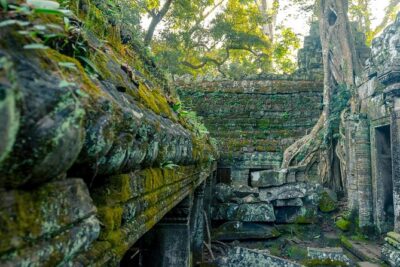
Finally, you reach Ta Prohm for about one hour, and it’s a strong finale. Ta Prohm is famous for being jungle-enveloped, with trees and roots growing right into the ruins. It’s described as being in much the same condition it was found, which is a big part of why it looks so cinematic.
Ta Prohm was built in the 13th century, and it also had a role as a religious temple at the center of an ancient Khmer university complex from the 12th and 13th centuries. UNESCO inscribed it in 1992, and yes, it remains one of the most visited temple areas in Cambodia because the “trees versus stones” look is so distinctive.
Still, don’t treat it as only a photo stop. With a guide, you can learn how and why the temple’s setting became part of its identity. You get time to slow down, scan details, and watch how light hits the stone edges and root patterns.
If you’re the type who gets tired mid-day, this ending matters. Ta Prohm’s atmosphere can feel like a reward, even after lots of walking.
Price, Pace, and What You Really Get for $30
This tour lists a price of $30 per person with an approximately 8-hour day from Siem Reap. For many people, the value is not the absolute sightseeing list. It’s the combo of private logistics and guided interpretation.
You get:
- Hotel pickup and drop-off in Siem Reap
- A private comfortable vehicle
- An English-speaking guide
- Bottled water
- A mobile ticket
Then there’s the big “watch this” item: Angkor Wat admission fee is not included. In practice, that means you should plan a moment before you go to handle the e-ticket. The guide sends a link days in advance, which helps, but you still need to do your part.
How does it feel day-to-day? The pace is structured, but it isn’t rigid. In at least some cases, the guide has shifted temple order and paused for breaks when needed, including time around coffee near Angkor Wat when the day got heavy. That kind of flexibility matters a lot when you’re dealing with humidity and the occasional surprise weather moment.
Also, you’ll be walking. This isn’t a “sit on a bus and see ruins” day. Wear shoes you can trust, and keep your water ready. The included water helps, but it’s still wise to hydrate and pace yourself.
The Practical Stuff: What to Wear and How to Handle the Heat
This is a temple day, so dress rules matter. For sacred places, you’ll need clothes that cover knees and shoulders. Casual outfits are fine, as long as they meet the requirement. If you’re traveling with light layers, this is an easy fix.
For shoes, stick to flat, comfortable walking shoes. The ground can be uneven, and temple steps do not care about your fashion choices.
Timing wise, the tour is designed for an 8-hour flow with multiple temple stops and short transitions. That structure usually helps you avoid the worst “sit around waiting” moments. Still, the sun and humidity in Siem Reap can feel relentless, so use the guide’s pauses. Take the short breaks seriously. They help you enjoy the carvings without rushing.
And if you’re coming from a hotel, you’ll have the convenience of pickup, then drop-off back at the end of the day.
Who This Private Tour Fits Best
I’d book this if you want:
- Private guide attention and the ability to slow down without feeling guilty
- A day that mixes top-tier sights with a few less standard stops
- More meaning than just looking at stones
- A route that aims to reduce time in the heaviest crowds, including entering Angkor Wat from the eastern side
This tour also fits well if you’re traveling as a couple, small group, or family unit that wants control over pacing. Because it’s private, you are not sharing the experience with a stranger who moves at a different speed.
If you have mobility limits, the walking and steps may be a factor. The tour is described as possible for most travelers, but it is still a full day at Angkor, so be honest about your stamina.
Should You Book This Full-Day Private Angkor Tour?
Yes, if you want an Angkor day that balances the classics with guided context, and you’re happy to handle the Angkor Wat admission on your side. The big strength is the guide experience, including well-regarded guides such as Rith and Sim, who are praised for being flexible and for keeping the story of the temples clear and engaging.
I’d think twice if you hate walking in heat, or if you prefer truly unguided wandering where you can ignore timing. This is a guided, structured day, and it works best when you enjoy the “stop, learn, look, move” rhythm.
FAQ
Is hotel pickup and drop-off included?
Yes. The tour includes hotel pick up and drop off, plus a private comfortable vehicle for the day.
What about the Angkor Wat admission ticket?
The Angkor Wat admission fee is not included. Your guide will send you a link to purchase an entrance e-ticket days in advance.
How long is the tour?
The duration is about 8 hours (approx.).
Do I need to follow any dress rules?
Yes. For some sacred areas, you need clothes that cover your knees and shoulders. Flat shoes that are comfortable for walking are recommended.
What temples and stops are included?
You visit Angkor Wat and key parts of Angkor Thom, including the South Gate, Bayon, Baphuon, Phimeanakas, the Terrace of the Elephants, the Terrace of the Leper King, and Ta Prohm.
Is this a private tour or shared group?
It is private. Only your group participates.
More day trips out of Siem Reap
- From Siem Reap: Kampong Phluk Floating Village Tour by Boat
★ 4.9 · 6,979 reviews - Angkor Wat Highlights and Sunrise Guided Tour from Siem Reap
★ 5.0 · 3,213 reviews - Full-Day Angkor Wat Sunrise Private Tour with Guide from Siem Reap
★ 5.0 · 2,920 reviews - Angkor Wat Private Day Tour from Siem Reap
★ 5.0 · 834 reviews
Newly listed around Siem Reap
- Sambor Prei Kuk Off Beaten Track★ 5.0 · 3 reviews
- Siem Reap Airport Taxi Transfer – City Center Hotels★ 5.0 · 5 reviews
- Short Cycling at Countryside★ 5.0 · 29 reviews
- Unveiling the Mystical Beauty of Phnom Kulen National Park★ 5.0 · 6 reviews
- Angkor Wat at Sunrise★ 4.0 · 7 reviews
- Rooftop Romantic Dinner – 4 Courses Set Meal & Wine★ 3.5 · 5 reviews
- Khmer Cooking Class in Cambodia★ 5.0 · 36 reviews
- Bakong Temples & Floating Village Tour★ 4.5 · 3 reviews
Angkor Wat Tours, compared.
Angkor Wat Sunrise or Sunset Tour with Guide from Siem Reap
Read our review →
Angkor Wat: Small-Group Sunrise or Sunset Tour
Read our review →
Angkor Wat 2-Day Tour with Sunrise and Sunset
Read our review →
Angkor Wat Sunrise tour with Small – Group and Guide tours
Read our review →
Angkor Wat Highlights and Sunrise Guided Tour from Siem Reap
Read our review →
Angkor Wat Sunset Small Group Tour with Lunch Included
Read our review →
Full-Day Angkor Wat Sunrise Private Tour with Guide from Siem Reap
Read our review →Browse the lists this tour appears in