
Review · FLOATING VILLAGE TOURS
Kompong Phluk Floating Village Tour from Siem Reap
Stilted homes, schools, and fishing life on Tonlé Sap. This Kompong Phluk half-day is fascinating because you see how people live off the lake and then watch the flooded forest change with the seasons. I especially love the close-up village moments, like the pagoda temple and school visits, and the calm boat time that slows your brain down. One possible drawback to plan for is that the best scenery, especially the forest rowing, depends on water levels, so timing with the dry season can change what you get to see.
You’ll leave Siem Reap and head to the Tonlé Sap biosphere area, then switch into the slower rhythm of boats. I think it’s a great use of time if you want real rural Cambodia, not just temples, and you care about everyday life, not only big landmarks.
In This Review
- Key things to look forward to on this Kompong Phluk tour
- Why Kompong Phluk feels like a different side of Cambodia
- Getting from Siem Reap without feeling rushed
- The stilted township: schools, pagoda, and homes that rise with the water
- Two villages, not one: why the pergola matters
- The flooded forest row: when water levels decide everything
- Tonlé Sap Lake: the biggest freshwater system, seen from the water
- Animal encounters: what to know before you go
- Food, comfort, and the small practical stuff that matters
- Price and value: what $66 buys you in the real world
- Who this tour is best for
- Should you book the Kompong Phluk Floating Village Tour?
- FAQ
- How long is the Kompong Phluk Floating Village Tour from Siem Reap?
- What does the tour cost?
- Where is pickup in Siem Reap Province?
- What is included in the price?
- Is the tour mostly on boats?
- Will I be able to row through the flooded forest?
- How much walking is involved?
- Is the tour offered in English?
- Are unaccompanied minors allowed?
Key things to look forward to on this Kompong Phluk tour
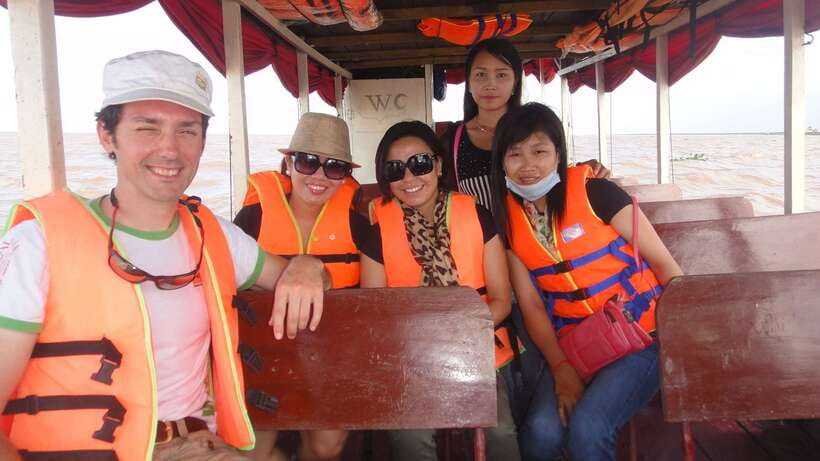
- UNESCO biosphere setting on Tonlé Sap: a living lake system with major biodiversity
- Two separate village areas: you see both sides of Kompong Phluk, split by a pergola
- Stilted houses up to 10 meters: a clear visual of how families adapt to flooding
- School visits and a pagoda temple: community stops beyond just sightseeing
- Flooded forest boat rowing when possible: water level decides whether you row farther inland
- Guiding from the village side: you hear daily-life stories from people connected to the place
Why Kompong Phluk feels like a different side of Cambodia
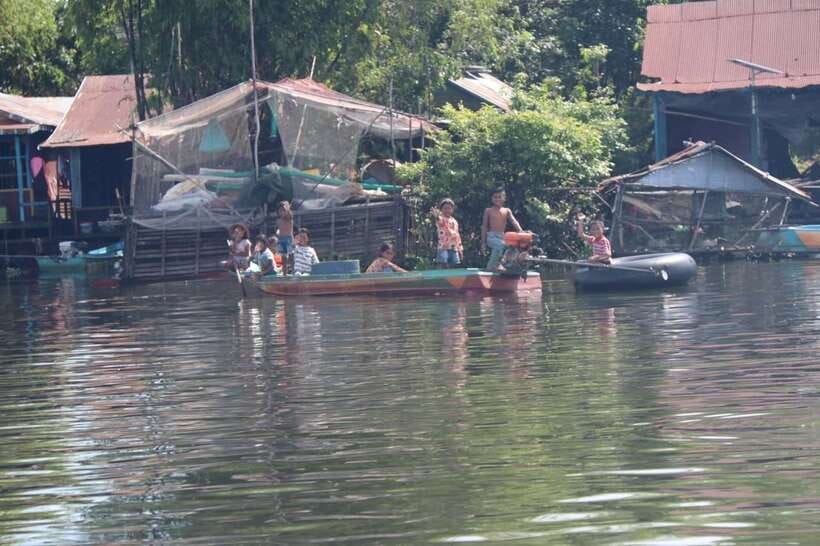
Kompong Phluk is the kind of place where you stop thinking about checklists and start paying attention to daily routines. On the stilted river and lake edges, houses rise with the water, and livelihoods revolve around fishing and farming. It’s rural Cambodia, not a staged attraction, and that makes the experience feel more human.
I like that the tour is built around learning, not just moving from one viewpoint to another. You get real context about how people live on Tonlé Sap Lake, including how the flooding shapes work and home life. And because you visit schools and a pagoda temple, you see community life beyond fishing boats.
The other strong point is the atmosphere. Even when you are not on the water, the pace stays slow. You’ll feel that shift when you glide along the Kompong Phluk river and then look out over Tonlé Sap, which is not just scenic, it is productive, supporting people in a very direct way.
More Countryside & Village Tours in Siem Reap
- From Siem Reap: Kampong Phluk Floating Village Tour by Boat
★ 4.9 · 6,979 reviews - Siem Reap: Kampong Phluk Floating Village Tour with Boat
★ 4.9 · 3,843 reviews - Kampong Phluk Floating Village Tour by Boat
★ 5.0 · 1,020 reviews
Getting from Siem Reap without feeling rushed
This is a 4-hour tour, and it does not waste much time getting you from Siem Reap Province into Tonlé Sap territory. You’ll be picked up in Krong Siem Reap, then you transfer by air-conditioned vehicle and tuk tuk for a short stretch (about 30 minutes). That matters because long half-day excursions can burn your energy before the fun even starts.
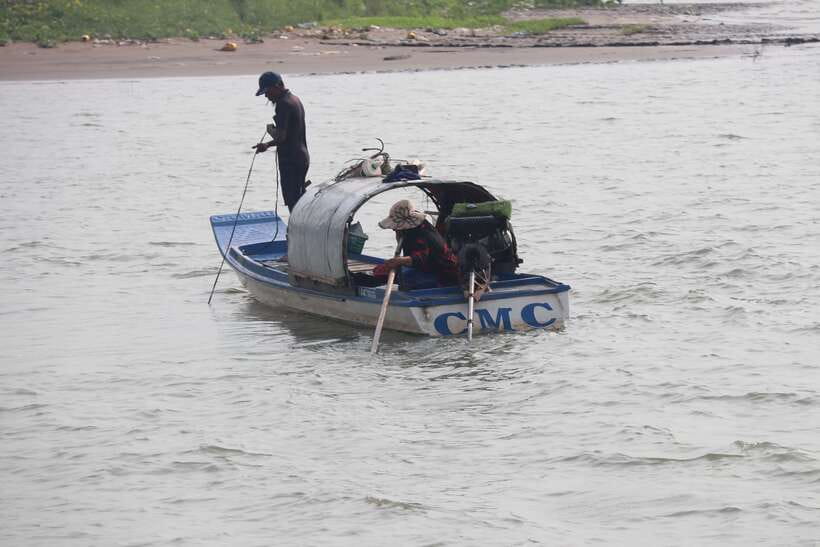
Once you reach the river/lake side, the action is mostly water-based. You’ll board waiting long-tail boats, guided by a professional guide, and then spend around 3 hours on the lake and river cruise area. I like that ratio, because it means you spend your time where the village life actually happens.
There is also a separate entrance/checkpoint flow mentioned for the tour, which helps you avoid unnecessary waiting. You will still need to follow local instructions at stops, but you’re not meant to sit in long lines.
The stilted township: schools, pagoda, and homes that rise with the water
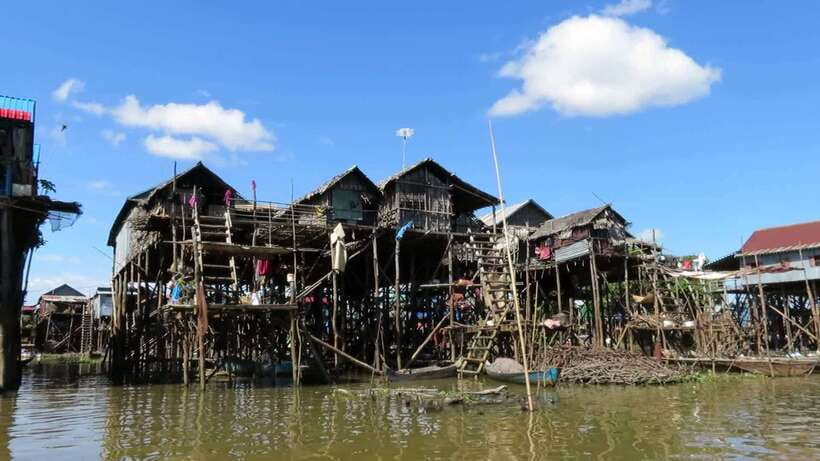
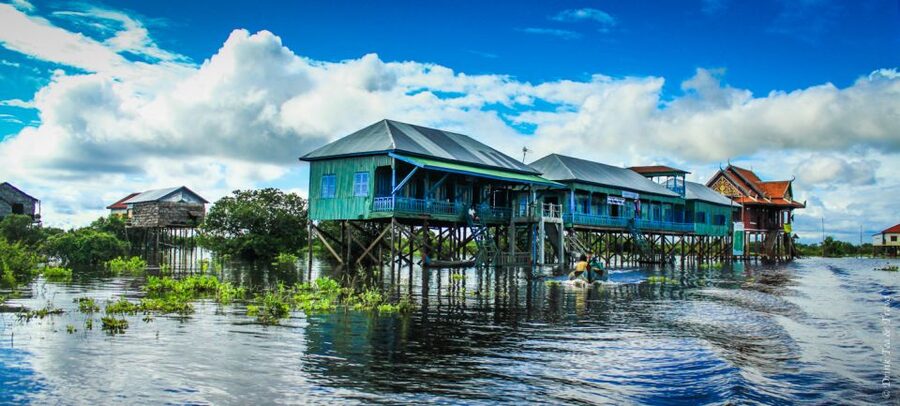
The core “wow” factor here is how clearly you can see adaptation. Kompong Phluk is a traditional Khmer village of about 3,000 inhabitants, and many homes sit on stilts, some reaching as high as 10 meters. When you stand close to those houses, it becomes obvious that flooding is not a rare event, it is part of the calendar.
You’ll likely experience this in a few ways: moving along the main river-side street area, doing some short walks, and also seeing spots on foot depending on weather and water conditions. That small amount of walking is worth noting, especially if you’re visiting during warmer parts of the day.
Community stops are a big part of the visit. You’ll go to a few schools in the village, and you’ll also see the pagoda temple. These are not just photo stops. They connect the village to something bigger than the boats, showing how kids learn and how religious life anchors the community.
I also like that Kompong Phluk is described as having two village sections. The tour includes both, separated by a large pergola. That detail matters because it keeps the day from feeling like one repeated street view. You’ll compare rhythms and layouts between the two areas, which makes the village feel more complete.
Two villages, not one: why the pergola matters
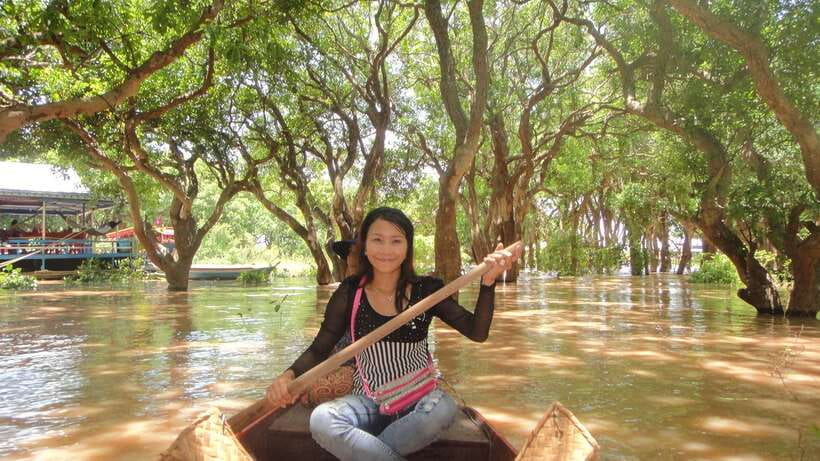
If you’re deciding whether this tour is worth your time, the “two villages” piece is key. Kompong Phluk is not a single settlement you loop once and call it done. It’s actually two village areas, and the tour visits both, with a large pergola acting as the divider you will see on site.
On the ground, this changes how you experience the place. Instead of feeling like you’re repeating the same scenery, you get two different angles of daily life. You also pick up a better sense of how community infrastructure works across the stilted environment.
This is also where the tour can feel more personal. Some visitors expect “floating village” to mean only water housing, but Kompong Phluk includes river street life, community gathering spots, and temple and school areas that you reach on foot. Seeing both village sections helps you connect the dots between homes, work, and education.
One practical note: your day will be affected by weather and tidal or seasonal water conditions. The tour is designed to operate in all weather, but that does not mean you will always see the same level of flooding.
More floating village trips in Siem Reap:
- Sunset tour of Kampong Phluk stilts home village on the Tonle Sap
★ 5.0 · 4,865 reviews - Siem Reap Floating Village Kampong Phluk Sunset with Boat
★ 5.0 · 1,962 reviews - Siem Reap: Kulen Mountain, Beng Mealea and Tonle Sap Tour
★ 5.0 · 1,483 reviews - Tonle Sap Lake & Kampong Phluk Village Half-Day Tour
★ 5.0 · 1,045 reviews
The flooded forest row: when water levels decide everything
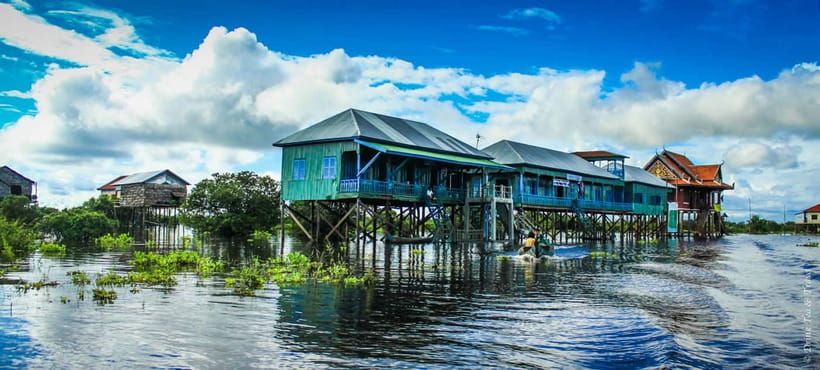
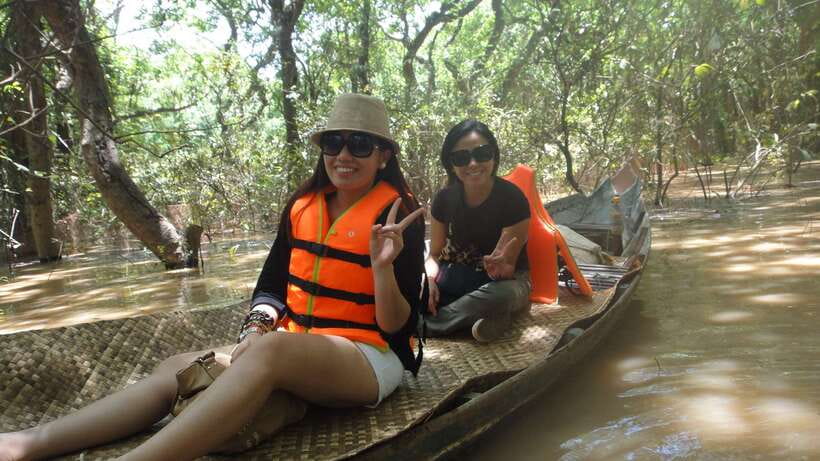
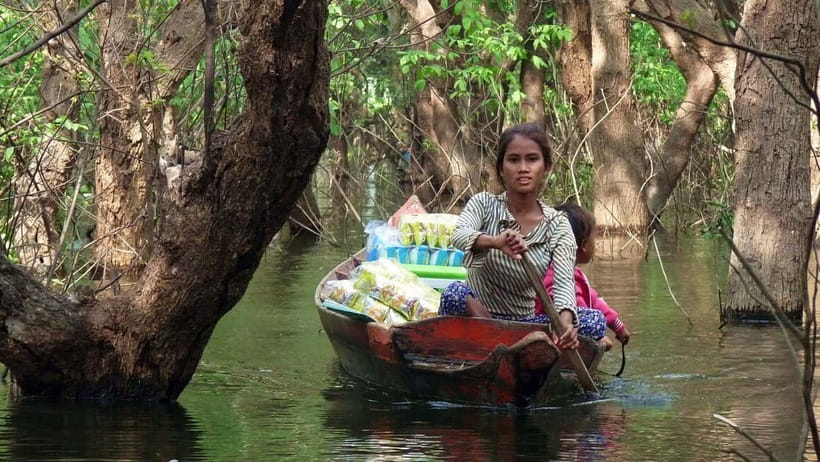
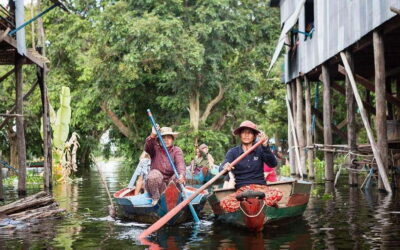
The flooded forest cruise is often the emotional high point, because it feels like you are slipping into a living ecosystem. After you explore village areas, you’ll be rowed through the flooded forest in a small boat. The big catch is simple: it happens if water levels allow.
In wetter months or times when the lake has more reach into the forest systems, you’re more likely to glide farther through the flooded landscape. In drier conditions, the route may be less flooded, and your experience can shift toward more village walking and less deep forest travel. That trade-off is important to understand before you book, especially if you are chasing that iconic flooded-forest look.
I also think this is where good guidance really matters. A professional guide helps you read what you’re seeing, like why the water changes access and how locals plan around it. You’re not just watching trees and water together, you’re seeing the mechanism that controls daily life.
Tonlé Sap Lake: the biggest freshwater system, seen from the water
After the village time and the flooded-forest segment, you head further out to Tonlé Sap Lake. This is described as the largest freshwater lake in Southeast Asia and also the richest fishing lake in the world. Those are big claims, but from the boat you can grasp what they mean: people are there for a reason, and the water feeds a huge number of households.
You’ll also learn that Tonlé Sap has strong ecological importance, being designated a UNESCO biosphere reserve in 1997 for its biodiversity. That designation helps explain why fishing, farming, and animal life are so tightly connected here.
A statistic you may hear during the tour is that 75% of all Khmer protein comes from farming Tonlé Sap Lake. Whether you treat that as exact or directional, it points to the real takeaway: this lake is not scenery, it is food production at massive scale.
Wildlife can be part of the experience too. The tour description mentions possible sightings of rare large water birds, fishing activity in shallow areas, and water buffalo cooling down in river systems. You should go in with flexible expectations on animals, but it’s a good sign that bird and water-life observations are part of how the guide frames the lake.
One more thing that’s easy to miss if you go in with only one mental image: Kompong Phluk includes a smaller floating village attached nearby. The tour includes that attached floating area, and it’s described as an educational addition because fewer tours go out there. It’s tied to a productive ecosystem in the lower Mekong basin area, and the guide connection from the village side can make it feel more grounded.
Animal encounters: what to know before you go
There is a caution flag worth mentioning, especially if you care about animals and animal welfare. One account notes a crocodile farm in the floating village area, with other animals kept in cages. That detail may or may not be the focus of your day, but it is something to consider.
If you are the kind of visitor who prefers nature over captive animal exhibits, you might want to go in prepared for that possibility. The rest of the day is about village life and water systems, but this floating-village add-on can include that kind of stop.
If you do decide to go, you can still make it meaningful by keeping your attention on what matters most to you. Look for community life, farming and fishing rhythms, and the way the water shapes homes. Let any animal stop be just one small segment of a broader day.
Food, comfort, and the small practical stuff that matters
This tour includes a light fruit lunch and water, so you do not have to plan snacks around a long day away from town. Still, you may want to eat before pickup if your schedule makes you hungry, because you are spending most of your half-day moving and sightseeing.
You’ll also want to pack for heat and sun. The tour operates in all weather conditions and asks you to dress appropriately. Even if it looks calm, boat trips can bring breezes one moment and full sun the next.
Comfort-wise, expect that this is not a zero-walking excursion. There is a small amount of walking involved, plus some foot time depends on how water levels affect access. Wear shoes you can tolerate on uneven surfaces near stilted homes.
Also, note the rule about minors. Unaccompanied minors are not allowed, and children must be accompanied by an adult. If you are traveling with kids, that’s part of the planning picture.
Finally, the language of your guide is listed as Cambodian and English. If you want deeper explanations, you can ask questions about how flooding changes work and housing. That is the kind of topic this tour is built for.
Price and value: what $66 buys you in the real world
At $66 per person for a 4-hour tour, the price makes sense when you break down what is included. You are paying for hotel pickup and drop-off, transport by air-conditioned vehicle and tuk tuk, a professional guide, boat time, light fruit lunch, water, and all checkpoint fees.
If you tried to do this independently, the hardest parts would be coordinating transport to the Tonlé Sap zone and arranging the right mix of boats and village access. Here, that work is packaged for you, and you get a guided context while you’re in the middle of it.
The biggest value driver is time on the water. The tour includes a long-tail boat segment into the Kompong Phluk area and additional boat movement around the flooded forest and lake. You also get multiple village stops, including schools and the pagoda temple, plus both village sections. That’s a lot of experience for a half-day.
The main value risk is seasonal. In dry season or low water conditions, the flooded forest portion may be shorter or less dramatic, and you could spend more time walking through villages rather than gliding deep through flooded areas. Still, even in drier conditions, the village life itself remains the point.
Who this tour is best for
I think this tour fits best if you want an authentic, everyday Cambodia experience. It’s ideal if you’re interested in how rural communities survive and adapt, especially around big natural systems like Tonlé Sap.
You’ll also enjoy it if you like guided context. The trip works well when your guide turns visuals into explanations, like how stilted homes function and why schools and temples matter in a fishing-and-farming community.
If you’re primarily temple-focused, Kompong Phluk can feel quieter and more local than what you came for in Siem Reap. But that’s exactly why it’s worth doing. It gives you contrast, and it helps you see the country beyond the stone monuments.
And if you’re an animal-focused visitor, go in with that crocodile-farm-cage possibility in mind. The overall experience is still community and ecosystem centered, but this is not a purely wildlife-only nature excursion.
Should you book the Kompong Phluk Floating Village Tour?
I’d book this tour if you want a half-day that is genuinely different from the Angkor rush and you like learning from village life. The combination of schools, pagoda, stilted homes, two village sections, and the Tonlé Sap lake cruise makes it feel substantial for the time you spend.
Do consider the water-level factor. If you are visiting during drier months, expect the flooded forest rowing segment may be limited, and the day could lean more toward walking and village exploration. That does not automatically make it a worse trip, but it changes the emphasis.
If you care about animal welfare, decide in advance how you feel about possible animal-cage exhibits in the floating village add-on. If you are okay with that being a small part of a larger ecosystem and community day, you’ll likely still get a lot from the village context and the lake experience.
Bottom line: for rural-leaning travelers who want Tonlé Sap to feel like a living system, this is a strong choice at $66 for a well-packed 4 hours.
FAQ
How long is the Kompong Phluk Floating Village Tour from Siem Reap?
The tour duration is 4 hours total, including pickup, travel, and the Tonlé Sap visit with a guided tour and boat cruise.
What does the tour cost?
The price is $66 per person.
Where is pickup in Siem Reap Province?
Pickup is included from your hotel or guesthouse in Krong Siem Reap.
What is included in the price?
Included are hotel pick-up and drop-off, transportation (air-conditioned car or minivan or tuk tuk), a professional guide, a boat trip, light fruit lunch, water, and all checkpoint fees.
Is the tour mostly on boats?
Yes. You’ll travel by long-tail boat for the village and river/lake cruising, and the tour also includes a small boat rowing through the flooded forest if water levels allow.
Will I be able to row through the flooded forest?
That depends on the seasonal water level. The tour description says rowing through the flooded forest happens if water levels allow.
How much walking is involved?
A small amount of walking is involved, and how much you do can depend on weather and water conditions.
Is the tour offered in English?
The tour guide speaks Cambodian and English.
Are unaccompanied minors allowed?
No. Unaccompanied minors are not allowed, and children must be accompanied by an adult.
More day trips out of Siem Reap
- Angkor Wat Sunrise or Sunset Tour with Guide from Siem Reap
★ 5.0 · 12,109 reviews - Angkor Wat Highlights and Sunrise Guided Tour from Siem Reap
★ 5.0 · 3,213 reviews - Full-Day Angkor Wat Sunrise Private Tour with Guide from Siem Reap
★ 5.0 · 2,920 reviews - Angkor Wat Private Day Tour from Siem Reap
★ 5.0 · 834 reviews
Newly listed around Siem Reap
- Sambor Prei Kuk Off Beaten Track★ 5.0 · 3 reviews
- Siem Reap Airport Taxi Transfer – City Center Hotels★ 5.0 · 5 reviews
- Short Cycling at Countryside★ 5.0 · 29 reviews
- Unveiling the Mystical Beauty of Phnom Kulen National Park★ 5.0 · 6 reviews
- Angkor Wat at Sunrise★ 4.0 · 7 reviews
- Bakong Temples & Floating Village Tour★ 4.5 · 3 reviews
- Rooftop Romantic Dinner – 4 Courses Set Meal & Wine★ 3.5 · 5 reviews
- Khmer Cooking Class in Cambodia★ 5.0 · 36 reviews
Floating Village Tours, compared.
Sunset tour of Kampong Phluk stilts home village on the Tonle Sap
Read our review →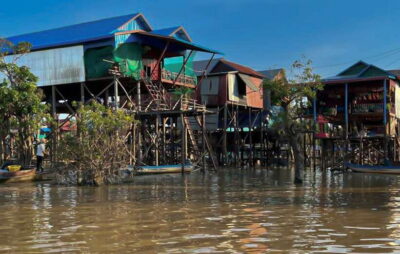
Kampong Phluk Floating Village Tour with Boat
Read our review →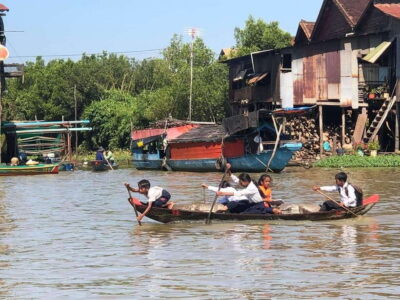
Siem Reap Floating Village Kampong Phluk Sunset with Boat
Read our review →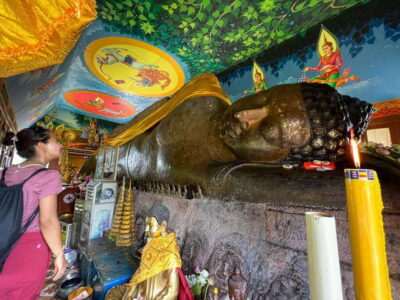
Kulen Mountain, Beng Mealea and Tonle Sap Tour
Read our review →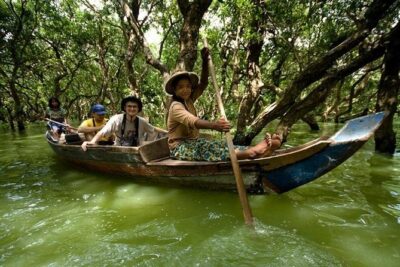
Tonle Sap Lake & Kampong Phluk Village Half-Day Tour
Read our review →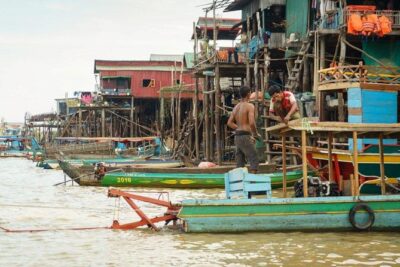
Browse the lists this tour appears in