
Review · ANGKOR SUNRISE TOURS
Private 2 Days Angkor Wat Sunrise and Discover all Major Temples
Two days, a lot of Angkor.
This private tour stacks Angkor Wat sunrise with the most important Khmer temples, plus a few quieter sites, all timed around day-long heat and long walking. You will travel in a private air-conditioned vehicle with bottled water and cool towels, and you will have an official guide to keep the story straight.
I particularly like two things: you hit the big icons (Angkor Wat, Angkor Thom, Bayon) and you also get extra context at places like Ta Nei and Banteay Kdei. I also like the practical comfort touches, especially the AC transfers between temple groups, which matters a lot when the sun gets strong.
One consideration: it starts very early (you are up around 4:30 for sunrise), so if you hate early mornings or long temple walks in humid weather, you may want to rethink the pace.
In This Review
- Key things I’d count on before you go
- Why Angkor Wat sunrise and sunset timing makes this tour easier
- Price and what your $149.46 really covers (and what to budget)
- Day 1: Angkor Wat sunrise, then Angkor Thom’s gates, Bayon faces, and terraces
- Day 2: Banteay Srei beauty, Preah Khan, water temples, and Pre Rup’s final light
- Comfort, timing, and how to survive Angkor’s heat and crowds
- Guide and driver quality: why this tour tends to score well
- Who should book this private 2-day Angkor tour
- Should you book it? My practical call
- FAQ
- Is hotel pickup and drop-off included?
- What is included in the tour price?
- Do I need to buy the Angkor Pass?
- What time does the Angkor Wat sunrise start?
- Are meals included?
- Is there free cancellation?
Key things I’d count on before you go
- Sunrise timing at Angkor Wat makes the day feel special before crowds and heat build.
- Private AC vehicle between sites cuts fatigue and keeps your group moving.
- A licensed English-speaking guide helps you understand what you are actually looking at, not just where to stand.
- Major circuit plus outlying temples means you see the famous places and a few lesser-visited ones.
- Cool towels and bottled water are built into the experience, so you do not arrive wiped out.
- Great guide and driver matches are a repeated theme, with names like Sara and Leap (guides) and Ry and La (drivers) showing up in past service.
Why Angkor Wat sunrise and sunset timing makes this tour easier
Angkor is not a place you can skim. The temples are spread out, the paths can be uneven, and the sun can turn a nice walk into a sweat test. This tour is designed to use the day efficiently, starting with sunrise at Angkor Wat and building toward major temple clusters across both days.
The biggest payoff is the pacing. Sunrise gives you a calmer, more atmospheric start at the most famous site. Then you shift into Angkor Thom and the core monuments, and you finish with the late-day light that helps temples feel less like museum pieces and more like living architecture.
If you are doing Angkor for the first time, having a plan that already accounts for sunrise and the day’s heat is a real quality-of-life upgrade. You will spend less time figuring out logistics and more time watching details, like the way towers, gates, and faces line up when you move position.
More Angkor Wat tours in Siem Reap:
- Angkor Wat Sunrise or Sunset Tour with Guide from Siem Reap
★ 5.0 · 12,109 reviews - Siem Reap: Angkor Wat: Small-Group Sunrise or Sunset Tour
★ 5.0 · 9,444 reviews - Siem Reap: Angkor Wat 2-Day Tour with Sunrise and Sunset
★ 4.9 · 4,429 reviews
Price and what your $149.46 really covers (and what to budget)
The price is $149.46 per person for about 2 days. What you get for that is the stuff that usually adds up fast on your own: hotel pickup and drop-off, a professional licensed guide (English-speaking), and private air-conditioned transfers with bottled water and cool towels.
Also included are service charges and current government VAT tax. That means you are not surprised by small add-on fees for the core service.
Two things to budget separately:
- The Angkor Pass is not included. Your guide will help you buy it at the entrance before you start touring.
- Meals are not included. Lunches are available at local restaurants with both vegetarian and non-vegetarian options, and typical dish prices are listed around $3 to $10.
And one more practical point: tipping is not included. If you want smooth wrap-up service, plan a tip for the guide and driver based on local custom.
When I look at value in Angkor, I focus on effort saved. A private guide and car do more than transport you. They keep the route logical, protect your time, and help you avoid wasting half a day in the wrong place at the wrong time.
Day 1: Angkor Wat sunrise, then Angkor Thom’s gates, Bayon faces, and terraces
Day 1 is built around the Royal Complex and the classic Angkor storyline. You start with sunrise at Angkor Wat, then move through Angkor Thom and the major surrounding monuments.
Stop 1: Angkor Wat sunrise (about 2 hours)
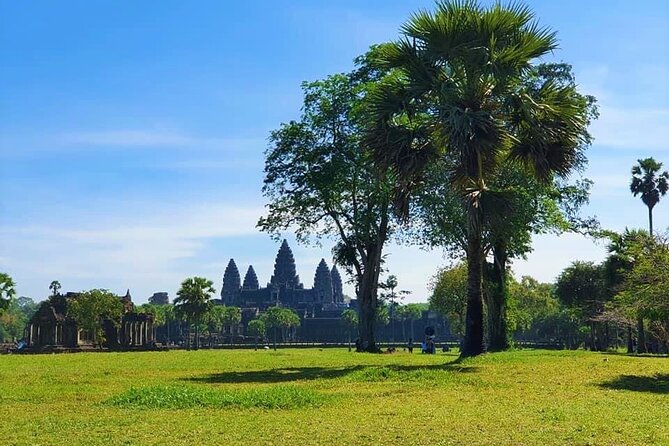
You wake up around 4:30 for sunrise. Angkor Wat is the national emblem of Cambodia, tied to Khmer pride. The famous towers are described as five when you look one way, but only three from a frontal perspective. That is useful to know, because it explains why the view can look different depending on where you stand.
Even if you do not love crowds, this timing helps. Sunrise also gives you a calmer feel for the stone geometry. You will have time to see more than just a quick photo stop.
Small consideration: sunrise days can be hard on your energy. Wear layers, because early morning can feel cooler than midday, and your body will not be ready for the heat ramp later.
Stop 2: Angkor Thom South Gate (about 40 minutes)
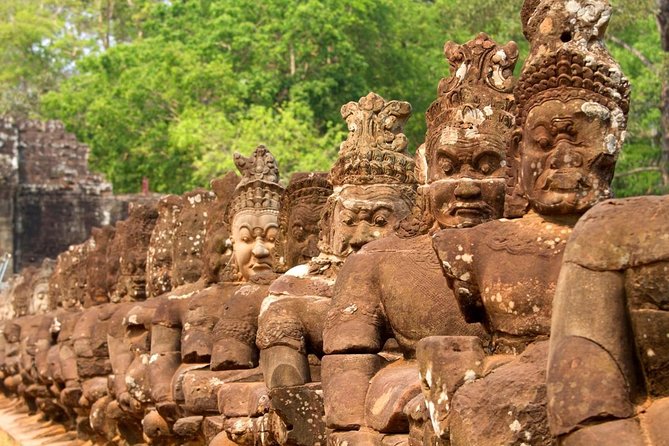
Next comes Angkor Thom’s South Gate and the causeway over the broad moat. The railings are lined with the famous rows of giant sculptures. It is the kind of detail that is easy to miss if you just rush to the next temple.
Use this stop to get oriented. Once you understand the gate and causeway, the rest of the Royal Complex feels like one connected set.
Stop 3: Angkor Thom (about 40 minutes)
Angkor Thom is the Great Angkor, sometimes spelled Angkor Tom. You learn that the name was used after Angkor was no longer the Khmer capital. That context matters because it shifts the way you read the stone work: it is not only about one empire moment, it is about how Angkor kept evolving.
Short stops like this are underrated. You may only be here 40 minutes, but the explanation helps you connect the dots later.
Stop 4: Bayon Temple (about 1 hour 30 minutes)
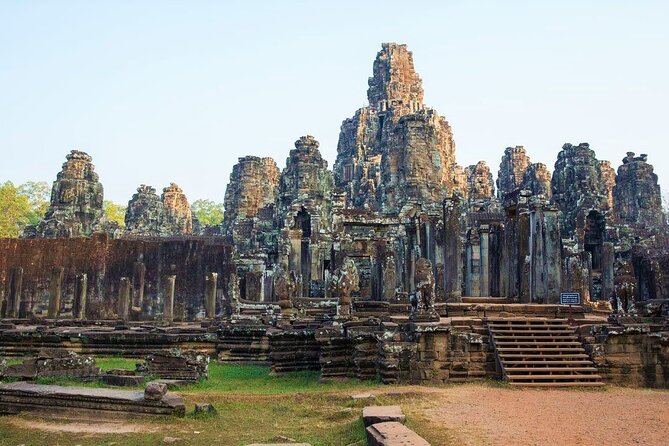
Bayon, in the center of Angkor Thom, is second most popular after Angkor Wat. The headline feature is the numerous enigmatic stone faces.
What I like about Bayon is that it is not just a single photo spot. The faces feel different as you move around. A good guide will point out where the angles create the most striking expressions and what the faces are meant to represent.
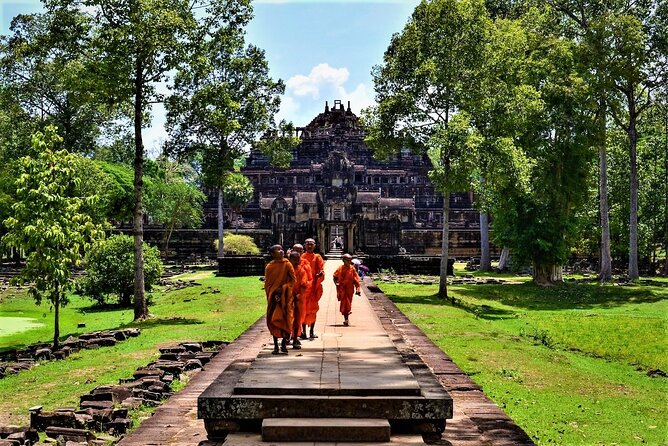
Stop 5: Baphuon Temple (about 1 hour)
Baphuon sits near the Bayon. It is noted as about 150 years younger, and it was once by far the hugest Khmer temple before Angkor Wat took over that role. This is one of those stops where history gives you a mental map of why certain temples look the way they do.
Stop 6: Phimeanakas (about 20 minutes)
Phimeanakas means Aerial Palace or Celestial temple. The name relates to Sanskrit terms, which helps you understand why these temple names often feel poetic rather than literal. The short time here works because it is more about noticing architectural form and symbolism than spending an hour hunting for every angle.
Stop 7: Terrace of the Elephants (about 30 minutes)
This terrace forms much of the western edge of the Royal Square. It is an ancient wall and platform, and it gives you a sense of how these spaces framed ceremonies and movement through the city center.
If you like architectural details, this is a good pause before the next heavy hitters.
Stop 8: Terrace of the Leper King (about 30 minutes)
Located just north of the Elephant Terrace, this terrace is worth seeing and studying. It is included because it gives you another style of relief work and another way the Royal Square was decorated.
Practical tip: this is a great place to slow down for 10 minutes. Even with a tight schedule, you can still read the carvings if you take your time.
Stop 9: Ta Nei Temple (about 50 minutes)
Ta Nei is a late 12th-century stone temple built during the reign of Jayavarman VII. It is near the northwest corner of the East Baray, and it was dedicated to the Buddha. That mix, Khmer temple architecture plus a Buddha dedication, is exactly why this stop helps the story feel more complete.
Stop 10: Banteay Kdei (about 50 minutes)
Banteay Kdei is easy to find because its eastern main gate is close to the meeting point of routes in the park. Opposite the road you can see the huge Srah Srang reservoir.
This is the kind of stop where timing and comfort matter. You finish Day 1 tired, but not wrecked, because the private car and cool towels keep you from overheating too badly.
Day 2: Banteay Srei beauty, Preah Khan, water temples, and Pre Rup’s final light
Day 2 pushes farther outward, mixing extremely popular temples with sites that feel more unusual in layout and purpose.
Stop 1: Banteay Srei (about 2 hours)
Banteay Srei is often picked by visitors as the most beautiful temple in Cambodia, at least among the list of major monuments. Angkor Wat gets the grand reputation, but this one is loved for its fine, delicate feel.
The time allocation is generous at 2 hours, which is smart. If you only give it a quick look, you miss why people rave about this place.
Stop 2: Banteay Samre (about 50 minutes)
Banteay Samre is a 12th-century Hindu temple tied to Suryavarman II and Yasovarman II. It is located about 400 meters east of the East Baray.
You will likely notice how it differs from the Angkor Thom core. A guide helps you avoid treating each temple as a random pile of stones.
Stop 3: Preah Dak Village (short stop for souvenirs and local arts)
Preah Dak Village is a popular place for souvenirs like objects and arts, plus natural nearby spots visitors can explore. This is not a must-do if you hate shopping, but it is a practical break between temple legs.
If you do shop, go slow. Aim for quality and a fair price, and remember that this stop is also there to give your body and brain a breather.
Stop 4: Preah Khan (about 1 hour)
Preah Khan was dedicated in 1191 to Jayavarman VII’s father, and the central statue name given is Jayavarmeshvara. That is a big detail, because it grounds the temple in a specific family story within the larger Khmer political world.
Stop 5: Neak Pean (about 1 hour)
Neak Pean is described as exceptional because its layout differs from other Khmer architecture. It was a temple on an artificial island in the Baray, with a 350 m diameter mentioned.
This stop is great if you get bored seeing the same kind of temple plan over and over. It also helps you notice how water and water structures were part of temple thinking.
Stop 6: Ta Som (about 40 minutes)
Ta Som is late 12th century, built by Jayavarman VII. Its purpose is not totally clear, but it may have been dedicated to the king’s father or one of his teachers.
Unclear stories can sound like a weakness, but in Angkor, it often makes the stones feel more human. Your guide can point out what evidence exists without pretending everything is known.
Stop 7: Eastern Mebon (about 30 minutes)
Eastern Mebon is a mountain temple built in the middle of the 10th century, dedicated to Shiva. It is a shorter stop, but it fits the route well because it keeps momentum without swallowing the day.
Stop 8: Pre Rup (about 1 hour)
Pre Rup is founded in 961 and is called one of Rajendravarman II’s most significant legacies. This is a strong finish because it helps you feel the timeline of rulers shaping different temple styles.
This is also where the tour’s end-of-day energy matters. The overall tour promise includes sunrise and sunset viewpoints, and with this day structure, you are set up to see late-day light as you finish.
More Angkor sunrise starts:
- Angkor Wat Sunrise tour with Small – Group and Guide tours
★ 5.0 · 3,655 reviews - Full-Day Angkor Wat Sunrise Private Tour with Guide from Siem Reap
★ 5.0 · 2,920 reviews - Angkor Wat Sunrise & 3 Main Temples with Breakfast – Small Group
★ 5.0 · 2,857 reviews - Siem Reap: Angkor Wat Sunrise and Full-Day Sightseeing Tour
★ 4.9 · 2,828 reviews
Comfort, timing, and how to survive Angkor’s heat and crowds
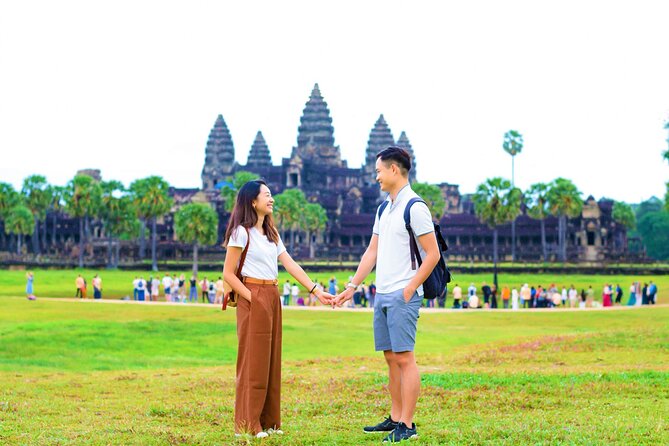
This tour includes private transfers with air conditioning, drinkable bottled water, and cool towels. That is not just nice. It is the difference between seeing the temples and merely surviving them.
You are out early on Day 1, around 4:30 for sunrise. Then you spend the day moving between temple clusters. By midday, you will feel it. Bring sun protection that actually fits your face and neck, and wear footwear that handles stone steps without slipping.
Short stays can be a blessing. When a stop is listed around 20 to 40 minutes, it usually means you get a guided highlight tour rather than getting stuck in decision fatigue. Your guide will keep you moving to the best angles, especially at places like Bayon and Angkor Wat, where position changes what you see.
One more practical note: because Angkor Pass is not included, you should plan for a visit to buy it at the entrance before you start touring. Your guide assists, which saves time, but it is still something you need to handle early in each day.
Guide and driver quality: why this tour tends to score well
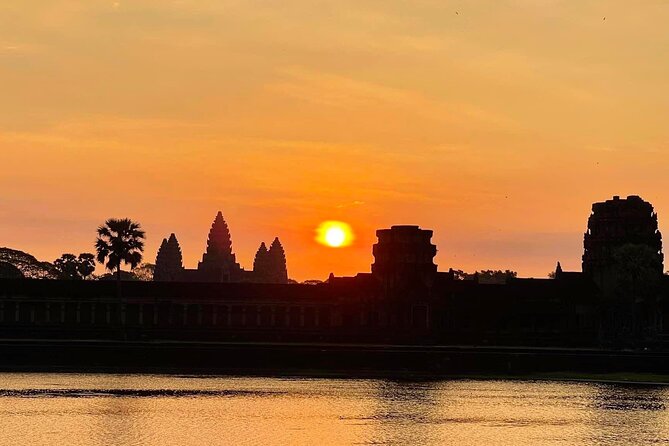
A licensed English-speaking guide is included, and the names that show up in past service feedback, like Sara and Leap, are described as strong communicators. In plain terms, this matters because Angkor can be confusing if you only look.
A good guide helps you understand what you are seeing at Bayon’s face towers, why Baphuon has its historical weight, and how temples like Ta Nei and Neak Pean fit into different phases of Khmer rule. When you get that explanation, you stop treating the trip like a checklist.
Driver quality also matters, especially on long days. Past service notes mention drivers like Ry and La, and the common thread is safe, careful driving that keeps groups comfortable during transfers.
Who should book this private 2-day Angkor tour
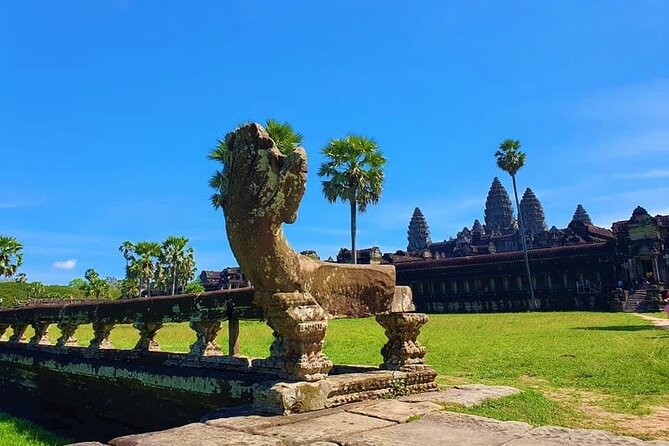
This tour is a strong fit if you:
- Want a first-time Angkor plan that hits the major temples without getting lost in logistics.
- Care about sunrise, not just afternoon temple hopping.
- Prefer private transfers in an AC vehicle with built-in water and cool towels.
- Like having a guide explain symbolism and layout, especially at Bayon, Preah Khan, and Neak Pean.
You might hesitate if you:
- Cannot handle very early mornings around 4:30.
- Want a slow, no-pacing itinerary. This schedule is action-packed, by design.
- Are not interested in either the Angkor Thom core or the mix of temples on both days.
Should you book it? My practical call

If your priority is seeing the major temples in a sensible route, with sunrise built in, this private 2-day tour looks like a good value. The included AC transport, hotel pickup and drop-off, licensed guide, water, and cool towels reduce the usual stress that comes with Angkor.
Just go into it ready for two things: the early start and the reality that you still need to buy the Angkor Pass and cover your own meals and tips. If that fits your style, you should feel comfortable booking, because the service quality and guide performance are clearly central to how this tour is experienced.
FAQ
Is hotel pickup and drop-off included?
Yes. Pickup and drop-off at your hotel are included. You will need to provide your hotel name for the pickup.
What is included in the tour price?
The price includes a licensed English-speaking guide, private air-conditioned transfers, bottled water, cool towels, and service charges plus current government VAT. Entrance fees and meals are not included.
Do I need to buy the Angkor Pass?
Yes. The Angkor Pass is not included. Your tour guide will assist you in purchasing it at the entrance of Angkor Park before starting the tour.
What time does the Angkor Wat sunrise start?
You are scheduled to get up early around 4:30 for the sunrise at Angkor Wat.
Are meals included?
Meals are at your own expense. Lunches are available at local restaurants with both vegetarian and non-vegetarian options.
Is there free cancellation?
Yes, free cancellation is offered. You can cancel up to 24 hours in advance for a full refund, with cut-off times based on local time.
Newly listed around Siem Reap
- Sambor Prei Kuk Off Beaten Track★ 5.0 · 3 reviews
- Siem Reap Airport Taxi Transfer – City Center Hotels★ 5.0 · 5 reviews
- Short Cycling at Countryside★ 5.0 · 29 reviews
- Unveiling the Mystical Beauty of Phnom Kulen National Park★ 5.0 · 6 reviews
- Angkor Wat at Sunrise★ 4.0 · 7 reviews
- Bakong Temples & Floating Village Tour★ 4.5 · 3 reviews
- Rooftop Romantic Dinner – 4 Courses Set Meal & Wine★ 3.5 · 5 reviews
- Khmer Cooking Class in Cambodia★ 5.0 · 36 reviews
Angkor Sunrise Tours, compared.
Angkor Wat Sunrise or Sunset Tour with Guide from Siem Reap
Read our review →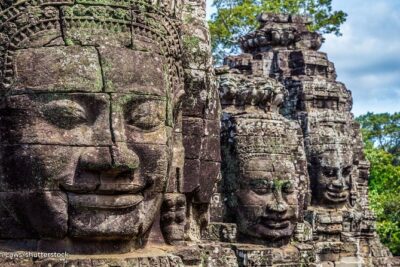
Angkor Wat Sunrise tour with Small – Group and Guide tours
Read our review →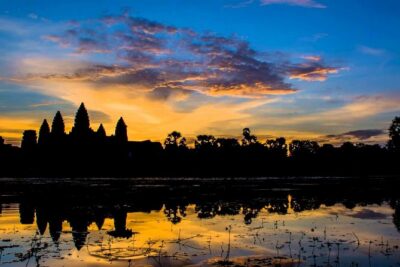
Full-Day Angkor Wat Sunrise Private Tour with Guide from Siem Reap
Read our review →
Angkor Wat Sunrise & 3 Main Temples with Breakfast – Small Group
Read our review →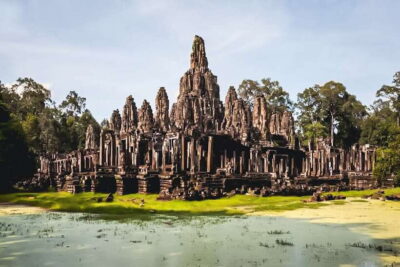
Angkor Wat Sunrise and Full-Day Sightseeing Tour
Read our review →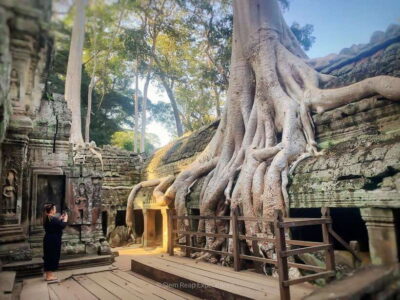
Angkor Wat Sunrise or Sunset Guided Group Tour
Read our review →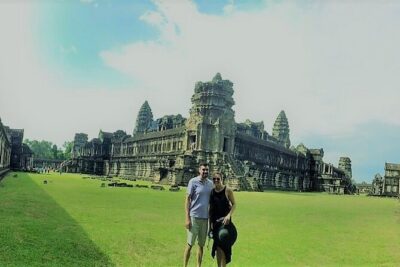
Siem Reap Tour: Angkor Wat Sunrise, Bayon, Ta Prohm, Banteay Srei
Read our review →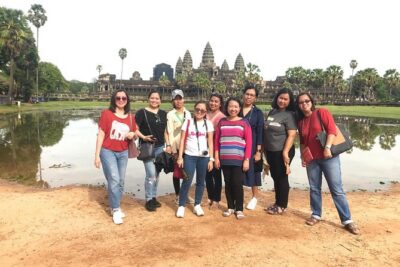
Angkor Wat Sunrise Explore The Most Iconic Temples
Read our review →Browse the lists this tour appears in