
Review · ANGKOR WAT TOURS
Private Day Angkor Wat Temple and Banteay Srei Temple Tour
Finding the right Angkor route can be tricky. This private day balances the big hits with two standout stops, Ta Prohm and Banteay Srei, plus a long look at Angkor Wat. I especially like that you get an English-speaking guide, air-conditioned transport, and helpful comforts like cold water and towels.
Two things I really appreciate: first, the guide can work with you, even if you need to adjust for walking limits, and I like that level of care. Second, you get a tight, logical flow from the forest temple to the royal core, then into Angkor Wat without wasting time guessing your next move. One possible drawback to consider is the temples pass, since it is not included, so you will need to budget extra on top of the tour price.
In This Review
- Key Takeaways Before You Go
- A Private Day That Makes Angkor Feel Manageable
- Ta Prohm: The Jungle Temple and Its Rooted Mood
- Pre Rup: The Short Stop That Adds Big Perspective
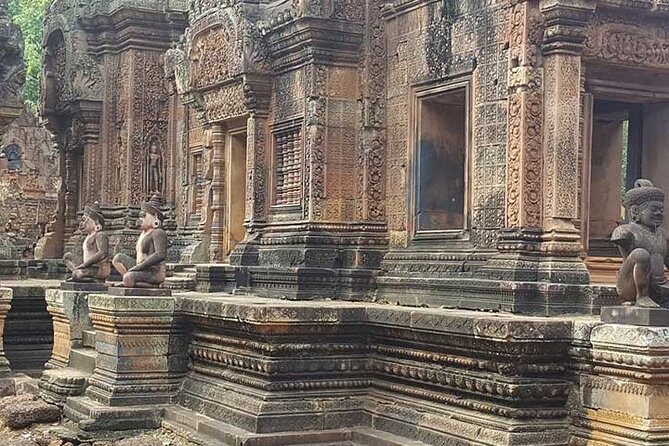
- Banteay Srei: Pink Stone, Tiny Details, and Real Wow Factor
- Angkor Thom South Gate to Bayon: Entering the Royal Core
- Baphuon, Phimeanakas, and the Royal Enclosure Details
- The Terrace of the Elephants and the Terrace of the Leper King
- Angkor Wat: Where the Cosmic Design Becomes Real
- Price and Value: The $43 Tour Plus the Temples Pass
- How Good Guides Change the Whole Day
- Practical Tips to Get More Out of Every Stop
- Who This Tour Suits Best
- Should You Book This Private Angkor Wat and Banteay Srei Tour?
- FAQ
- What temples are included in this private day tour?
- How long is the tour?
- Is pickup offered?
- Is the temples pass included in the price?
- What is included in the tour price?
- What is not included?
- Is this a private tour?
- What tour hours does this run?
- Do I get a ticket on my phone?
- What is the cancellation policy?
Key Takeaways Before You Go
- Private and flexible: only your group, with the option to customize what you emphasize during the day
- Comfort included: air-conditioned vehicle, cold water and towels, parking fees, and tolls
- A strong temple mix: jungle drama at Ta Prohm, pink-stone artistry at Banteay Srei, then royal Angkor Thom highlights
- Long anchor time at Angkor Wat: a full 3 hours so you can pace yourself instead of rushing
- Tickets are separate: the 1-day temples pass is not included in the tour price
A Private Day That Makes Angkor Feel Manageable
Angkor can overwhelm you fast, mostly because the scale is huge and the walking adds up. This tour is built to keep the day moving with clear stops and enough time at each site to actually look, not just pass through. You start in the morning from Siem Reap and end the day after a full circuit that lands you at Angkor Wat last, when you can really shift into slow, detail-focused sightseeing.
The practical win here is the transport. You are not bouncing around on your own for every leg. An English tour guide rides with you, and the vehicle also makes it easier to cope with uneven ground, sun, and the simple fact that Cambodia temples are spread out.
I also like that the tour has a private format. In other words, you are not stuck waiting for a larger group to funnel through each courtyard. If your pace is steady or you want extra time at carvings and doorways, you have room to do that.
More Angkor Wat tours in Siem Reap:
- Angkor Wat Sunrise or Sunset Tour with Guide from Siem Reap
★ 5.0 · 12,109 reviews - Siem Reap: Angkor Wat: Small-Group Sunrise or Sunset Tour
★ 5.0 · 9,444 reviews - Siem Reap: Angkor Wat 2-Day Tour with Sunrise and Sunset
★ 4.9 · 4,429 reviews
Ta Prohm: The Jungle Temple and Its Rooted Mood
Ta Prohm is the opening act that makes Angkor feel different. The temple was originally named Rajavihara, meaning monastery of the King, and it was built as a Mahayana Buddhist monastery and university in the late 12th century (1186 AD is often cited). What you notice first is not just the stone. It is the jungle taking over, with vines and massive tree roots snaking across and around the structures.
You get about an hour here, which is the right amount of time for Ta Prohm. If you spend too little, you end up seeing only the famous root frames from a distance. If you spend too long, the magic can blur into a green maze. With this timing, you can walk the main areas slowly enough to understand how the carvings and passageways relate to the roots.
Practical tip: go at a relaxed pace and pick a few specific viewpoints to return to. Ta Prohm rewards repetition. Stand in one spot long enough to see how light hits carved surfaces before you move on.
Pre Rup: The Short Stop That Adds Big Perspective
Pre Rup is a state temple tied to King Rajendravarman, built in the late 10th century (either 961 or 962 AD). It sits in the Angkor area with a relationship to East Mebon, and it is close enough in time to feel like part of a developing Khmer temple style.
You only get about 20 minutes here. That is intentional. Pre Rup works best as a quick viewpoint and a scene-setting stop. You are not meant to treat it like your main attraction. Instead, it gives you a sense of height, layout, and the wider temple planning that connects across the Angkor complex.
If you like photos, Pre Rup is useful because it can offer open views compared with the tighter courtyards of other temples. Just keep it efficient. You will have plenty of other places later where you can spend longer.
Banteay Srei: Pink Stone, Tiny Details, and Real Wow Factor
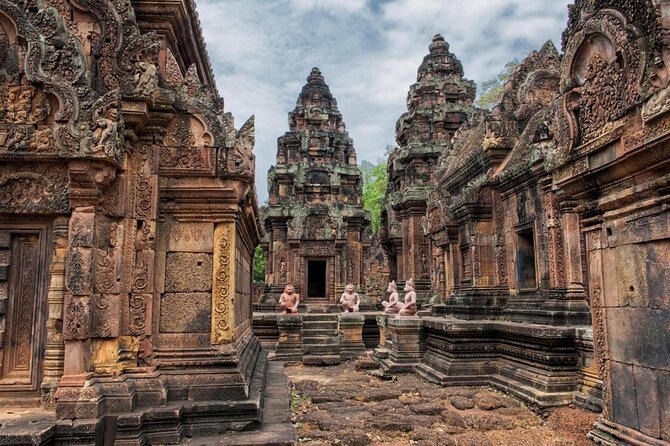
Banteay Srei, often called the Pink Ladies Temple, is a 10th-century Khmer Hindu temple dedicated to Shiva. Even though it is smaller than many of the major Angkor temples, it can feel more intense. The stonework and the subject matter are what catch you: motifs, figures of gods, and especially the fine carving that you notice only when you slow down.
You get around an hour, which is right. Banteay Srei rewards close looking. When you rush, you miss the small patterns around doorways, the layered ornament, and the way the artisans used the pinkish stone to keep carvings crisp and readable.
This is also a great contrast with Ta Prohm. One is about nature reclaiming architecture. The other is about human precision. If you only do the most famous mega-temples, you tend to miss that second side of Khmer art.
More Banteay Srei trips:
- Full-Day Banteay Srei & 4 Temples – Grand Tours Join-in Tour
★ 5.0 · 1,155 reviews - Siem Reap Tour: Angkor Wat Sunrise, Bayon, Ta Prohm, Banteay Srei
★ 5.0 · 931 reviews - 2-Day Angkor Wat With Small, Big Circuit and Banteay Srei Tour
★ 5.0 · 545 reviews - From Siem Reap: Banteay Srei Temple & Grand 5 Temple Tour
★ 4.8 · 262 reviews
Angkor Thom South Gate to Bayon: Entering the Royal Core
After Ta Prohm and the quick viewpoint stop, the tour shifts into Angkor Thom, the ancient royal city. It starts at the South Gate, approached via a causeway crossing a broad moat. You get the classic naga balustrades along the sides, plus big stone sculpture elements that help you read the entrance as more than just a gateway.
Then you move through to Bayon Temple, where the famous faces watch you from tower after tower. There are 173 gigantic faces remaining, and people still debate who they represent. Locals in the Khmer tradition connect them with sacred or symbolic figures, which is the kind of local layer that makes the carvings feel alive rather than museum-still.
You will spend about 50 minutes at Bayon. That is a good balance. Bayon is not one hallway. It is a place where you walk, look up, then re-check details at different angles. A half-hour can feel too fast. An hour can turn into fatigue. Fifty minutes keeps it satisfying.
A smart move during Bayon: don’t just take one photo of a face. Watch the way the stonework aligns with doorways and corner passages so you understand how the temple’s layout was meant to guide movement.
Baphuon, Phimeanakas, and the Royal Enclosure Details
From Bayon, the tour continues deeper into the royal core with several shorter stops, and each one has a job.
At Baphuon, you spend about 40 minutes. It is the state temple of King Udayadityavarman II, located in the Angkor Thom area between the royal palace and Bayon. The main draw here is understanding how sandstone monuments fit into the broader Angkor design language.
Next comes Phimeanakas for about 30 minutes. This temple has a story attached to it and is part of the royal enclosure. Even if you do not care about legends, the setting matters. It helps you see the royal spaces as an intentional system, not a collection of random monuments.
These stops are shorter, but they help you avoid a common mistake: treating Angkor like a checklist of the biggest highlights only. Here, you get enough time to connect how the city functioned.
The Terrace of the Elephants and the Terrace of the Leper King
The day culminates in the royal terraces area, and this part is fun because it feels theatrical. The Elephants terrace stretches for more than 300 meters and was built by King Jayavarman VII toward the end of the 12th century. The long stretch means you can walk along the sequence and notice patterns rather than only looking at one focal point.
You also stop at the Terrace of the Leper King for about 15 minutes. That is brief, so the goal is to see it as part of the bigger boundary between royal palace grounds and the parade spaces. Even with limited time, it adds another layer to your mental map of Angkor Thom’s layout.
If your legs are starting to feel it, pace yourself here. Terraces involve repeated viewing along a long axis. Bring water into your rhythm, and keep your photo goals small and specific.
Angkor Wat: Where the Cosmic Design Becomes Real
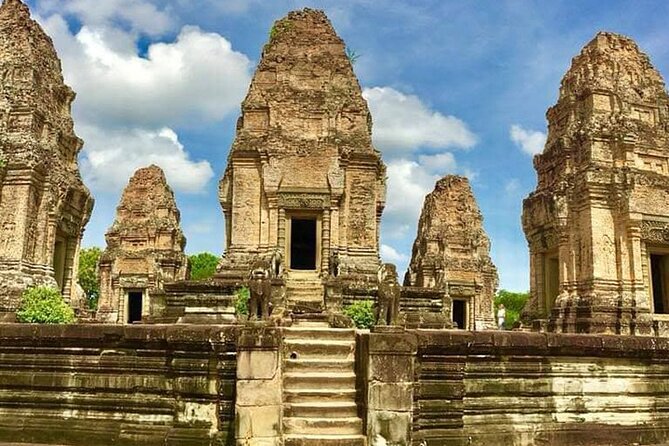
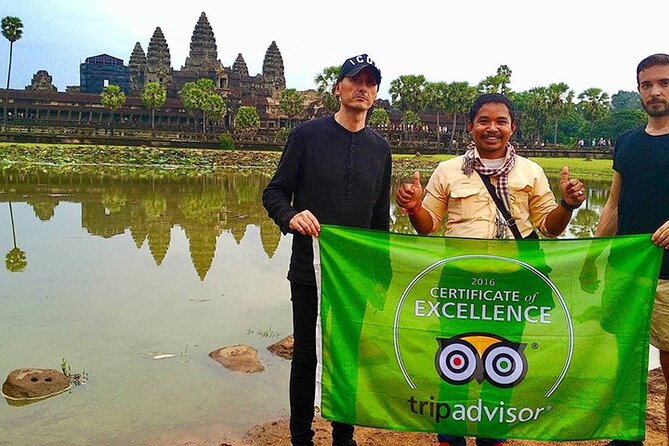
Angkor Wat is the final anchor, and you get around 3 hours, which is exactly what this temple deserves. Representing the abode of Hinduism’s ancient gods, it is often described as the jewel in the Khmer archaeological crown, and it is also the largest of the Angkor temples.
What makes it more than a famous silhouette is the design idea behind it. Angkor Wat has five concentric rectangular walls and moats that symbolize a cosmic chain of mountains and ocean. The central tower represents Mount Meru, the mythical center of the Hindu and Buddhist universe.
When you have time, you can actually track that concept as you move through the layers. That is the difference between seeing Angkor Wat once and understanding why it was built this way. With three hours, you can slow down for the details in the causeways, the symmetry, and the way carvings connect to the movement of people across spaces.
Photo tip: plan your pace so you do not spend all your energy chasing the perfect shot early. Take some early pictures, then come back to specific angles once you feel oriented.
Price and Value: The $43 Tour Plus the Temples Pass
The tour price is $43 per person, and it is a private format with a guide, air-conditioned vehicle, cold water and towels, and parking and tolls handled. If you are traveling as a small group, this can be good value compared with piecing together separate transport and guide time.
The key catch is the Temples Pass, which is $37 for a 1-day pass and is not included. So your realistic day budget is the tour price plus that entry ticket.
You should also think about what you are paying for beyond entry. In a place like Angkor, the real costs are time and energy. Having a plan, a guide to explain what you are looking at, and transport between distant sites is what lets you enjoy the temples instead of just surviving the logistics.
How Good Guides Change the Whole Day
Two of the best things I associate with this tour style are guide communication and real-world flexibility. One guide name you may hear is Chanra, and the standout detail is how clearly he can communicate ahead of time via WhatsApp. That matters because it lets you set expectations early, then adjust during the day if you want more emphasis on certain temples.
Flexibility also shows up as practical problem-solving. If someone has a mobility issue, the guide can arrange options like driving closer and using a mix of motorbike and tuk tuk where possible, so the person does not have to skip major sights like the more central ruins.
That kind of problem-solving is not a small perk in Angkor. It is the difference between a day that feels tailored and a day that feels like forced marching.
Practical Tips to Get More Out of Every Stop
Angkor rewards preparation because heat and walking can sneak up on you.
- Wear shoes with grip and expect uneven ground at multiple sites.
- Use your cold water and take short breaks on terraces and at viewpoints rather than pushing through fatigue.
- If you care about carvings, save some energy for Banteay Srei and Bayon, where details are a big part of the payoff.
- For photos, pick a few key moments per temple instead of trying to shoot everything. You will enjoy the temples more if you do not sprint.
Also, remember the tour runs during the day, generally between 8:00 AM and 4:00 PM. Build your expectations around that timeline so you are not rushing when you reach the biggest sites.
Who This Tour Suits Best
This is a smart fit if you want a guided Angkor day without the hassle of figuring out transportation between widely spaced temples. It is also a strong choice if you like structure, since the stops flow logically from Ta Prohm to the Angkor Thom royal area and then to Angkor Wat.
It is especially good for couples, families with older kids, and travelers who want to manage walking without turning the day into a series of missed monuments. The private format helps you keep your pace.
If you are the type who hates backtracking and wants a clear plan, you will likely appreciate this route.
Should You Book This Private Angkor Wat and Banteay Srei Tour?
Book it if you want the best balance of major highlights and high-quality craft, with enough time at Angkor Wat to actually absorb what you are seeing. The private setup, English guide, and comfort extras make it feel smoother than doing temples on your own.
Skip it only if you know you want to fully control every hour yourself, or if you would rather spend extra time at just one or two temples and nothing else. With an 8.5-hour structure, this is designed as a complete day circuit, not a one-temple deep dive.
If you are going to Angkor for the first time and you want your day to feel planned but not rigid, this is a very solid way to do it.
FAQ
What temples are included in this private day tour?
The tour covers Ta Prohm, Pre Rup, Banteay Srei, Angkor Thom South Gate, Bayon, Baphuon, Phimeanakas, Terrace of the Elephants, Terrace of the Leper King, and Angkor Wat.
How long is the tour?
The duration is about 8 hours 30 minutes.
Is pickup offered?
Yes. Pickup and drop-off at the airport is included, and pickup is offered.
Is the temples pass included in the price?
No. The Temples Pass is not included. The 1-day pass is $37 per person.
What is included in the tour price?
It includes an air-conditioned vehicle, an English tour guide, parking fees and roads tolls, cool water and towels, and pickup/drop-off at the airport.
What is not included?
The temples admission pass is not included.
Is this a private tour?
Yes. It is private, and only your group participates.
What tour hours does this run?
It runs Monday to Sunday from 8:00 AM to 4:00 PM.
Do I get a ticket on my phone?
The experience includes a mobile ticket.
What is the cancellation policy?
You can cancel for free. If you cancel at least 24 hours before the experience starts, you get a full refund. Changes within 24 hours are not accepted.
Newly listed around Siem Reap
- Sambor Prei Kuk Off Beaten Track★ 5.0 · 3 reviews
- Siem Reap Airport Taxi Transfer – City Center Hotels★ 5.0 · 5 reviews
- Angkor Wat at Sunrise★ 4.0 · 7 reviews
- Short Cycling at Countryside★ 5.0 · 29 reviews
- Unveiling the Mystical Beauty of Phnom Kulen National Park★ 5.0 · 6 reviews
- Bakong Temples & Floating Village Tour★ 4.5 · 3 reviews
- Rooftop Romantic Dinner – 4 Courses Set Meal & Wine★ 3.5 · 5 reviews
- Khmer Cooking Class in Cambodia★ 5.0 · 36 reviews
Angkor Wat Tours, compared.
Angkor Wat Sunrise or Sunset Tour with Guide from Siem Reap
Read our review →
Angkor Wat: Small-Group Sunrise or Sunset Tour
Read our review →
Angkor Wat 2-Day Tour with Sunrise and Sunset
Read our review →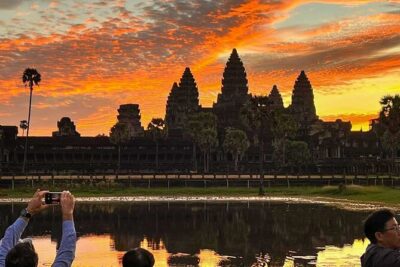
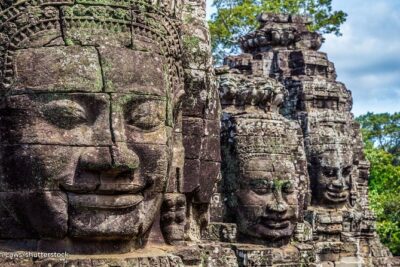
Angkor Wat Sunrise tour with Small – Group and Guide tours
Read our review →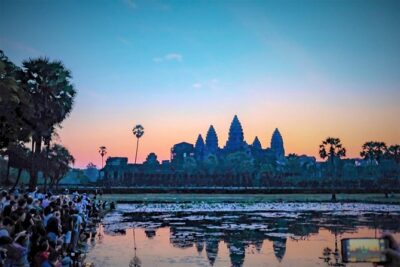
Angkor Wat Highlights and Sunrise Guided Tour from Siem Reap
Read our review →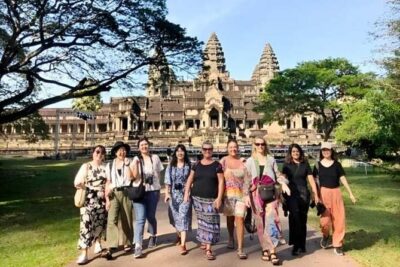
Angkor Wat Sunset Small Group Tour with Lunch Included
Read our review →
Full-Day Angkor Wat Sunrise Private Tour with Guide from Siem Reap
Read our review →Browse the lists this tour appears in