Review · TOURS
Sacred Siem Reap Tours
Koh Ker feels like a jungle time machine. The big reason I’d recommend Sacred Siem Reap Tours is how it pairs the famous Angkor sights with the more off-the-map, mossy ruins of Koh Ker. You also get a clean private setup with a guide and driver, plus cold water for the bumpy hours between stops.
I especially like the way Day 1 stacks Angkor Wat, Bayon, and Ta Prohm into a tight, easy-to-follow temple flow. And on Day 2 you trade the usual postcard loop for a mix of Banteay Srei, the Kbal Spean riverbed carvings, and the Cambodia Landmine Museum, which adds real context to Cambodia’s modern scars.
The one drawback to plan for is that entrance fees are not included, so your total day cost depends on what tickets you buy on-site. A moderate fitness level also helps, since temple walking can add up in the heat.
In This Review
- Key highlights you’ll feel right away
- Price and logistics: what $100 buys you
- Day 1 at Angkor: Angkor Wat, Bayon, Ta Prohm in sequence
- Angkor Wat, the 2-hour anchor
- Bayon Temple, with its faces at the center of Angkor Thom
- Ta Prohm, where the trees feel like part of the stone
- Day 2 away from the main crowds: Banteay Srei and Kbal Spean
- Banteay Srei, Lady Temple in pink stone
- Kbal Spean, carvings in a sacred river setting
- Cambodia Landmine Museum, history with a hard edge
- Koh Ker: mossy prang towers and Prasat Bram’s overgrown atmosphere
- Day 3 explorer mood: Beng Mealea plus the smaller Angkor-area temples
- Prasat Beng Mealea, 2 hours of ruin-and-root vibes
- Bakong, a short look at Shiva dedication
- Preah Ko, six towers dedicated to a king ancestor
- Lolei, the island temple at Indratataka Baray
- What makes this tour feel efficient, not rushed
- Practical tips to get more from the day
- Who should book this Siem Reap 3-day mix
- Should you book Sacred Siem Reap Tours?
- FAQ
- What is the price of Sacred Siem Reap Tours?
- How long is the tour?
- Where does the tour take place?
- What time does the tour start?
- Is pickup included?
- What’s included in the price?
- Are entrance fees included?
- Is the tour private?
- What fitness level do you need?
- Can I cancel for a full refund?
Key highlights you’ll feel right away
- Koh Ker’s jungle ruins, including the 7-tiered prang and Prasat Bram’s overgrown atmosphere
- A focused Angkor trio on Day 1, so you spend less time figuring out routes
- Banteay Srei’s pink stone details, with a shorter visit that’s easier to manage
- Kbal Spean’s carved riverbed setting, plus a chance to see caves connected to Vishnu
- A sobering museum stop, Cambodia Landmine Museum, for historical grounding beyond temples
- Private timing, your group moves together with a guide and driver
Price and logistics: what $100 buys you
At $100 per person for an approx. 3-day private circuit, this is priced like a value option, not a luxury add-on. What makes it work is that the basics are included: a guide and driver and cold water. The big items that are not included are the things that often surprise people later, like accommodations, meals, and entrance fees.
Also, the tour starts at 8:00 am, which matters in Siem Reap. You get earlier light for temples and you avoid some of the worst heat for at least the first big stop days. Pickup is offered, and you’ll get a mobile ticket, which usually makes check-in easier and less paperwork-heavy.
One practical thought: because entrance fees are separate, you should budget a little extra. The temples you’ll visit are the kind where tickets add up, especially when a day includes multiple sites.
Others in Siem Reap worth putting side by side:
- Angkor Wat Sunrise or Sunset Tour with Guide from Siem Reap
★ 5.0 · 12,109 reviews - Siem Reap: Angkor Wat: Small-Group Sunrise or Sunset Tour
★ 5.0 · 9,444 reviews - From Siem Reap: Kampong Phluk Floating Village Tour by Boat
★ 4.9 · 6,979 reviews
Day 1 at Angkor: Angkor Wat, Bayon, Ta Prohm in sequence
This is the day most people come for, and it’s arranged in a smart order. You’ll hit three of Angkor’s best-known stops, with set visit times that keep the pace moving without feeling rushed.
Angkor Wat, the 2-hour anchor
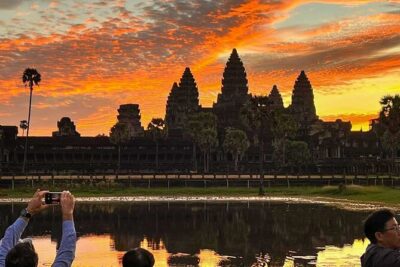
Angkor Wat is the biggest Hindu temple in the world, and it tends to overwhelm you in the first few minutes. That’s why I like that the stop is 2 hours. You’re not forced to sprint through it. You can slow down long enough to notice the layout and the way the building holds your attention even when you’re standing in the same general area.
Admission tickets aren’t included, so expect to pay on top of the tour price. Also, since this is a major site, plan for a steady flow of people even on tour days. The upside is simple: you can see the scale without needing to study a map for hours.
Bayon Temple, with its faces at the center of Angkor Thom
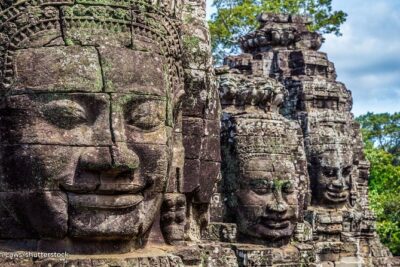
Next is Bayon Temple, located in the middle of Angkor Thom city. The standout here is the famous smiling faces of Buddha. The temple can feel different from Angkor Wat because Bayon is more about repeated views and angles. With about 1 hour, you can take your time moving around key vantage points.
Again, admission is not included. If you’re the type who likes to pause, look up, and re-orient yourself, the hour gives you room. If you prefer quick photos and onward movement, you’ll still have enough time, as long as you keep an eye on timing.
A different kind of day in Cambodia:
- Sunset tour of Kampong Phluk stilts home village on the Tonle Sap
★ 5.0 · 4,865 reviews - Siem Reap: Angkor Wat 2-Day Tour with Sunrise and Sunset
★ 4.9 · 4,429 reviews - Siem Reap: Kampong Phluk Floating Village Tour with Boat
★ 4.9 · 3,843 reviews - Siem Reap: Full-Day Angkor Wat Guided Tour with Sunset
★ 4.9 · 3,803 reviews
Ta Prohm, where the trees feel like part of the stone
Ta Prohm is the jungle temple people talk about for a reason. The Buddhist setting, the dramatic trees growing over and through the ruins, and the big rock formations create a place that feels half temple and half nature exhibit. With about 1 hour, you’ll have enough time to wander the main areas without feeling like the visit drags.
The main consideration here is heat and shade. You do get natural cover from the trees in places, but it’s still a lot of walking on uneven ground. If you’re traveling with someone who moves slowly, this is where your group pace matters most.
Day 2 away from the main crowds: Banteay Srei and Kbal Spean
Day 2 is where the tour shifts from the big Angkor circuit to more textured, sometimes less predictable experiences. You get three very different stops, and that variety is a big part of the value.
Banteay Srei, Lady Temple in pink stone
Banteay Srei is known as the Lady Temple, and it’s famous for its pink sand stone. The visit is about 1 hour, which I like because Banteay Srei’s details reward attention, but you don’t need half a day to get the full effect.
Admission is listed as free for this stop, which is a real budget plus. Even if you’ve seen photos before, up close you tend to notice how intricate the stonework is, and how the smaller scale can feel more intimate than the huge temple complexes.
Kbal Spean, carvings in a sacred river setting
Next is Kbal Spean. This is the kind of place that changes depending on how you approach it. You’ll see a sacred pathway, a waterfall area, and caves associated with the Hindu god Vishnu. The scheduled time is about 1 hour, and that sounds short until you realize the site is more about walking a path and taking in key viewpoints.
Admission is not included here. The practical reality is that you may spend part of your time moving between points. If you’re sensitive to uneven terrain, take it slow.
Cambodia Landmine Museum, history with a hard edge
The Cambodia Landmine Museum is the emotional pivot point of the day. You’ll spend about 30 minutes here, and while it’s shorter than the temple stops, it’s not a quick stop in terms of impact. The museum covers Cambodia’s war history, including civil conflict and the effects of bombings carried out during the Vietnam War period.
I appreciate that the tour doesn’t just stay in postcard mode. You leave with a clearer understanding of why certain areas in Cambodia still carry risks. It also makes the country feel more real, not just scenic.
Koh Ker: mossy prang towers and Prasat Bram’s overgrown atmosphere
Koh Ker is the tour’s headline jungle city in the information you get before you go, and it’s easy to see why. Built between 928 and 944 AD, it was home to more than 10,000 people. Today, it’s a different kind of spectacle.
The centerpiece is the 7-tiered prang pyramid, set in the jungle and about 36 meters high. What I find compelling is the sense of elevation and scale, even when the structures are broken. At the highest point, the view is mostly forest. It makes the ruins feel like a message from another time, surrounded by the world that swallowed them.
A big reason to prioritize Koh Ker is the relative quiet. The ruins are covered in moss, and because fewer tourists tend to visit, you can explore crumbled structures at a slower pace. That matters if you like standing back, reading the stone shapes with your eyes, and letting the scene settle.
Prasat Bram, also called the Five Temples, is another highlighted stop. Two brick towers are completely overgrown with strangled figs, which adds drama you won’t get from the more restored complexes. Near the car park area, you’ll also find small food and drink stalls, which can be useful if you’re passing through hungry.
If Koh Ker is on your exact schedule, plan for jungle light, damp stone textures, and more walking on uneven ground. This is the kind of stop where slow is the best pace.
Day 3 explorer mood: Beng Mealea plus the smaller Angkor-area temples
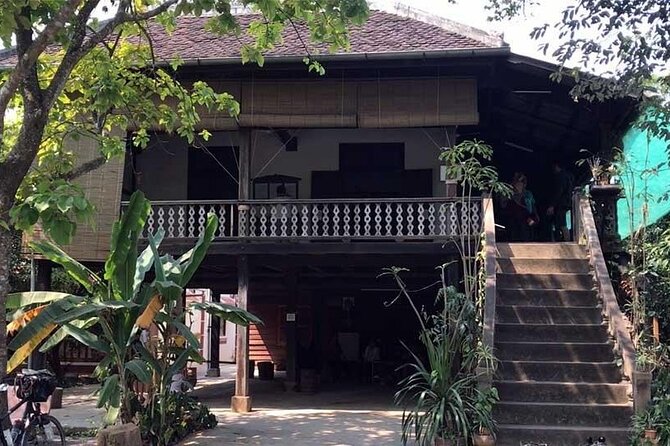
Day 3 keeps the temple theme but shifts the feeling again. Instead of polished, curated grounds, you get ruins that look like they’re still waiting for time to finish its work.
Prasat Beng Mealea, 2 hours of ruin-and-root vibes
Prasat Beng Mealea was built in the early 12th century and is sometimes treated as an example temple for the style later seen at Angkor Wat. It’s about 75 km from Siem Reap, so you’ll feel the travel distance in your energy.
The real draw is the setting. The temple is ruined and overgrown by big trees and plants, and it’s noted as having not seen renovation work because of road access. That lack of smoothing out makes Beng Mealea feel more like a real-life exploration. With 2 hours, you can wander the causeways, peek at stone clusters, and get a sense of the scale without being funnelled.
Admission is not included, so factor in ticket cost. Also, bring a cautious attitude for the walking. Ruin sites often mean roots, loose stones, and less flat ground.
Bakong, a short look at Shiva dedication
Then you’ll head to Bakong, dedicated to Shiva. The scheduled visit is about 30 minutes, so treat it as a quick palate cleanser. This is not the day for long pauses, it’s more about seeing the temple type in a compact window and keeping your energy for later stops.
Admission is not included.
Preah Ko, six towers dedicated to a king ancestor
Preah Ko has six tower temples built to honor a king ancestor. You’ll spend about 30 minutes here. With a shorter stop, the strategy is to choose a vantage point, take in the layout, and then walk slowly enough to notice the structure.
Admission is not included.
Lolei, the island temple at Indratataka Baray
Finally, Lolei is a beautiful temple built on the island of Indratataka Baray. It takes about 30 minutes, and it’s a great way to end because it feels airy compared to some of the dense, enclosed ruins.
Admission is not included.
What makes this tour feel efficient, not rushed
Even with multiple temples each day, the timing you get suggests a balanced approach. Day 1 gives you longer blocks at the biggest, most complex sites, then you move to a more tree-and-stone temple like Ta Prohm for a manageable hour.
Day 2 is shorter overall, with 1 hour at Banteay Srei, 1 hour at Kbal Spean, and 30 minutes at the Landmine Museum. Day 3 adds up through one longer exploration stop, then short looks at several smaller temples.
The private format helps a lot here. Your guide and driver can keep your group together, and that matters if someone needs a slower pace or if you want a minute to catch the right angle for photos.
Practical tips to get more from the day
For a schedule this temple-heavy, your comfort choices are the difference between enjoying the ruins and feeling drained.
- Wear comfortable, closed shoes with grip. Several sites involve uneven stone and rooty ground.
- Bring sun protection and drink water when you can. You do get cold water included, but you’ll still want to pace yourself across long breaks.
- Plan for extra cash for entrance fees, since they are not included for most stops.
- If you’re sensitive to heat, slow down your photo stops. Your eyes adjust faster when you’re not rushing from bright sun into shade all the time.
- For the museum stop, keep expectations realistic. The Landmine Museum is brief time-wise, but it’s emotionally weighty. Give it your full attention even if you only have 30 minutes.
If your group includes someone with limited walking endurance, Beng Mealea and Ta Prohm may be the hardest parts. You can help by setting a slower pace early in the day, not at the last stop.
Who should book this Siem Reap 3-day mix
This tour makes the most sense for you if you want a private schedule and you like mixing famous sites with places that feel calmer. Koh Ker in particular is marketed as a low-crowd jungle exploration, and that’s the kind of match I’d recommend to travelers who get bored with the standard checklist.
It also fits if you want context, not just scenery. Adding the Cambodia Landmine Museum gives the trip emotional and historical depth without turning it into a full-day seminar.
You might consider a different option if you’re trying to keep your trip budget totally predictable, because entrance fees are not included and that can move your total cost. And if you’re expecting to avoid walking and stairs completely, remember you’ll be on temple paths and uneven ruins.
Should you book Sacred Siem Reap Tours?
I’d book it if your priority is a well-planned temple circuit with guide and driver included, and if you like the idea of Koh Ker’s mossy jungle feel and Prasat Bram’s overgrown towers. The value at $100 per person looks strongest when you’re already planning to pay separate admission fees and you want a private group route that runs on a clear schedule.
I would pause and compare if you hate unpredictable add-ons. Since entrance fees are not included, check how much you expect to spend before you commit. Also, if your group is not comfortable with ruin walking, Beng Mealea deserves extra attention in your planning.
If you want, tell me your travel dates and who you’re going with, and I can help you estimate a realistic total budget for entrances and a smart pacing plan across the 3 days.
FAQ
What is the price of Sacred Siem Reap Tours?
The price is listed as $100.00 per person.
How long is the tour?
The tour duration is approximately 3 days.
Where does the tour take place?
The tour is in Siem Reap, Cambodia.
What time does the tour start?
The start time is 8:00 am.
Is pickup included?
Pickup is offered.
What’s included in the price?
The tour includes a guide and driver, and cold water.
Are entrance fees included?
No. Entrance fees are not included.
Is the tour private?
Yes, it is a private tour or activity, and only your group will participate.
What fitness level do you need?
The information notes that travelers should have a moderate physical fitness level.
Can I cancel for a full refund?
Yes, you can cancel up to 24 hours in advance for a full refund. If you cancel less than 24 hours before the start time, the amount paid will not be refunded.
Newly listed around Siem Reap
- Sambor Prei Kuk Off Beaten Track★ 5.0 · 3 reviews
- Siem Reap Airport Taxi Transfer – City Center Hotels★ 5.0 · 5 reviews
- Unveiling the Mystical Beauty of Phnom Kulen National Park★ 5.0 · 6 reviews
- Angkor Wat at Sunrise★ 4.0 · 7 reviews
- Short Cycling at Countryside★ 5.0 · 29 reviews
- Bakong Temples & Floating Village Tour★ 4.5 · 3 reviews
- Rooftop Romantic Dinner – 4 Courses Set Meal & Wine★ 3.5 · 5 reviews
- Khmer Cooking Class in Cambodia★ 5.0 · 36 reviews
Tours, compared.
Angkor Wat Sunrise or Sunset Tour with Guide from Siem Reap
Read our review →
Angkor Wat: Small-Group Sunrise or Sunset Tour
Read our review →
Sunset tour of Kampong Phluk stilts home village on the Tonle Sap
Read our review →
Angkor Wat 2-Day Tour with Sunrise and Sunset
Read our review →
Kampong Phluk Floating Village Tour with Boat
Read our review →