
Review · ANGKOR WAT TOURS
Siem Reap 2 Days Private Tour Angkor Wat and Floating Village
Angkor Wat feels bigger when it comes with context. This Siem Reap private 2-day tour strings together the major sights with a licensed English guide and an easy rhythm, so you spend less time figuring things out and more time seeing what matters. I like that you get in-depth commentary about Cambodia’s past, not just photo stops, and that the plan is built around big iconic names like Angkor Thom, Bayon, Ta Prohm, Tonle Sap, and the floating village.
The comfort side is solid too: hotel pickup and drop-off, a private air-conditioned vehicle, and a private cruise day with water plus a cool fresh towel during the trip. One thing to weigh, though, is that day 1 temples require the Angkor Pass (entrance is not included per site), and meals plus tips are on your own.
In This Review
- Key things I’d plan for
- How This Private 2-Day Plan Feels in Real Life
- Day 1 Angkor Temples: From Angkor Thom to Angkor Wat and Sunset at Phnom Bakheng
- Angkor Thom and the South Gate: your first big wow
- Bayon, Baphuon, and Phimeanakas: the royal core
- Terrace of the Elephants and Ta Prohm: stone with personality
- Angkor Wat and Phnom Bakheng: day 1’s finale
- Angkor Pass: The Ticket Piece People Often Misunderstand
- Day 2 Tonle Sap Lake, Kampong Phluk, and Siem Reap’s Slower Side
- Tonle Sap Lake: why the lake matters here
- Kampong Phluk floating village: stilts, wood, and real scale
- Wat Preah Prom Rath: a quieter temple stop with wall paintings
- Artisans Angkor: craft and jobs, not just shopping
- West Baray and Svay Romiet Pagoda: water-built history
- The Comfort Factor That Actually Changes Your Experience
- Price and Value: Is $170.05 Per Person Fair?
- Who This Tour Suits Best, and Who Should Think Twice
- Final Call: Should You Book This Siem Reap Private Tour?
- FAQ
- FAQ
- What is the duration of this Siem Reap tour?
- Is pickup and drop-off included?
- Is this a private tour or a shared group tour?
- What language is the tour guide?
- What transportation is included?
- Are entrance fees to Angkor temples included?
- Are meals included?
- What is included for the Tonle Sap Lake and floating village day?
- What should I wear to visit the temples?
- Is there free cancellation?
Key things I’d plan for
- Private licensed English guide keeps the story straight, especially through Angkor’s layout and symbolism
- Day 1 temple circuit covers Angkor Thom, Bayon, Ta Prohm, Angkor Wat, then ends at Phnom Bakheng for sunset views
- Tonle Sap + Kampong Phluk is done by private cruise time, not just a quick roadside stop
- Angkor Pass needed for day 1 since individual temple admissions are listed as not included
- Meals and tips are extra, but you do have clear on-site meal options with local pricing
How This Private 2-Day Plan Feels in Real Life
If you’ve ever tried to see Angkor on a tight schedule, you know the risk: you end up chasing tickets, routes, and quick explanations that blur together. This format fixes that by giving you one guide, one vehicle, and a sequence that makes sense over two days. It’s not trying to fit everything in Cambodia, it’s focused on the parts most people come for, plus a grounded look at life around Tonle Sap.
I also like the “less friction” design. Hotel pickup and drop-off mean you don’t lose your best energy time to coordination. And because it’s private, your guide can slow down or emphasize what you care about, whether that’s Angkor’s religious symbolism or how the floating village connects to Tonle Sap Lake.
A possible catch is the intensity of the schedule. This is a temple-forward itinerary with multiple stops per day. If you prefer long breaks and minimal walking, you’ll still have those breaks built into the pacing, but you should expect a full, active two days.
More Angkor Wat tours in Siem Reap:
- Angkor Wat Sunrise or Sunset Tour with Guide from Siem Reap
★ 5.0 · 12,109 reviews - Siem Reap: Angkor Wat: Small-Group Sunrise or Sunset Tour
★ 5.0 · 9,444 reviews - Siem Reap: Angkor Wat 2-Day Tour with Sunrise and Sunset
★ 4.9 · 4,429 reviews
Day 1 Angkor Temples: From Angkor Thom to Angkor Wat and Sunset at Phnom Bakheng
Day 1 is the big Angkor run, and the order matters. It starts inside Angkor Thom, then works through key structures, transitions to Ta Prohm, and lands at Angkor Wat before sunset views from Phnom Bakheng.
Angkor Thom and the South Gate: your first big wow
You begin at Angkor Thom (about 2 hours). This is the walled royal city, described as a materialization of Buddhist cosmology in three dimensions and on a national scale. That framing helps because you’re not just looking at old stone. You’re looking at an idea, built into a city plan.
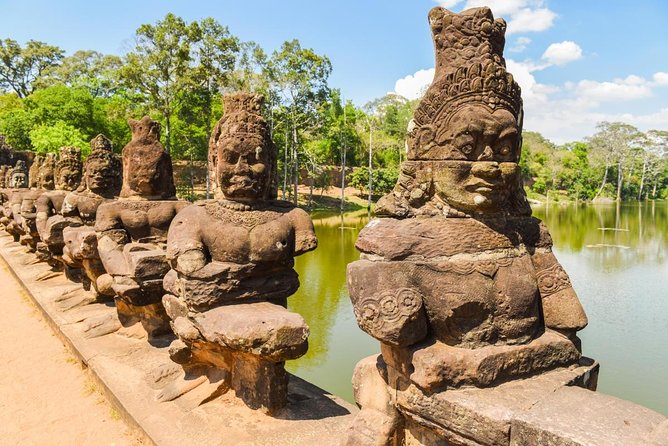
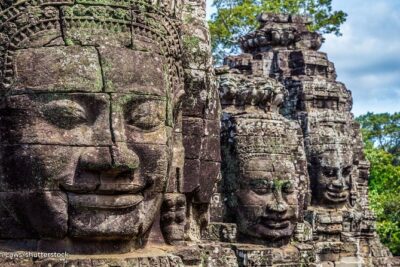
Next is the South Gate of Angkor Thom (about 30 minutes). This entrance is popular because it’s restored and many of the stone heads remain in place. If you like strong photo angles, this is one of the places where the gate itself gives you a clear subject, even before you reach the heart of the city.
Bayon, Baphuon, and Phimeanakas: the royal core
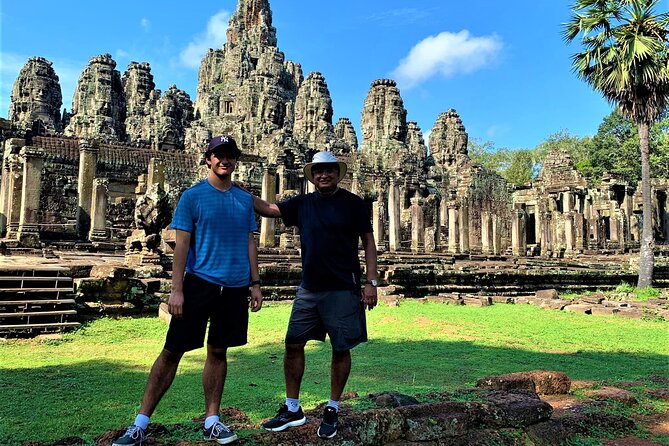
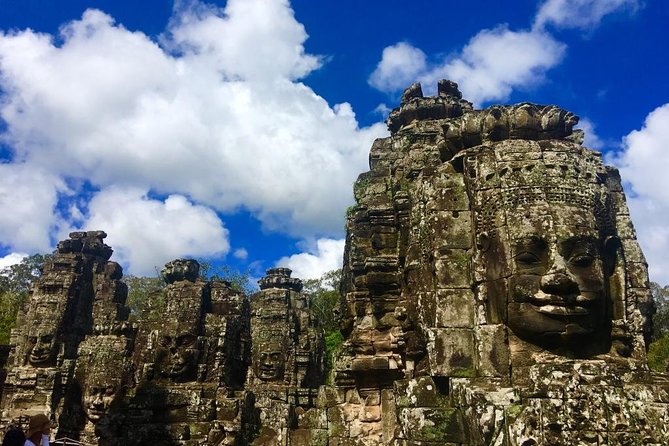
After the gate, you move to Bayon Temple (about 1 hour 20 minutes). Bayon sits at the center of a royal city, and the timing and placement are part of the story: it was built nearly 100 years after Angkor Wat. That makes it a nice contrast day 1 gives you, because you’re seeing different eras and different design priorities in a single run.
You then visit Baphuon (about 50 minutes). The description focuses on its unusual form for a multi-level temple, with five levels on a rectangular sandstone base that are about the same size rather than stepping down into smaller tiers. If you’re the type who notices architecture details, this stop rewards you.
Next is Phimeanakas (about 30 minutes), located near the center of the royal palace area. The key detail here is that it originally likely had a golden pinnacle, described by Zhou Daguan as the Tower of… (the historical reference is part of what your guide may explain as you stand there).
More floating village trips in Siem Reap:
- From Siem Reap: Kampong Phluk Floating Village Tour by Boat
★ 4.9 · 6,979 reviews - Sunset tour of Kampong Phluk stilts home village on the Tonle Sap
★ 5.0 · 4,865 reviews - Siem Reap: Kampong Phluk Floating Village Tour with Boat
★ 4.9 · 3,843 reviews - Siem Reap Floating Village Kampong Phluk Sunset with Boat
★ 5.0 · 1,962 reviews
Terrace of the Elephants and Ta Prohm: stone with personality
You’ll pause at the Terrace of the Elephants (about 30 minutes). The description highlights how elephants were portrayed with servants and princes, with steps that keep even length despite obstacles. It’s one of those spots where the carvings communicate daily power and ritual through careful design, not just decoration.
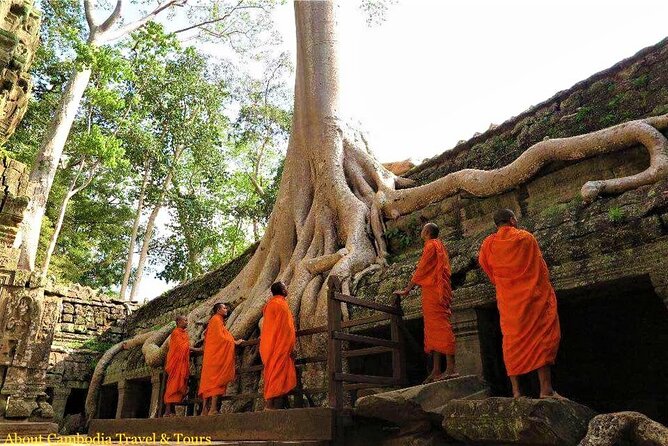
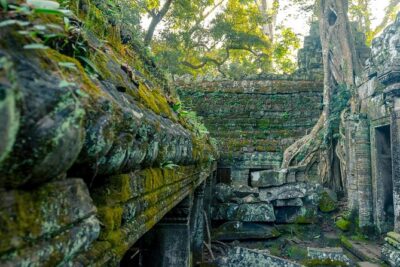
Then comes Ta Prohm (about 1 hour 30 minutes). This is described as the kingdom of trees, and the big idea is that it was left largely untouched by archaeologists, except for clearing a path and structural strengthening. That means you get the feel of temples and nature sharing the same space, which is why Ta Prohm is often the “I get it now” stop for people who were only expecting ruins.
Angkor Wat and Phnom Bakheng: day 1’s finale
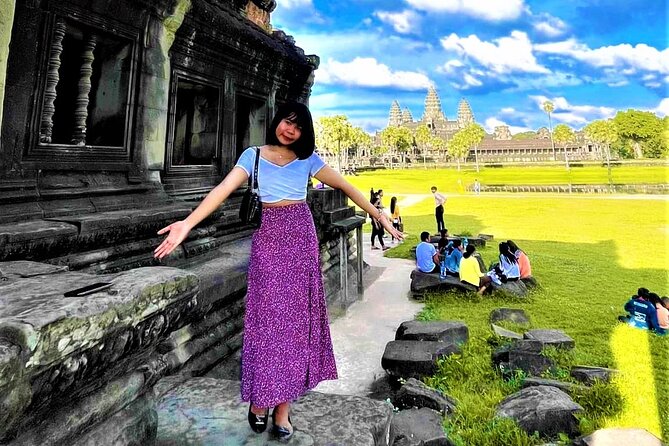
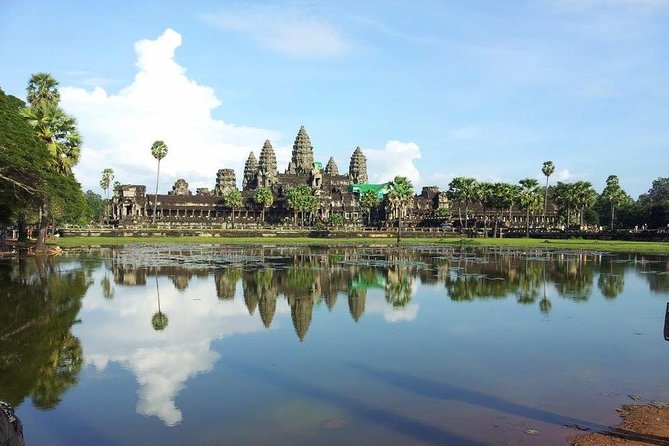
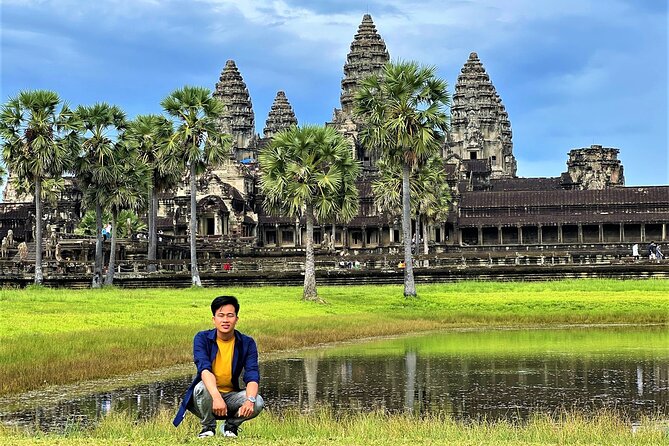
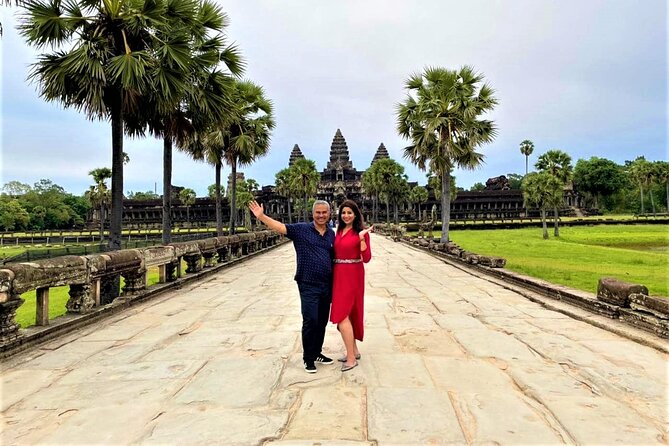
You finish the main temple highlight with Angkor Wat (about 2 hours). It’s described as the largest monument of the Angkor group and the best preserved, and you’re meant to see it as an architectural masterpiece with careful balance, proportions, reliefs, and sculpture. A private guide helps here because it’s easy to miss the logic of how the layout builds your perspective.
Finally, you go to Phnom Bakheng (about 1 hour) for sunset views over Angkor Wat. This is the kind of ending that makes a two-day plan feel worth it, because it connects the temples to the time of day people remember.
Angkor Pass: The Ticket Piece People Often Misunderstand
For day 1 stops like Angkor Thom, Bayon, Ta Prohm, and Angkor Wat, admission tickets are listed as not included per stop. The tour uses the Angkor Pass, which covers all temples in the itinerary, and your guide helps you buy it at the entrance of Angkor Park before starting the tour.
That matters because it changes how you plan your budget and your timing. Instead of paying separate entry fees at each site, you’re buying one pass to cover the temple set for your schedule. If you’re the kind of person who likes to know where the money goes, this structure is cleaner.
It also means your guide handles the process right when you need it. For a first-time Angkor visitor, that can save stress and prevent those frustrating moments where you think you’re ready, then realize the pass is the missing step.
Day 2 Tonle Sap Lake, Kampong Phluk, and Siem Reap’s Slower Side
Day 2 shifts tone. You trade temple stones for water, daily life, and a different kind of Cambodian perspective. It starts at Tonle Sap Lake (about 2 hours), then goes to Kampong Phluk Floating Village (about 3 hours) by a private cruise.
Tonle Sap Lake: why the lake matters here
Tonle Sap Lake is described as the largest fresh water in South East Asia, and its dimensions change depending on monsoon and dry season. That seasonal change is more than trivia. It explains why floating life exists and why the community adapts instead of resisting water realities.
Because it’s included as an admission item for the lake stop, you know that part of the day is set up for you, not just “here’s a boat if you want it.”
Kampong Phluk floating village: stilts, wood, and real scale
Next is Kampong Phluk Floating Village. The key details in the plan: it’s about 30 km southeast of Siem Reap town, and the village has more than 3,000 inhabitants identified as real Khmers. Their households are made of wood and bamboo, built on stilts of about 6 m.
The tour’s time at Kampong Phluk is generous at about 3 hours, which is important. Floating villages reward you when you have time to look, ask, and absorb the rhythms, not just speed through for a few photos. And since the plan includes a private cruise, you avoid the hassle of mixing into a crowd that doesn’t match your pace.
Wat Preah Prom Rath: a quieter temple stop with wall paintings
After the lake, you visit Wat Preah Prom Rath (about 45 minutes). It’s described as one of the oldest pagodas in Siem Reap, with well-preserved wall paintings from the 17th century. This stop is a nice counterweight to Angkor day 1. Instead of massive classic Angkor temples, you get a more local layer of religious art and continuity.
Artisans Angkor: craft and jobs, not just shopping
Then you go to Artisans Angkor (about 1 hour). This is described as a Cambodian social business creating job opportunities for young people in rural areas while reviving traditional Khmer craftsmanship. It’s located on Stung Th… (the location line is cut in the provided description), but the purpose is clear: it’s an effort tied to work and preservation, not just a retail stop.
If you want your trip to support real livelihoods, this is one of the better “what you’re doing matters” add-ons in a two-day plan.
West Baray and Svay Romiet Pagoda: water-built history
You end day 2 with a couple of sites connected to water and local geography. West Baray (about 30 minutes) is a vast man-made lake with an earthen levee forming a dyke. There’s also a legend tied to crocodiles and a ruler’s daughter, and your guide may connect that to how Angkor planners used water storage and layout.
Finally, Svay Romiet Pagoda (about 30 minutes) sits directly on the banks of the West Baray. For me, this is a pleasant closer because it ties back to the lake theme from earlier in the day.
The Comfort Factor That Actually Changes Your Experience
One reason private tours can feel worth it is the operational side. Here you get pick up and drop off at your hotel, plus a private transfer by luxury air-conditioned vehicle. On hot days, that alone makes a difference in your mood. You’re less likely to rush, and you can stay focused on what you’re seeing instead of fighting the weather.
The tour also includes water and a cool fresh towel for the whole trips. Small things like that help when you’re outdoors for multiple hours.
And you get a professional English speaking licensed tour guide. The descriptions also promise in-depth commentary about Cambodia’s past. That matters at Angkor, because the temples look like they’re all the same pile of stone until someone explains how the city plan and religious references connect.
In one of the feedback notes tied to this experience, the guide is named Sokmeng and the comments emphasize how organized everything felt and how informative and professional he was. The same note also mentions that the driver cared about details, which is exactly what you want during a two-day itinerary where timing between sites matters.
Price and Value: Is $170.05 Per Person Fair?
At $170.05 per person, this isn’t the cheapest way to see Angkor. The value question comes down to what’s included and what you would otherwise have to manage yourself.
Here’s what the price covers based on the tour details:
- Hotel pickup and drop-off
- Professional licensed English guide
- Private air-conditioned vehicle
- Private cruise for Tonle Sap and the floating village day
- Water and a cool fresh towel
- Mobile ticket
- In-depth commentary
What is not included:
- Tips for the guide and driver
- Entrance fees via the Angkor Pass for day 1 temples, with the guide helping you purchase it at Angkor Park
- Meals on your own, with lunches available at local restaurants and dish prices listed around $3 to $10
So the math is less about paying for “a car” and more about paying for a full organized system: guide knowledge, private transport, and cruise time. If you were planning on doing Angkor plus Tonle Sap as separate arrangements, you’d likely spend time coordinating and dealing with fragmented info. This plan stacks those pieces so your brain stays on the sights.
Also, this tour lists group discounts as a feature. If you have a small group, it’s worth asking how that discount applies when you book.
Who This Tour Suits Best, and Who Should Think Twice
This experience fits best if you want two things at once: high-impact Angkor temples and a real Tonle Sap day without turning your trip into a logistics project.
You’ll probably like it if:
- You want a private plan with a licensed English guide
- You prefer comfortable air-conditioned transport between far-flung stops
- You want your Angkor time guided with context, not just a checklist
- You like the idea of seeing a floating village by cruise, with enough time to look around
You might think twice if:
- You’re trying to keep costs ultra-low, because meals, tips, and the Angkor Pass are extra
- You prefer a slower travel pace, since day 1 is packed with major sites and day 2 is still busy
Final Call: Should You Book This Siem Reap Private Tour?
If your top priority is seeing the core Angkor highlights plus Tonle Sap in a way that feels organized and guided, I think this is a strong booking choice. The biggest strengths are the licensed guide, the private comfort, and the way day 1 finishes with sunset at Phnom Bakheng after Angkor Wat.
The main reason not to book is simple: if you dread paying additional costs on arrival, you’ll want to budget for the Angkor Pass, plus meals and tips. Still, the structure is clear, and the guide helps with the pass purchase, which reduces the hassle.
FAQ
FAQ
What is the duration of this Siem Reap tour?
The tour runs for about 2 days.
Is pickup and drop-off included?
Yes. Pickup and drop-off at your hotel are included. You provide your hotel name when booking.
Is this a private tour or a shared group tour?
It is a private tour/activity, so only your group participates.
What language is the tour guide?
The tour guide is described as professional English speaking and licensed.
What transportation is included?
You travel in a private, comfortable, air-conditioned vehicle, plus there is a private cruise for the Tonle Sap Lake and floating village day.
Are entrance fees to Angkor temples included?
The tour notes that entrance tickets for the listed Day 1 sites are not included, and it uses the Angkor Pass to cover the temples on the itinerary. Your guide assists you in purchasing the pass at the entrance of Angkor Park.
Are meals included?
No. Lunches at local restaurants are available, but meals during the tour are at your own expense. Menu prices are listed around $3 to $10 per dish.
What is included for the Tonle Sap Lake and floating village day?
Tonle Sap Lake and Kampong Phluk floating village have admission included, and the plan includes a private cruise as part of that day.
What should I wear to visit the temples?
You should dress appropriately and respect ancient religious grounds. A shirt that covers your shoulders is recommended, and trousers or knee-length pants or skirts are permitted.
Is there free cancellation?
Yes. Free cancellation is offered up to 24 hours in advance for a full refund.
Newly listed around Siem Reap
- Sambor Prei Kuk Off Beaten Track★ 5.0 · 3 reviews
- Siem Reap Airport Taxi Transfer – City Center Hotels★ 5.0 · 5 reviews
- Short Cycling at Countryside★ 5.0 · 29 reviews
- Unveiling the Mystical Beauty of Phnom Kulen National Park★ 5.0 · 6 reviews
- Angkor Wat at Sunrise★ 4.0 · 7 reviews
- Khmer Cooking Class in Cambodia★ 5.0 · 36 reviews
- Bakong Temples & Floating Village Tour★ 4.5 · 3 reviews
- Rooftop Romantic Dinner – 4 Courses Set Meal & Wine★ 3.5 · 5 reviews
Angkor Wat Tours, compared.
Angkor Wat Sunrise or Sunset Tour with Guide from Siem Reap
Read our review →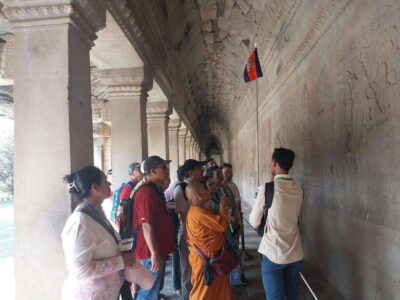
Angkor Wat: Small-Group Sunrise or Sunset Tour
Read our review →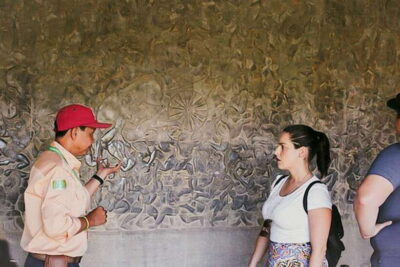
Angkor Wat 2-Day Tour with Sunrise and Sunset
Read our review →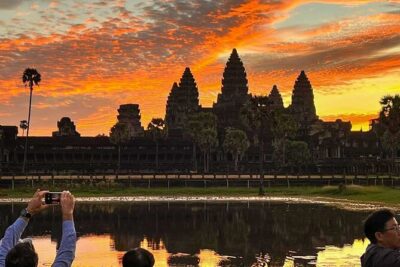
Angkor Wat Sunrise tour with Small – Group and Guide tours
Read our review →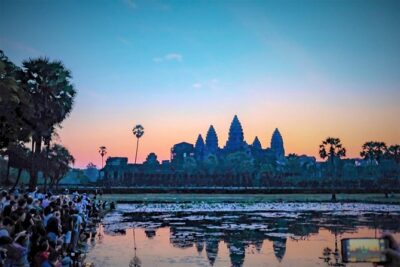
Angkor Wat Highlights and Sunrise Guided Tour from Siem Reap
Read our review →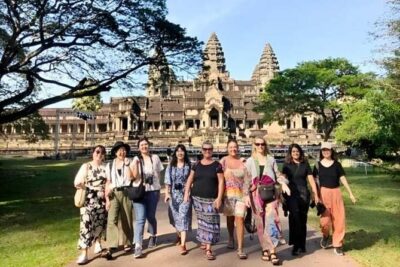
Angkor Wat Sunset Small Group Tour with Lunch Included
Read our review →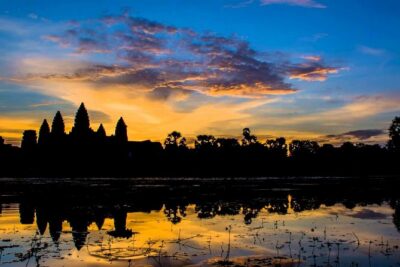
Full-Day Angkor Wat Sunrise Private Tour with Guide from Siem Reap
Read our review →Browse the lists this tour appears in