Review · FULL-DAY
Siem Reap: Angkor Full-Day Group Tour with Japanese Guide
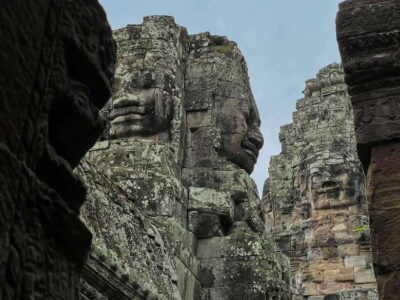
Smiling stone faces feel more human up close. I like how this Angkor day tour in Siem Reap is set up for Japanese-speaking visitors, with a Japanese-speaking guide and hotel pickup that keeps the morning stress low. You still get a real temple circuit, but the explanations help you notice what you would normally walk right past.
My favorite part is the way the guide supports your day, from pacing to photos. When the guide is Chun or Bun, you get clear background, helpful photo angles, and a bit of Japanese humor that makes the big moments feel personal rather than rushed. It also helps if you need a slower walking pace, since the route can be adjusted.
One thing to plan for: the Angkor Archaeological Park entrance ticket is not included, and lunch isn’t included either. That means your final cost depends on the ticket you choose and what you do for meals.
In This Review
- Key highlights you should care about
- Pickup, dress code, and what to bring in Siem Reap
- Why a Japanese-speaking guide changes Angkor Wat from a photo stop to a story
- Ta Prohm and the jungle temple feeling you can’t replicate later
- Angkor Thom’s South Gate, Elephants Terrace, and the temple details that matter
- Srah Srang, lunch timing, and how to handle a long temple day
- Angkor Wat closing the loop, plus why sunrise is a smart upgrade
- Two-day upgrade: Pre Rup, Banteay Srei, Beng Mealea, and Bakong
- Transportation, group size, and comfort choices that affect your day
- Price and value: what $50 covers, and what to budget in reality
- Who this Angkor tour suits best
- Should you book this Japanese-led Angkor tour?
- FAQ
- Is the Angkor Archaeological Park entrance ticket included?
- What time does pickup happen for the standard day tour?
- What time is pickup for the sunrise option?
- Is lunch included?
- What kind of transport do I use?
- What should I wear to visit the temples?
- Are there limits for young children or wheelchair users?
Key highlights you should care about
- Japanese guide support that helps you read the temples, not just pass by them
- Time-saving ticket skip so you spend more hours among the ruins
- Ta Prohm jungle atmosphere with major roots and photo-ready angles
- Bayon details: 54 towers and 216 serene faces, explained in plain language
- Two-day upgrade to add Banteay Srei and Beng Mealea for a more countryside feel
- Optional sunrise at Angkor Wat with a morning pick up that gets you there early
Pickup, dress code, and what to bring in Siem Reap
Your day starts with a hotel pickup in Krong Siem Reap, typically between 08:30 and 09:00. The tour uses a comfortable vehicle, and small groups may travel by tuk-tuk (depending on group size), while larger groups use an air-conditioned van or bus. Either way, the goal is simple: get you to the Angkor circuit without wasting your first hours in town.
Pack for heat and walking. Comfortable shoes matter more than you think here, because temple paths can be uneven. Bring a hat and insect repellent, and keep cash on hand for lunch or snacks since meals are not included. A camera helps, but the bigger win is bringing clothing that fits the temple rules.
Dress code is strict. Shorts, short skirts, and sleeveless shirts are not allowed. Many temples accept a scarf that covers your shoulders and knees, but for most entrances you must still cover properly. The guidance also calls out that Angkor Wat is handled a bit differently from other temples, so if you’re unsure, bring a lightweight layer that covers your shoulders and knees. This saves time at the gate when you are already standing in the sun.
A few more Siem Reap trips to compare
- Angkor Wat Sunrise or Sunset Tour with Guide from Siem Reap
★ 5.0 · 12,109 reviews - Siem Reap: Full-Day Angkor Wat Guided Tour with Sunset
★ 4.9 · 3,803 reviews - Angkor Wat Sunrise tour with Small – Group and Guide tours
★ 5.0 · 3,655 reviews
Why a Japanese-speaking guide changes Angkor Wat from a photo stop to a story
Angkor can feel endless if you only look for Instagram angles. What you gain with a Japanese-speaking guide is interpretation, and interpretation is what makes these ruins stick in your head after you go back to your hotel.
I especially like that guides like Chun and Bun are known for clear explanations and thoughtful pacing. You get help connecting the “what” to the “why,” like how Bayon fits into Angkor Thom’s layout or what the repeated face imagery is trying to communicate. And yes, humor shows up too, including Japanese wordplay, which makes a long day feel lighter.
There’s also a practical side. Good guides know where the best sightlines are and how to guide you to photo-friendly moments without you wandering. If you travel solo, that matters even more, because you will still come away with images that look like you planned your angles, not just held a phone out in the crowd. And if your group includes older visitors, the route can be adjusted, like slower walking and more time where you need it.
Ta Prohm and the jungle temple feeling you can’t replicate later
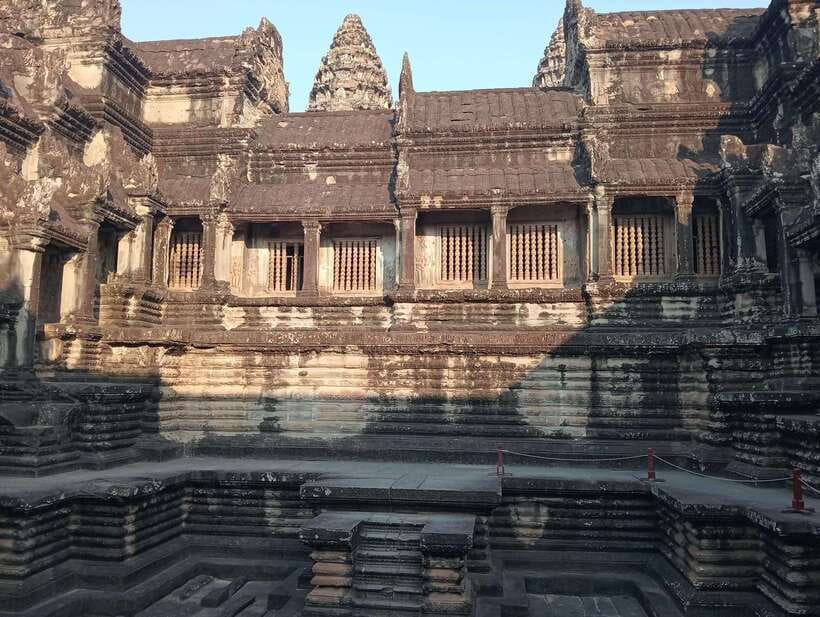
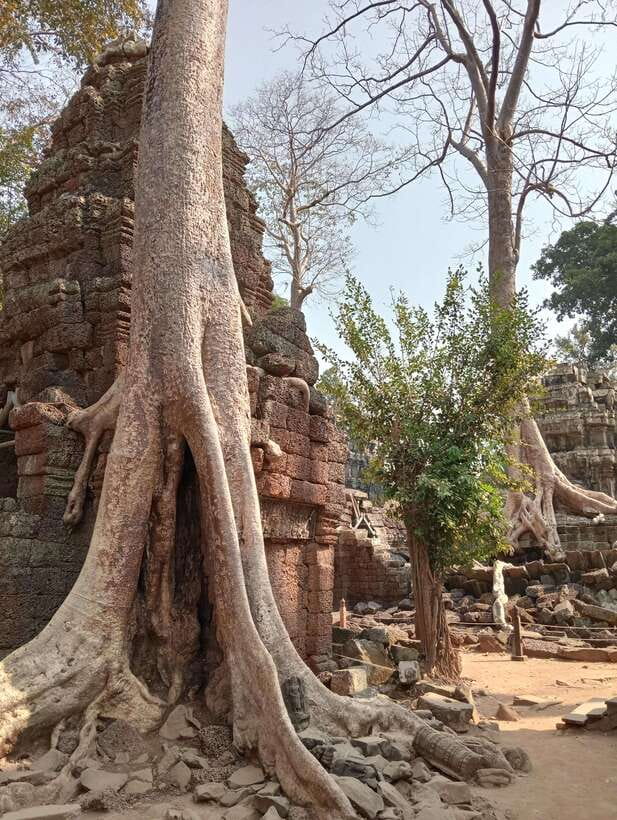
Most Angkor days start with the major highlights, but Ta Prohm is often the stop that makes people remember the trip. This is the temple where nature takes the stage. You walk through ruins that were left in a more natural state, and the giant tree roots twist around stone blocks like the forest has been slowly sculpting them for centuries.
The payoff here is atmosphere. You do not just see carved surfaces, you see scale and texture. The stone looks layered, the roots look dramatic, and the contrast between greenery and gray rock does something your brain understands instantly. It is also one of the easiest places for a guide to help with photo composition because the temple frames you, not the other way around.
The time you spend is guided (about an hour in the standard flow), so you get enough room to wander and find angles without feeling like you are rushing through a theme-park version of the ruins. The only caution: Ta Prohm can be busy, and it is outside, so go at a steady pace, keep water with you, and watch your step around uneven ground.
Angkor Thom’s South Gate, Elephants Terrace, and the temple details that matter
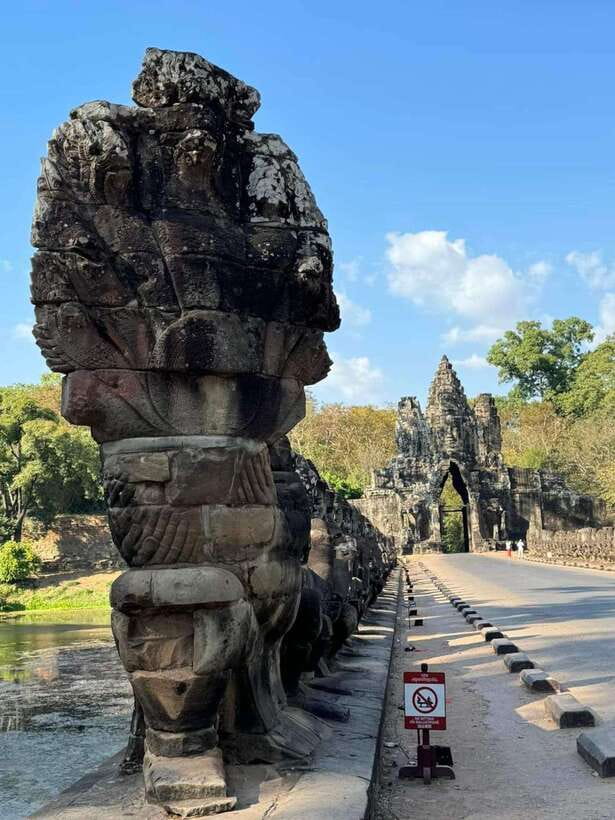
After Ta Prohm, you enter the Angkor Thom area through the South Gate, which is a built-in photo moment. The giant stone faces set the tone. From there, the day shifts from jungle atmosphere to dense temple symbolism, and this is where the guide’s explanations start to pay off.
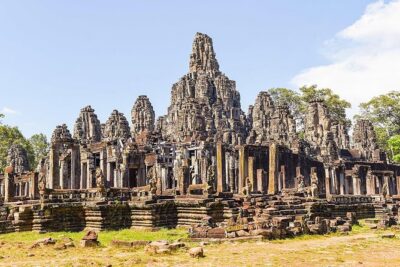
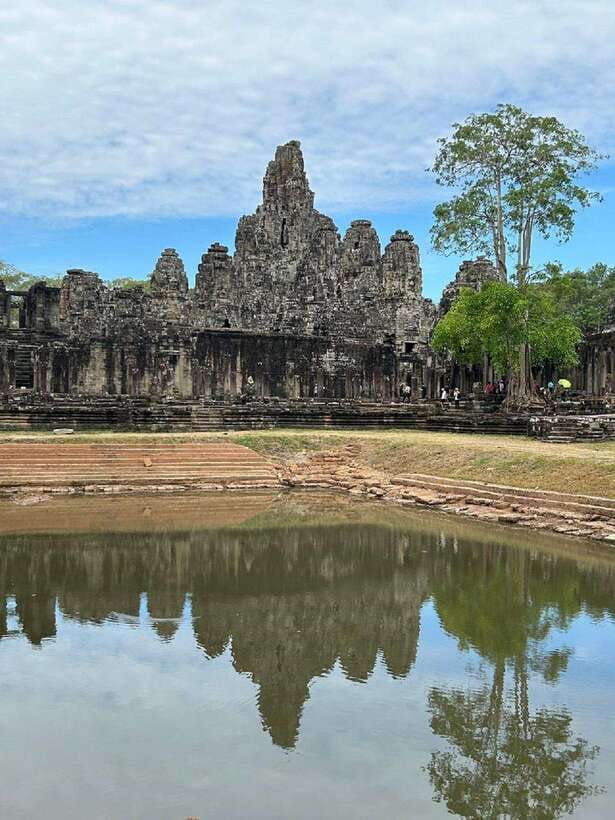
You’ll visit key stops inside Angkor Thom, including Bayon, Baphuon, and the Elephant Terrace, plus a break time later in the circuit. One of the best-known “wow” elements is Bayon, the Temple of Smiles, with 54 towers and 216 serene, smiling faces. Your guide can walk you through what you are seeing and how that face imagery fits into the larger ceremonial city.
Baphuon is another important stop because it gives you a strong sense of height and restoration. It’s also a temple where views help. When you get the chance to look outward, you better understand the layout and why Angkor feels so engineered, not random.
The Elephant Terrace is more than a decorative platform. It ties into Angkor’s royal and ceremonial functions, and the carvings make more sense once your guide sets the context. Even if you already know the basics, I like that the guide can point out details you would likely miss if you were scanning the stone for faces only.
A different kind of day in Cambodia:
- Siem Reap: Angkor Wat: Small-Group Sunrise or Sunset Tour
★ 5.0 · 9,444 reviews - From Siem Reap: Kampong Phluk Floating Village Tour by Boat
★ 4.9 · 6,979 reviews - Sunset tour of Kampong Phluk stilts home village on the Tonle Sap
★ 5.0 · 4,865 reviews - Siem Reap: Angkor Wat 2-Day Tour with Sunrise and Sunset
★ 4.9 · 4,429 reviews
Srah Srang, lunch timing, and how to handle a long temple day
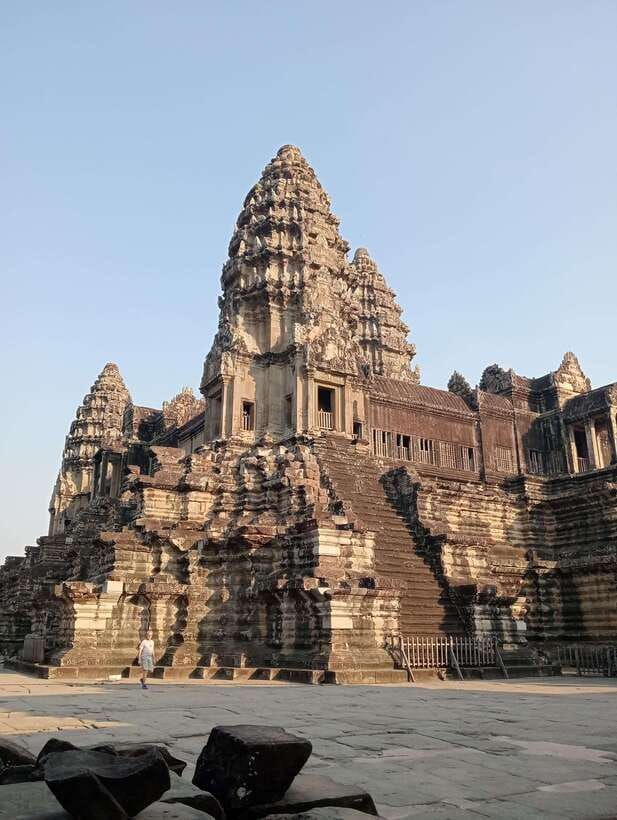
Srah Srang is a calmer break inside the day. It’s a good moment to reset, take photos that are not just “face after face,” and catch your breath before Angkor Wat.
In the standard route, you get break time, and lunch is scheduled but not included. That means you should plan your meal strategy early. If you want a simpler day, you can look for nearby restaurant options your guide might suggest on the day. If you have dietary needs, be direct and ask what is available.
A long temple day is about energy management, not just walking. Cold drinking water and cold towels are provided during visits, which is a nice touch when the sun is strong. Still, treat this like an all-day hike with cultural stops. Wear shoes that you trust, and keep moving steadily rather than stopping every five minutes for another photo. You will feel better later in the day, especially at Angkor Wat when you might be tired.
Angkor Wat closing the loop, plus why sunrise is a smart upgrade
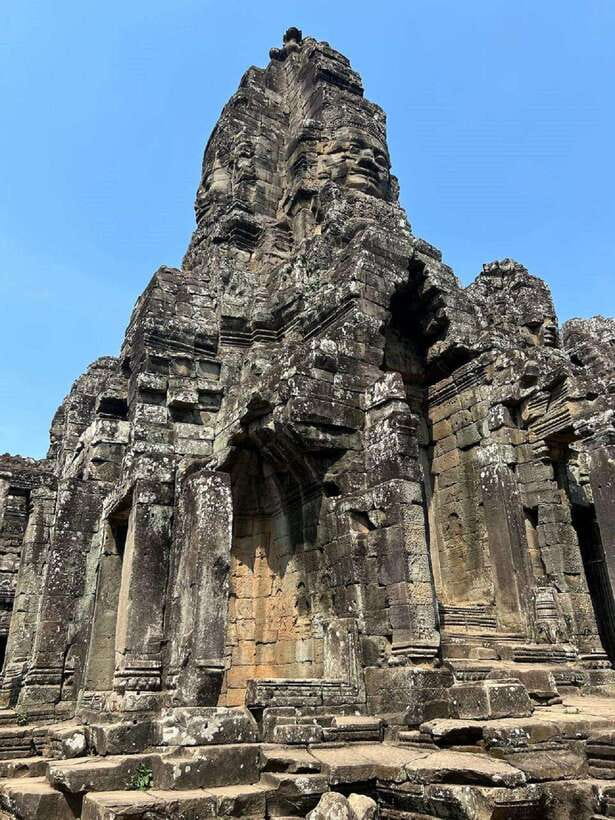
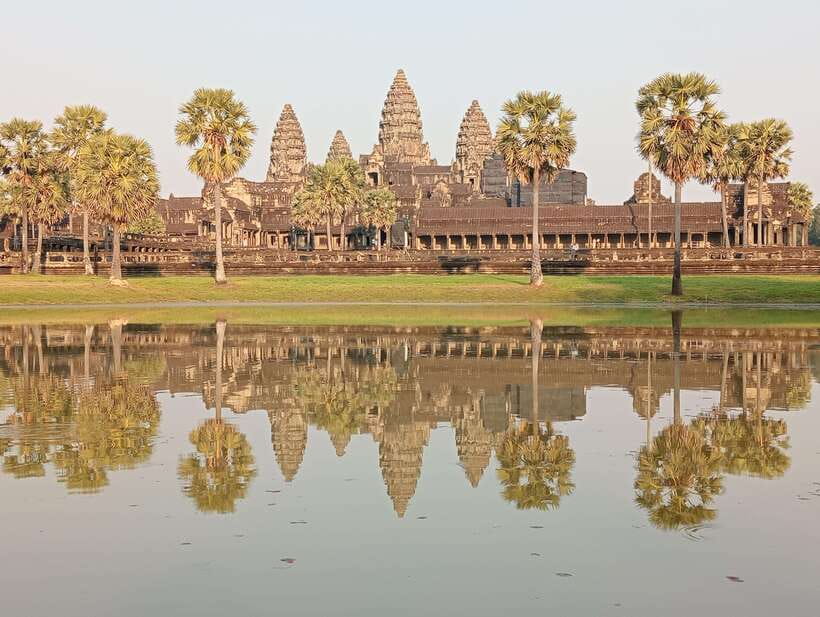
Angkor Wat is the final big anchor in the one-day tour, and it often feels like the most iconic moment because it completes the circuit. You spend about two hours with a guide, and that time is valuable. Without guidance, you might see the scale and carvings but miss the symbolism and structure.
There’s also an optional sunrise option. If you choose sunrise, pickup is around 04:30 to 05:00, and the tour generally finishes around 12:00. The recommendation is to bring breakfast from your hotel so you can eat after sunrise.
For me, sunrise is a “yes” if you like early starts and you want softer light and fewer peak-time crowds. The key is to treat it like a real morning outing. You will be awake before you feel ready, so keep your packing simple the night before: water, hat, comfortable layers, and your breakfast.
In both the regular and sunrise formats, the guide matters here too. Angkor Wat has more than one way to look at it, and a guide can help you time views, understand what you are looking at, and still make the visit feel relaxed rather than checkbox-driven.
Two-day upgrade: Pre Rup, Banteay Srei, Beng Mealea, and Bakong
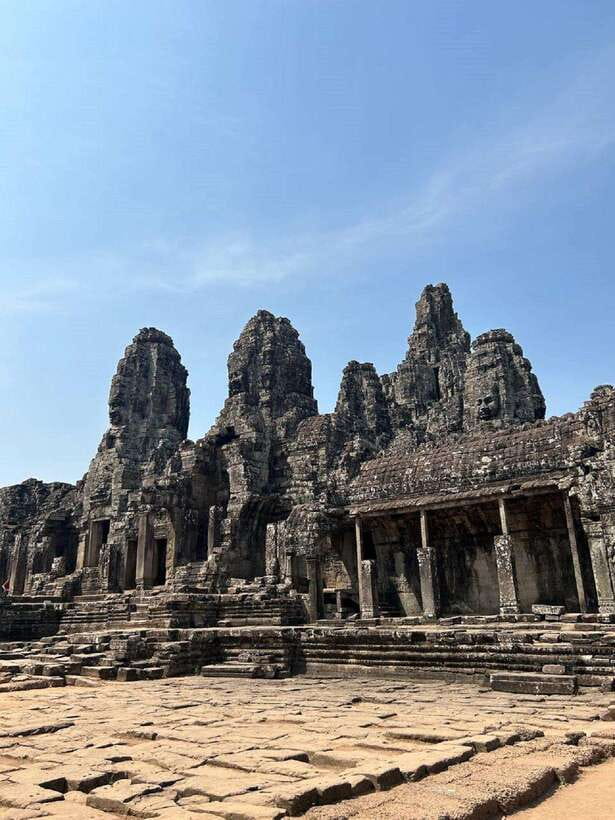
If you choose the two-day option, you get a more relaxed rhythm and two major countryside-style temples: Banteay Srei and Beng Mealea. Day 2 starts with sunrise at Angkor Wat again, with pickup at 05:00. After sunrise, you have breakfast (bring it from your hotel) and then head out for the morning temples.
Pre Rup is a strong opener for the second day because it’s all about warm brick and panoramic views. It is a pyramid temple that helps you shift from the main urban core to the surrounding architecture style. The view from the terraces is useful, especially on a multi-day trip, because it gives your brain a wider map in between temple clusters.
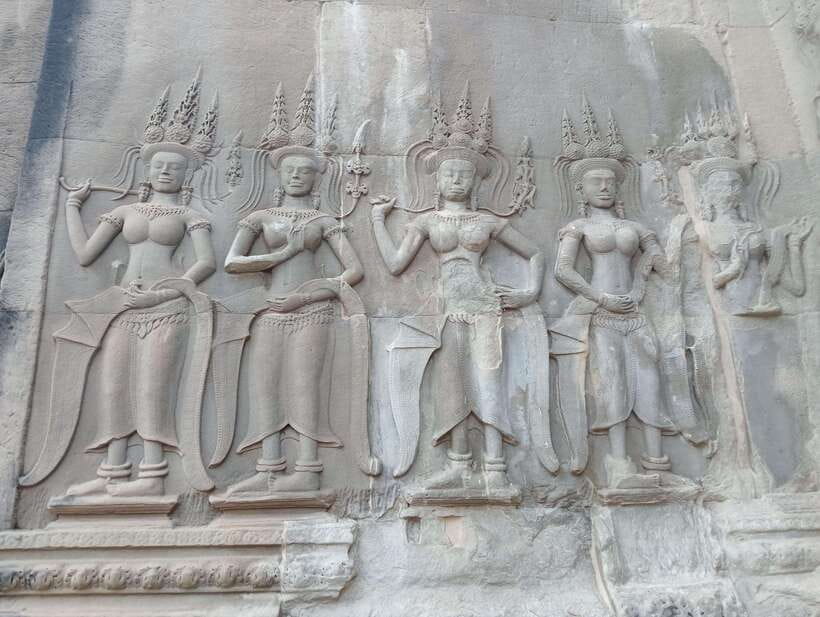
Then comes Banteay Srei, known for pink sandstone and extremely detailed carvings. The nickname “Citadel of Women” is part of the popular story, but the real reason you will care is the craft level. The carvings are delicate, so going with a guide helps you slow down and actually understand what you are looking at.
After lunch (not included), the day becomes more adventurous with Beng Mealea. This is the temple where nature is not just background, it’s the main character. Collapsed galleries, giant stone blocks, and tree roots create an explore-and-react feeling. Even if you are not a “ruins wanderer,” this stop adds variety to an Angkor routine dominated by cleaner, more restored areas.
You end at Bakong in the afternoon (roughly 2:30 to 3:00 PM), then drive back to your hotel. Bakong matters because it is linked to early Khmer pyramid temple traditions, and by the time you reach it you have enough context to enjoy it rather than just tick it off.
Transportation, group size, and comfort choices that affect your day
How you travel can make or break a temple day. This tour supports both small-group and private formats. For shared tours, the vehicle depends on the number of people: 1 to 2 people may go by tuk-tuk, while 3 to 6 people travel in an air-conditioned van. For private options, 1 to 2 people typically use a tuk-tuk, but a car can be chosen during checkout. Groups of 3+ use an air-conditioned van or bus.
Here’s the practical takeaway. If you want flexibility and smaller crowds, private or small-group usually improves your experience. If you are sensitive to heat, the air-conditioned van or bus can be a real relief during transfers. If you enjoy getting around locally, a tuk-tuk can be fun, but it can also feel bumpy.
Either way, you get included transfers and guided visits. That means you are not trying to find your own route between major temple clusters, which saves time and reduces stress on days where your attention is better spent on the ruins.
Price and value: what $50 covers, and what to budget in reality
The tour price starts around $50 per person, depending on the option you choose. That base cost covers the big on-the-ground value: hotel pickup, transport, a Japanese-speaking guide, guided visits, and conveniences like cold water and cold towels during stops. It also includes the ticket-line skip, which can save you time at peak hours.
But you still need to budget the Angkor entrance fee. The Angkor Archaeological Park pass is not included. Expect $37 per person for a 1-day pass and $62 per person for a 2-3 day pass. Lunch is also not included, and tips are optional.
So what does that mean for value? For many first-time visitors, the math is still favorable because you are paying for interpretation plus logistics. If you tried to do Angkor alone, you’d spend your time managing transport and trying to understand symbolism without a guide. If you are traveling with a Japanese language preference, that guidance is hard to replicate cheaply.
If you want the best value for the money, choose based on how you travel:
- If you want the key hits and you are okay with a longer day, the 1-day option makes sense.
- If you want a more relaxed pace and a broader temple mix, the 2-day upgrade tends to be worth it because it adds Banteay Srei and Beng Mealea.
Who this Angkor tour suits best
This tour is best for you if:
- You want Japanese-language guidance for Angkor’s meanings and details.
- You like a structured day with hotel pickup and planned stops.
- You care about photo moments and want help finding good angles.
- You prefer not to coordinate transport between temples on your own.
It might not be ideal if you have mobility limitations that make uneven temple ground hard to manage. The tour is listed as not suitable for wheelchair users, and it also notes age limits (not for babies under 1 year, and not for people over 95 years).
If you are bringing family, you may like that children under 12 join free on private tours. If you are traveling with older parents, the guide approach can be accommodating, like adjusting walking pace and making changes when conditions shift.
Should you book this Japanese-led Angkor tour?
Book it if you want your Angkor visit to feel organized, with a guide who can explain what you’re seeing in Japanese and help you get better photos without running around. The mix of major temples like Ta Prohm, Bayon, and Angkor Wat, plus the optional sunrise and the 2-day upgrade to Banteay Srei and Beng Mealea, gives you flexibility depending on how much time you have in Siem Reap.
Don’t book it if you’re trying to minimize extra costs or you hate early mornings. The entrance ticket and lunch add to your budget, and sunrise versions mean you need breakfast ready and the early pickup schedule in your head.
FAQ
Is the Angkor Archaeological Park entrance ticket included?
No. The entrance ticket is not included. It’s listed as $37 per person for a 1-day pass and $62 per person for a 2-3 day pass.
What time does pickup happen for the standard day tour?
Pickup is included from your hotel lobby between 08:30 and 09:00.
What time is pickup for the sunrise option?
For the sunrise option, pickup is between 04:30 and 05:00, and the tour finishes around 12:00.
Is lunch included?
No. Lunch is not included on the itinerary.
What kind of transport do I use?
It depends on group size and your option. Shared tours may use tuk-tuk for 1-2 people and an air-conditioned van for 3-6 people. Private tours are tuk-tuk for 1-2 people (car can be chosen at checkout) and an air-conditioned van or bus for 3+.
What should I wear to visit the temples?
Avoid shorts, short skirts, and sleeveless shirts. A scarf that covers knees and shoulders is suggested for many temple entrances. The guidance also says trousers and skirts that cover the knees and shirts that cover the shoulders are required for most temples, with a special note that Angkor Wat differs from the rest.
Are there limits for young children or wheelchair users?
The tour is not suitable for wheelchair users. Children under 12 can join for free on private tours only, and it is not suitable for babies under 1 year.
Newly listed around Siem Reap
- Sambor Prei Kuk Off Beaten Track★ 5.0 · 3 reviews
- Siem Reap Airport Taxi Transfer – City Center Hotels★ 5.0 · 5 reviews
- Short Cycling at Countryside★ 5.0 · 29 reviews
- Unveiling the Mystical Beauty of Phnom Kulen National Park★ 5.0 · 6 reviews
- Angkor Wat at Sunrise★ 4.0 · 7 reviews
- Bakong Temples & Floating Village Tour★ 4.5 · 3 reviews
- Rooftop Romantic Dinner – 4 Courses Set Meal & Wine★ 3.5 · 5 reviews
- Khmer Cooking Class in Cambodia★ 5.0 · 36 reviews
Full-Day, compared.
Full-Day Angkor Wat Sunrise Private Tour with Guide from Siem Reap
Read our review →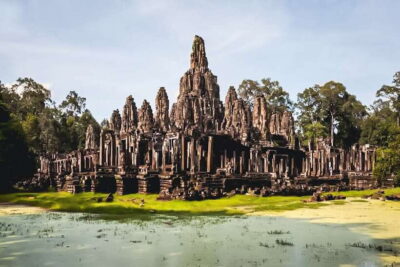
Angkor Wat Sunrise and Full-Day Sightseeing Tour
Read our review →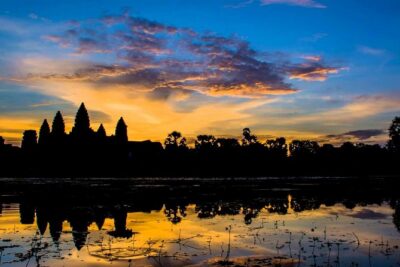
Full Day Angkor Wat Temple Experience with Sunset
Read our review →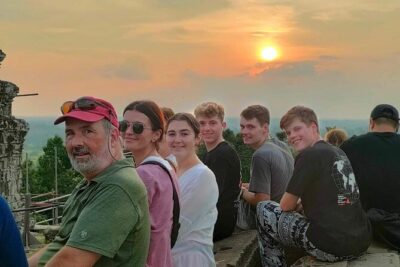
Angkor Wat full Day ‘Small Group with sunset & Tour Guide
Read our review →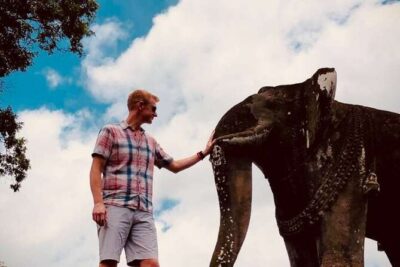
Full-Day Banteay Srei & 4 Temples – Grand Tours Join-in Tour
Read our review →