Review · PRIVATE
Siem Reap: Private Tour of Angkor Complex
Angkor can feel like time travel. This private full-day tour knits together the big sights, starting in Angkor Thom with Bayon’s famous stone faces, then moving to Ta Prohm before you tackle Angkor Wat.
I really like that you get a true private setup, with hotel pickup and an English-speaking guide and driver, not a rushed cattle-car day. The one real drawback is that it is an 8-hour schedule, so if you want long photo breaks at every stop, you may feel a little pressed.
In This Review
- Key things that make this Angkor tour work
- Private hotel pickup, air-conditioning, and why it matters at Angkor
- Angkor Thom through the South Gate: start where the city still has a heartbeat
- Bayon, Baphuon, and the Royal Enclosure: temple-to-temple context
- The Terrace of the Elephants and Terrace of the Leper King
- Ta Prohm: the “jungle temple” stop that changes the mood
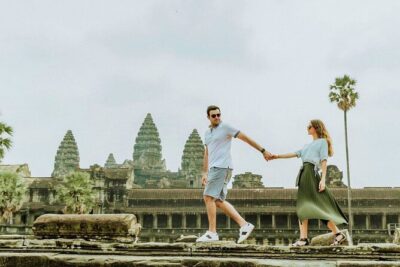
- Angkor Wat in the afternoon: the big finished masterpiece on the plain
- Temple Pass and the real value math of this $65 tour
- What the 8-hour pace feels like, and how to get the most out of it
- Who should book this Angkor private tour
- Should you book it?
- FAQ
- What is included in the Siem Reap private Angkor tour?
- How long is the tour?
- Do I have to pay for the Temple Pass?
- What temples are visited during the day?
- Is lunch included?
- Is the guide and tour language English?
- Can I cancel or pay later?
Key things that make this Angkor tour work
- Hotel pickup and drop-off in Siem Reap city plus an air-conditioned vehicle keeps the day comfortable
- Angkor Thom first, through the South Gate with Bayon and the Royal Enclosure highlights
- Bayon’s massive carved faces give you a strong, easy-to-read start to the Khmer story
- Terrace stops in the middle of the route including the Terrace of the Leper King
- Ta Prohm’s jungle feel that has stayed relatively untouched since it was discovered
- Cost clarity: the $65 tour price is simple, but the Temple Pass is extra at $37 per person
Private hotel pickup, air-conditioning, and why it matters at Angkor
Angkor is spread out, and the “getting there” part is real. What I like about this tour is the straightforward rhythm: you are picked up from your hotel in Siem Reap city, ride in an air-conditioned car or minivan, and then hop between temple areas with short travel windows. Over a full day, that matters because you spend less time negotiating tuk-tuks and more time looking at stone.
Your guide is English-speaking, and the tour includes the practical comforts that keep a long temple day from turning into a sweaty endurance test. You get drinking water, fresh coconut juice, and a cool towel. It is a small list, but on a hot day in the Cambodian lowlands, it is the difference between feeling okay and feeling done.
Because this is private, you also get flexibility in pacing. Not total free-for-all, but you can move with a little more breathing room than a larger group day. If you hate feeling shoved along, that alone makes a private tour feel like better value.
A few more Siem Reap trips to compare
- Full-Day Angkor Wat Sunrise Private Tour with Guide from Siem Reap
★ 5.0 · 2,920 reviews - Siem Reap: Angkor Wat Private Tuk-Tuk Tour
★ 4.9 · 2,222 reviews - Angkor Wat Private Day Tour from Siem Reap
★ 5.0 · 834 reviews
Angkor Thom through the South Gate: start where the city still has a heartbeat
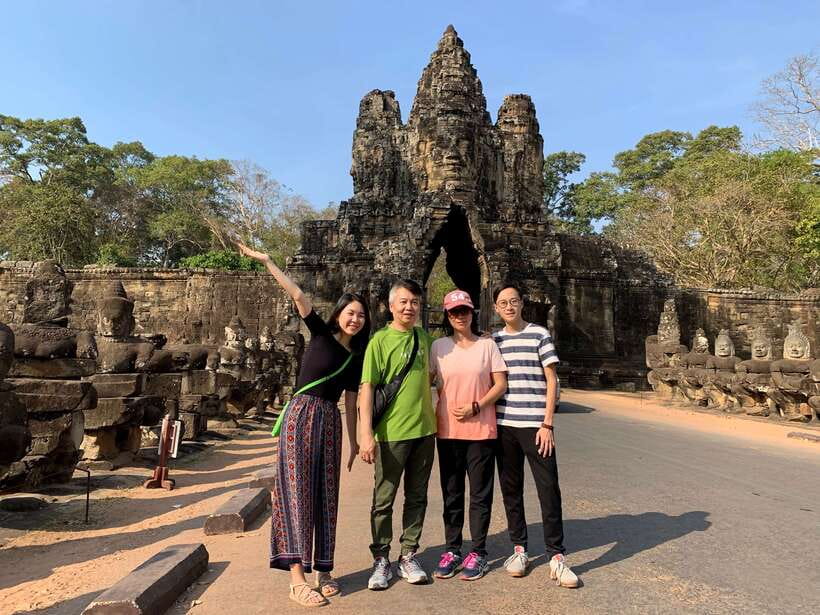
The day begins at the ancient capital area of Angkor Thom, entered through the South Gate. This first move is smart. Bayon and the surrounding structures land harder when you understand you are stepping into a royal city layout, not just wandering from one monument to the next.
Once you are in, the route centers on Bayon Temple. Bayon is where you see the massive carved faces that have become a signature image of Angkor. The faces are not just decoration. Standing near them, you get a sense of how Khmer builders designed for attention and viewpoint, so your eyes keep returning to the same focal points as you walk.
From Bayon, the tour continues to Baphuon, plus stops like the Royal Enclosure and Phimeanakas. These areas help fill in the sense of court life. You start to see how temple architecture acted like a statement of power, belief, and organization across the Khmer Empire. Built over centuries, the site reflects the long arc from the 9th through the 15th centuries, before Angkor was mysteriously abandoned around 1430.
One practical note: early in the day, you are likely to feel the walking more because you are still warming up. Wear comfortable shoes and plan for stairs and uneven stone surfaces. You will thank yourself later at the bigger temple complexes.
Bayon, Baphuon, and the Royal Enclosure: temple-to-temple context
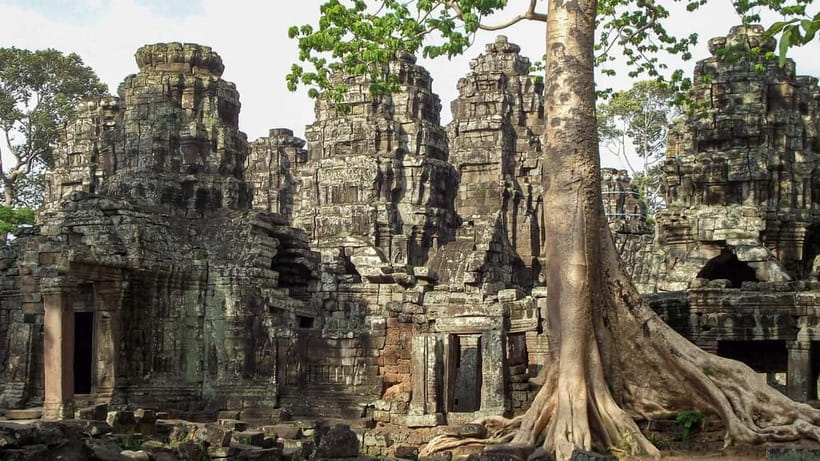
This tour does not treat Angkor like a checklist. It strings temples together in a way that helps you connect the dots.
After Bayon, the shift to Baphuon and the Royal Enclosure helps you move from iconic faces to broader ideas, like sacred geography and elite precincts. Phimeanakas adds another layer of the “royal center” feeling. Even if you are not a hardcore architecture nerd, this kind of order helps you get your bearings fast and then enjoy the details without constantly asking, Where am I?
Also, the guide’s job here is not just pointing. A good Angkor guide translates what you see into understandable context. From what I’ve gathered about how this tour runs, the storytelling is a strong point, with clear explanations about Cambodia’s past and what the temples meant to the people who built them.
The Terrace of the Elephants and Terrace of the Leper King
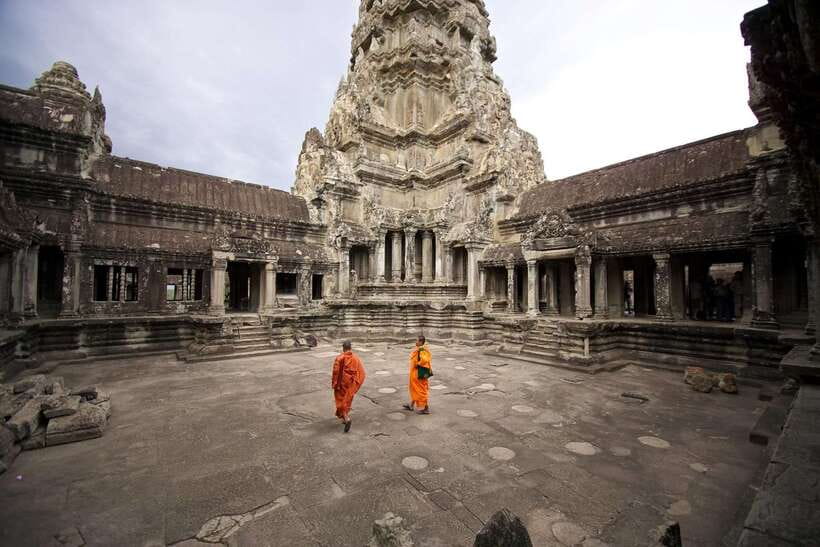
Midday at Angkor is when many people start craving shade and motivation. This route uses that time well by grouping two of the most memorable terrace stops: the Terrace of the Elephants and the Terrace of the Leper King.
Terraces at Angkor are not casual viewpoints. They are carved stages, made to be seen in a specific way. The Terrace of the Elephants brings you close to the sense of procession and ceremony. It is also a good break from the tallest, most face-forward carvings, because you can slow down and look more steadily at patterns and scenes.
Then comes the Terrace of the Leper King. It is called enigmatic for a reason. Even without digging into legends ahead of time, the structure and carvings feel like a puzzle: why this arrangement, why this theme, and how it fits the wider temple language of Angkor Thom. This is a stop where a guide can make a big difference, because you can watch your own understanding click into place as you connect symbols to setting.
Practical tip: terraces can be crowded at peak times. If you want space to study carvings, move slowly, take your photos, then step aside and let another moment happen before you continue.
A different kind of day in Cambodia:
- Angkor Wat Sunrise or Sunset Tour with Guide from Siem Reap
★ 5.0 · 12,109 reviews - Siem Reap: Angkor Wat: Small-Group Sunrise or Sunset Tour
★ 5.0 · 9,444 reviews - From Siem Reap: Kampong Phluk Floating Village Tour by Boat
★ 4.9 · 6,979 reviews - Sunset tour of Kampong Phluk stilts home village on the Tonle Sap
★ 5.0 · 4,865 reviews
Ta Prohm: the “jungle temple” stop that changes the mood
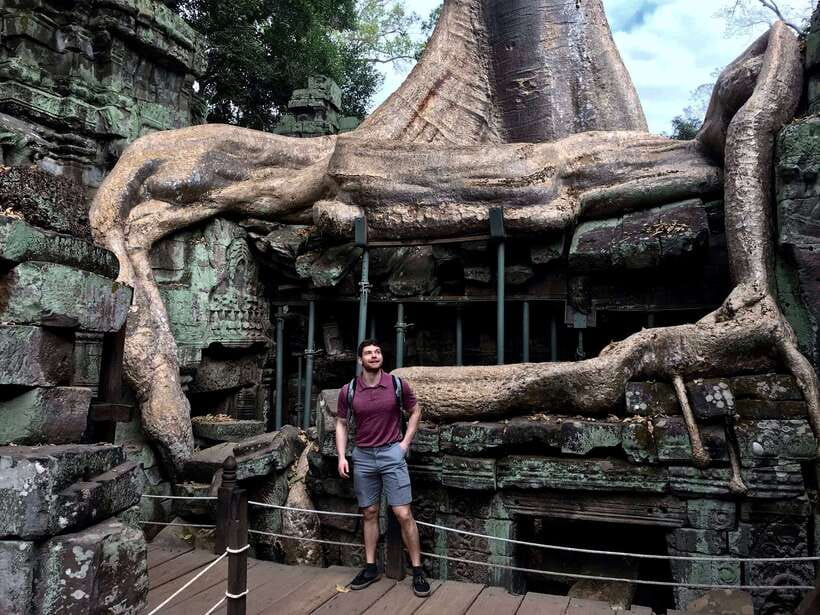
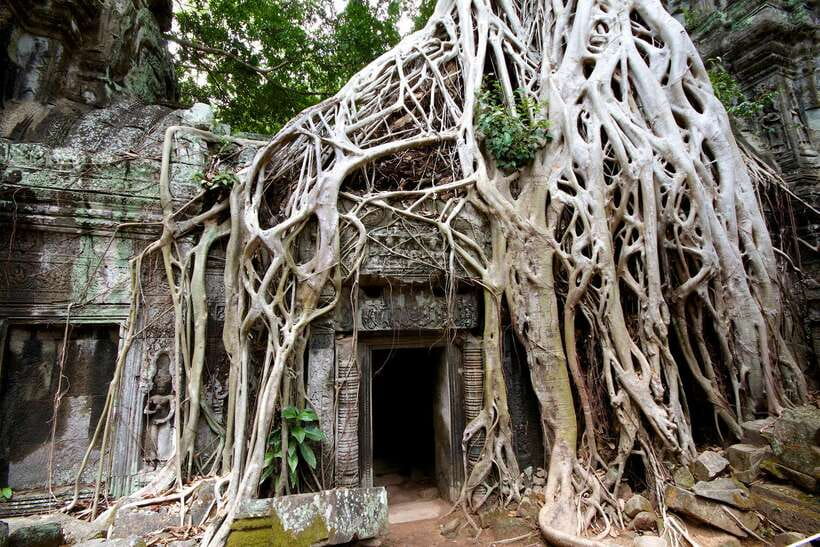
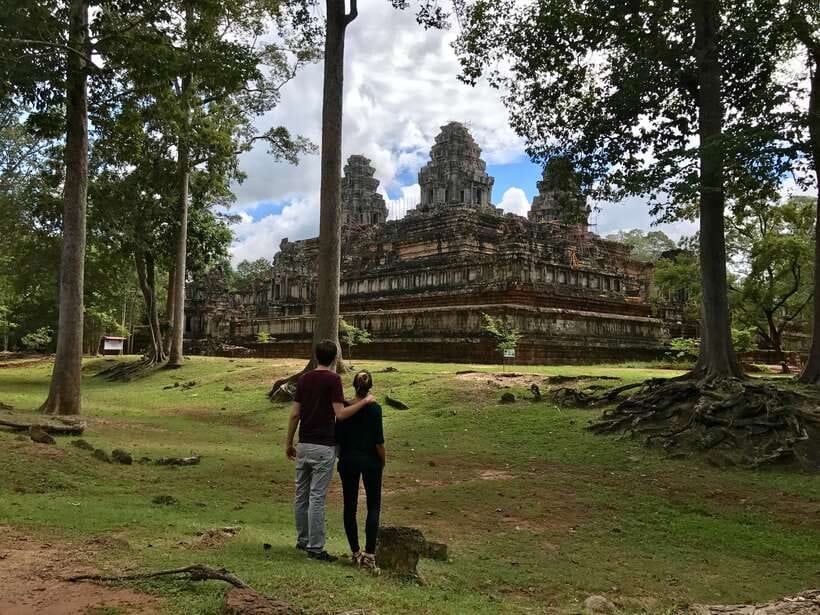
After the Angkor Thom complex, the tour heads to Ta Prohm, often described as a lost jungle city feel. Here, Angkor shifts from royal enclosure to something more natural and haunting.
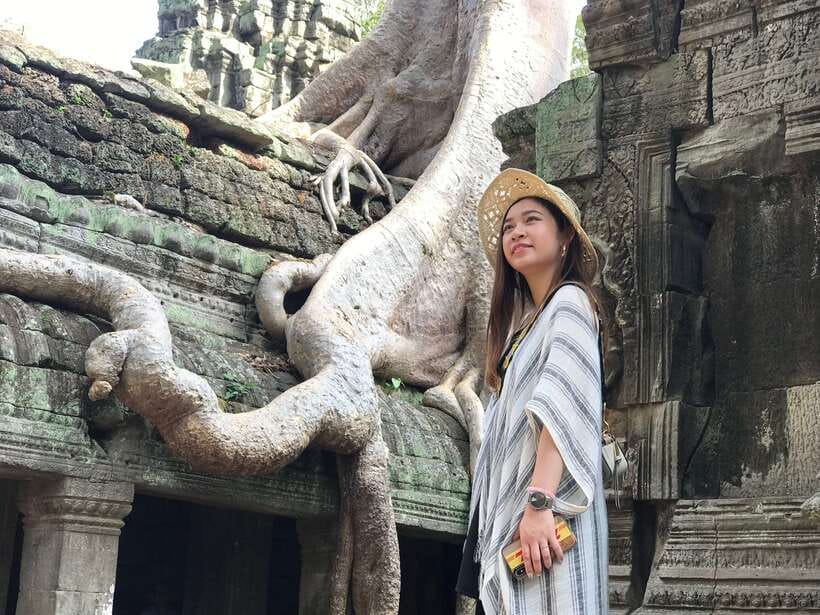
Ta Prohm is the temple that many people picture when they imagine vines and trees interacting with stone. What makes it special on this route is that it has stayed relatively untouched since it was discovered. That matters because it lets you see Angkor as a living ruin, not just a restored monument cleaned of its weathered character.
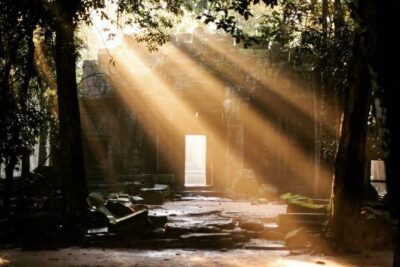
Walking through Ta Prohm, you notice how light moves between roots and branches. The place can look different depending on the angle of the sun and the height you are standing. It is a temple where the “scene” is not only carved. It is carved stone plus forest pressure, and that combination changes your attention.
There is also a pacing benefit. The day has already built up intensity with Bayon and royal precinct structures. Ta Prohm resets your senses, making the afternoon feel less like repeat sightseeing and more like another chapter.
If you are sensitive to heat or insects, this is one stop to plan for. You do not need to fear it, just treat it like outdoor time as much as temple time.
Angkor Wat in the afternoon: the big finished masterpiece on the plain
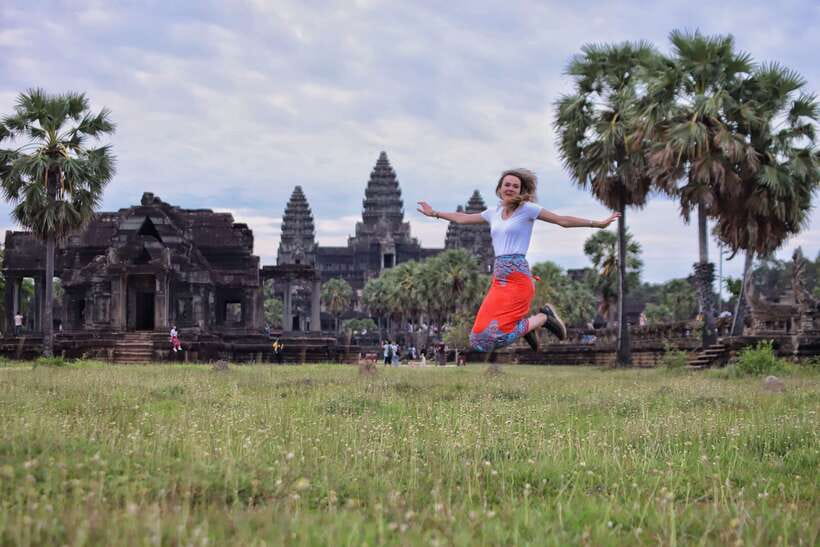
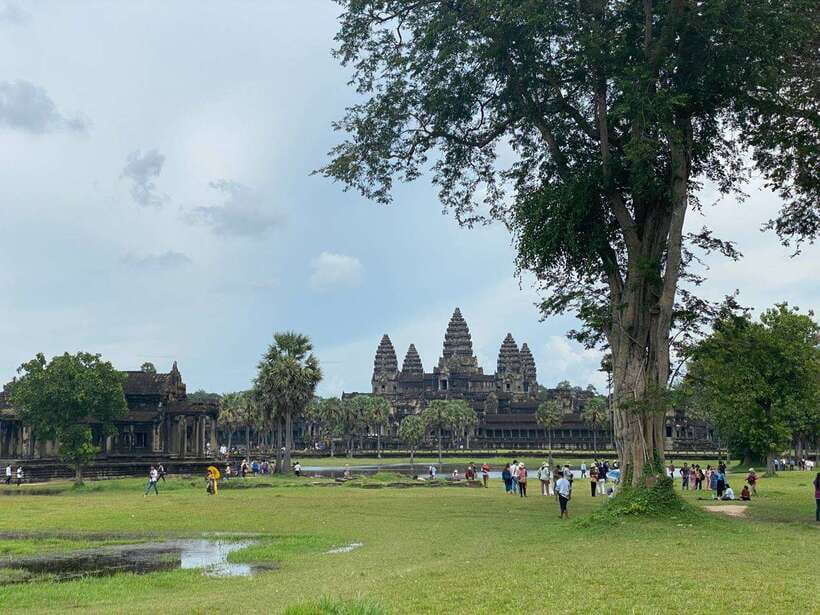
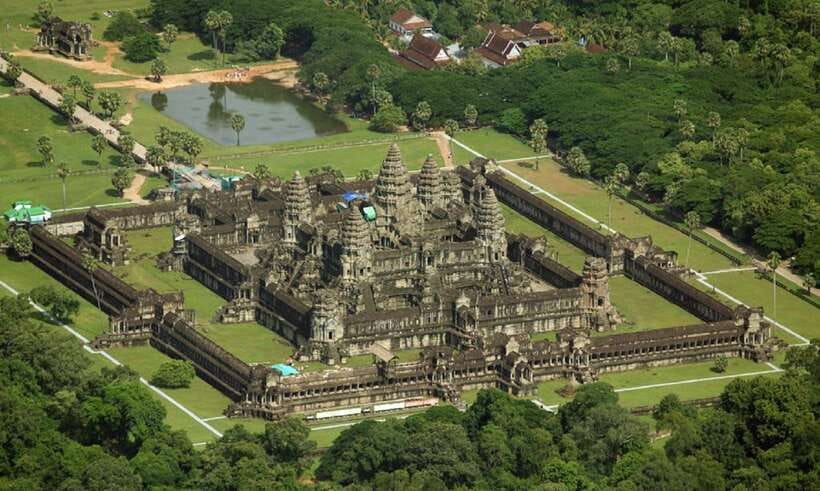
After lunch time, the tour heads to Angkor Wat, the most famous temple on the plain of Angkor. This timing is useful because Angkor Wat tends to be the emotional finish line of a full-day Angkor visit. You start with the city, you walk through the jungle ruin, and then you reach the grand, symmetrical centerpiece.
Angkor Wat is massive, covering 81 hectares. The tour also frames it as comparable in size to the Imperial Palace in Beijing, which helps you understand why it feels like a whole world rather than a single building. And it is not just size. The composition, balance, proportions, and sculptural detail are described as among the finest monuments ever constructed, and you can feel that once you start moving through the complex.
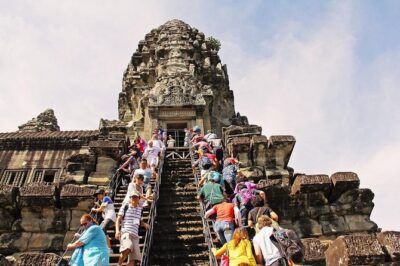
Here’s what you should watch for: Angkor Wat rewards observation in layers. From a distance, it is geometry and presence. Up close, it is the sculptural texture that pulls you in. When you visit after you’ve already spent time with Bayon and Ta Prohm, the experience lands better. You can compare how each temple “speaks” to visitors in a different way.
You may also find that Angkor Wat feels calmer than some of the face-heavy stops earlier in the day. Not quieter in crowds necessarily, but calmer in design. It is a structured feeling, almost architectural breathing room.
Temple Pass and the real value math of this $65 tour
The tour price is $65 per person, and that gets you the private guide and driver plus the transportation, water, coconut juice, and cool towel. You also get pickup and drop-off from your hotel in Siem Reap city.
The big line-item you must budget separately is the Temple Pass, which is $37 per person. So, in practical terms, your day’s core cost becomes about $102 per person, before any optional food or drinks. Lunch is not included, and neither are soft drinks or beer. Personal expenses are also extra.
Is it still good value? For me, it depends on what you’re optimizing for:
- If you value comfort and clean logistics, this private format plus A/C transfers is a strong trade.
- If you are traveling with friends and you would otherwise pay separately for a guide, this can feel efficient.
- If you are purely chasing the cheapest way in, paying the pass and then DIYing might be cheaper, but it is harder to get the same flow.
For most first-time Angkor visitors, the “value” is not just price. It is the way the day is organized so you can focus on the temples instead of the logistics.
Also, if you like flexibility, this activity offers free cancellation up to 24 hours in advance for a full refund, and it supports reserve now and pay later.
What the 8-hour pace feels like, and how to get the most out of it
This is a full-day tour that runs about 8 hours. That is a sweet spot for Angkor if you want the big names and you also want enough time to actually look.
Your itinerary flows like this:
- Start with hotel pickup in Siem Reap city
- Ride between temple zones in short car segments
- Explore Angkor Thom, then Bayon and other central structures
- Continue to terraces, including the Terrace of the Leper King
- Head to Ta Prohm in the middle stretch of the day
- After lunch, finish with Angkor Wat on the plain of Angkor
Because it is private, you are not stuck waiting as long for a whole bus to regroup. You still have a schedule, but it tends to feel like guided movement rather than constant rushing. That is the best kind of tight itinerary: you stay productive, not frantic.
For your own prep, I’d prioritize three things:
- Wear shoes you can walk in for hours on uneven ground
- Bring a hat or something for sun protection
- Plan your lunch decision, because food is not included
If you want maximal photo time at one or two temples, you can usually do that by being efficient at the others. Use the guide to decide where to slow down and where to keep moving.
Who should book this Angkor private tour
This is a great fit if you:
- Want a private, English-guided day with hotel pickup and drop-off
- Are visiting Angkor for the first time and want the major temples in one coherent route
- Prefer less stress and more comfort, especially with A/C transport and included water and coconut juice
- Like having context while you look, not just standing in front of stone with no explanation
It may not be ideal if you:
- Have a very specific plan to linger for long stretches at one monument
- Want a totally free schedule with no set route
- Are trying to keep costs as low as possible, since the Temple Pass is extra and lunch is on your own
Should you book it?
If this is your first serious Angkor visit, I think it is a smart choice. The $65 tour price buys real structure: private guide and driver, A/C transfers, and the essentials that help you make it through a long day. Then you add the Temple Pass to get into the main sites.
The route also makes sense. Angkor Thom sets up the Khmer capital story, Ta Prohm shifts the mood, and Angkor Wat lands as the day’s main payoff. If you want a day that feels organized and thoughtful, this private tour is one of the easier ways to do it.
If you already have your own guide or you love DIY museum-style wandering, you might skip this. But if you want the temples to connect in your mind as you walk, book it.
FAQ
What is included in the Siem Reap private Angkor tour?
The tour includes a fully vaccinated English-speaking tour guide and driver, air-conditioned vehicle transfer, hotel pickup and drop-off in Siem Reap city, drinking water, fresh coconut juice, and a cool towel.
How long is the tour?
The total duration is 8 hours.
Do I have to pay for the Temple Pass?
Yes. The Entrance fee Temple Pass is $37 per person, and it is not included in the tour price.
What temples are visited during the day?
You visit Angkor Thom (including Bayon and other key spots such as Baphuon Temple and the Royal Enclosure), Ta Prohm, and then Angkor Wat. The route also includes the Terrace of the Elephants and the Terrace of the Leper King.
Is lunch included?
No. Food and drinks like lunch and soft drinks or beer are not included.
Is the guide and tour language English?
Yes, the tour is guided in English.
Can I cancel or pay later?
Yes. There is free cancellation up to 24 hours in advance for a full refund, and you can reserve now and pay later.
Newly listed around Siem Reap
- Sambor Prei Kuk Off Beaten Track★ 5.0 · 3 reviews
- Siem Reap Airport Taxi Transfer – City Center Hotels★ 5.0 · 5 reviews
- Short Cycling at Countryside★ 5.0 · 29 reviews
- Unveiling the Mystical Beauty of Phnom Kulen National Park★ 5.0 · 6 reviews
- Angkor Wat at Sunrise★ 4.0 · 7 reviews
- Bakong Temples & Floating Village Tour★ 4.5 · 3 reviews
- Rooftop Romantic Dinner – 4 Courses Set Meal & Wine★ 3.5 · 5 reviews
- Khmer Cooking Class in Cambodia★ 5.0 · 36 reviews
Private, compared.
Full-Day Angkor Wat Sunrise Private Tour with Guide from Siem Reap
Read our review →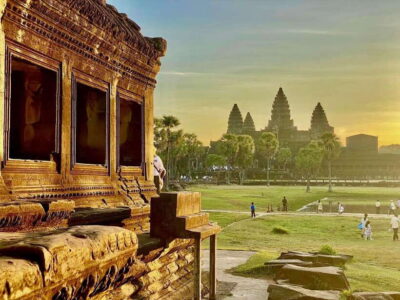
Phnom Penh Full Day Private Tour Included All Admission Tickets
Read our review →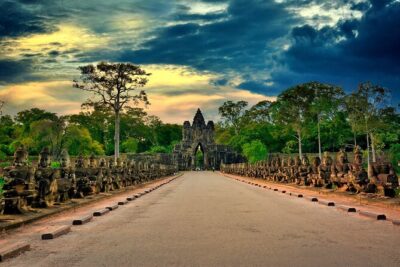
Angkor Wat Private Tuk-Tuk Tour (sunrise Option) & more
Read our review →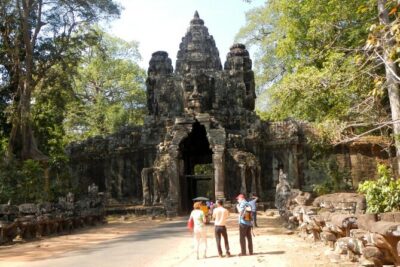
Angkor Sunrise Half-Day Tour with Private Vehicles & Tour Guide
Read our review →