Review · TOURS
Small Tour and Big Tour By Car
Angkor is huge, but this plan stays manageable. This 2-day by-car tour in Siem Reap strings together the big sights and a lot of variety, with an English-speaking guide and strong timing for both morning and evening light.
I especially like the sunrise Angkor Wat focus and the comfort perks like an air-conditioned vehicle with Wi-Fi and water. The result feels efficient, without turning temples into a blur.
One thing to consider: the temple pass is not included, and the best photo moments mean early hours plus a mountain climb. If you’re not into long days, you may want a slower option.
In This Review
- Key things to know before you go
- The big idea: small-tour pacing with a big Angkor payoff
- Getting to Angkor: car comfort and a guide who keeps it understandable
- Day 1 morning at Angkor Wat: sunrise energy and classic Khmer geometry
- What to watch for
- Ta Prohm after the crowds: trees, ruins, and storybook chaos
- A small drawback
- Ta Keo and Banteay Kdei: when “plain” becomes powerful
- Why this pairing works
- Srah Srang, Kravan, and Phimeanakas: the royal-side stops people skip
- Practical advice
- Sunset at Phnom Bakheng: the climb, the view, and the reason tourists care
- What to consider
- Angkor Thom centerpiece time: Bayon plus the quieter corners
- Why these stops feel different
- Day 2: Neak Pean to Preah Khan, the route gets more atmospheric
- Then comes Preah Khan: a big complex that feels more real
- Banteay Samre and Ta Som: restored beauty and softer forms
- Value and money sense: how $22 works, and what you must plan for
- The practical stuff that makes or breaks the experience
- Should you book this two-day Angkor car tour?
Key things to know before you go
- Sunrise at Angkor Wat starts around 4:45am, so you’ll see the temple in calmer morning light
- Phnom Bakheng for sunset includes a mountain viewpoint, with a very “don’t miss this” payoff
- Big and small temples together so you get contrast, not just the same architecture again and again
- Comfort built in with an air-conditioned car, Wi-Fi onboard, and one bottle of water per person
- Private-group feel so you can move as a group, not get shuffled through crowds
- Temple pass planning matters since admission is listed as not included
The big idea: small-tour pacing with a big Angkor payoff
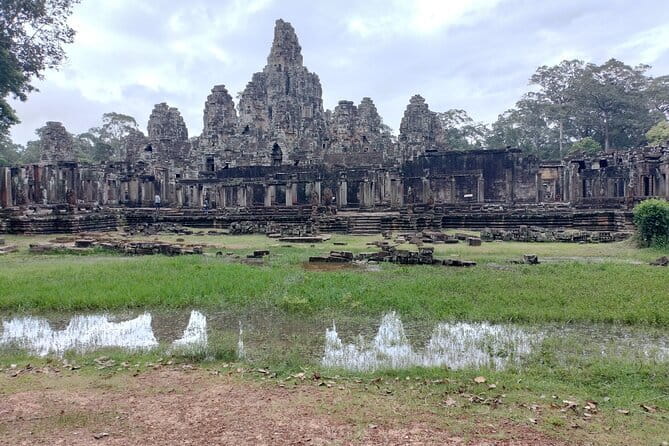
Angkor can swallow your whole vacation if you let it. What I like about this 2-day setup is that it treats Angkor like a route, not an endless list. You’ll bounce between temple styles, positions in the landscape, and different religious layers, which is where the area gets really interesting.
You’re also not just chasing landmarks. The tour is built around two moments that change how Angkor feels: sunrise at Angkor Wat and sunset from Phnom Bakheng (often described as Ba Kheng Mountain). Those are long days, yes, but they’re also the times when the temples stop feeling like a checklist and start feeling like places with atmosphere.
The car helps too. You’ll spend most of your day on a proper itinerary structure, which matters in Angkor because the spacing between sites adds up quickly. On hot afternoons, that air-conditioning can feel like a luxury, not a convenience.
Others in Siem Reap worth putting side by side:
- Angkor Wat Sunrise or Sunset Tour with Guide from Siem Reap
★ 5.0 · 12,109 reviews - Siem Reap: Angkor Wat: Small-Group Sunrise or Sunset Tour
★ 5.0 · 9,444 reviews - From Siem Reap: Kampong Phluk Floating Village Tour by Boat
★ 4.9 · 6,979 reviews
Getting to Angkor: car comfort and a guide who keeps it understandable
This is a car-based tour with an English-speaking guide, plus a dedicated vehicle for your group. That means less time negotiating, fewer logistical headaches, and more time actually looking at carvings, layout, and how the temples connect to the larger Angkor Thom and Angkor Wat areas.
Two comfort details are genuinely helpful:
- Wi-Fi onboard means you can plan photos, check timing, or just keep your maps straight without burning your data
- One bottle of water per person helps during early starts and late returns, when you forget to stock up
There’s also a mobile ticket element mentioned in the tour features, so you should be ready to use it smoothly if your guide shares instructions on arrival.
One practical note: the meeting info lists a start from Siem Reap Airport at around 8:00am, but the experience description also talks about sunrise departures around 4:45am and a mountain viewpoint timing around 5pm. That tells me the exact pickup timing depends on which day and which moment you’re targeting. When you book, confirm the day-by-day schedule so you’re not surprised by the early departure for sunrise.
Day 1 morning at Angkor Wat: sunrise energy and classic Khmer geometry
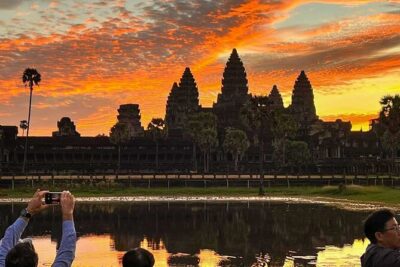
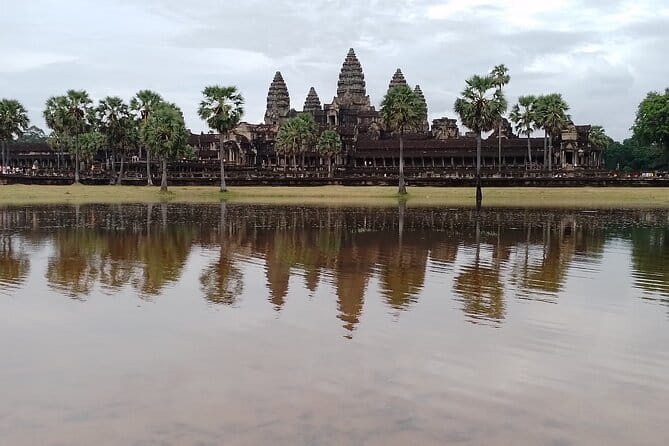
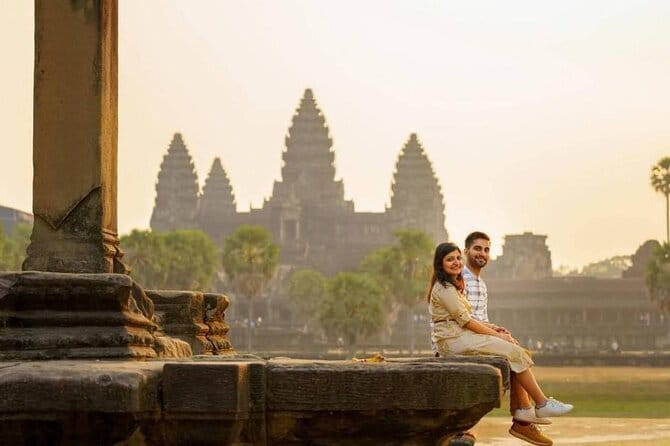
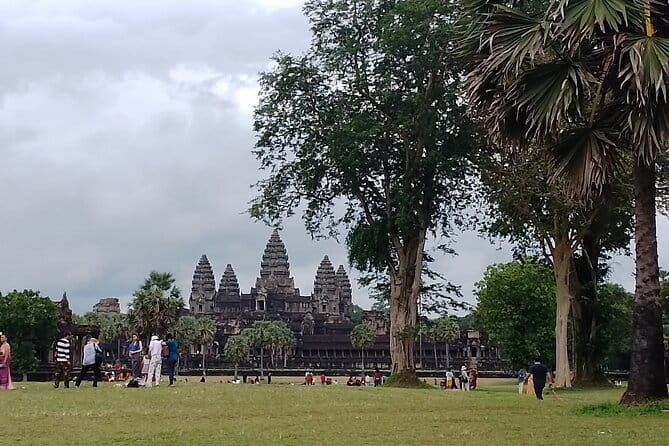
Angkor Wat is the headline for a reason. Your day starts with Angkor Wat for sunrise, with the tour description saying around 4:45am. Even if you’ve seen photos before, sunrise changes the scale. The light is softer, the courtyards feel quieter, and the temple’s high classical design reads more clearly.
Expect about 1 hour 10 minutes at Angkor Wat. That’s enough time to:
- orient yourself inside the temple grounds
- walk a couple of key viewing paths
- take photos without feeling like you’re constantly sprinting
Why sunrise here matters: the temple is built with a specific sense of order and symmetry, and morning light makes those carved surfaces and long sightlines easier to appreciate. Crowds also tend to behave differently early on, so you can focus on details instead of fighting for a camera angle.
What to watch for
Angkor Wat involves heat management. It’s a big stone complex, and once the sun climbs, it’s not exactly shady. Wear something breathable, and bring a small layer if you get chilly in the pre-dawn air.
A different kind of day in Cambodia:
- Sunset tour of Kampong Phluk stilts home village on the Tonle Sap
★ 5.0 · 4,865 reviews - Siem Reap: Angkor Wat 2-Day Tour with Sunrise and Sunset
★ 4.9 · 4,429 reviews - Siem Reap: Kampong Phluk Floating Village Tour with Boat
★ 4.9 · 3,843 reviews - Siem Reap: Full-Day Angkor Wat Guided Tour with Sunset
★ 4.9 · 3,803 reviews
Ta Prohm after the crowds: trees, ruins, and storybook chaos
After the sunrise focus, you shift into Ta Prohm for about 45 minutes. Ta Prohm is described as a Bayon style temple, and it’s famous for a very particular look: ruins fused with large trees and jungle surroundings. It’s often one of the easiest temples to “read” visually because the setting does half the interpretation work for you.
What makes Ta Prohm special is that it’s been left in a way that preserves the atmospheric look. That means you see the temple as a lived-in ruin, not a freshly restored monument. The photo results can look unreal, but it’s also one of the best places to slow down and observe how the temple stones frame the surrounding vegetation.
A small drawback
Ta Prohm can feel visually crowded since the whole scene has motion, roots, and shade patterns. If you prefer pure open geometry over dense jungle texture, you might want to balance your photo time with a little walking to the calmer corners.
Ta Keo and Banteay Kdei: when “plain” becomes powerful
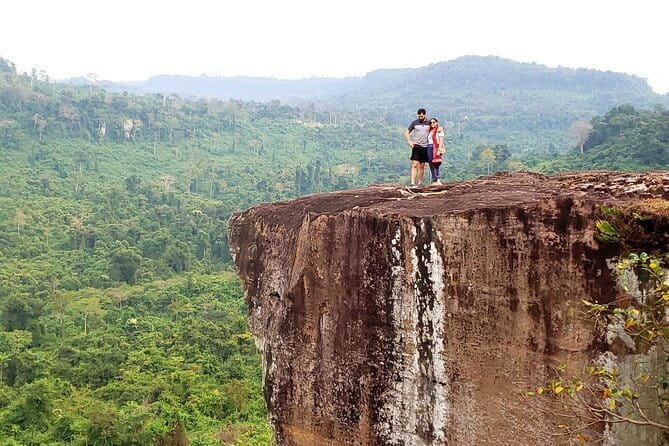
Next comes Ta Keo, about 20 minutes. It’s a temple-mountain dedicated to Shiva and is known for being the first to be constructed wholly of sandstone. That detail matters because sandstone gives different visual weight than laterite or mixed materials. From certain angles, Ta Keo feels taller than you expect, even without extreme ornamentation.
Then you move to Banteay Kdei for around 30 minutes. This is described as a Buddhist temple built in the Bayon style during Jayavarman VII’s reign. It’s also presented with an air of mystery since a key inscription stone has never been found. Even without scholarly background, that “unfinished clue” feeling adds tension to the visit.
Why this pairing works
Ta Keo and Banteay Kdei break the pattern of temples that look similar. You’re not repeating one story. You’re seeing how Khmer builders used style, material, and religion differently across nearby space.
Srah Srang, Kravan, and Phimeanakas: the royal-side stops people skip
Srah Srang, about 15 minutes, is called the Royal Bath. The description adds that it may have been a chapel to Kama, the God of Love. Whether you take that religious framing literally or just use it as context for your imagination, it’s still a good moment to step away from heavy crowds and stone towers.
Then you’ll get Prasat Kravan (about 20 minutes), built under King Harshavarman I, dedicated to Hinduism. It’s a smaller stop, but the value is contrast. Not everything in Angkor is a massive central stage.
After that is Phimeanakas, around 30 minutes. It’s described as a former royal palace, with a laterite and sandstone pyramid. Even if the carvings you see are limited, Phimeanakas is the tallest scalable temple in Angkor Thom. That’s a big deal because climbing it gives you a different perspective on the layout.
Practical advice
If you’re climbing, plan for uneven steps and sun exposure. Bring shoes with grip and keep your pace steady. The viewpoint is the payoff, not the speed.
Sunset at Phnom Bakheng: the climb, the view, and the reason tourists care
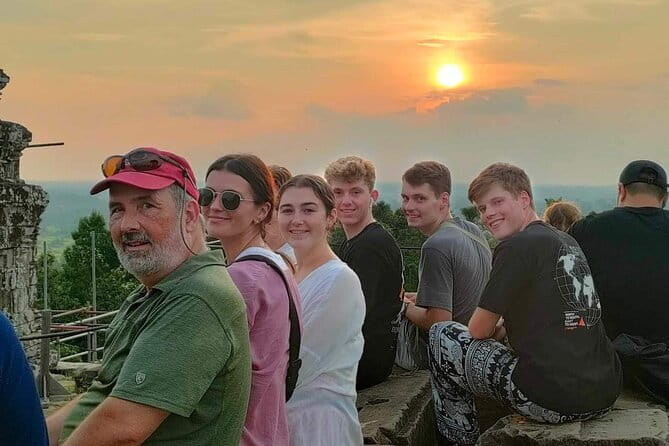
This is the moment most visitors remember. The tour describes Phnom Bakheng as a top sunset spot, connected with Ba Kheng Mountain. It’s originally a Hindu temple dedicated to Shiva, constructed more than two centuries before Angkor Wat, and it’s said to have been a principal temple in its heyday.
You’ll spend about 1 hour here. That time usually gives you a mix of:
- arriving before peak light
- walking up and taking in the viewpoint
- exploring the temple space at golden hour
The description also notes that the top includes an additional temple, which matters because you’re not only climbing for a view, you’re also reaching a specific sacred spot.
What to consider
Sunset timing means you’re on a schedule. If you hate crowds, you may not love the “everyone thinks this is the best spot” energy. Still, the view is the point, and Phnom Bakheng delivers it.
Angkor Thom centerpiece time: Bayon plus the quieter corners
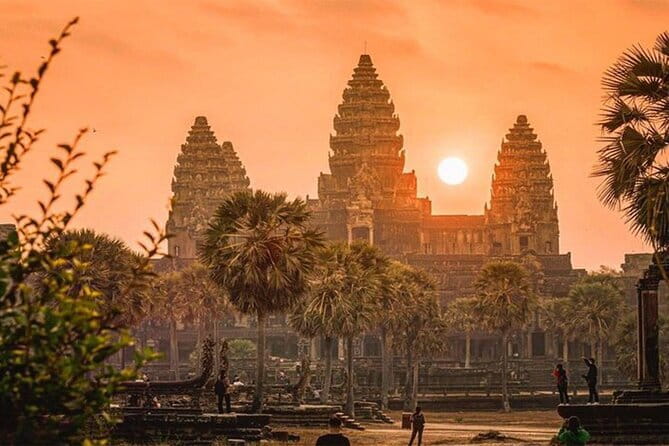
After the mountain, your day includes Angkor Thom highlights, starting with Bayon Temple for about 40 minutes. Bayon is richly decorated and is linked to the late 12th and early 13th century. It’s also positioned as the state temple of Jayavarman’s capital, and it’s described as primarily a Mahayana Buddhist shrine.
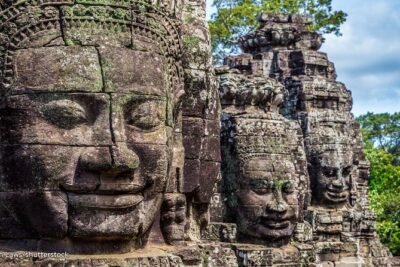
That matters because Bayon isn’t only architecture. It’s the way it communicates through its design. The faces and the dense ornamentation create a temple that feels like it’s watching you back.
Then you’ll head to Chau Say Tevoda for about 20 minutes. It’s described as a small temple similar in design to Thommanon across the street, but historically seen as a neglected sister. Chau Say Tevoda is described as in good condition, with Angkor Wat style easily seen in its towers and carved devatas.
Why these stops feel different
Bayon is intense and central. Chau Say Tevoda is a breather. That mix keeps the day from feeling like you’re trapped in one kind of stone aesthetic.
Day 2: Neak Pean to Preah Khan, the route gets more atmospheric
Day two leans more into Angkor’s “in-between” temples, the ones that feel less like a theme park and more like places you’d stumble into if you lived nearby.
You start with Neak Pean for around 1 hour 20 minutes. Neak Pean is described as a small island temple sitting in the middle of a baray (a reservoir), with a lotus or cross-style layout of eight pools. The old name Rajasri and the modern meaning, coiled serpents, connect the site to nagas around the temple.
That timing matters too. The longer stop suggests you’re meant to take your time with the water setting and the temple’s geometric layout, instead of just taking one quick photo and moving on.
Then comes Preah Khan: a big complex that feels more real
Next is Preah Khan for about 40 minutes. It’s built on the site of Jayavarman VII’s victory in 1191. The description notes the scale in its heyday: an organization with close to 100,000 officials and servants. That’s a mind-bending way to see the temple. It’s not only stone. It’s tied to an administrative and spiritual system.
Preah Khan is described as largely unrestored, with trees and vegetation growing among the ruins. That means you’ll see more of the in-between textures, the half-light, and the stone that looks weathered rather than polished.
Banteay Samre and Ta Som: restored beauty and softer forms
Banteay Samre takes around 30 minutes. It’s described as large and comparatively flat, with Angkor Wat-style architecture. The temple underwent extensive restoration using the anastylosis method, so you get a sense of careful rebuilding rather than complete reconstruction. It’s a nice change of pace if you want something that reads clearer and more structured.
Then Ta Som for about 20 minutes gives you a shorter, less intense stop. It’s described as the grandfather of the temple name, which is a fun reminder that many of these places have linguistic and architectural roots, not just modern tour branding.
Value and money sense: how $22 works, and what you must plan for
The price is listed as $22.00 per person for about 2 days. At first glance, it sounds almost too low for a two-day car tour with an English-speaking guide and a pile of major temples. The value is mostly in what’s included.
Included items:
- all fees and taxes
- air-conditioned vehicle
- private transportation
- Wi-Fi on board
- one bottle of water each person and flexible
- mobile ticket
What’s not included:
- temple pass
- your own expense meals
So how do you judge value? You’re basically paying for the logistics and the guided flow. Since temple admission is separate, your real all-in budget depends on your temple pass cost. If you already know how much you’ll spend on the pass, then $22 starts to make sense as a strong bargain for two full days of movement and interpretation.
Also, note the “small tour and big tour” wording. Even if you end up visiting a lot of stops, the car plan keeps it organized. The key value is not that you see the most temples possible. It’s that you see a lot of distinct ones with enough time in each place to notice differences.
The practical stuff that makes or breaks the experience
This tour is designed for most travelers, but Angkor is still physically real. You’ll spend time outdoors across two days. You can expect:
- early starts for sunrise
- sun exposure during midday temple time
- a mountain climb at sunset (Phnom Bakheng)
The best way to handle it is simple: wear supportive shoes, bring sun protection, and plan hydration. Even with included water, you’ll likely want more than one bottle if it’s hot.
One more practical point is how coordination works at the start. The meeting info says Siem Reap Airport with a start time listed as 8:00am. Because sunrise is discussed at around 4:45am in the description, ask your provider to confirm the exact pickup time for each day when you book. That one question saves stress later.
Should you book this two-day Angkor car tour?
If you want a structured, car-based Angkor plan that hits the big moments and still gives you variety, this is a strong match. I’d especially recommend it if you like:
- sunrise photography and calmer morning energy at Angkor Wat
- ending the day at a viewpoint like Phnom Bakheng
- having an English guide to connect sites to stories like Jayavarman VII’s capital, and Shiva-linked temples like Phimeanakas and Phnom Bakheng
Skip it or consider another option if you:
- hate early mornings
- don’t want to climb for sunset viewpoints
- don’t want to deal with temple pass budgeting
Bottom line: for $22, with an air-conditioned vehicle, Wi-Fi, water, and an English-speaking guide, this is a sensible way to cover a lot of Angkor without turning it into a frantic sprint. Just factor in the temple pass and be ready for early and late days.
Newly listed around Siem Reap
- Twilight Tastes of Siem Reap Include Dinner★ 5.0 · 13 reviews
- Ultimate Sunrise to Angkor Wat, Angkor Thom and Bayon Temple★ 5.0 · 3 reviews
- Trekking Tour at Phnom Kulen National Park from Siem Reap★ 5.0 · 3 reviews
- Angkor 2-Day Sunset & Sunrise Small-Group Tour★ 4.5 · 6 reviews
- 2-Day Siem Reap Angkor Bicycle Experience★ 5.0 · 7 reviews
- Unique Private Day Tours To Kompong Khleang Village & Tonle Sap Lake★ 5.0 · 5 reviews
- 6-hour Angkor Sunrise & Private Tour (Solo, Couple & Family )★ 5.0 · 5 reviews
- Professional Photo Shoot in Angkor Archaeological Park, Siem Reap★ 5.0 · 42 reviews
Tours, compared.
Angkor Wat Sunrise or Sunset Tour with Guide from Siem Reap
Read our review →
Angkor Wat: Small-Group Sunrise or Sunset Tour
Read our review →
Sunset tour of Kampong Phluk stilts home village on the Tonle Sap
Read our review →
Angkor Wat 2-Day Tour with Sunrise and Sunset
Read our review →
Kampong Phluk Floating Village Tour with Boat
Read our review →