
Review · ANGKOR WAT TOURS
Two Day Angkor Temples Tours
Angkor feels less overwhelming with a plan. This two-day Siem Reap tour threads together big hits like Angkor Wat and Ta Prohm, plus quieter temple stops on Day 1. I like the way the route is built for real variety, moving from pink-stone carvings to sprawling city ruins.
One thing I really appreciate is the guide focus. People mention guides who handle both the temple history and the living faith context behind Hinduism and Buddhism, and they also help with photo spots and practical timing pivots when needed.
The main downside to weigh is that admission tickets are not included at the temples, so you need to budget for that on top of the tour price. Also, the Day 1 schedule is packed with several sites, so comfortable walking matters.
In This Review
- Key things to know before you go
- Why a two-day Angkor circuit beats trying to wing it
- Price and logistics: what $102.57 covers, and what it doesn’t
- Meeting point, pickup, and how the tour actually flows
- Day 1 Temple Highlights: Banteay Srei to Pre Rup
- Banteay Srei: the pink-stone jewel feel
- Banteay Samre: Hindu Vishnu temple with solid preservation
- Preah Khan: Sacred Sword and the maze corridors
- Neak Pean: a Buddhist island temple in the water reservoir
- Ta Som: a satellite stop that pays off for gate details
- Eastern Mebon: a temple that used to be an island
- Pre Rup: temple-mountain form by Rajendravarman II
- Day 2 Main Icons: Angkor Wat, Angkor Thom, and Ta Prohm
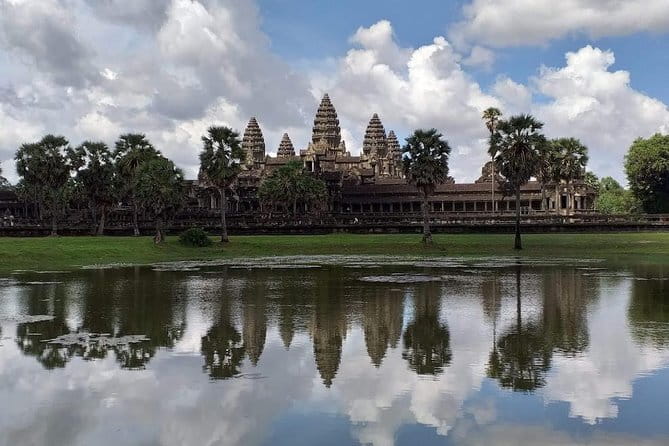
- Angkor Wat: largest monument, built for Vishnu
- Phnom Bakheng: quick hit on the early temple-mountain idea
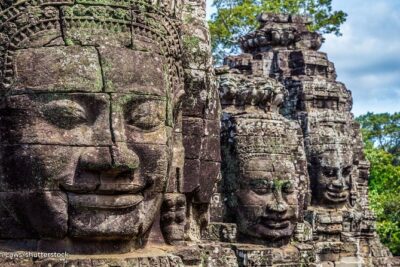
- Angkor Thom: the last Angkor city around the Bayon
- Ta Prohm: the ruin with the tree feel
- The guides: where the best value really shows up
- Weather, time in the field, and how to plan your two days
- Who should book this Angkor temples tour
- Should you book this tour?
- FAQ
- What is the duration of the Two Day Angkor Temples Tours?
- How much does the tour cost per person?
- Is pickup included?
- What transportation is included?
- Are admission tickets included for the temples?
- Where do I meet the tour?
- Is this a private tour or a group tour?
- What happens if the weather is bad?
- How does cancellation work?
Key things to know before you go
- Private group only: you ride together, not with random strangers added to the mix.
- Air-conditioned vehicle included: helpful in Siem Reap heat between temple stops.
- Admission tickets not included: plan for entry fees separately at each stop.
- Big Angkor hits plus lesser-seen ruins: you get both famous and overlooked temples.
- Guide-led history and photography help: expect explanations plus photo guidance for your device.
- Good weather matters: the tour requires decent conditions to run as scheduled.
Why a two-day Angkor circuit beats trying to wing it
Angkor can feel like a theme park until someone connects the dots. This kind of two-day route is designed to do that: you see temples from multiple reigns and styles, without having to figure out what to prioritize hour by hour. Even when you land on a famous site, you still get the context that makes the carvings easier to read.
What I like is the pacing logic across both days. Day 1 is heavy on the mid-sized and mid-distance temples, like Banteay Srei and Preah Khan, then Day 2 returns to the main showpieces: Angkor Wat, Angkor Thom, and Ta Prohm. That makes your second day feel like the payoff day, rather than one more long list of ruins.
This is also a tour where “flexible” means something. Reviews point to guides who respond to what your group wants, and even suggest route adjustments when your family latches onto a temple longer than expected. In practical terms, that can prevent the most common Angkor annoyance, feeling rushed even though you’re enjoying yourself.
More Angkor Wat tours in Siem Reap:
- Angkor Wat Sunrise or Sunset Tour with Guide from Siem Reap
★ 5.0 · 12,109 reviews - Siem Reap: Angkor Wat: Small-Group Sunrise or Sunset Tour
★ 5.0 · 9,444 reviews - Siem Reap: Angkor Wat 2-Day Tour with Sunrise and Sunset
★ 4.9 · 4,429 reviews
Price and logistics: what $102.57 covers, and what it doesn’t
The listed price is $102.57 per person for a tour lasting about 2 days. You’re also told it’s booked around 28 days in advance on average, which is a hint that dates can fill up in busy seasons.
From what you get included, you’re paying for more than a car. Included is an air-conditioned vehicle, plus a guide service built around a private group experience. You’re also told pickup is offered, and the tour is marked as private, so it’s not a shared scramble.
Where your cost can rise is the part that is not included:
- Admission tickets are not included at the temple stops.
- GST is not included.
So the smart way to judge value is this: compare the “extra” costs you’ll pay anyway for entries, versus what you get for planning help, interpretation, and a smooth two-day route. For many visitors, paying a bit more for a good guide is cheaper than wasting half a day trying to understand what you’re looking at.
Meeting point, pickup, and how the tour actually flows
Your ticket redemption point is Angkor Enterprise, Apsara Rd, Krong Siem Reap, Cambodia. That matters because it’s the anchor point for where your day begins if you’re not being picked up directly.
The tour is described as a private tour/activity, meaning only your group participates. That usually translates into less waiting and more control over your schedule. Reviews also highlight guides who respond quickly to questions and adjust when your family’s interests shift.
You’ll also be in an included air-conditioned vehicle, which is a real comfort factor. Temple-hopping in Siem Reap is mostly outdoor time, so the rides between stops are your buffer. A guide who keeps that buffer running well makes the whole two days feel less exhausting.
One last practical note from the format: you should have moderate physical fitness. The tour is not labeled as wheelchair accessible, and it’s built around multiple temple walks and uneven ground typical of Angkor ruins.
Day 1 Temple Highlights: Banteay Srei to Pre Rup
Day 1 is where Angkor stops being a list and starts becoming a story. You’ll move through seven major stops, each with its own tone, from delicate stone art to broad temple-mountain forms.
A different kind of day in Cambodia:
- From Siem Reap: Kampong Phluk Floating Village Tour by Boat
★ 4.9 · 6,979 reviews - Sunset tour of Kampong Phluk stilts home village on the Tonle Sap
★ 5.0 · 4,865 reviews - Siem Reap: Kampong Phluk Floating Village Tour with Boat
★ 4.9 · 3,843 reviews - Siem Reap: Full-Day Angkor Wat Guided Tour with Sunset
★ 4.9 · 3,803 reviews
Banteay Srei: the pink-stone jewel feel
Banteay Srei is often treated like the artistic crown jewel, and this itinerary leans into that. It’s described as a 10th-century Hindu temple dedicated to Lord Shiva, built from pinkish-hued stone. You’ll likely spend about 1 hour here, which is a good length for taking your time with the carved details without burning your whole Day 1.
Practical expectation: this is a “look longer than you think you need to” temple. If you care about photography, Day 1 is a great time to ask your guide about photo angles, because the stone color and carving depth reward good framing.
Banteay Samre: Hindu Vishnu temple with solid preservation
Next is Banteay Samre, also dated to the same broad period as Angkor Wat, and linked to Suryavarman II. It’s a 12th-century temple dedicated to Lord Vishnu, and the description notes it’s in a fairly healthy state of preservation.
That preservation detail is helpful for your expectations. When a temple holds up well, you can spend less time guessing at what’s missing and more time interpreting what remains.
Preah Khan: Sacred Sword and the maze corridors
Then comes Preah Khan (the Sacred Sword), described as one of Angkor’s largest complexes. Expect maze-like vaulted corridors, fine carvings, and lichen-clad stonework, plus a note that it generally sees slightly fewer visitors than some of the biggest names.
This is a temple where fewer crowds can be a gift. You can slow down and let the corridor rhythm and wall carvings do their job.
Neak Pean: a Buddhist island temple in the water reservoir
Neak Pean (Intertwined snake) is a shorter stop at about 40 minutes, but it’s unique. It’s a Buddhist temple built by Jayavarman VII, and it sits on an artificial island in the middle of a manmade lake called Jayatataka, also referred to as the north Baray.
If you’re the kind of person who likes how Angkor mixes engineering and spirituality, this stop helps. You’re not just walking through carved stones, you’re seeing how the water system and the religious site connect.
Ta Som: a satellite stop that pays off for gate details
Ta Som is labeled a satellite temple of Preah Khan, also tied to Jayavarman VII in the late 12th century. The tour description calls it very small, but worth a quick look for the big head at the eastern gate.
This is one of those stops that works best when your guide points out what to notice quickly. In a packed day, that kind of guidance keeps the short stop from feeling like a checkbox.
Eastern Mebon: a temple that used to be an island
Eastern Mebon is another Hindu temple, erected by Rajendravarman II. The key detail here is that it would have been on an islet in the center of the Eastern Baray, though it’s now much more on dry land.
That change is a helpful reminder while you’re touring. Angkor’s water features were part of the original design, and today’s ground conditions can shift what you see. A guide can help you read what you’re looking at in a “then and now” way.
Pre Rup: temple-mountain form by Rajendravarman II
Day 1 closes with Pre Rup, built by Rajendravarman II in the 10th century. The description calls it a pyramid-shape temple-mountain with three tiers, including a stairway feel.
Why it’s a good landing spot: temple-mountain forms help you calibrate how Angkor’s religious architecture is structured. By the time you reach Day 2’s major sites, you’re seeing the “design logic” more clearly.
Day 2 Main Icons: Angkor Wat, Angkor Thom, and Ta Prohm
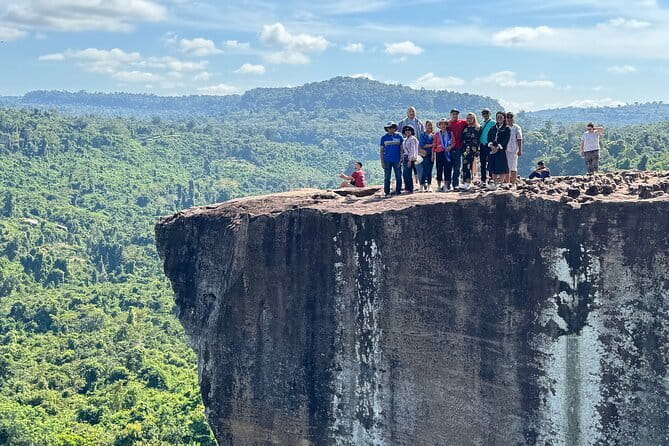
If Day 1 teaches you how to look, Day 2 is where Angkor looks back. This day is anchored by Angkor Wat, then expands into the last city at Angkor, Angkor Thom, and finishes with the most atmospheric ruin in the whole complex, Ta Prohm.
Angkor Wat: largest monument, built for Vishnu
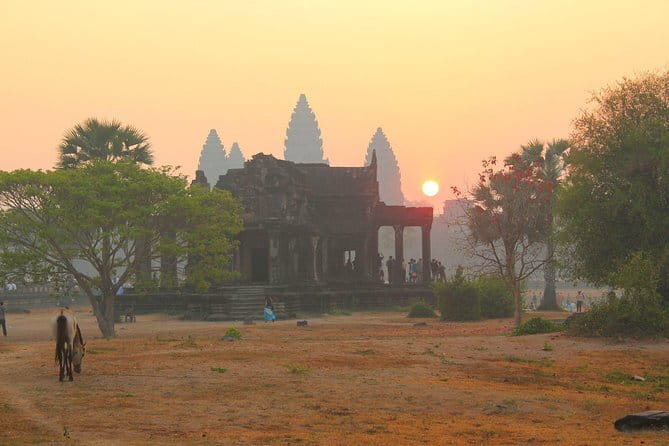
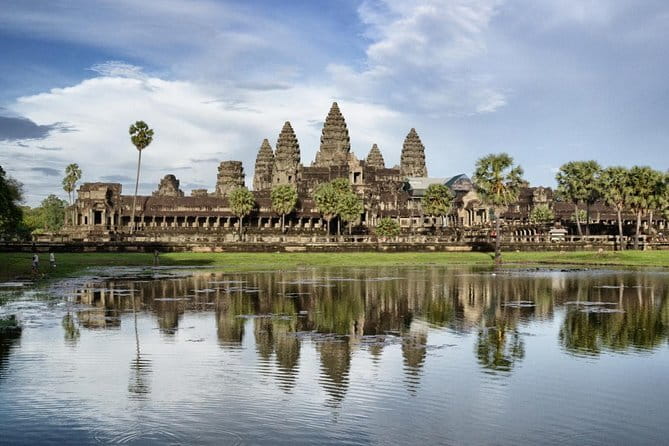
You’ll spend about 2 hours at Angkor Wat. It’s described as a 12th-century temple built by Suryavarman II to honor Lord Vishnu. The description calls it the largest and the most breathtaking of Angkor’s monuments.
In practical terms, Angkor Wat can be a sensory overload if you just wander. A good guide helps you understand what the temple is doing with axis lines, symbolism, and religious purpose, even if you only take in a portion of the site.
Phnom Bakheng: quick hit on the early temple-mountain idea
Next is Phnom Bakheng, built by Yasovarman I in the early 10th century. The tour description says it’s a claim to being home to the first temple-mountain concept in the area, with five tiers and seven leveled structure.
The timing here is very short in the itinerary format, roughly listed as 1 minute. You should treat this as a fast viewpoint or orientation moment rather than a deep exploration.
Angkor Thom: the last Angkor city around the Bayon
Angkor Thom is where you switch from single temples to an entire city layout. Built by Jayavarman VII as the last city of Angkor, it’s described as having once supported a population that could reach one million people in the surrounding region. The centerpiece is the Bayon.
You get about 2 hours here, which is enough to get a sense of scale. The city setting also helps you understand why Angkor wasn’t just religious buildings, it was a full system of people, power, and movement.
Ta Prohm: the ruin with the tree feel
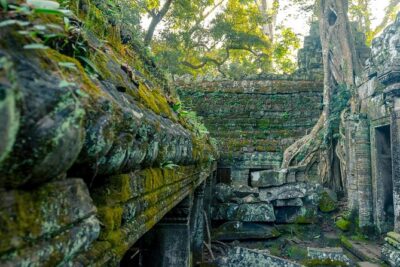
Finally, you reach Ta Prohm, described as one of the most atmospheric ruins at Angkor. The appeal is that it’s been swallowed by trees, and the ruin has a very particular visual mood compared to cleaner restored sites.
In many itineraries, Ta Prohm is rushed. Here, it’s allotted about 1 hour, which gives you time to slow down and notice how the carvings survive in the middle of the roots.
The guides: where the best value really shows up
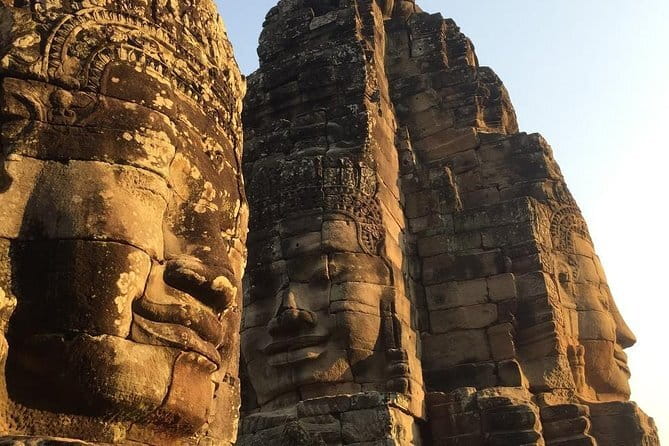
This tour’s biggest recurring theme in feedback is the guide quality, not just the temple list. Guides are described as honest, reliable, and flexible, and most importantly they listen to what your group wants.
You’ll see a pattern in the reviews: guides like Borey Hang, Mr Kim, Mr Bunleat, and Kimhoeun are praised for a mix of temple history plus the religious and cultural context behind what you’re seeing. That matters because Angkor isn’t only stone. It’s a living story of shifting belief systems, and the tour format is set up to explain that.
There’s also a practical photography angle. One review notes the guide helped with iPhone photography and photo spotting. Another calls out cold water supplied during the tour, plus a clean, modern car with great aircon. If you’re the type who brings a phone for photos and wants better results, this is the part of the experience you’ll feel immediately.
And flexibility shows up again in route behavior. One guide suggested a pivot when a group enjoyed Ta Prohm more than expected, which kept the experience from turning into a rushed performance.
Weather, time in the field, and how to plan your two days
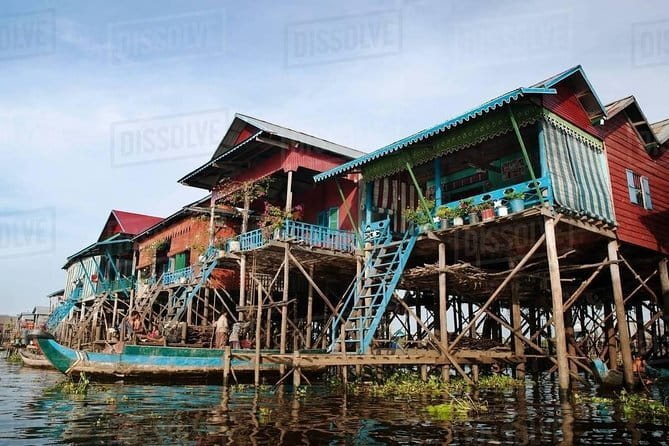
The experience requires good weather. If it’s canceled due to poor weather, you’re offered another date or a full refund. That’s a big deal at Angkor because cloudy or rainy conditions can reduce visibility and make ruins less pleasant to move around.
Timing in two days is always tight, and this itinerary leans into that. Day 1 includes many stops from Banteay Srei to Pre Rup, while Day 2 packs Angkor Wat, Phnom Bakheng, Angkor Thom, and Ta Prohm. The advantage of having a private guide is that you can slow down when a temple clicks for your group and still keep a working schedule.
Fitness-wise, you should have moderate physical fitness. That’s not a “never walk” tour. Plan for uneven surfaces and some stairs, and pace yourself so you still enjoy the later stops, especially Ta Prohm.
Who should book this Angkor temples tour
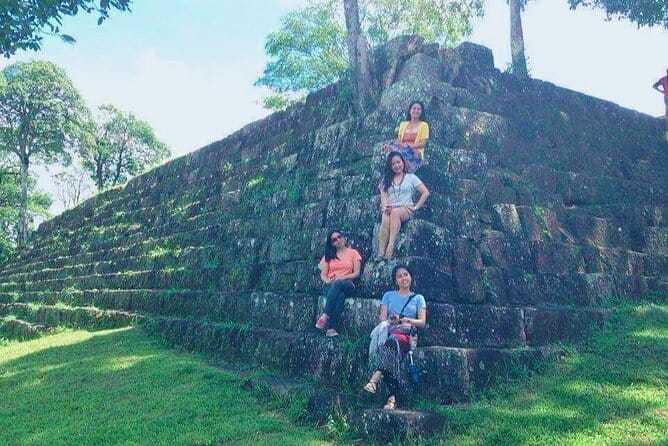
This tour is a strong fit if:
- You have a short stay in Siem Reap and want a meaningful two-day Angkor highlight route.
- You care about the “why” behind the carvings, not just what year a temple was built.
- You want a private group experience with an air-conditioned vehicle.
- You like photography and want help finding better viewing and photo angles.
It’s also a good match if you prefer structured guidance, but still want a bit of flexibility. Reviews call out responsiveness to questions and changing interests, which is ideal for families and mixed-age groups where attention spans vary.
If you’re someone who wants only the very top monument sites, this tour might feel like a lot of stops. But if you enjoy variety, the Day 1 circuit gives you a broader Angkor picture.
Should you book this tour?
I’d book this two-day Angkor temples tour if your goal is simple: see major temples and understand what you’re looking at, without spending your vacation figuring logistics. The combination of private guiding, air-conditioned transport, and a route that mixes famous names with strong secondary sites makes the value feel practical.
Skip it or rethink if you hate planning around extra costs, because temple admission tickets are not included. Also, if you want a slow, minimal schedule, this itinerary is busy. For most people, though, that busy feeling comes with a payoff: by Day 2, you’re ready for Angkor Wat and Ta Prohm in a way that feels meaningful, not frantic.
FAQ
What is the duration of the Two Day Angkor Temples Tours?
The tour runs for 2 days (approx.).
How much does the tour cost per person?
The listed price is $102.57 per person.
Is pickup included?
Yes, pickup is offered.
What transportation is included?
An air-conditioned vehicle is included.
Are admission tickets included for the temples?
No. Admission Ticket Not Included is stated for the temple stops.
Where do I meet the tour?
The ticket redemption point is Angkor Enterprise, Apsara Rd, Krong Siem Reap, Cambodia.
Is this a private tour or a group tour?
It’s a private tour/activity, meaning only your group will participate.
What happens if the weather is bad?
The experience requires good weather. If it’s canceled due to poor weather, you’ll be offered a different date or a full refund.
How does cancellation work?
It offers free cancellation, with a full refund if you cancel up to 24 hours in advance of the experience start time.
Newly listed around Siem Reap
- Siem Reap Airport Taxi Transfer – City Center Hotels★ 5.0 · 5 reviews
- Sambor Prei Kuk Off Beaten Track★ 5.0 · 3 reviews
- Short Cycling at Countryside★ 5.0 · 29 reviews
- Unveiling the Mystical Beauty of Phnom Kulen National Park★ 5.0 · 6 reviews
- Angkor Wat at Sunrise★ 4.0 · 7 reviews
- Bakong Temples & Floating Village Tour★ 4.5 · 3 reviews
- Rooftop Romantic Dinner – 4 Courses Set Meal & Wine★ 3.5 · 5 reviews
- Khmer Cooking Class in Cambodia★ 5.0 · 36 reviews
Angkor Wat Tours, compared.
Angkor Wat Sunrise or Sunset Tour with Guide from Siem Reap
Read our review →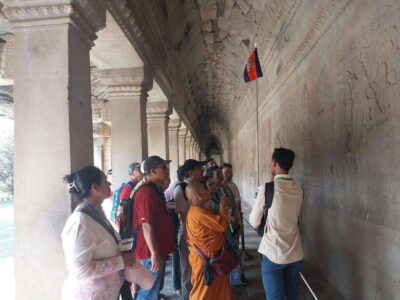
Angkor Wat: Small-Group Sunrise or Sunset Tour
Read our review →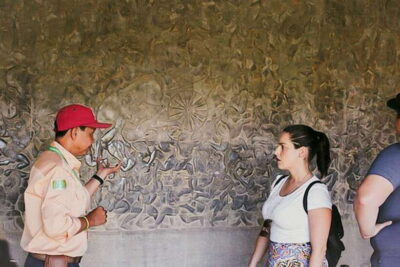
Angkor Wat 2-Day Tour with Sunrise and Sunset
Read our review →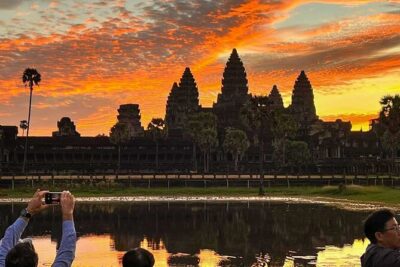
Angkor Wat Sunrise tour with Small – Group and Guide tours
Read our review →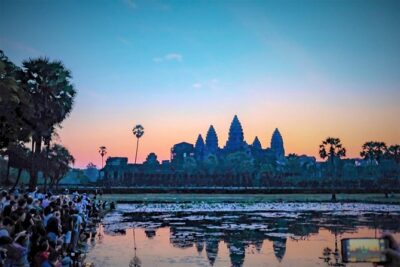
Angkor Wat Highlights and Sunrise Guided Tour from Siem Reap
Read our review →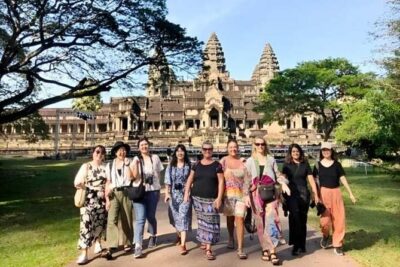
Angkor Wat Sunset Small Group Tour with Lunch Included
Read our review →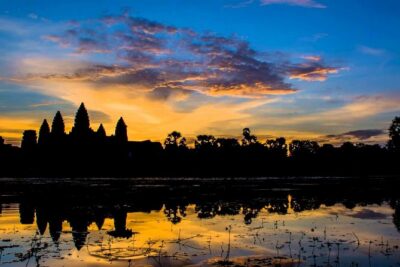
Full-Day Angkor Wat Sunrise Private Tour with Guide from Siem Reap
Read our review →Browse the lists this tour appears in