
Review · BENG MEALEA TOURS
Two Days Angkor Complex, Beng Mealea plus Kampong Phluk Village
Two days is the smart way to do Angkor. I like that this tour keeps a relaxed rhythm while still covering the major sights, and I especially value the hotel pickup plus a guide who explains the Khmer world in plain language. The potential downside is the temple entrance fees and the boat fee are not included, so your final cost depends on what you pay on site.
I also like the mix of famous temples with quieter ones, including off-the-beaten-path stops where the crowds thin out. The provider notes that some profits support local community work, and that theme shows up in how guides talk about the places and people around Siem Reap, including guides like Thom San and Sokkun.
In This Review
- Key Points at a Glance
- Angkor in Two Days, Not One
- The Comfort Details That Make Long Temple Days Easier
- Day One: Angkor Wat, Angkor Thom Gates, Bayon Faces, Ta Prohm
- Day Two: Pink Sandstone Carvings at Banteay Srei
- Beng Mealea: The Remote, Overgrown Side of Angkor
- Kompong Phluk on Tonle Sap: Stilts, Fishing Life, and Flooded Forests
- Guides Matter, and This Tour Pays Attention to That
- Price and What It Really Covers
- What to Pack and How to Avoid Common Friction
- Who This Tour Is Best For (And Who Might Want Something Else)
- Should You Book This Two-Day Angkor and Lake Tour?
- FAQ
- Are hotel pickup and drop-off included?
- Does the tour include temple entrance fees?
- Is the boat fee included for Kompong Phluk?
- What’s included with the tour besides the guide?
- What should I wear for temple visits?
- Is this tour private?
- Is there a cancellation refund available?
Key Points at a Glance
- Hotel pickup and drop-off means you start and end with less hassle in Siem Reap.
- Two-day pacing helps you see more without feeling like you’re speed-running history.
- Less-crowded temples like Beng Mealea and the small-circuit pairing give you breathing room.
- Strong English guides (Thom San, Sokkun) focus on meaning, not just pointing.
- Tonle Sap reality check at Kompong Phluk shows life on stilts, not just ancient stone.
- Costs to plan for: temple entrance fees, boat fee, and recommended tipping.
Angkor in Two Days, Not One
Angkor is big. Really big. If you try to cram the whole complex into a single day, you end up sprinting between viewpoints and losing the story behind the stone. I like the way this format gives you time to slow down, notice details, and take photos without feeling like you’re constantly late.
You’ll also get a smoother flow across the big and small circuits, so the visit feels more complete than a highlight-only day. On top of that, you’re not just staring at temples. Your guide helps you connect what you’re seeing to Khmer kings, changing beliefs, and the way Angkor was designed as a whole system.
The other win is mental. When your day is structured, you spend less energy figuring out what comes next. You just show up, walk in, and let the explanations land while the temples are still fresh in your head.
More Beng Mealea trips:
- Siem Reap: Kulen Mountain, Beng Mealea and Tonle Sap Tour
★ 5.0 · 1,483 reviews - Kulen Mountain with Beng Mealea and Tonle Sap Small Group Tour
★ 5.0 · 780 reviews - Koh Ker Temple Group & Beng Mealea Full-Day Join-in Tour
★ 5.0 · 710 reviews
The Comfort Details That Make Long Temple Days Easier
This tour includes an air-conditioned vehicle, drinking water, and cold towels. That sounds small until you hit the heat and humidity around midday. Having water ready, instead of hunting for bottles in Siem Reap, makes your stops feel less stressful.
Hotel pickup and drop-off also matters more than it sounds. Angkor days can start early, and they can end late. With pickup arranged, you don’t have to coordinate rickety timing with a driver you just met.
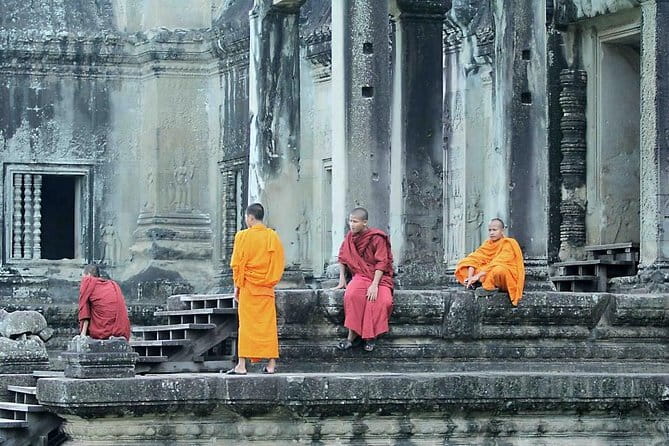
You should still plan for real walking. Comfortable shoes are a must. Also, the tour operates with the expectation that you’ll follow temple dress rules, covering knees and shoulders before entering.
Day One: Angkor Wat, Angkor Thom Gates, Bayon Faces, Ta Prohm
Day 1 hits the Angkor “greatest hits,” but it’s paced so you’re not only chasing the next photo. The anchor stop is Angkor Wat, and you start with one of the most iconic sights in Southeast Asia for a reason.
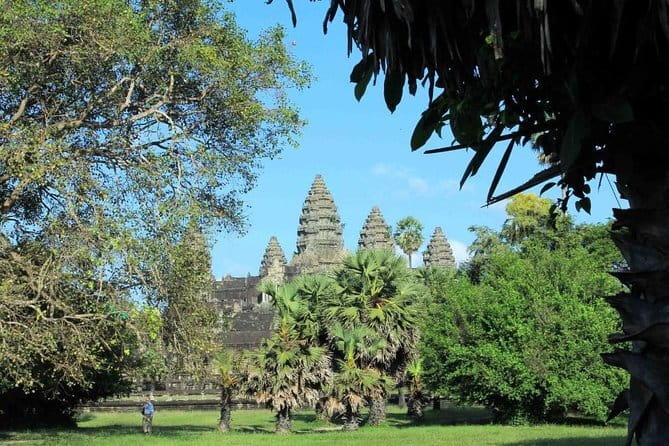
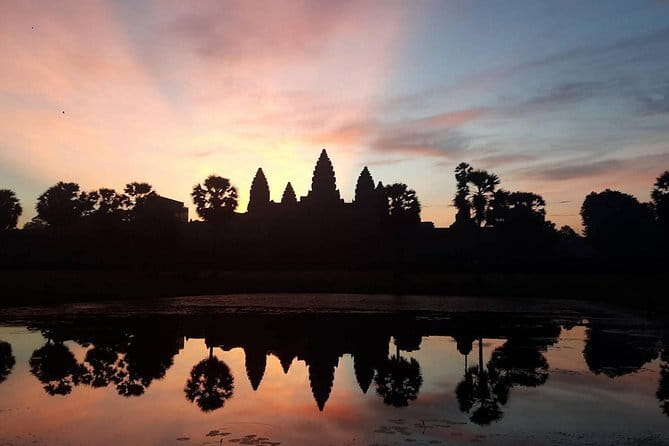
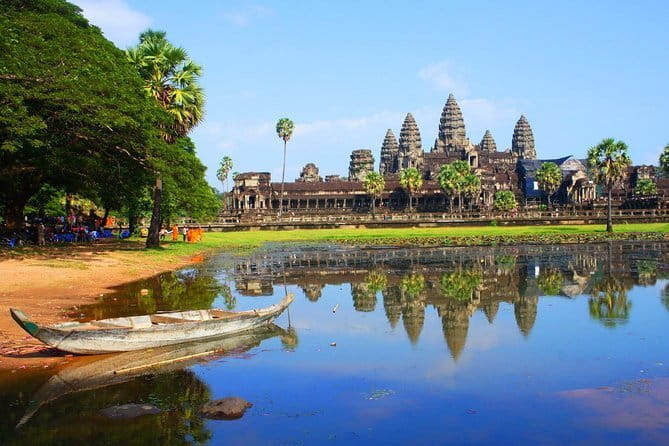
At Angkor Wat, you’ll see five towers rising about 65 meters, tied to the early 12th-century reign of King Suryavarman II. The temple’s original name is noted as Parama Visnuloka, and it also shows up in the Cambodian flag as a national symbol. If you like symbolism, this is a satisfying start, because the building is both religious and political in how it’s designed.
From there, you move into Angkor Thom, beginning at the South Gate. This gate is also called Tonle Oum, and it’s part of a city concept with five gates. The names you may hear include the ghost or gate of the dead, victory gate, dei chhnang gate (often referenced as the north gate), and the killing gate, plus the south gate. Angkor Thom itself is described as being about three kilometers on each side, which helps you picture the scale of the walled capital.
Next comes Bayon Temple, the late 12th-century Buddhist temple associated with King Jayavarman VII. The “face towers” are the draw: you’ll see multiple towers with faces, described as 212 faces and 53 towers. The guide portion is key here. Without context, it’s easy to treat the faces like a photo backdrop. With context, you start noticing repetition, symmetry, and the way the temple feels like it’s watching you from every direction.
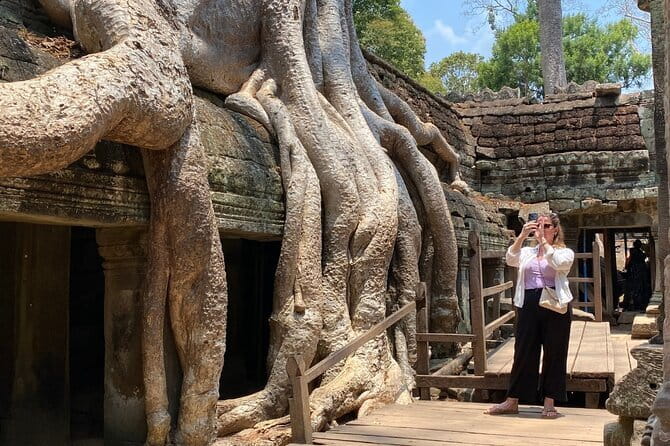
Finally, you finish Day 1 at Ta Prohm, the jungle temple people connect to the Tomb Raider movie (from 2004). You’ll hear it described as a place associated with arts and dance, including the idea of teaching girls to dance as Apsara. Beyond the movie connection, what you’ll enjoy is the way the roots and stone create a dramatic contrast. It’s less about perfectly staged views and more about a “nature reclaimed it” feeling that’s very Angkor.
Potential drawback on Day 1: this is still the busiest temple cluster. Even with smart timing, expect more people than on the remote stops later. If you hate crowds, don’t plan to spend forever inside every nook. Use your time to watch the guide lead you to the most meaningful angles, then take your photos and move on.
Day Two: Pink Sandstone Carvings at Banteay Srei
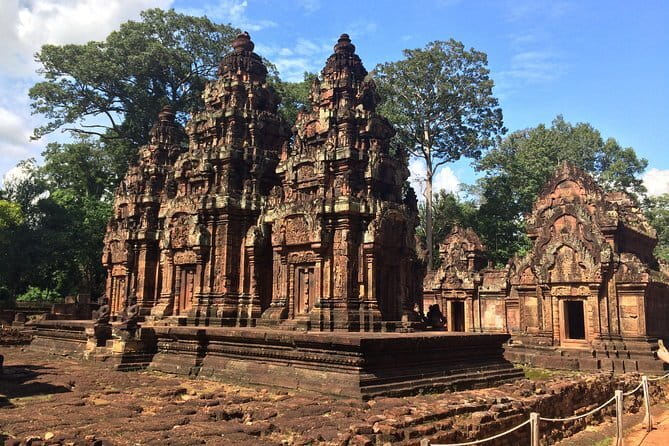
Day 2 starts with Banteay Srei, known for its pink sandstone and detailed carvings. This is one of those temples where the beauty is not only “what it looks like,” but also how it’s carved. You’ll be told it was built in the 10th century, and that the carving quality here is so strong it’s sometimes compared to even Angkor Wat.
You should also expect the travel time. The drive is described as about 50 minutes to 1 hour. That’s normal for the region, but it matters when you’re deciding what to pack in your day. If you’re prone to getting sleepy on rides, bring a little energy snack and hydrate early.
The walking style is different from Angkor Wat. Rather than huge broad areas where you can roam in every direction, you’ll likely get closer to specific carved sections. This makes it a great follow-up to Day 1, because your brain is no longer overwhelmed by scale. Instead, you can appreciate craftsmanship.
If you love architecture and detail, Banteay Srei is your “slow down and look” moment.
More floating village trips in Siem Reap:
- From Siem Reap: Kampong Phluk Floating Village Tour by Boat
★ 4.9 · 6,979 reviews - Sunset tour of Kampong Phluk stilts home village on the Tonle Sap
★ 5.0 · 4,865 reviews - Siem Reap: Kampong Phluk Floating Village Tour with Boat
★ 4.9 · 3,843 reviews - Siem Reap Floating Village Kampong Phluk Sunset with Boat
★ 5.0 · 1,962 reviews
Beng Mealea: The Remote, Overgrown Side of Angkor
After Banteay Srei, you head to Prasat Beng Mealea, a temple complex that feels more wild than curated. It was built in the 12th century during Suryavarman II’s reign and dedicated to the Hindu god Vishnu. It’s made of sandstone and is enclosed by a moat, with three concentric enclosures, each surrounded by a gallery. The central sanctuary is described as being in ruins, while other structures remain relatively well-preserved.
Here’s why I think Beng Mealea is a highlight for many people: it’s not as crowded. The reason is practical. It’s farther from Siem Reap and the trip is harder. That distance creates a different atmosphere. You get a more “explorer” feeling, and it’s easier to hear yourself think.
You’ll also notice the temple’s overgrown state. Instead of being fully polished for tourism, it feels like time has done its work. That can be amazing for photos, but it’s also a reminder to keep your expectations realistic. You’re visiting ruins, not a perfectly restored monument.
What to watch for: uneven ground and a more rugged walking environment. Wear shoes you trust on dirt and rocks. And if you’re doing a lot of photos, remember that dust and heat can build fast. Stop often, rest when needed, and let your guide help you find safe, worthwhile angles.
Kompong Phluk on Tonle Sap: Stilts, Fishing Life, and Flooded Forests
The tour finishes with Kompong Phluk Village, a floating community on Tonle Sap Lake. It’s about 16 kilometers (10 miles) southeast of Siem Reap, and the village is home to around 3,700 people. The houses are built on stilts above the water, so the setting changes with the seasons.
What makes this stop more than a quick photo stop is that it teaches you how daily life works here. The village is described as being based on fishing and agriculture. Once you arrive, you can explore on foot or by boat, depending on conditions, and you may see floating schools, local markets, and flooded forests.
Your best timing depends on what you want. During wet season (June to October), water levels rise and the village becomes more accessible. In other months, you can still visit, but the lake’s rhythm changes what you’ll see.
Also consider costs. The tour notes that a boat fee is not included. So if you want to do the water side of the experience, plan extra money for that part.
This stop is a good balance to Angkor. After days of stone temples, you switch to living culture and natural water cycles. It’s the kind of contrast that makes the whole two days feel like a real slice of Cambodia, not just a museum run.
Guides Matter, and This Tour Pays Attention to That
The biggest difference between a good Angkor day and a great one is the guide. In particular, people praise guides like Thom San and Sokkun for focusing beyond checklists. Instead of just pointing out what to look at, they help explain Khmer history and spiritual ideas in a way that feels tied to what you’re standing in front of.
That guidance is especially useful at Bayon and Ta Prohm, where the “wow” is obvious, but the meaning takes a little help. Thom San is specifically praised for staying attentive and keeping people focused on context, not distractions. Sokkun is also described as leading a memorable experience where each temple’s unique feel comes through.
If you care about understanding why these temples were built, or why kings and beliefs shifted over time, this is the part you’ll feel most during the walk.
Price and What It Really Covers
The stated price is $153.79 per person for about two days. For many visitors, that range feels like a fair deal because you get hotel pickup and drop-off, an air-conditioned vehicle, drinking water, cold towels, and a local English-speaking guide.
But you also need to budget for the add-ons:
- Temple entrance fees are not included and are available at the temple.
- Tipping for guide and driver is recommended.
- Boat fee for the lake area is not included.
- Travel insurance is not included.
So the best way to judge value is this: you pay for transport, guidance, and comfort, and you pay for admissions separately. If you’re the type who wants to rely on someone else for navigation and pacing, you’re getting your money’s worth. If you’re trying to keep a very strict budget, the “not included” items can change the math.
Also, the tour is described as private for your group, with some group discount structure. That means you get the benefit of shared logistics without being lost in a huge crowd, at least in theory.
What to Pack and How to Avoid Common Friction
You don’t need much, but you do need the right basics.
Bring:
- Comfortable walking shoes (Angkor ground can be uneven, Beng Mealea is rugged)
- A light layer for mornings or evenings, since conditions can shift
- Something to protect from sun and heat, even if you’re in an AC vehicle between stops
Wear:
- Clothes that let you cover knees and shoulders before entering temples
Leave:
- Valuables behind when possible. The tour advises not to bring valuables.
Practical tip: plan to move slowly inside temples. If you rush, you’ll miss the guide’s explanations and you’ll also feel more tired when you reach the next stop.
Who This Tour Is Best For (And Who Might Want Something Else)
This tour is ideal if you’re:
- A first-time Angkor visitor who wants a structured introduction
- Someone who prefers a two-day pace over a one-day sprint
- Interested in temples beyond Angkor Wat, especially off-the-beaten areas like Beng Mealea
- Curious about everyday life around Siem Reap through Kompong Phluk
It might be less ideal if you:
- Want only the most famous, most restored highlights and hate ruins. Beng Mealea is meaningful, but it’s not polished.
- Have a tight budget, because entrances and boat fee add to the final total.
- Expect guaranteed near-empty temples. Day 1 includes major sites, which naturally have more people.
Should You Book This Two-Day Angkor and Lake Tour?
I’d book it if you want Angkor with breathing room. Two days lets you experience the site as more than a photo list. You’ll get the right mix of large-circuit icons and quieter temple energy, plus a strong cultural contrast at Kompong Phluk.
I’d pause and check your budget if you don’t want to manage extra costs like temple entrance fees and the boat fee. And if you dislike walking on uneven ground, think carefully before committing to Beng Mealea, since it’s a remote and overgrown stop.
If you do book, a smart move is to lean into the guide side of the day. Ask questions. Listen for names and connections, especially when you reach Bayon and Ta Prohm. That’s where your experience turns from seeing temples to understanding them.
FAQ
Are hotel pickup and drop-off included?
Yes. The tour includes hotel pickup and drop-off in Siem Reap.
Does the tour include temple entrance fees?
No. Temple entrance fees are not included. They are available at the temple.
Is the boat fee included for Kompong Phluk?
No. The boat fee is not included. It’s an extra cost if you choose to go by boat.
What’s included with the tour besides the guide?
The tour includes a local English-speaking guide, an air-conditioned vehicle, drinking water, and cold towels.
What should I wear for temple visits?
You should cover your knees and shoulders when entering temples.
Is this tour private?
Yes. It’s described as a private tour/activity, meaning only your group participates.
Is there a cancellation refund available?
Yes. You can cancel up to 24 hours in advance for a full refund. If you cancel less than 24 hours before the start time, the amount paid is not refunded.
Newly listed around Siem Reap
- Sambor Prei Kuk Off Beaten Track★ 5.0 · 3 reviews
- Siem Reap Airport Taxi Transfer – City Center Hotels★ 5.0 · 5 reviews
- Short Cycling at Countryside★ 5.0 · 29 reviews
- Unveiling the Mystical Beauty of Phnom Kulen National Park★ 5.0 · 6 reviews
- Angkor Wat at Sunrise★ 4.0 · 7 reviews
- Rooftop Romantic Dinner – 4 Courses Set Meal & Wine★ 3.5 · 5 reviews
- Khmer Cooking Class in Cambodia★ 5.0 · 36 reviews
- Bakong Temples & Floating Village Tour★ 4.5 · 3 reviews
Beng Mealea Tours, compared.
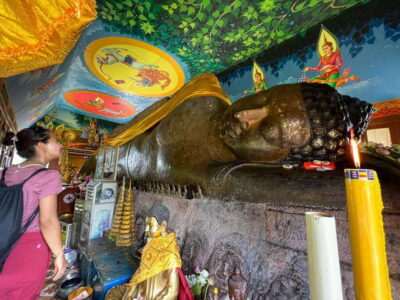
Kulen Mountain, Beng Mealea and Tonle Sap Tour
Read our review →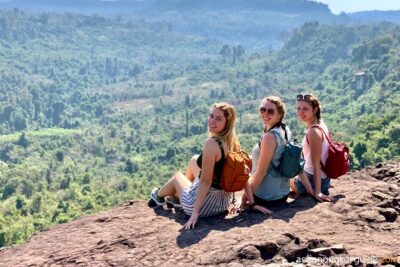
Kulen Mountain with Beng Mealea and Tonle Sap Small Group Tour
Read our review →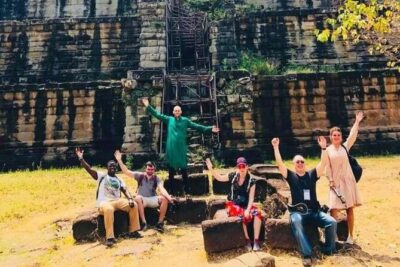
Koh Ker Temple Group & Beng Mealea Full-Day Join-in Tour
Read our review →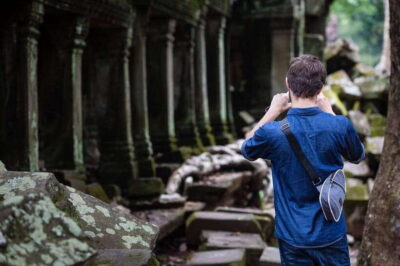
Banteay Srei, Kulen Waterfall & Beng Mealea Exploration
Read our review →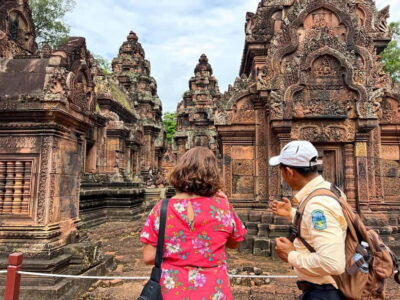
Banteay Srei, Beng Mealea and Kulen Mountain with Picnic
Read our review →Kulen Mountain, Beng Mealea, and Tonle Sap Tour
Read our review →
Full-Day Preah Vihear, Koh Ker and Beng Mealea Private Tour
Read our review →Browse the lists this tour appears in