
Review · ANGKOR WAT TOURS
Two-days tour discovering Angkor Wat and Floating Village
Two days, and Angkor finally feels real. This tour links the big-name ruins to the smaller, story-rich stops, with air-conditioned transport included on both days. I especially like ending with sunset at Angkor Wat and then carrying that mood straight into a visit to Kompong Phluk on Tonle Sap. One thing to plan for: entrance tickets and meals are not included, so the final cost is usually higher than the $92 price.
I also like that the day-by-day flow is built around sights, not logistics. You get an English-speaking guide, cold water and a cold towel, and a clear timetable that keeps you moving through Angkor without spending your energy figuring out how to get from place to place. The possible drawback is pretty simple: admission fees and food are on you, and some stops are listed as requiring their own tickets.
In This Review
- Key highlights at a glance
- Price and what you really get for $92
- Day 1: Angkor Thom, Bayon faces, and Ta Prohm’s tree roots
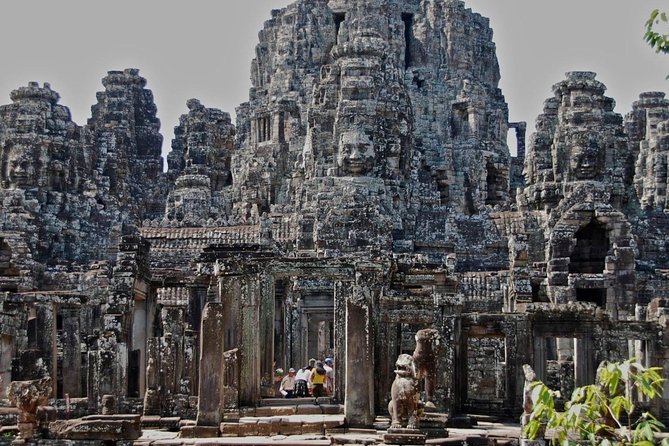
- Bayon Temple and Angkor Thom gate
- Ta Prohm, the jungle and tree temple effect
- Banteay Kdei for a calmer afternoon feel
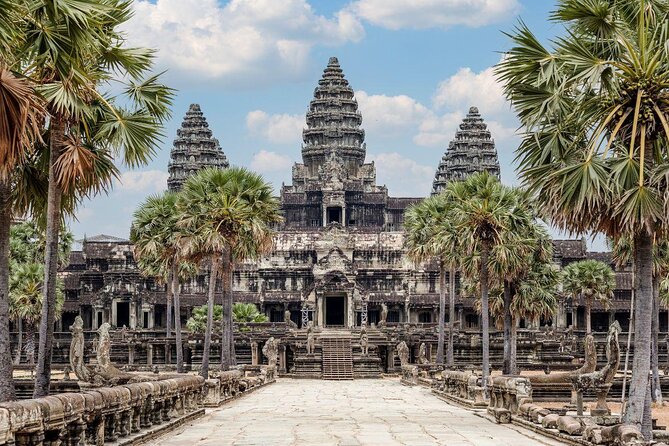
- Angkor Wat at the center, with sunset built in
- Day 2: Kompong Phluk on Tonle Sap and how stilt life works
- Angkor National Museum: putting statues and relics in context
- Artisans Angkor stone carving workshop with a local NGO
- Who will enjoy this tour most
- What to look for before you book
- Should you book this two-day Angkor Wat and Floating Village tour?
Key highlights at a glance
- Angkor Wat sunset time in the plan, not as an afterthought
- Two full days of included transport so you stay focused on the ruins and village
- Angkor Thom temples plus Ta Prohm (the jungle and tree-root look is built in)
- Kompong Phluk on Tonle Sap, with stilted life and local waterway culture
- Hands-on stone carving at Artisans Angkor, via a local NGO workshop
- Small-group feel with private-tour setup, so the pace can match your crew
Price and what you really get for $92
$92 per person for a two-day experience in Siem Reap is a solid value if you want a structured plan with transport handled. You are paying for two things that are expensive in time and effort when you do them on your own: guided interpretation at major temple sites, and a driver plus an air-conditioned vehicle to move between stops.
What you do need to budget separately is the cost of entrance tickets and the cost of meals. Every stop listed on the itinerary shows admission tickets not included, and meals are explicitly not included either. That means the final trip cost depends on which tickets you buy and how you eat each day.
Also note the booking timing. This is commonly booked about six days in advance, which usually suggests decent demand and a steady schedule. If you are traveling at peak times, booking early is still a good idea so you get the start time and tour fit you want.
More Angkor Wat tours in Siem Reap:
- Angkor Wat Sunrise or Sunset Tour with Guide from Siem Reap
★ 5.0 · 12,109 reviews - Siem Reap: Angkor Wat: Small-Group Sunrise or Sunset Tour
★ 5.0 · 9,444 reviews - Siem Reap: Angkor Wat 2-Day Tour with Sunrise and Sunset
★ 4.9 · 4,429 reviews
Day 1: Angkor Thom, Bayon faces, and Ta Prohm’s tree roots
Day 1 starts at 8:30 am, and the first sequence is all about Angkor Thom and the surrounding temple zone. This is where you get the most recognizable Khmer imagery, plus enough variety that you can start seeing how the different temple styles relate to each other.
Bayon Temple and Angkor Thom gate
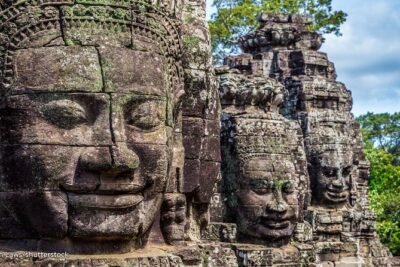
The tour begins with the south gate of Angkor Thom and then moves into Angkor Thom, including the Bayon area. Bayon is famous for its 54 towers and 216 faces of the Avalokitesvara, and the value of a guide here is that it turns those faces from a photo subject into something you can actually read as part of a larger temple plan.
After Bayon, you also visit Baphoun. Even though you only spend about two hours in the first stop block, this pairing gives you a strong starting point. Bayon sets the tone, then Baphoun helps you broaden your view beyond one signature feature.
Possible drawback for this portion: two hours can feel quick if you stop often for photos or want to study carvings closely. If you love slow, detailed looking, you may need to manage expectations for Day 1 pacing.
Ta Prohm, the jungle and tree temple effect
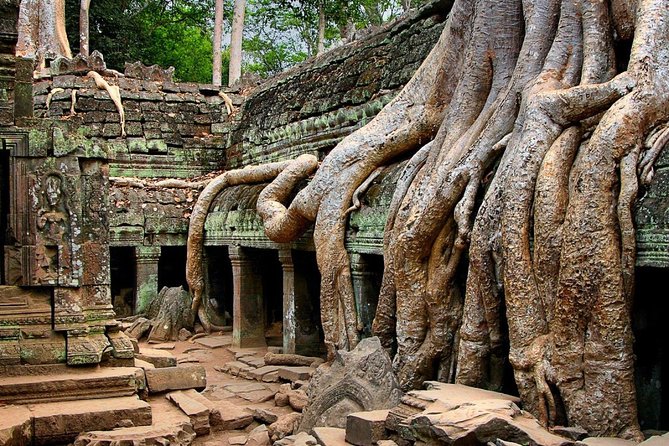
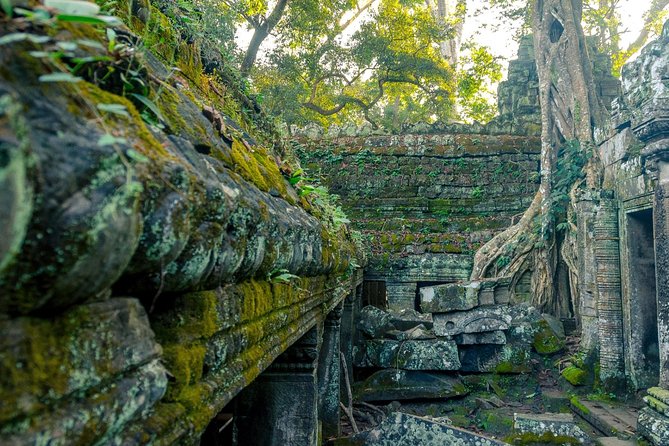
Next up is Ta Prohm, often called the jungle temple or tree temple because the roots and surrounding greenery swallow parts of the stonework. The tour includes about two hours here, which is enough time to see the dramatic main views and still have room for a few detours around viewpoints.
This stop is one of the best examples of why guided time matters. The setting is visually striking on its own, but a good guide helps you understand what you are seeing, why the ruins look the way they do, and how that creates a different emotional tone than the more formal temple complexes.
More floating village trips in Siem Reap:
- From Siem Reap: Kampong Phluk Floating Village Tour by Boat
★ 4.9 · 6,979 reviews - Sunset tour of Kampong Phluk stilts home village on the Tonle Sap
★ 5.0 · 4,865 reviews - Siem Reap: Kampong Phluk Floating Village Tour with Boat
★ 4.9 · 3,843 reviews - Siem Reap Floating Village Kampong Phluk Sunset with Boat
★ 5.0 · 1,962 reviews
Banteay Kdei for a calmer afternoon feel
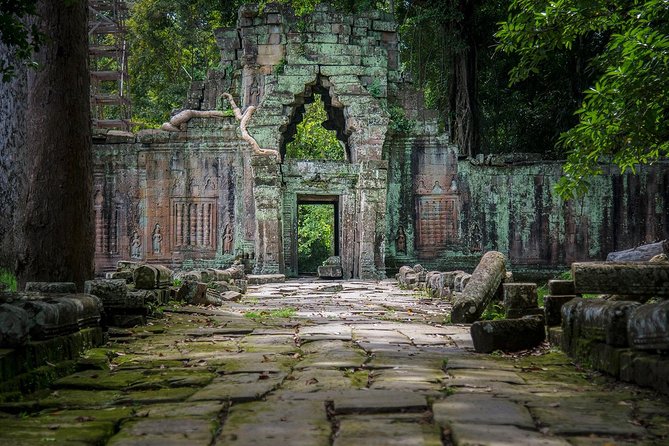
After Ta Prohm, you head to Banteay Kdei, built by King Jayavarman VII in the late 12th century. This is listed as about one hour. That shorter timing can be a benefit if you want variety without burning out your eyes and legs.
Banteay Kdei works as a breather between the high-impact sights. You get a distinct temple character before the day ends with Angkor Wat.
Angkor Wat at the center, with sunset built in
The Day 1 finale is Angkor Wat, a UNESCO World Heritage Site and one of the most important archaeological areas in Southeast Asia. The stop is listed for about three hours, which is exactly the right length for a guided visit plus time to linger as the light changes.
What I like about this tour is the structure: the experience is not just about walking through Angkor Wat. It specifically ends the day with sunset over Angkor Wat. That matters because sunset is when Angkor Wat stops being only a landmark and starts becoming a mood. If you have ever tried to catch sunset on your own, you know how easily timing gets chaotic. Here, the plan is already arranged to give you the right end-of-day payoff.
The practical downside is that sunset plans often require some patience. Even with a guided approach, you will want to accept that this is a major moment at a major site. The guide approach in the overall tour concept is meant to help you avoid the worst queues at key points, but you are still going to be near other visitors at peak times because that is the nature of Angkor Wat sunset.
Day 2: Kompong Phluk on Tonle Sap and how stilt life works
Day 2 takes a different turn. Instead of staying fully inside the Angkor ruin zone, you head to Kompong Phluk, a traditional Khmer floating village about 30 km from Siem Reap. This is listed at about four hours, so it is not a quick photo stop.
Kompong Phluk sits on Tonle Sap Lake, and the tour framing emphasizes that the houses are perched on stilt foundations above the water. You also visit things tied to day-to-day community life, including a floating hospital and a fishery.
Why this matters: it keeps your Cambodia story balanced. Angkor Wat is huge, but Cambodia is not only stone ruins. Seeing how people live in relation to the lake’s cycles gives you a different kind of context for the region, one that feels lived-in and practical rather than purely monumental.
One thing to consider is that a village visit can shift with weather and water conditions. The tour description includes natural elements and local life, but it does not specify what you will do on the water beyond seeing the stilted community features. If your main goal is a lot of boating time, you might want to confirm how the four hours are split between village exploration and any lake activities.
Angkor National Museum: putting statues and relics in context
After Kompong Phluk, the tour moves to the Angkor National Museum. The museum stop is about one hour, and the focus is on a major collection of Buddha statues and relics gathered into one gallery.
I like adding a museum stop in the middle of a two-day plan because it changes how you look at what came before. After seeing temple carvings in the open air, stepping into a museum helps you connect the visuals to artifacts in a more controlled setting. With only one hour, it is not meant to replace a longer museum day, but it is a smart reset.
If you are the kind of person who wants deeper historical reading, one hour might feel short. Still, as a link between Angkor’s religious art and the physical remains you saw earlier, it is a worthwhile addition.
Artisans Angkor stone carving workshop with a local NGO
The last stop is Artisan D’Angkor, a local NGO focused on improving life for disadvantaged Cambodians from rural areas. You enter their workshop where you try your hand at making stone carving.
This is the most interactive piece of the tour. It also helps you slow down at the end when your feet are probably ready for a rest. Even if you are not great at crafts, the value is in learning how stone carving culture ties back to the visual language of Angkor carvings.
One caution: the stone carving experience is included in the tour plan, but the itinerary lists admission tickets not included for stops. Since the workshop time is listed as one hour with admission tickets not included, it is smart to budget for any associated charges that might apply. The tour does include the guided experience and your time in the workshop, but you should assume extra fees could exist unless you have ticket details in writing.
Who will enjoy this tour most
This two-day plan is best for you if you want to see major Angkor highlights without turning the trip into a logistics project. You do not need to figure out transport between sites, you are supported with an English-speaking guide, and you get air-conditioned comfort plus cold water and a cold towel.
It also fits well if you like variety. The mix of Bayon and Ta Prohm for spectacle, Banteay Kdei for a calmer temple contrast, Angkor Wat for the big finale, and Kompong Phluk for a living culture stop means your two days do not blur together.
If you are traveling with older family members or anyone who prefers fewer decisions, the structure is a real plus. It is also set up as a private tour, so only your group participates, which can make the pace more comfortable.
What to look for before you book
Two reminders help you avoid surprises.
First, entrance tickets and meals are not included. With a tour like this, that can easily add up if you compare the $92 to what you would pay for only a basic driver. I recommend planning for those costs up front so the total stays predictable.
Second, check how long you want to spend at the sites. The itinerary lists fairly specific stop lengths, like two hours at Bayon and Ta Prohm, about one hour at Banteay Kdei, and three hours at Angkor Wat. If you know you want extra time at one temple for carvings or photography, you may want to confirm whether the guide can flex the schedule.
On the plus side, the overall experience is rated 5 with seven reviews, and the standout praise is consistent: the guide Sen and the driver are described as easy to work with, communicative, accommodating, and upbeat. People also say the booking process through Viator was simple and that connecting with Sen felt smooth.
Should you book this two-day Angkor Wat and Floating Village tour?
I think you should book it if you want maximum Angkor efficiency with a guide who helps you understand what you are seeing, plus the cultural balance of Kompong Phluk and the hands-on stone carving workshop. The included air-conditioned transport on both days is a big quality-of-life upgrade, and the Angkor Wat sunset focus is the right way to end Day 1.
Skip it or at least double-check the plan if you are on a tight budget for add-on costs, because entrance tickets and meals are not included. Also, if you are expecting a very water-heavy floating village adventure, confirm how the four hours at Kompong Phluk are structured.
If your goal is a thoughtful two-day route that keeps you moving through the real highlights, this is one of the more sensible ways to do Angkor without the stress.
Newly listed around Siem Reap
- Twilight Tastes of Siem Reap Include Dinner★ 5.0 · 13 reviews
- Ultimate Sunrise to Angkor Wat, Angkor Thom and Bayon Temple★ 5.0 · 3 reviews
- Trekking Tour at Phnom Kulen National Park from Siem Reap★ 5.0 · 3 reviews
- Angkor 2-Day Sunset & Sunrise Small-Group Tour★ 4.5 · 6 reviews
- 2-Day Siem Reap Angkor Bicycle Experience★ 5.0 · 7 reviews
- Unique Private Day Tours To Kompong Khleang Village & Tonle Sap Lake★ 5.0 · 5 reviews
- 6-hour Angkor Sunrise & Private Tour (Solo, Couple & Family )★ 5.0 · 5 reviews
- Professional Photo Shoot in Angkor Archaeological Park, Siem Reap★ 5.0 · 42 reviews
Angkor Wat Tours, compared.
Angkor Wat Sunrise or Sunset Tour with Guide from Siem Reap
Read our review →
Angkor Wat: Small-Group Sunrise or Sunset Tour
Read our review →
Angkor Wat 2-Day Tour with Sunrise and Sunset
Read our review →
Angkor Wat Sunrise tour with Small – Group and Guide tours
Read our review →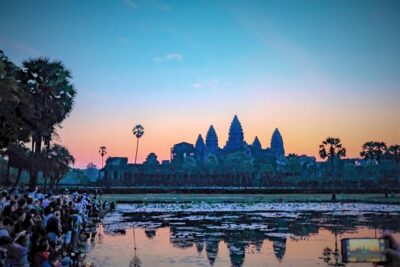
Angkor Wat Highlights and Sunrise Guided Tour from Siem Reap
Read our review →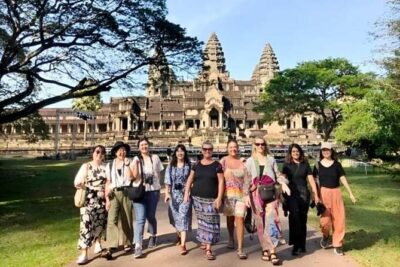
Angkor Wat Sunset Small Group Tour with Lunch Included
Read our review →
Full-Day Angkor Wat Sunrise Private Tour with Guide from Siem Reap
Read our review →Browse the lists this tour appears in