
Review · DAY TRIPS FROM SIEM REAP
Banteay Chhmar Temple & Silk Farm Private Day Trip from Siem Reap
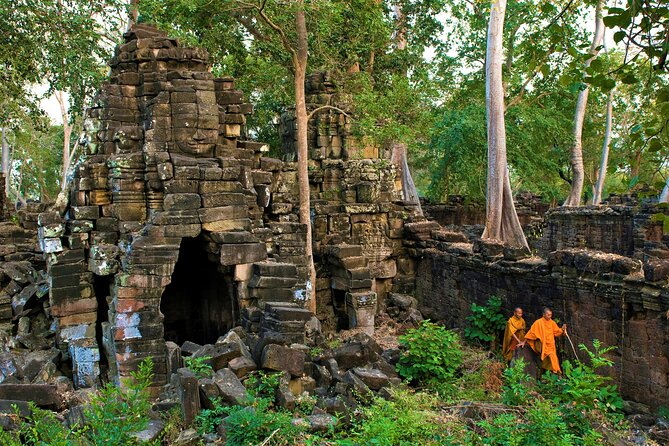
Jungle temples, far from the crowds, is the whole point here. This private day trip sends you from Siem Reap to the remote Banteay Chhmar complex, then adds Banteay Toap, West Baray, and a working silk farm, all guided by a professional English-speaking guide. I especially like how the day pairs big ruins with clear explanations, so carvings and layout actually make sense. Big consideration: it is a long day, with significant driving time before you even reach the temple grounds.
What I like next is the balance. You get two temple stops in the same Angkor-era zone, including one site people often skip, plus a hands-on-feeling stop at Angkor Silk Farm where you can see the process from mulberry to finished silk. And because this is private, the pace feels easier to control than the usual day-tour shuffle.
If you want a classic Angkor checklist, this is not that. This trip leans into contrast: quiet jungle ruins, Khmer-era stone architecture, and a silk-making workshop that feels practical and real. If you like getting away from the most over-visited paths, it is a strong fit.
In This Review
- Key Highlights at a Glance
- Why Banteay Chhmar Feels Different Than Classic Angkor Stops
- Banteay Chhmar Temple: Stone Carvings and Collapsed Galleries in Jungle Quiet
- Banteay Toap, the Fortress of the Army, and What to Expect Visually
- West Baray and Svay Romiet Pagoda: A Khmer Reservoir With Living Traditions
- Angkor Silk Farm: See How Silk Actually Gets Made
- Price and Value: What $137.75 Really Buys You
- Getting There Smart: Pickup, Drive Time, and What to Pack
- Guide Quality Matters Here, Especially at Banteay Chhmar
- Who Should Book This Banteay Chhmar and Silk Farm Day Trip
- Should You Book It?
- FAQ
- How long is the Banteay Chhmar and Silk Farm private day trip?
- Is hotel pickup and drop-off included?
- What does the price include?
- Is lunch included?
- Is this tour private or shared?
- Do I need to buy entrance tickets separately?
- What is the cancellation policy?
Key Highlights at a Glance
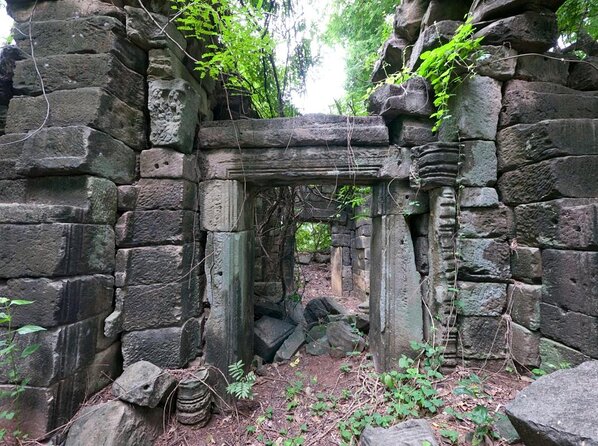
- Banteay Chhmar: an impressive Angkorian complex that most standard routes skip
- Banteay Toap: the name often explained as Fortress of the Army, tied to the same period
- West Baray: an enormous Khmer reservoir stop for context and views
- Svay Romiet Pagoda: a brief cultural stop on the banks of West Baray
- Angkor Silk Farm: see mulberry trees, silkworm care, dyeing, and weaving stages
- Private, guided logistics: hotel pickup and drop-off, air-conditioned SUV or van, entrance fees handled
Why Banteay Chhmar Feels Different Than Classic Angkor Stops
If you’ve done the main Angkor circuit already, you know the vibe: big temples, big crowds, lots of photos, sometimes not much time to understand what you’re looking at. Banteay Chhmar is the opposite mood. It is remote enough that the ruins feel calmer, and the jungle setting helps you see the architecture as something reclaimed by time, not just a postcard.
This is also a good choice if you like your sightseeing to come with interpretation. A good English-speaking guide matters here because Banteay Chhmar is not a simple, single big structure. It is an overall complex with galleries, carvings, and lots of stonework where your brain benefits from a narrative: who built it, why, and what you are seeing on the walls.
Finally, the day-trip format is what makes it workable. You get the far-site experience without sacrificing the chance to include another cultural stop. Instead of turning it into a two-day haul, you get temples plus the silk farm in about 8 to 9 hours total.
More day trips out of Siem Reap:
- Angkor Wat Sunrise or Sunset Tour with Guide from Siem Reap
★ 5.0 · 12,109 reviews - From Siem Reap: Kampong Phluk Floating Village Tour by Boat
★ 4.9 · 6,979 reviews - Angkor Wat Highlights and Sunrise Guided Tour from Siem Reap
★ 5.0 · 3,213 reviews
Banteay Chhmar Temple: Stone Carvings and Collapsed Galleries in Jungle Quiet
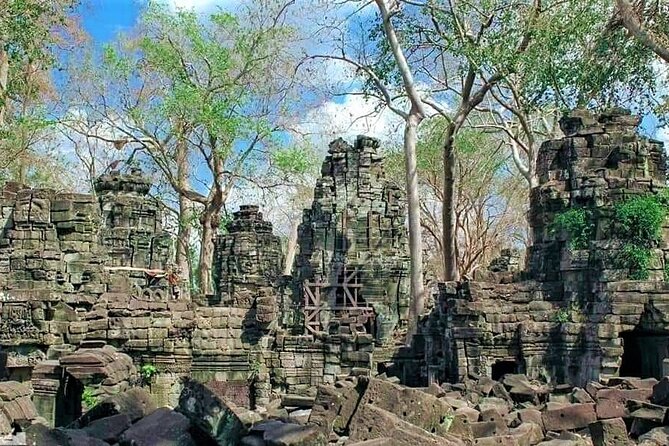
Banteay Chhmar was one of the more extensive architectural projects connected to Jayavarman VII, and it sits in a politically sensitive region in the late years of his reign. That matters because the site’s architecture shows signs of haste in construction, so parts can feel less like pristine restoration and more like something that was rushed and then left to time.
Here’s what you can look for in practical terms:
- Carvings and stone details: if you get a guide who points them out clearly, you’ll get much more out of the stonework than just standing in front of it for photos.
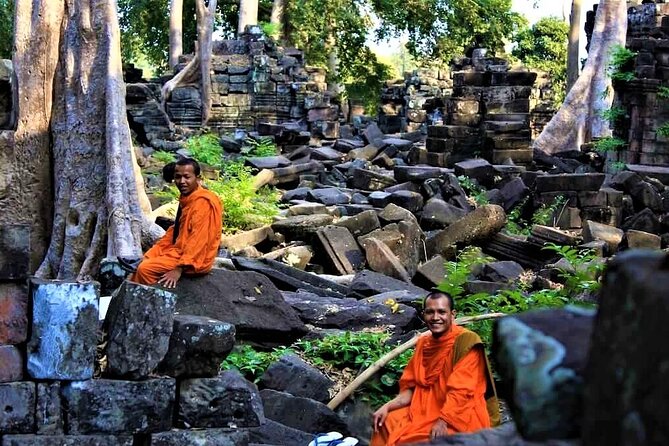
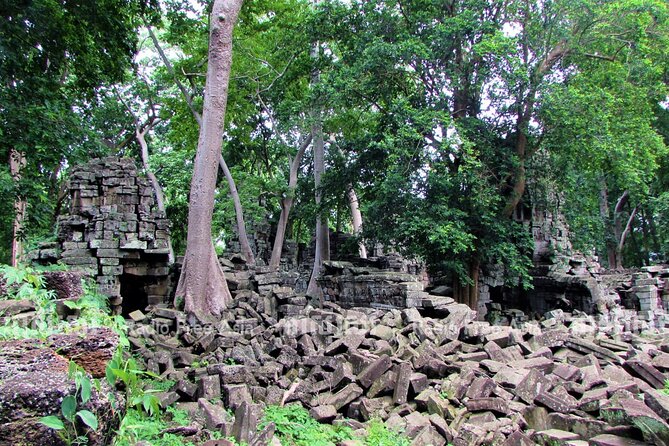
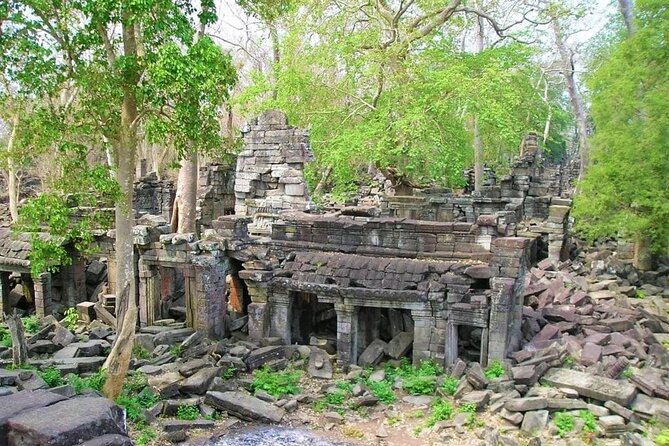
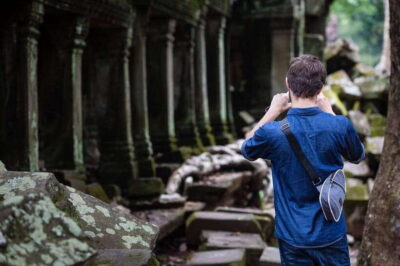
- Collapsed galleries: this is not fully intact architecture, and that is part of the point. You’ll see how the stone corridors and spaces still communicate a layout even after nature has taken back the edges.
- Jungle atmosphere: the setting helps you understand how these temples functioned as sacred spaces, not just buildings.
One extra benefit: this is the kind of site where a patient guide helps you pace your viewing. If your group likes to slow down and read what matters, you can do that. If you prefer to keep moving, you can still cover it without feeling lost. Private format makes the difference.
Tip for your comfort: wear shoes you don’t mind getting dusty, and bring a hat. You may be outside for a while, and it is Cambodia. Shade and water are your friends.
Banteay Toap, the Fortress of the Army, and What to Expect Visually
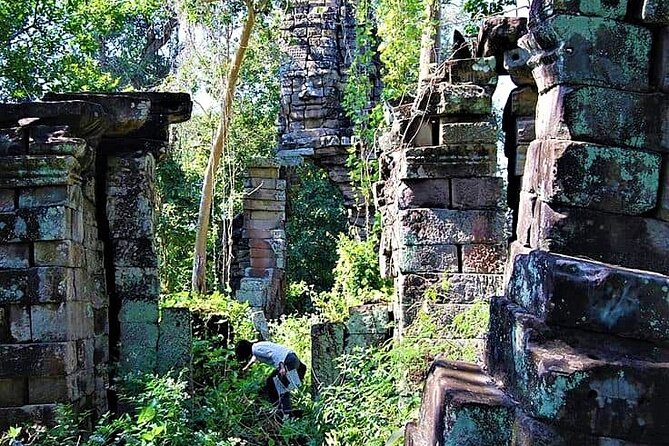
After Banteay Chhmar, you head to Banteay Toap, another temple site built in the same general period. The name is often explained as the Fortress of the Army, with local belief connecting it to Khmer soldiers. Even if you don’t get pulled into the story part, the site still pays off visually.
What makes Banteay Toap a worthwhile second stop is that it gives you variety. Instead of repeating the exact same kind of temple view, you shift your angle and your brain. You’re still in Khmer-era ruins, but you’re looking at a different kind of layout and spiritual focus.
This stop is about 2 hours. That is just enough time to:
- see the main structures,
- take in the overall composition, and
- get some context from your guide without rushing.
If you’re the type who likes architecture and names and meanings, you’ll probably appreciate how your guide frames why this place exists beside the scenic water features nearby. It gives the ruins a sense of function and setting, not just a set of stones.
West Baray and Svay Romiet Pagoda: A Khmer Reservoir With Living Traditions
Not all great stops are inside temple walls. West Baray is a big reminder that the Angkor world was engineered as well as sacred.
West Baray is an enormous Khmer reservoir, measuring about 8 km long by 2.1 km wide. What’s interesting is that its original purpose is still not fully clear. One hypothesis often discussed is irrigation, but you’ll also notice that the sheer scale of the reservoir suggests it mattered in multiple ways, even if the exact function is debated.
You’ll get a short stop, about 30 minutes, which is enough for:
- a quick orientation to the water feature,
- photo time,
- and a mental reset between temple viewing and the silk farm.
Right by West Baray sits Svay Romiet Pagoda, on the banks of the reservoir. This stop is only 30 minutes as well, but it’s a nice cultural pause. Your guide may explain that people go to this pagoda on ancestor anniversary dates or birthdays, as a way to show respect.
Even if you only spend a short time here, it helps you connect the Khmer-era water world to the present day. It is one of those moments where the guide’s context turns a simple roadside stop into something meaningful.
A few more Siem Reap trips to compare
- Full-Day Angkor Wat Sunrise Private Tour with Guide from Siem Reap
★ 5.0 · 2,920 reviews - Siem Reap: Angkor Wat Private Tuk-Tuk Tour
★ 4.9 · 2,222 reviews - Angkor Wat Private Day Tour from Siem Reap
★ 5.0 · 834 reviews - Angkor Wat Private Tuk-Tuk Tour (sunrise Option) & more
★ 5.0 · 439 reviews
Angkor Silk Farm: See How Silk Actually Gets Made
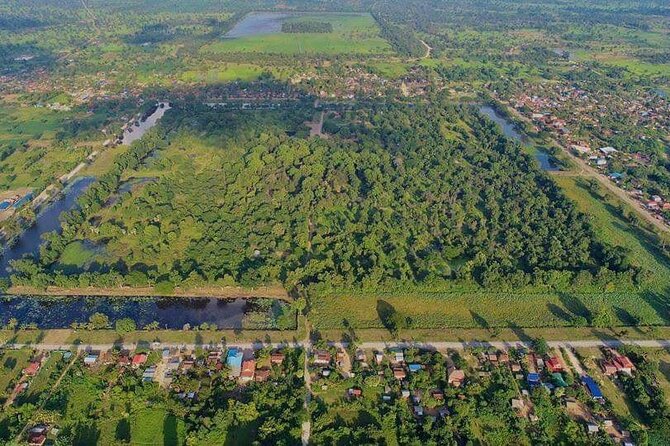
This is the stop that turns the day from stone to hands-on process. At Angkor Silk Farm, you can see multiple stages of silk production, from mulberry trees to silkworm care, then dyeing and weaving of silk textiles.
What makes this work well on a temple day trip is that it gives your body and eyes a break from the heat and stone detail. You’re still learning, but the pace feels different. It becomes more about observation and understanding how traditional methods work step by step.
In practical terms, you’ll want to:
- pay attention to the sequence, because silk production is easy to misunderstand if you only catch one stage,
- ask questions if your guide prompts discussion, and
- keep your expectations realistic. This is a farm visit, so the value is in seeing the workflow, not buying a mass-produced souvenir.
Also, if you like crafts and cultural production, this stop is a good way to diversify your Cambodia experience without adding extra travel time.
Price and Value: What $137.75 Really Buys You
At $137.75 per person, this trip is priced like a private, full-day experience with transport and admissions handled. On paper, that can look high compared to budget group tours, but the math shifts once you factor in what’s included.
Your price covers:
- hotel pickup and drop-off
- a professional English-speaking tour guide
- all entrance fees for the tour sites
- private transfer via luxury SUV or van with air conditioning
- service charges and current government VAT
Lunch is not included, which is common, but you have a clear expectation: you’ll eat at local restaurants during the day, with both vegetarian and non-vegetarian options, typically around $3 to $10 per dish.
So the value question becomes simple: do you want a driver, an English-speaking guide, and admissions taken care of while you bounce between far-off sites? If yes, this price starts to feel fair. If you’re traveling super budget and don’t mind self-navigating, you might spend less on transport, but you’ll pay for it in time, stress, and likely missed context.
One more pricing detail that matters: the tour notes group discounts, even though it operates as a private activity for your group. If you’re flexible on exact dates, it may help to ask how the operator handles that discount for your booking.
Getting There Smart: Pickup, Drive Time, and What to Pack
This trip runs about 8 to 9 hours, and you should plan your day around that reality. It takes time to reach Banteay Chhmar, and one traveler described the drive as roughly 3 hours to the temple area. That’s why comfort matters.
Here’s what I suggest you take seriously:
- Morning timing: start with a full water bottle and a light breakfast. You’ll likely be in a car for a while.
- Sun protection: hat, sunglasses, sunscreen. Even when you’re moving through ruins, the Cambodia sun is not subtle.
- Power through the day: bring a small snack if you’re prone to getting hungry between stops. Lunch is available, but it is not included in the tour price.
The good news is you’re not stuck in a sketchy vehicle. The transfer is described as a luxury SUV or van with air conditioning. That alone improves the experience on a long, road-heavy day.
Also, the trip notes mobile tickets and that you’ll receive confirmation at booking. If you like clean, simple check-in, that’s a plus.
Guide Quality Matters Here, Especially at Banteay Chhmar
For most temple days in Siem Reap, your guide can make or break the experience. For Banteay Chhmar and its carvings, it matters even more because you’re in a less standardized setting than the headline temples.
The operator’s tour guides include English-speaking licensed professionals, and names that show up with strong feedback include Leap and Danut. When the guide is strong, you get clear explanations of the sculptures on the walls and a better understanding of Cambodia beyond just the temple stones.
There are also indications of smooth, careful driving from La, which matters when you’re spending hours on the road. A comfortable driver reduces fatigue, and it makes the temple time feel less like an endurance event.
If you want to maximize value, do this: during Banteay Chhmar, ask your guide to point out one or two carvings and explain what they represent. Then you’ll start seeing the rest more clearly on your own.
Who Should Book This Banteay Chhmar and Silk Farm Day Trip
This private day trip is best for:
- temple lovers who already covered the classic Angkor staples and want a quieter, less common Angkorian site
- travelers who like context, names, and explanations tied to architecture
- anyone who wants a balanced day, temples plus a working cultural craft stop
- couples or small groups who value control of pace and comfort, not a rigid schedule
It is a good match if you prefer fewer other tour buses and more breathing room. And it works well even if you’re not a hardcore Khmer architecture person, because the silk farm adds an easier win, and the guide keeps the story moving.
It may not be your top choice if you hate long driving days. This one is road-forward, because Banteay Chhmar is far off the main visitor route.
Should You Book It?
Book this tour if you want a genuine change of pace from the usual Angkor day. The combination makes sense: remote ruins that feel quieter and more human, then a practical silk production visit you can actually picture after you leave. The private format, English-speaking guide, and entrance fees included add up to convenience and value.
Skip it, or at least think hard, if you want short travel time or you only want the most famous temples. This day is about going off the beaten path, and that means committing to the drive.
If you do decide, my advice is simple: book early. The tour is described as commonly booked well in advance, and for a popular remote-site plan, being flexible later can limit your options.
FAQ
How long is the Banteay Chhmar and Silk Farm private day trip?
It runs about 8 to 9 hours.
Is hotel pickup and drop-off included?
Yes. The tour includes pickup and drop-off at your hotel. You provide your hotel name for pickup.
What does the price include?
Your price includes pickup and drop-off, an English-speaking licensed tour guide, all entrance fees, private transfers by air-conditioned SUV or van, and service charges plus current government VAT.
Is lunch included?
No. Lunch is not included. You can eat at local restaurants, with vegetarian and non-vegetarian options, typically around $3 to $10 per dish.
Is this tour private or shared?
It is private. Only your group participates.
Do I need to buy entrance tickets separately?
No. Entrance fees for the tour sites are included.
What is the cancellation policy?
Free cancellation is available up to 24 hours in advance for a full refund. If you cancel less than 24 hours before the start time, the amount paid is not refunded. The cutoff is based on local time, and the experience requires a minimum number of travelers, so it may be canceled if the minimum is not met, with an offer of another date or a full refund.
Newly listed around Siem Reap
- Sambor Prei Kuk Off Beaten Track★ 5.0 · 3 reviews
- Siem Reap Airport Taxi Transfer – City Center Hotels★ 5.0 · 5 reviews
- Angkor Wat at Sunrise★ 4.0 · 7 reviews
- Short Cycling at Countryside★ 5.0 · 29 reviews
- Unveiling the Mystical Beauty of Phnom Kulen National Park★ 5.0 · 6 reviews
- Bakong Temples & Floating Village Tour★ 4.5 · 3 reviews
- Rooftop Romantic Dinner – 4 Courses Set Meal & Wine★ 3.5 · 5 reviews
- Khmer Cooking Class in Cambodia★ 5.0 · 36 reviews
Day Trips from Siem Reap, compared.
Angkor Wat Sunrise or Sunset Tour with Guide from Siem Reap
Read our review →
Angkor Wat Highlights and Sunrise Guided Tour from Siem Reap
Read our review →
Full-Day Angkor Wat Sunrise Private Tour with Guide from Siem Reap
Read our review →

Browse the lists this tour appears in