
Review · ANGKOR WAT TOURS
From Siem Reap: Angkor Wat and Floating Village 3-Day Trip
Sunrise temples and stilt-house villages make this trip special. I love the cool water and towels that keep you moving even when the heat hits, and I also like that you’re not just dumped in a crowd, you get an English-speaking guide who explains what you’re seeing.
The second thing I really like is the pacing with an air-conditioned vehicle between sights, so you spend less time frying on the road. One consideration: the $199 price is just the tour framework, the Angkor pass and Tonle Sap boat fees are extra, and you’ll also pay for most meals.
In This Review
- Key things I’d highlight before you go
- How the 3 days flow, and why the route feels efficient
- Price and value: what $199 really covers
- Day 1: Angkor Thom, Angkor Wat, and the Phnom Bakheng sunset decision
- Day 2: Banteay Srei and Beng Mealea add texture to the Angkor story
- Day 3: sunrise at Angkor Wat, then the quieter temple chain
- Comfort details that actually matter in Siem Reap heat
- Temple etiquette: dress code you can’t ignore
- Tonle Sap at Kampong Phluk: the lake day feels different for a reason
- Who this tour suits best, and who should think twice
- Final verdict: should you book this Angkor and floating village 3-day trip?
- FAQ
- What’s included in the tour price?
- What tickets or admissions are extra?
- Do I need to pay for meals during the trip?
- Is airport pickup and drop-off included?
- Does the tour include accommodation?
- What should I wear to the temples?
- Can I cancel for a full refund?
Key things I’d highlight before you go
- Air-conditioned private transport keeps temple time focused on walking, not waiting.
- Angkor Wat plus a sunrise option means you can catch the morning light if the schedule allows.
- Banteay Srei and Beng Mealea add variety beyond the usual main circuit.
- Kampong Phluk on Tonle Sap is included as part of the lake day experience.
- Cool water, towels, and an experienced guide make the long days feel more doable.
- Temple passes and admissions are not included, so your total budget needs a quick add-on.
How the 3 days flow, and why the route feels efficient
This is the kind of 3-day Angkor plan that actually makes sense if you want variety without turning it into a marathon of random tuk-tuk hops. You start with the big, iconic Angkor City area, then widen out to famous specialty temples (Banteay Srei and Ta Prohm), and finally finish with a day that strings together smaller, often quieter temple stops plus Tonle Sap.
The logic is simple: Day 1 and Day 3 lean toward the core Angkor zone, while Day 2 pushes farther outward. That means you get different temple styles and different crowd levels across the three days, instead of seeing the same kind of stone carvings every hour. It also means your guide can talk about how the Khmer empire thought about sacred space, not just show you a photo spot.
More Angkor Wat tours in Siem Reap:
- Angkor Wat Sunrise or Sunset Tour with Guide from Siem Reap
★ 5.0 · 12,109 reviews - Siem Reap: Angkor Wat: Small-Group Sunrise or Sunset Tour
★ 5.0 · 9,444 reviews - Siem Reap: Angkor Wat 2-Day Tour with Sunrise and Sunset
★ 4.9 · 4,429 reviews
Price and value: what $199 really covers
The base price is $199 per person, and it’s built around a guided, private 3-day itinerary with hotel pickup and drop-off plus air-conditioned transport. You’ll also get free cool water and towels during the tour, which is a small line item that matters a lot in Siem Reap.
Here’s the part you should calculate up front: key entrances and lake access cost extra.
- Angkor 3-day pass: $62 per person (not included)
- Tonle Sap pass and a private boat ride: $15 per person (not included)
- Lunch and dinner, plus soft drinks, are also not included
So, purely for the must-pay admissions listed here, you’re looking at about $77 additional on top of the $199 tour price, before meals. That still can be good value if you want the convenience of a guide, direct transport, and a full itinerary that would be time-consuming to organize alone.
If you’re the type who eats cheap local meals and doesn’t buy many extras, this tour can land in a very reasonable total range. If you want meals included, or you hate budgeting for tickets, you’ll feel the add-ons.
Day 1: Angkor Thom, Angkor Wat, and the Phnom Bakheng sunset decision
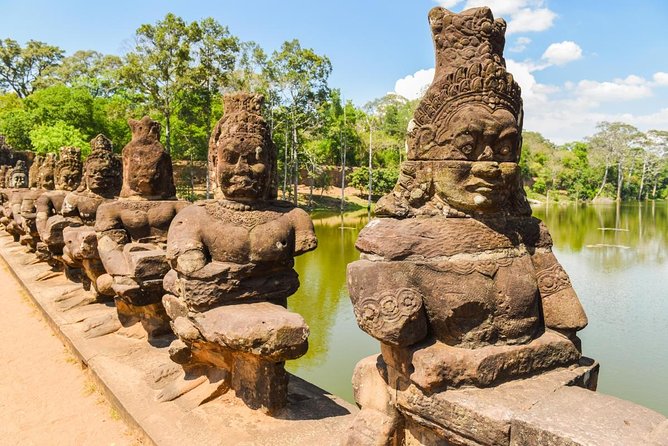
Day 1 is about getting your bearings fast, then locking in Angkor Wat while your energy is still high. You start at Angkor Thom, including the South Gate area. This is a great “orientation” start because Angkor Thom is a reminder that this wasn’t just one temple. It was a whole royal city concept, ringed by walls and designed as a ceremonial landscape.
From there you move into the Angkor Archaeological Park zone for a lunch break (plan about 45 to 60 minutes). Lunch is on your own, so bring cash or be ready to pay for drinks too. This is also where you get a chance to cool off, regroup, and avoid rushing through temples while your body is still adjusting to the heat.
Then comes Angkor Wat, the big one, and the world-famous temple complex you’re really traveling for. The time on-site is about 1 hour 30 minutes, which is enough to cover the major highlights when you have a guide helping you understand what matters visually and historically. It’s also long enough to step aside from the main flow, if your guide times it right.
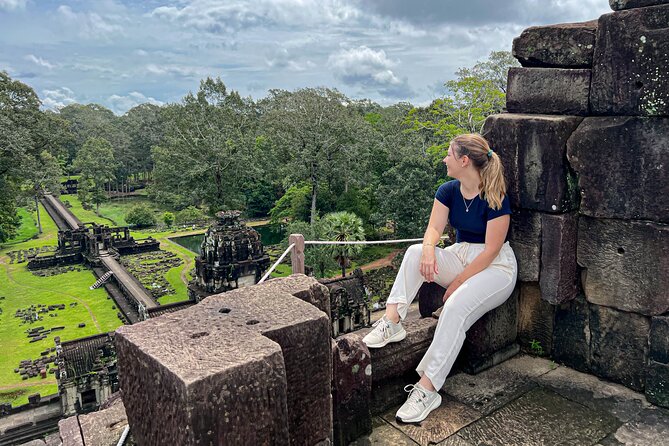
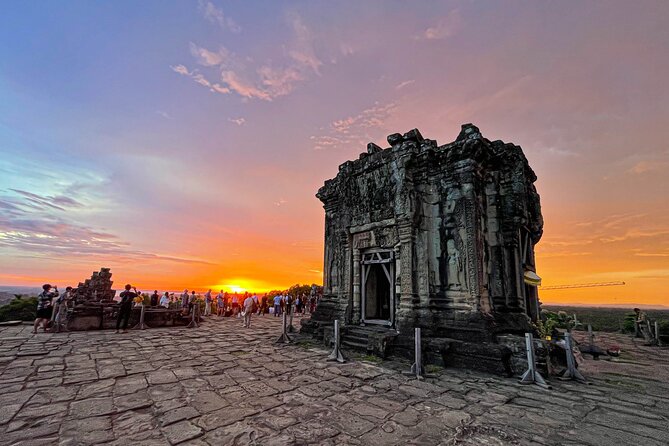
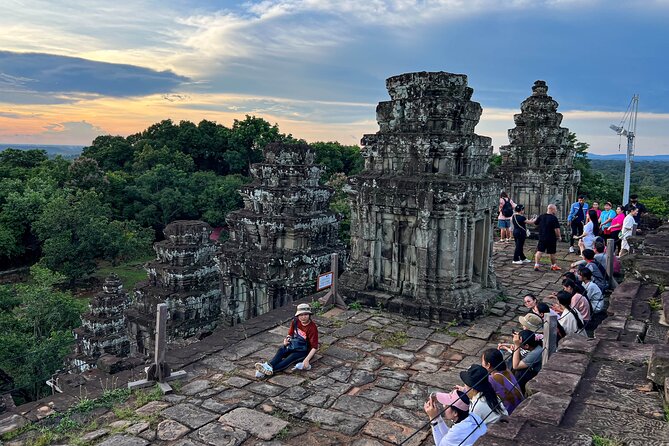
Finally, you might end with a sunset climb at Phnom Bakheng if the weather allows and you’re not too tired. If that’s not the right fit that day, the plan can shift toward Pre Rup instead. This flexibility matters because temple sunsets can be a weather and stamina game, not just a schedule game.
Day 2: Banteay Srei and Beng Mealea add texture to the Angkor story
Day 2 is where the trip starts to feel more like a journey and less like a checklist. You begin with Banteay Srei, a 10th-century temple dedicated to Shiva. What I like about this stop is that it tends to feel less overwhelming than some of the massive Angkor City structures. It’s detailed, compact, and it helps you notice the craftsmanship and symmetry without being buried under scale.
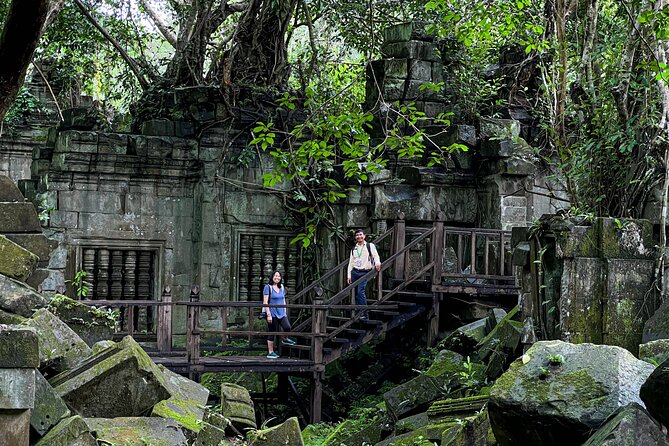
Next is Beng Mealea, often called the jungle temple. This is about 40 km from the main Angkor group, and the vibe is different on purpose. Instead of a super-polished, fully restored complex, it reads more like a temple reclaimed by nature. That gives you a powerful contrast to the more manicured areas.
You’ll then visit Bakong, described as the first temple mountain of sandstone constructed by Khmer rulers near modern Siem Reap. That’s a helpful historical anchor, because it connects later temple ideas back to earlier Khmer architectural experiments.
After another lunch break in the Angkor Archaeological Park zone (again, 45 to 60 minutes), you shift gears to water. The afternoon brings you to Kampong Phluk (Kampong Phluk Floating Village) on Tonle Sap Lake. The focus here is on the stilt houses and the life tied to the water.
You’ll also have the Tonle Sap pass and private boat ride as part of the lake experience. The boat portion is the practical reason this is worth doing with a guide, since you’re not guessing where to go or how to arrange access on the fly.
More floating village trips in Siem Reap:
- From Siem Reap: Kampong Phluk Floating Village Tour by Boat
★ 4.9 · 6,979 reviews - Sunset tour of Kampong Phluk stilts home village on the Tonle Sap
★ 5.0 · 4,865 reviews - Siem Reap: Kampong Phluk Floating Village Tour with Boat
★ 4.9 · 3,843 reviews - Siem Reap Floating Village Kampong Phluk Sunset with Boat
★ 5.0 · 1,962 reviews
Day 3: sunrise at Angkor Wat, then the quieter temple chain
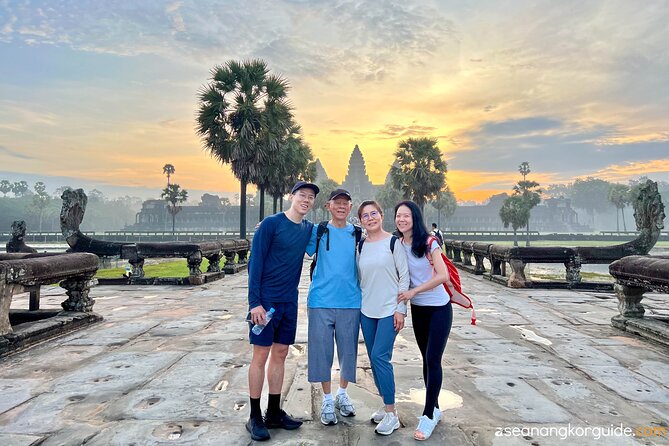
Day 3 has one of the most intense schedule perks: a possible sunrise wait at Angkor Wat. The plan suggests you may spend about 1 hour waiting for sunrise, then you watch the morning light, followed by a short break with a local breakfast. If you like photos, mornings are usually when Angkor feels most alive. If you’re not a morning person, you’ll still appreciate the calmer start.
The breakfast is described as a local option, with Khmer rice noodle mentioned as an example. Since it’s included only on Day 3, I’d treat it as part of the experience, not just fuel. It also buys you time to cool down before the main temple walking begins.
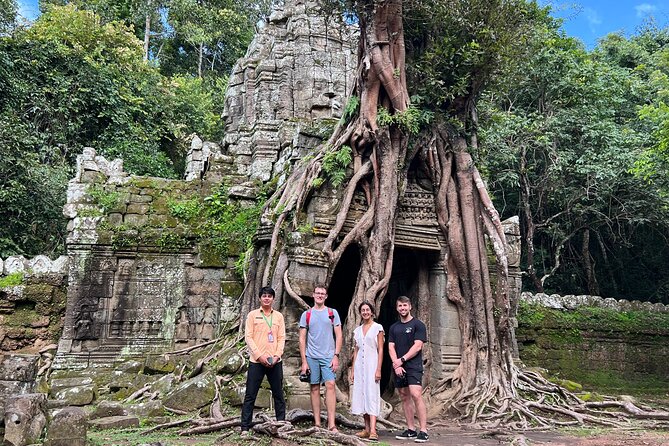
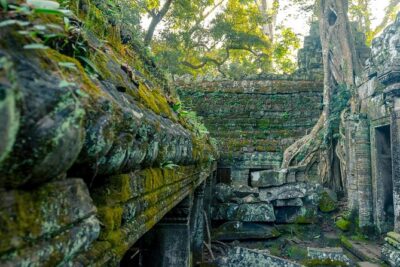
After Angkor Wat, you go to Ta Prohm, the so-called Jungle-temple made famous in pop culture. You’ll see the Bayon-style temple character and the dramatic tree roots that people come to photograph. The guide explanation is important here, because it turns the visuals into meaning: what you’re seeing is not random, it’s how nature and stone have interacted over time, and how the site has been managed as well.
Then you move through a compact chain of additional stops:
- Pre Rup, a Hindu temple mountain with mixed brick, laterite, and sandstone construction
- Ta Som, a smaller end-of-12th-century temple tied to King Jayavarman VII
- Neak Pean, an artificial island with a Buddhist temple on a circular island in Jayatataka Baray
- Preah Khan, a 12th-century temple honoring King Jayavarman VII’s father
What I like about this selection is that it keeps you moving through different “moods” of Angkor. You get the big famous temple moment, then you pivot into smaller, more niche structures that help the whole complex feel less repetitive. The stops are short on purpose, which is good when you’re dealing with heat and fatigue.
Comfort details that actually matter in Siem Reap heat
This tour is set up to handle the real Siem Reap problem, which is temperature, not logistics. Walking between temples is hot, and the route is spread over multiple days, so you’ll feel it.
That’s why I appreciate the practical inclusions:
- Cool water and towels during the tour
- Air-conditioned private transport between stops
- An English-speaking guide to help you understand what to look for while you’re moving
You should still plan your own support. The tour notes strongly suggest carrying water and using skin protection like sun protection and mosquito spray. You can buy both in town, which is helpful if you forget something on day one. I like keeping a small bag with those items because it saves time when you’re sweating and trying to pay attention to carvings at the same time.
Temple etiquette: dress code you can’t ignore
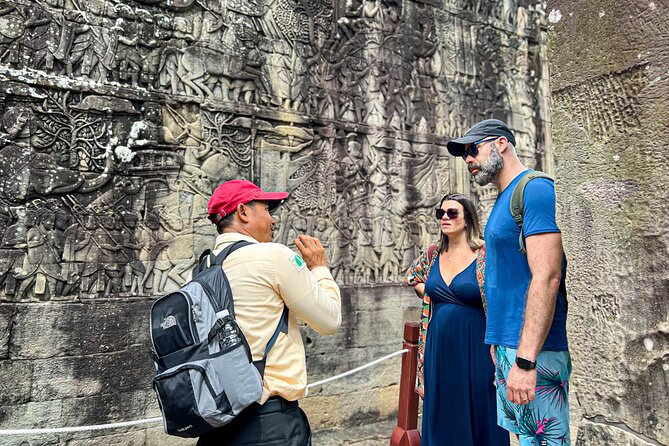
Angkor sites are strict about what you wear, and it’s not just a vague suggestion. The guidance here is clear: both men and women should dress respectfully, covering shoulders and knees. Lightweight, loose clothing can keep you cool while meeting the rule.
Comfortable shoes are a must. You’ll be walking on uneven stone, and you’ll also want traction when you’re climbing steps at temples like Phnom Bakheng or other viewpoints.
Also, the Apsara authority that manages the park can refuse entry to certain areas if your clothing doesn’t meet standards. So if you’re thinking of wearing something borderline, I’d rather you bring something safer. It’s one of those rules that can save your day.
Tonle Sap at Kampong Phluk: the lake day feels different for a reason
The Tonle Sap part of the itinerary is the contrast you need after temple stone. At Kampong Phluk, the focus is on stilt houses and the community life connected to the lake’s water levels.
There are more than 1000 fishermen families mentioned, which helps you understand that this isn’t a small tourist set of huts. It’s a real living area where the calendar of daily life bends to the lake.
The Tonle Sap pass and private boat ride are called out as part of the plan, and I’d treat the boat time as a core piece, not an add-on. Even with a guide, it’s hard to replicate this experience on your own without wasting time figuring out access.
Also, remember lunch is on your own earlier in the day. If you want a smooth afternoon, eat before you head to the village.
Who this tour suits best, and who should think twice
This is a smart fit if you:
- Want a 3-day Angkor plan with a guide and vehicle
- Are excited about both the major sites and supporting temples like Banteay Srei and Beng Mealea
- Like the idea of a sunrise option at Angkor Wat
- Want Tonle Sap included without DIY planning
You might think twice if you:
- Want meals included or don’t want to budget for admissions
- Prefer a slower pace with fewer stops
- Get overwhelmed by strict dress rules and long walking days
On the positive side, reviews highlight that guide quality and professionalism really matter here. Sean and Mr Sophon are praised for kindness and professionalism, and Mr Sam is praised for being professional, available, and friendly. That’s a good sign that you’re not just buying transportation, you’re getting someone who can explain what you’re seeing.
Final verdict: should you book this Angkor and floating village 3-day trip?
If your goal is a well-rounded Siem Reap package that covers Angkor Wat, Ta Prohm, Pre Rup, and then connects the story to life on Tonle Sap, I’d say this tour is a strong choice. The combination of air-conditioned transport, cool water and towels, and a structured route makes it easier to handle the heat and the huge scale of the sites.
The decision comes down to your budget and expectations. If you’re fine paying extra for the Angkor pass and the Tonle Sap boat ride, and you’re okay buying lunch and dinner yourself, $199 plus the add-ons can feel like solid value for a three-day, guided route.
If you want everything bundled, including meals and admissions, or you hate sunrise mornings, you may want a different style of tour.
FAQ
What’s included in the tour price?
The tour includes an English-speaking guide, private transport by air-conditioned vehicle, free cool water and towels during the tour, hotel pick-up and drop-off, and breakfast on Day 3 only.
What tickets or admissions are extra?
The Angkor 3-day pass is extra ($62 per person). Temple admissions are also listed as extra, and the Tonle Sap pass plus a private boat ride costs $15 per person. Lunch, dinner, and soft drinks are not included.
Do I need to pay for meals during the trip?
Yes. Lunch and dinner are not included, and you’ll need to pay for food and beverages on your own during the lunch breaks.
Is airport pickup and drop-off included?
Yes. Airport pickup and drop-off is included.
Does the tour include accommodation?
No, accommodation is not included.
What should I wear to the temples?
You should dress respectfully by covering shoulders and knees. Loose, lightweight, long clothing is recommended, along with comfortable shoes. The site reserves the right to refuse entry if clothing is considered immodest.
Can I cancel for a full refund?
Yes. The policy says you can cancel up to 24 hours in advance for a full refund, and cancellations due to poor weather may be offered a different date or a full refund.
More day trips out of Siem Reap
- Angkor Wat Highlights and Sunrise Guided Tour from Siem Reap
★ 5.0 · 3,213 reviews - Full-Day Angkor Wat Sunrise Private Tour with Guide from Siem Reap
★ 5.0 · 2,920 reviews - Angkor Wat Private Day Tour from Siem Reap
★ 5.0 · 834 reviews - From Siem Reap: Koh Ker and Beng Mealea Temples Tour
★ 4.9 · 293 reviews
Newly listed around Siem Reap
- Sambor Prei Kuk Off Beaten Track★ 5.0 · 3 reviews
- Siem Reap Airport Taxi Transfer – City Center Hotels★ 5.0 · 5 reviews
- Short Cycling at Countryside★ 5.0 · 29 reviews
- Unveiling the Mystical Beauty of Phnom Kulen National Park★ 5.0 · 6 reviews
- Angkor Wat at Sunrise★ 4.0 · 7 reviews
- Bakong Temples & Floating Village Tour★ 4.5 · 3 reviews
- Rooftop Romantic Dinner – 4 Courses Set Meal & Wine★ 3.5 · 5 reviews
- Khmer Cooking Class in Cambodia★ 5.0 · 36 reviews
Angkor Wat Tours, compared.
Angkor Wat Sunrise or Sunset Tour with Guide from Siem Reap
Read our review →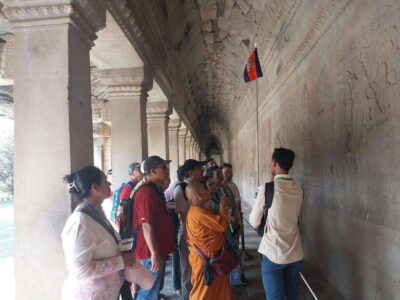
Angkor Wat: Small-Group Sunrise or Sunset Tour
Read our review →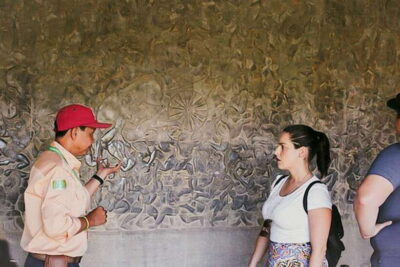
Angkor Wat 2-Day Tour with Sunrise and Sunset
Read our review →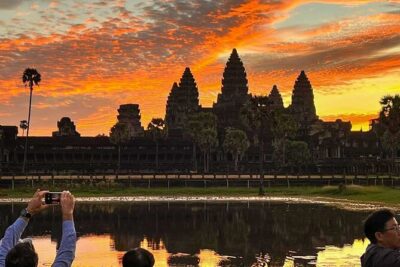
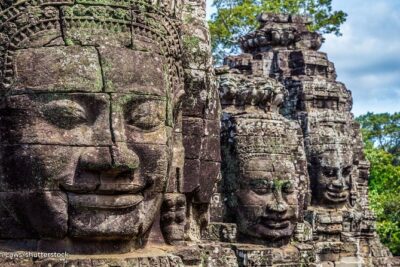
Angkor Wat Sunrise tour with Small – Group and Guide tours
Read our review →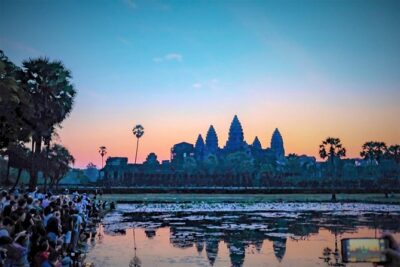
Angkor Wat Highlights and Sunrise Guided Tour from Siem Reap
Read our review →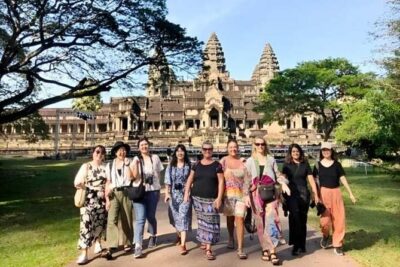
Angkor Wat Sunset Small Group Tour with Lunch Included
Read our review →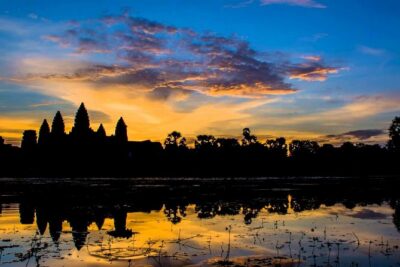
Full-Day Angkor Wat Sunrise Private Tour with Guide from Siem Reap
Read our review →Browse the lists this tour appears in