
Review · 2-DAY EXPERIENCES
Highlight of Angkor Complex 2 Days Private Tour
Angkor in two days is intense, in a good way. This private tour strings together big names like Angkor Wat and quieter stops like Ta Nei, guided in your language with hotel pickup. I love how the route feels designed for pacing, not just checking boxes, and I love the included comfort touches like bottled water and cool tissues during the long temple hours. One consideration: you’ll need an Angkor Pass for entry, and meals plus tipping are extra.
The best part for me is that you’re not stuck waiting around with strangers. This is restricted to your group, using a comfortable vehicle for private transfers between sites, so you can move smoothly from sunrise-light drama to slower, less crowded corners.
I also like that the tour doesn’t hide the practical stuff. You get a professional English speaking licensed guide, and one guide name that’s come up is Mr. Sara, praised for being on time and keeping the day comfortable. That matters, because Angkor can feel like a marathon if your plan is sloppy.
In This Review
- Key things I’d focus on before you go
- A two-day Angkor route built around big impact and real variety
- Price and value: what $149.46 per person gets you
- Angkor Pass and tickets: your main add-on
- Day 1: Angkor Thom highlights, tree temples, and a quieter jungle stop
- Angkor Thom South Gate, the restored entrance feel
- Bayon Temple, where the faces do the talking
- Angkor Thom itself, scale and spiritual city planning
- Baphuon and Phimeanakas, royal architecture moments
- Terrace of the Elephants, plus the rhythm of the bas-reliefs
- Terrace of the Leper King, big bas-relief storytelling
- Ta Prohm, the kingdom of the trees
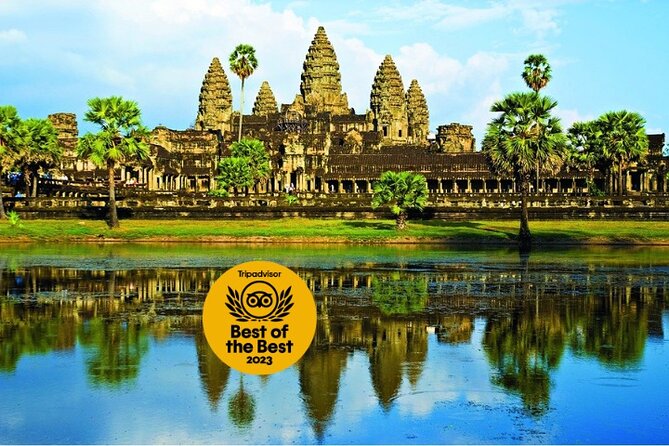
- Angkor Wat, the main masterpiece with a long viewing window
- Ta Nei Temple, the jungle detour that feels like a find
- Day 2: Banteay Srei to Preah Khan, plus a village stop for snacks and souvenirs
- Banteay Srei, Khmer art at its jewel-like scale
- Banteay Samre, a complete complex with visible maintenance gaps
- Pre Rup, bold design and strong balance
- Eastern Mebon, elephants and Indra scenes
- Neak Pean, a luxury-feeling pond complex
- Preah Khan, a 12th-century temple with royal dedication
- Banteay Prei, the rarely visited patience test
- Preah Dak Market and Prashdak Village stop: palm cake and souvenirs
- How your private guide changes the experience
- Temple rules, clothing, and staying comfortable in the real world
- Who this two-day private Angkor tour is best for
- Should you book this Angkor Complex 2 Days Private Tour?
Key things I’d focus on before you go
- Private group format: only your group rides together, so the day stays flexible.
- Major temples plus a deeper cut: you get the icons and also less-visited sites like Ta Nei and Banteay Prei.
- Guide-led storytelling: you’re not just walking ruins, you’re connecting scenes to Khmer kings and religion.
- Comfort on the clock: hotel pickup, private transfers, water, and cool tissues.
- Angkor Pass is the main extra cost: the tour helps with buying it at the park entrance.
A two-day Angkor route built around big impact and real variety
If you’re short on time, this two-day plan is one of the more practical ways to see the Angkor complex without feeling like you’re sprinting from one photo spot to another. Day 1 centers on Angkor Thom and the most famous stretches of the Angkor Wat area, while Day 2 shifts to temples that feel different in scale and vibe.
The value for you is balance. You get the big visual hits, like the gates, the Bayon, the iconic Angkor Wat silhouette, and the tree-choked mood of Ta Prohm. But you also get stops that people often skip when they only follow the fastest loop.
For me, the standout is the mix of architectural styles and spiritual themes across both days. You’re moving through city gate symbolism, Buddhist imagery, royal terraces, and temple structures that range from massive to almost secretive. That variety is why the two days feel like more than a checklist.
A few more Siem Reap trips to compare
- Full-Day Angkor Wat Sunrise Private Tour with Guide from Siem Reap
★ 5.0 · 2,920 reviews - Siem Reap: Angkor Wat Private Tuk-Tuk Tour
★ 4.9 · 2,222 reviews - Angkor Wat Private Day Tour from Siem Reap
★ 5.0 · 834 reviews
Price and value: what $149.46 per person gets you
At $149.46 per person, you’re paying for a private guided experience, with logistics handled. That price includes hotel pickup and drop off, a professional English speaking licensed guide, private transfers by vehicle, and the small comfort extras like bottled drink water and cool tissues throughout the trip.
What it does not include is equally important. You’ll still pay for temple entry through an Angkor Pass, plus tipping for the guide and driver. Meals are also on your own budget, with local lunches available and prices listed as roughly $3 to $10 per dish.
My practical take: this is strong value if you want a smooth, guided two-day plan with minimal stress. It’s less value if you’re traveling ultra-budget with your own tuk-tuk and you can handle navigating the complex and buying tickets yourself. But if you want the day to run on time and make sense, this kind of private structure often saves you more energy than it costs in extra dollars.
Also worth noting: the tour has a 4.9 rating from 13 reviews and is marked recommended at 100%. That’s a good signal when you’re paying for someone to get the timing right at Angkor.
Angkor Pass and tickets: your main add-on
Entrance fees are not included in the tour price. The good news is you’re not left guessing. Your guide will assist you with purchasing the Angkor Pass at the entrance of Angkor Park before you start.
Plan on this affecting timing at the start of the day. It’s not usually a disaster, but it can add a bit of waiting depending on crowds and the exact moment you arrive. If you want the best experience, aim for an early start and keep your morning pacing realistic.
One more practical tip: Angkor temple rules mean you should arrive ready to move. Wear the right clothes (details below), bring something for sun and heat, and treat the ticket step as part of the morning routine, not an unexpected hurdle.
Day 1: Angkor Thom highlights, tree temples, and a quieter jungle stop
Day 1 is packed, and it’s packed for a reason. You’re starting at the city entrance, working your way through the core royal zones of Angkor Thom, and then shifting toward the more famous temple scenery and the forest feel of the tree temples.
Here’s what each stop adds, and where you should watch your time.
A different kind of day in Cambodia:
- Angkor Wat Sunrise or Sunset Tour with Guide from Siem Reap
★ 5.0 · 12,109 reviews - Siem Reap: Angkor Wat: Small-Group Sunrise or Sunset Tour
★ 5.0 · 9,444 reviews - From Siem Reap: Kampong Phluk Floating Village Tour by Boat
★ 4.9 · 6,979 reviews - Sunset tour of Kampong Phluk stilts home village on the Tonle Sap
★ 5.0 · 4,865 reviews
Angkor Thom South Gate, the restored entrance feel
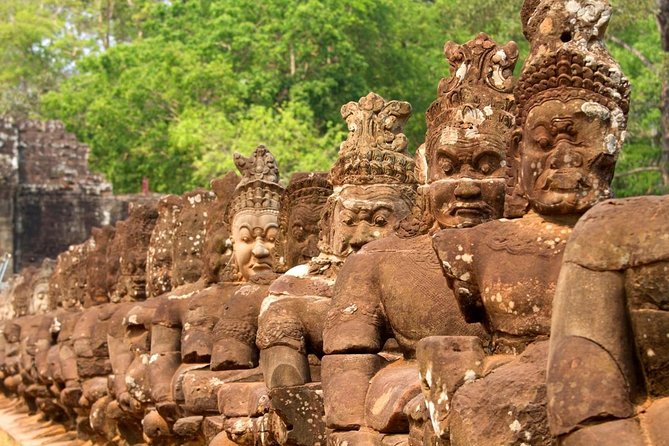
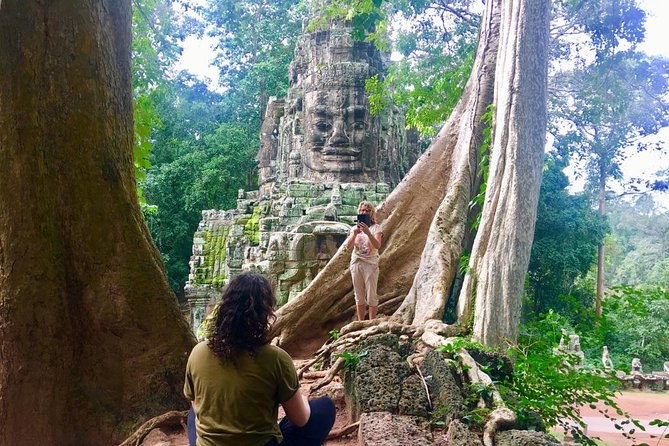
You begin at Angkor Thom South Gate, on the main road into the city. This is popular because many of the heads are still in place and the gate has been fully restored, so the visual impact hits fast.
Practical idea: this is a good stop to get your bearings. You’ll see how visitors flow into the royal city and why later temples sit in specific, symbolic alignments.
Bayon Temple, where the faces do the talking
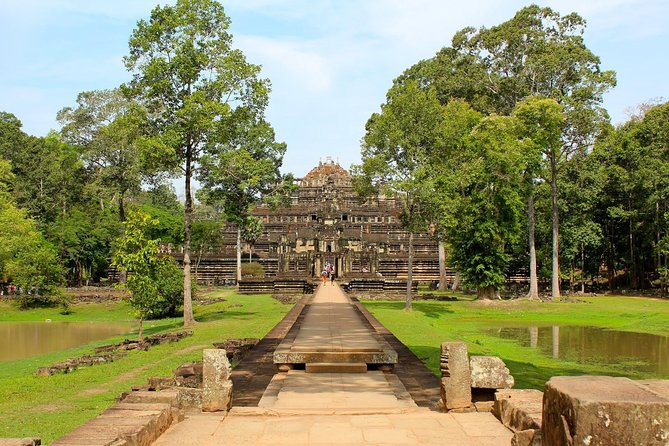
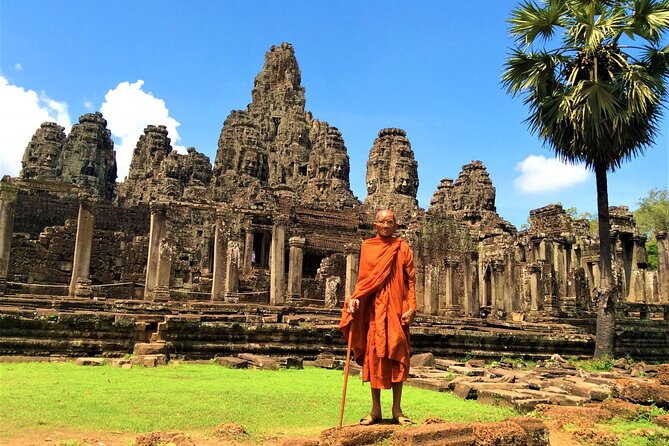
Next is Bayon Temple, built nearly 100 years after Angkor Wat. Even with the incomplete early documentation, the central idea is clear: this temple sits in the core of the royal city, so it carries power and meaning.
If you like details, bring your attention here. This is where you’ll notice how Buddhist themes and royal authority mix in stone.
Angkor Thom itself, scale and spiritual city planning
Then you move into Angkor Thom. This is not just a single monument. It’s a whole expression of planning and scale, and the focus is Buddhist cosmology represented in three dimensions.
Drawback to consider: once you’ve walked a few major temple zones, it’s easy to feel temple fatigue. This is why guide context matters. If you get the story stitched together, the scale feels less overwhelming.
Baphuon and Phimeanakas, royal architecture moments
After Bayon, the route includes Baphuon Temple, known for its five levels on a rectangular sandstone base, and Phimeanakas, near the Royal Palace walls. Phimeanakas originally had a golden pinnacle, described historically as the Tower of the golden pinnacle.
These stops can be less visually loud than the terraces, but they’re great for understanding Khmer royal design and what the city’s leaders wanted people to see.
Terrace of the Elephants, plus the rhythm of the bas-reliefs
Terrace of the Elephants is described as a place where elephants were used by servants and princes. The scene is calm and ceremonial, and the steps are even, making movement feel almost choreographed.
If you’re taking photos, keep your pace steady. Terraces can tempt you to linger too long, and Day 1 is already full.
Terrace of the Leper King, big bas-relief storytelling
Then you hit the famous Terrace of the Leper King. This stop is tied to Jayavarman VII’s reign and known for dramatic bas-reliefs on both interior and exterior.
This is one of those places where a good guide changes everything. The stone carvings are the main event, so you’ll get more out of it when you understand what you’re looking at.
Ta Prohm, the kingdom of the trees
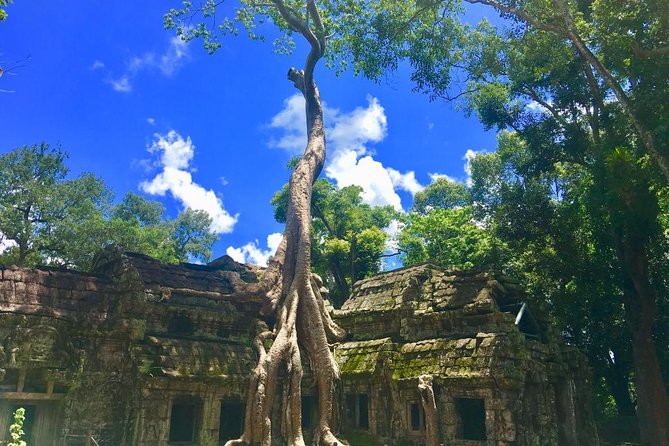
After the royal terraces, you go to Ta Prohm, often called the kingdom of the trees. It’s left mostly untouched by archaeologists except for clearing paths for visitors and structural strengthening to prevent further deterioration.
This is where Angkor feels cinematic. Big roots and heavy shadows turn the temple into a living stage. It’s also a great break from the denser carved terraces, even though it still requires time to see properly.
Angkor Wat, the main masterpiece with a long viewing window
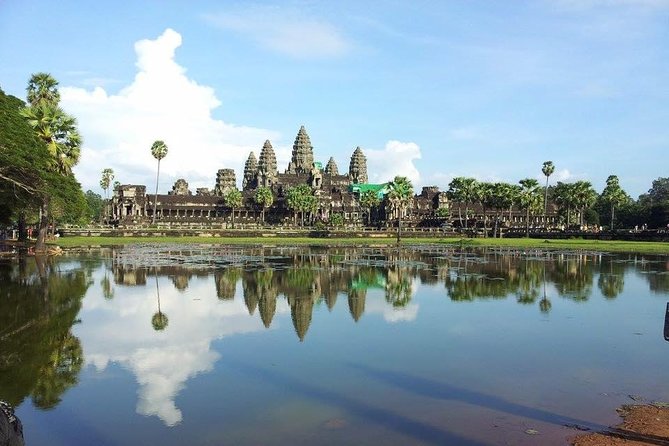
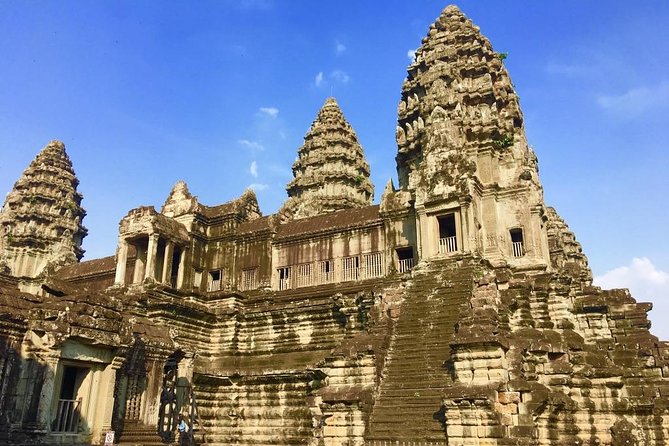
Next comes Angkor Wat, the largest and best preserved Angkor monument in the Angkor group. The description emphasizes composition, balance, proportions, and sculpture.
With 3 hours allocated here, you’ll have space to do more than one quick look. If you rush, you miss the feel of the design.
Practical note: wear shoes that handle lots of walking and stone steps. Angkor Wat rewards slow looking, but your legs decide how slow you can go.
Ta Nei Temple, the jungle detour that feels like a find
Finally on Day 1 is Ta Nei Temple, a small temple in the Cambodian jungle about 200 meters west of East Baray. It can be difficult to find and is described as not a popular tourist destination.
That makes it valuable for you if you want variety. You’re shifting from iconic Angkor Wat tourism energy to a quieter, more off-the-path atmosphere.
Day 2: Banteay Srei to Preah Khan, plus a village stop for snacks and souvenirs
Day 2 is designed to expand the “what else is here” part of Angkor. It’s not just repetition of Day 1. You go to temples with different restoration stories and different vibes, then finish with a practical cultural stop.
Banteay Srei, Khmer art at its jewel-like scale
Start with Banteay Srei. French archaeologists called it a precious gem and a jewel in Khmer art, and the tour focuses on its value as an artwork expression.
Even if you only have one stop like this, it’s worth it. Smaller temples can feel more intimate and easier to appreciate when carvings and proportions are the focus.
Banteay Samre, a complete complex with visible maintenance gaps
Next is Banteay Samre, one of the most complete complexes at Angkor due to restoration using anastylosis. The tour notes that the lack of maintenance over the past 20 years is evident.
This is a place where you can observe restoration choices and how time affects stone. It can be a little more “real” and less polished, which some people will find more interesting than a perfectly staged site.
Pre Rup, bold design and strong balance
Pre Rup is described as superb of boldness in architectural design, with fine balance, scale, and proportion. It’s almost identical in style to East Mebon but built several years later.
If you like architecture rather than just faces or terraces, this is a strong Day 2 anchor.
Eastern Mebon, elephants and Indra scenes
You then visit Eastern Mebon, known for varied sculpture including two meter high, free standing stone elephants at corners of tiers. It also includes religious scenes with Indra atop his mount.
This is the kind of stop where your guide’s explanation helps you see meaning beyond the surface.
Neak Pean, a luxury-feeling pond complex
Neak Pean is described as a large square man-made pond, about 70 meters each side, bordered by steps and surrounded by four small structures. It’s the sort of place that makes you slow down, because the geometry and setting do the work.
Preah Khan, a 12th-century temple with royal dedication
Then you go to Preah Khan, located about 2 kilometers north-east of Angkor Thom on the Grand Circuit. It was built in the second half of the 12th century, in AD 1191 by King Jaya-varman VII, dedicating it to his father Dh.
This stop connects Day 2 back to royal narratives and the political-religious role these sites played.
Banteay Prei, the rarely visited patience test
Banteay Prei is described as rarely visited, near Prasat Prei. It’s a minor temple and only of interest if you’re studying Angkor in depth.
This is a potential drawback if you’re tired. But if you want quiet variety and you’re okay with a more subtle payoff, it’s a good place to see the complex beyond the loudest hits.
Preah Dak Market and Prashdak Village stop: palm cake and souvenirs
The tour includes a stop connected with Om Pich steamed Toddy Palm Cake at Prashdak Village, and it also references Preah Dak Market as a popular place for souvenirs like objects and arts.
This is a helpful ending point because it gives you a chance to pick up something small and food-based, and you don’t have to hunt on your own after temple fatigue.
How your private guide changes the experience
A private tour is not just about not sharing a vehicle. It’s about not losing your day to confusion or bad timing.
You get:
- Hotel pickup and drop off, which matters because Angkor logistics start before your first temple.
- A professional English speaking licensed guide, which means you get context as you walk.
- All private transfers by comfortable vehicle, so you spend more energy seeing and less energy figuring out how to get there.
One more detail I like is that the tour description includes multiple language options. If you’re not comfortable with English, you can still follow along and get the story.
And based on an operator note that praised Mr. Sara, the guide quality shows up as practical things: being on time, keeping you comfortable, and staying flexible. Flexibility matters most at Angkor when light, heat, and crowds shift hour to hour.
Temple rules, clothing, and staying comfortable in the real world
Angkor temples are religious sites. The tour asks you to dress appropriately, meaning you should wear a shirt that covers your shoulders, and trousers or knee-length pants or skirts are permitted.
This is not just for politeness. It also keeps you from getting stopped at the last moment, which can derail a tight schedule.
Also remember: Day 1 and Day 2 include long walking windows, plus stone steps, plus outdoor exposure. The tour provides drink water and cool fresh tissues, which helps, but you should still plan for heat and sun.
My practical advice: start each day with a simple plan for how you’ll carry essentials (water, sun protection, and something to cover up if needed). Then you can focus on the temples instead of your own gear.
Who this two-day private Angkor tour is best for
This tour is a smart fit if you:
- want a structured two-day plan without jumping between ticket booths and directions
- care about explanations of what you’re seeing, not just photos
- prefer a private group where your pace matters
- want both top sights and quieter additions like Ta Nei and Banteay Prei
It might not be ideal if you want full self-guided freedom every step of the way. This is a guided day with set stops and time allocations, so you’ll follow the route whether you’re feeling energetic or not.
Should you book this Angkor Complex 2 Days Private Tour?
If you want an efficient two-day Angkor experience with private transfers, a licensed English speaking guide, and a route that mixes icons with lesser-visited temples, I’d book it. The $149.46 price makes sense when you factor in the logistics included, not just the guide.
Just go in knowing the main extra costs are the Angkor Pass, your meals, and tipping, plus you’ll want to follow the clothing rules. If you’re comfortable with that, this is a solid way to see Angkor without turning your trip into a stressful puzzle.
Newly listed around Siem Reap
- Siem Reap Airport Taxi Transfer – City Center Hotels★ 5.0 · 5 reviews
- Sambor Prei Kuk Off Beaten Track★ 5.0 · 3 reviews
- Short Cycling at Countryside★ 5.0 · 29 reviews
- Unveiling the Mystical Beauty of Phnom Kulen National Park★ 5.0 · 6 reviews
- Angkor Wat at Sunrise★ 4.0 · 7 reviews
- Bakong Temples & Floating Village Tour★ 4.5 · 3 reviews
- Rooftop Romantic Dinner – 4 Courses Set Meal & Wine★ 3.5 · 5 reviews
- Khmer Cooking Class in Cambodia★ 5.0 · 36 reviews
2-Day Experiences, compared.
Angkor Wat 2-Day Tour with Sunrise and Sunset
Read our review →
Angkor 2-Day Sunset & Sunrise Small-Group Tour
Read our review →
2 Days Exclusive Temple Highlights with Sunset and Sunrise Tour
Read our review →
Angkor Sunrise 1- or 2-Day Guided Temples Tour
Read our review →
2-Day Angkor Wat With Small, Big Circuit and Banteay Srei Tour
Read our review →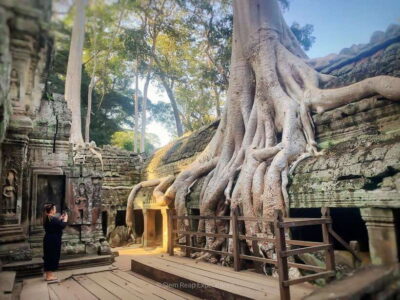
Angkor Wat 2-Day complex Sun rise & Sun set with Guided Tour
Read our review →
2-Day Temple Highlights Sunrise and Sunset Option
Read our review →Browse the lists this tour appears in