
Review · CYCLING TOURS
Local Livelihood Full Day Bike Tour in Battambang
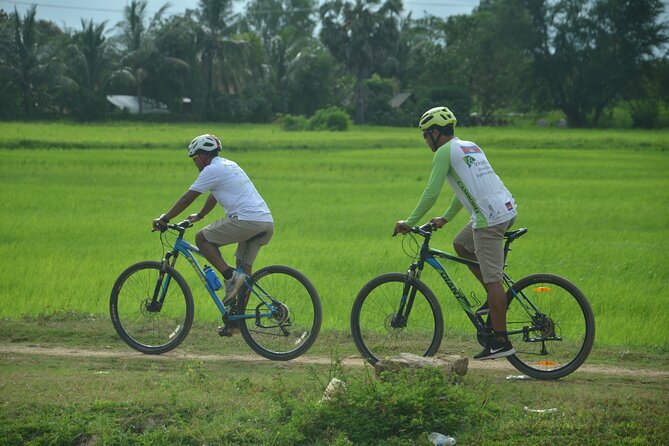
Biking through Battambang feels like time travel, pairing village cycling with temples, French colonial sites, a Khmer Rouge memorial, and the famous bamboo train. It is a full day that stays grounded in daily life, not postcard stops. You pedal out, snack and taste local products, learn history with context, then end on a rolling ride that feels like it belongs to Battambang alone.
I love the way this tour is built around real households and local makers, from rice paper to dried bananas and rice wine tastings. I also like the small-group feel, with a maximum of 10 people and guides who can answer questions in clear English, including names you might hear like Pich, Pek, and Savith.
One consideration: the day runs long (about 7.5 to 9 hours) and you will be riding and stopping often, so if you want a short, low-effort outing, this may feel like more than you bargained for.
In This Review
- Key things I’d circle on your Battambang bike day
- Battambang by bike hits a sweet spot between history and daily life
- The morning start: 7:20 pickup, 8:00 launch, and quick bike setup
- Kinyei Cafe first: a welcome drink and an easy way to get oriented
- Pedal through rice-field country to meet local makers and producers
- Snack break inside a traditional house: fresh fruit and coconuts
- Temples and monk-hood: respectful visits with a clear lesson
- Khmer Rouge memorial stop: remembering history with weight
- French colonial sites: a second lens on Cambodia
- Homecooked lunch in a family Khmer house
- Afternoon flow and the bamboo train finale
- Return ride and wrap-up at the Soksabike office
- Price and value: is $50 fair for a full day like this?
- Who should book this bike tour, and who should rethink
- Should you book this Battambang local livelihood bike tour?
- FAQ
- What time does hotel pickup happen?
- How long is the bike tour?
- What is included in the price?
- Do I ride a bamboo train on this tour?
- Is there a welcome drink?
- What should I wear?
- Are bikes and helmets provided?
- How many people are in a group?
Key things I’d circle on your Battambang bike day
- Hotel pickup at 7:20am, so you start easily and ride out before the heat ramps up.
- Kinyei Cafe welcome drink as a quick reset (or skip it and go straight to cycling).
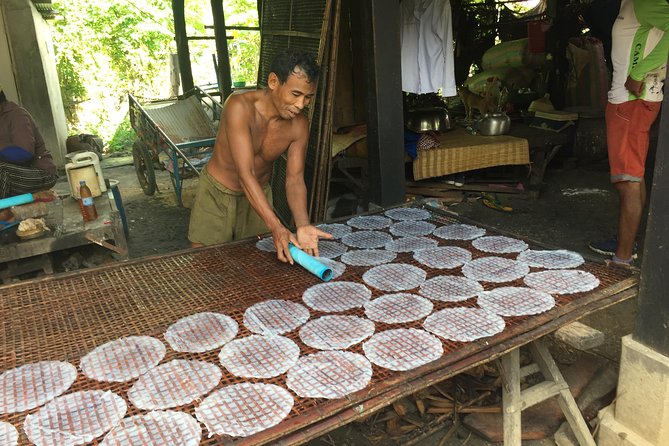
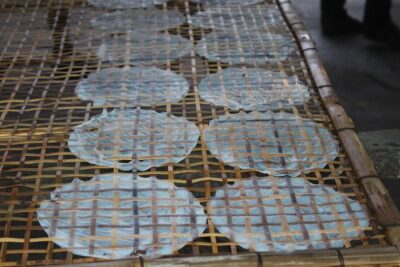
- Hands-on tastings like rice paper, dried banana, bamboo sticky rice, fish paste, and rice wine.
- A real Khmer lunch made at a family home in a traditional Khmer house.
- Bamboo train included, so you get the signature Battambang moment without having to plan it yourself.
Battambang by bike hits a sweet spot between history and daily life
If Battambang is on your route, you probably already know it for the bamboo train and some standout sights. This tour adds the missing middle, the part you do not see from tuk-tuk windows: how people actually make food, how religion shows up in everyday routines, and how the past is remembered.
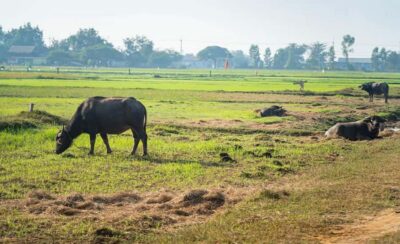
I like the balance. You are not stuck in a single lane of history facts or souvenir shopping. Instead, you pedal past rice fields and villages, then step into small production spaces, temple visits, and memory-focused stops.
You also get something practical: the day is paced for regular visitors. Most people can participate, and the cycling is set up with frequent stops, so you are not surviving on willpower alone.
More of Battambang:
- Battambang: Tuk-Tuk, Bamboo Train, Killing/Bat Caves, Sunset
★ 4.9 · 1,436 reviews - Battambang Tuk Tuk tour: Bambootrain, Killing & Bat Caves,Sunset
★ 5.0 · 799 reviews - Afternoon tour by tuk tuk to bamboo train,bat cave,killing cave,countryside.
★ 5.0 · 344 reviews
The morning start: 7:20 pickup, 8:00 launch, and quick bike setup
Your day begins with pickup around 7:20am from your hotel, with a stated start time of 8:00am. That timing matters. Battambang mornings tend to be more comfortable for riding, and you will cover more calm countryside before lunch.
When you arrive at the meeting point and get sorted, the tour includes a bike safety tutorial and you learn some basic Khmer. That small language touch is not just cute. It helps you greet families you meet, ask simple questions, and show respect when you enter homes or temples.
You ride a mountain bike with a safety helmet included. The bike choice is sensible for village roads and uneven surfaces. If you have a strong preference for speed bikes, this is not that. If you want stable, confidence-inspiring wheels for countryside lanes, it fits.
Also: afternoon stops are flexible and time dependent, so the route is shaped to keep the day flowing rather than marching you through a rigid checklist.
Kinyei Cafe first: a welcome drink and an easy way to get oriented
At pickup time, you can choose to go directly to the road or take a moment for a free welcome drink at Kinyei Cafe. Either way works, but I like having that pause because it helps you wake up fully before you start pedaling.
If you take the drink, it is also a mental warm-up. You are about to spend the day riding, tasting, and visiting places that require small stretches of patience: waiting your turn in a home, listening to explanations, and pausing often for photos.
Even if you choose to skip Kinyei Cafe, you still get the same core day rhythm. That means your energy is yours to manage, and the tour team does not push you into one fixed order.
Pedal through rice-field country to meet local makers and producers
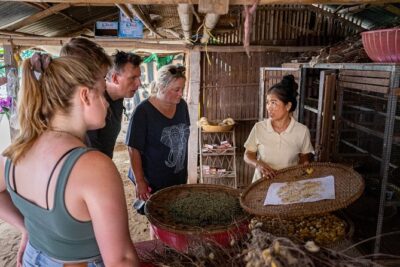
A big reason this tour scores high is that it goes beyond seeing countryside. You actually meet the people who produce everyday Cambodian food and snacks. On the bike ride, you are constantly moving through local lanes, then stopping at homes or small production areas where families explain what they do and how they do it.
Expect tastings and product examples such as:
- Rice paper, including how it is made and why it matters in daily cooking
- Dried bananas
- Bamboo sticky rice
- Fish paste
- Rice wine, often explained with a clear sense of how it fits local life
This is where the tour earns its name, local livelihood. You are not just learning that these products exist. You get the sense of how labor, seasons, and tradition connect to what ends up on plates.
I also like that guides can tailor questions. The guides are described as local university students who receive vocational training and support. In practice, that means you often get explanations that sound lived-in, not memorized. You might hear the same family-style enthusiasm from guides like Pich or Pek, and they can help you phrase questions so you get real answers.
More Bike Tours in Battambang:
- Local Livelihood Half Day Bike Tour in Battambang
★ 5.0 · 287 reviews - Cultural Cycling Tour – half day (8:00-11:30)
★ 5.0 · 26 reviews - Explore local livelihood & countryside (Half-Day Cycling Tour)
★ 5.0 · 19 reviews - Siem Reap Countryside Bike Tour / E-Bike or Tuk Tuk
★ 5.0 · 935 reviews
Snack break inside a traditional house: fresh fruit and coconuts
Between longer cycling segments, you stop for a refresh break in a traditional house. This is not just a sugary pause. It is a snapshot of everyday hospitality.
You get fresh fruit and coconuts, plus snacks and tastings at stops along the way. The food choices here are simple, but they do a useful job. They reset your energy and keep you from arriving at lunch hungry and grumpy.
Practical tip: if you have dietary needs, flag them at booking. The tour asks you to advise dietary restrictions ahead of time. Since tastings are part of the day, telling them early gives you the best chance of staying comfortable at each stop.
Temples and monk-hood: respectful visits with a clear lesson
Religion shows up in this tour in a grounded way. You visit a temple and learn about Buddhism and monk-hood. You do not just look at buildings. You get context for why temples matter to daily life, what monk-hood represents, and how visitors should behave.
This is also where the dress guidance matters. You will want to dress to cover knees and shoulders out of respect for local culture. Even if you feel hot in the morning, this is worth planning for. Light long pants and a breathable top solve most issues.
Another practical point: you will be in and out of different places, so bring something easy to carry. A small day bag works well for water, a light layer, and whatever you need to keep hands free during tastings.
Khmer Rouge memorial stop: remembering history with weight
Battambang’s story includes the era of the Khmer Rouge, and this tour includes a memorial site for victims. You should go into this part ready for a different mood than temples and food tasting.
This stop adds meaning to the day. When you have already spent hours hearing about daily livelihoods, the memorial gives the context of how history shaped normal life, not just how history looks in books.
If you are sensitive to heavy content, treat this as the tour’s gravity moment. It is not designed as a quick photo stop. Plan to slow down, listen, and take in what is shared.
French colonial sites: a second lens on Cambodia
In addition to Khmer culture and recent history, the day also includes French colonial sites. This gives you a wider lens on Cambodia’s past.
I find this helpful because it prevents a one-note story. Battambang is not just temples and countryside labor. You can also see how colonial-era structures and influences show up in the city and region.
Because the tour mixes this into a day that already includes villages and homes, the colonial stops feel less like isolated sightseeing and more like another chapter in the same larger story.
Homecooked lunch in a family Khmer house
Lunch is one of the strongest reasons to book. You get a homecooked meal at a local family home in a traditional Khmer house.
This is not a generic restaurant lunch where everyone eats the same way in the same room. It is a chance to experience Cambodian food as it is served at home, not staged for tours. You also get to connect with the families you met earlier in the day through the cycle of tasting, questions, and shared hospitality.
From a value perspective, this matters. Many tours hit the countryside, then send you to a standard lunch spot. Here, lunch is part of the local livelihood exchange.
Tip for your day: slow down during lunch and let the family lead the conversation. Ask simple questions you practiced during the ride, even if your Khmer is basic. The effort is usually what earns the warmest responses.
Afternoon flow and the bamboo train finale
After lunch, the plan keeps moving with flexibility. You will continue with stops that fit the schedule and the day’s conditions. That means you can end up cycling a bit more or visiting slightly different points, but you still get the core set of themes: rural life, culture, history, and the signature experience.
The afternoon’s big finale is the Battambang bamboo train. This is one of those experiences that feels both simple and unforgettable. It is also a smart finish because your body is ready for a different kind of movement after hours of biking.
The bamboo train ride also ties back to the livelihoods theme. It is not just a quirky photo moment. It is a local invention that carries on a regional tradition in a way you can feel in motion.
Return ride and wrap-up at the Soksabike office
At the end of the day, you return to the Soksabike office through the countryside. This final stretch keeps you in the rhythm of the day, and it often feels like an informal debrief, with time to reflect on what you saw, which products you tasted, and what you learned about Cambodian daily routines.
Even though your day is long, the structure helps. You are not doing one long grind without breaks. You ride, stop, eat, learn, and ride again.
Price and value: is $50 fair for a full day like this?
At $50 per person, this tour is not cheap in the budget sense, but it is not overpriced either when you look at what you actually get.
You are paying for several high-value parts:
- Hotel pickup and round-trip transportation from Battambang, which removes planning stress
- A mountain bike and helmet, plus water, snacks, and included tastings
- Lunch made by a local family at a traditional Khmer house
- A full day with a local guide, and language support so you can ask questions
- The bamboo train ride, which is often an extra coordination headache on your own
- A stated commitment to sustainable tourism, with a portion of revenue going back to the local community and the families you visit
The sustainable part is not a vague promise in the wording. The tour says it works with Soksabike and returns revenue back to each family you visit. That is the difference between paying for a ride and paying for an exchange.
Also consider group size. A max of 10 travelers means you are less likely to feel rushed or lost in a crowd. That kind of small-group attention is a cost driver, and it usually shows in how smoothly the day runs.
Who should book this bike tour, and who should rethink
This tour fits best if you like:
- biking for enjoyment, not racing
- learning through hands-on stops and food tastings
- mixing countryside with history, including a Khmer Rouge memorial
- meeting families and asking questions with a guide who can help
You might want to rethink it if:
- you want a short outing (this is 7.5 to 9 hours)
- you struggle with long days on your feet and a lot of stop-and-go time
- you are uncomfortable with culturally required dress rules (knees and shoulders covered)
A small note for comfort: the tour includes lots of motion, sun exposure, and time outdoors. Wear sunscreen, and bring a cap or hat if you use one. Since water is included, you can focus on staying comfortable rather than buying supplies mid-day.
Should you book this Battambang local livelihood bike tour?
Yes, if you want a day that feels practical and human. I would book it for the combination of cycling through rural villages, tastings of local products, a homecooked lunch, and the bamboo train finish. The strongest value is that so many moments are tied to families and everyday work, not just scenery.
I would not book it if you only want a fast hits tour with minimal time on a bike. This day has rhythm, but it is still a full day.
If you do book, send your dietary restrictions upfront and plan clothes for temple visits. Then go in curious. The day is built for questions, and your guide will do a lot to help you ask them well.
FAQ
What time does hotel pickup happen?
Pickup is listed at about 7:20am, with the tour start time noted as 8:00am.
How long is the bike tour?
The duration is approximately 7 hours 30 minutes to 9 hours.
What is included in the price?
The tour includes a local guide, snacks, water, hotel pickup, a mountain bike with a safety helmet, one drink at Kinyei Cafe, and lunch.
Do I ride a bamboo train on this tour?
Yes. The day includes a ride on Battambang’s famous bamboo train.
Is there a welcome drink?
Yes. You can choose to have a free welcome drink at Kinyei Cafe, or go straight to the road.
What should I wear?
You should dress with knees and shoulders covered out of respect for local culture.
Are bikes and helmets provided?
Yes. You get a mountain bike and a safety helmet.
How many people are in a group?
The tour has a maximum of 10 travelers.
Newly listed around Battambang
- Private Taxi Transfer From Siem Reap – Battambang City★ 5.0 · 4 reviews
- Exploring Battambang: A Memorable Tour from Siem Reap★ 5.0 · 7 reviews
- Battambang Day Trip from Siem Reap – Bamboo Train, Killing Cave★ 5.0 · 4 reviews
- Private Battambang Full-Day Guided Tour★ 4.5 · 3 reviews
- Private Transfer : Siem Reap ↔ Battambang★ 5.0 · 31 reviews
- Scenic Boat Journey from Siem Reap to Battambang★ 5.0 · 7 reviews
- Battambang, Bamboo Train, Killing Cave Day Tour From Siem Reap★ 5.0 · 10 reviews
- Battambang Private Day Tour★ 5.0 · 5 reviews
Cycling Tours, compared.
Siem Reap Countryside Bike Tour / E-Bike or Tuk Tuk
Read our review →
Phnom Penh Silk Island Bike Tour/ E-Bike or Tuk Tuk
Read our review →
Angkor Wat Sunrise Bike Tour & Jungle Breakfast
Read our review →
Local Livelihood Half Day Bike Tour in Battambang
Read our review →Browse the lists this tour appears in