
Review · COUNTRYSIDE & VILLAGE TOURS
Morning village tour Livelihood tour with Local Product discover
One morning can explain how a whole region eats. This half day Battambang village tour leads you through countryside homes and workplaces, with hands-on stops for local food and drink production.
I especially like the focus on local produce and the practical way you see everyday Khmer life, not just monuments. You will also get chances to taste what you learn, from rice staples to traditional drinks.
The main consideration is that this is a countryside morning, so expect outdoor walking and a schedule that depends on good weather.
In This Review
- Key things to look for on the morning livelihood tour
- Rural Battambang in 4 to 5 Hours, With Local Food Making
- Pickup Times, Group Size, and How to Plan Your Morning
- The Food Stops That Explain How Khmer Cooking Starts
- Rice paper: seeing the process, not just the wrapper
- Sticky rice in bamboo tubes over an open fire
- Fermented Fish Paste at an Old Factory: The Real Factory Smell
- Bananas to Banana Chips: From Drying to Crunch
- The Traditional Rice Wine Distillery Stop
- Optional Wat Samrong Knong Temple Complex and Killing Fields
- Price and Logistics: Is $15 Good Value in Battambang?
- Who This Battambang Livelihood Tour Is Best For
- The Small Details That Make the Experience Easier
- Should You Book This Morning Village Livelihood Tour?
- FAQ
- How long is the Battambang morning village tour?
- What time does the tour start?
- Is pickup offered?
- How many people are in the group?
- What can I see during the tour?
- What is the cancellation policy?
Key things to look for on the morning livelihood tour
- Small group size (max 10 travelers) makes it easier to ask questions and move with the pace of local producers
- Tastings included, so you can match flavors to processes like sticky rice and rice paper
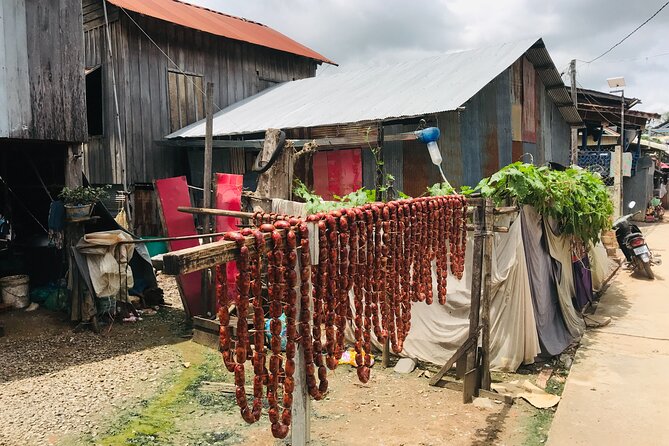
- Real village work stops, including an old factory for fermented fish paste
- Breadth of local foods, from bananas and banana chips to bamboo cooked sticky rice
- Traditional drink visit at a rice wine distillery, with optional temple and killing fields add-on
Rural Battambang in 4 to 5 Hours, With Local Food Making
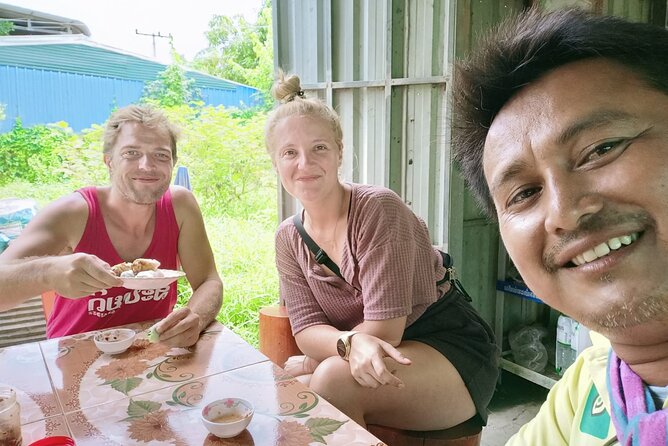
Battambang can feel like a quick stop if you only glance at the city. This tour is built to show you the rural side, where daily routines shape what people cook and sell.
I like that the tour is not trying to sell a performance. You travel from village areas into working spaces, where you can understand how foods go from ingredient to finished product. And because it is centered on livelihoods, it helps you connect meals to real work, not just taste snacks.
Another plus is the format. In about 4 to 5 hours, you get multiple stops rather than one long visit. That matters here because Battambang’s countryside food culture is all connected, rice, fermentation, fruit drying, and drink making.
More Countryside & Village Tours in Battambang
- Afternoon tour by tuk tuk to bamboo train,bat cave,killing cave,countryside.
★ 5.0 · 344 reviews - Full Day tour .City tour.Countryside.Bamboo Train.Secret Bat Cave
★ 5.0 · 178 reviews - Explore local livelihood & countryside (Half-Day Cycling Tour)
★ 5.0 · 19 reviews
Pickup Times, Group Size, and How to Plan Your Morning
This is a morning tour, running daily. The start window is 8:00 AM to 8:30 AM (Monday through Sunday). The operator also notes that a pickup is offered, which is a real help if you are staying outside the center.
You will be in a group with a maximum of 10 travelers. Small groups make the visit feel more conversational, and they also reduce the time you spend waiting at each stop. It is easier to ask practical questions like how long something takes, or what the process depends on.
On a practical level, you should treat this as a countryside outing. Bring sun protection, wear comfortable shoes, and plan for some time outdoors. Even though the exact walking distance is not specified, the stops are village and workplace focused, so sensible footwear is not optional.
The Food Stops That Explain How Khmer Cooking Starts
One of the smartest parts of this tour is the way it moves through staples first. Rice is central to Cambodian life, and this route repeatedly circles back to rice-based products and techniques.
Rice paper: seeing the process, not just the wrapper
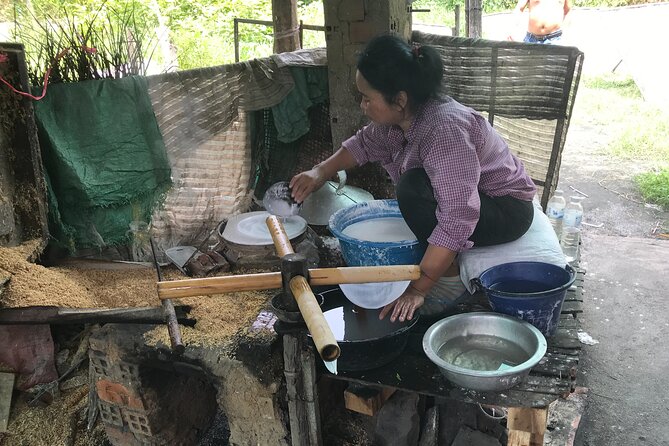
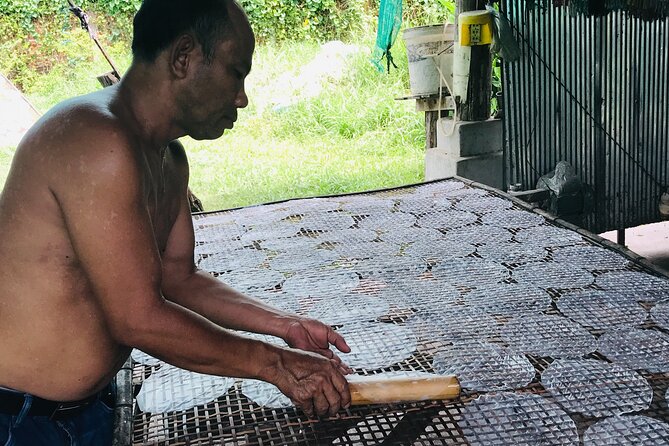
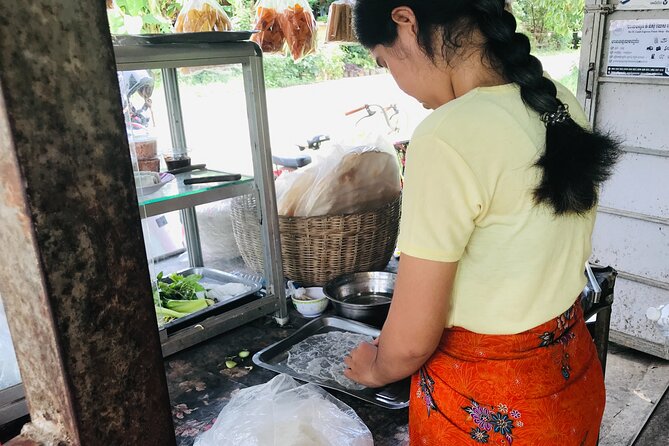
You can expect a stop that shows how rice paper is made. Watching production is useful because rice paper is simple on the plate, but the technique depends on timing, thickness, and drying. If you have ever bought rice paper at a market, this is the kind of visit that explains what you are actually tasting.
A bonus is that this stop is the right size for a short tour. It tends to be easy to follow visually and helps you appreciate texture, which makes later tastings more meaningful.
A different kind of day in Cambodia:
- Battambang: Tuk-Tuk, Bamboo Train, Killing/Bat Caves, Sunset
★ 4.9 · 1,436 reviews - Battambang Tuk Tuk tour: Bambootrain, Killing & Bat Caves,Sunset
★ 5.0 · 799 reviews - Local Livelihood Half Day Bike Tour in Battambang
★ 5.0 · 287 reviews - Explore Battambang full day tour by Tuk Tuk (start from 9am-6:30pm)
★ 5.0 · 240 reviews
Sticky rice in bamboo tubes over an open fire
Another highlight is watching sticky rice cooked in bamboo tubes over an open fire. This is the kind of method that feels old-school because it is. The open fire and bamboo changes how heat moves, which affects the final texture.
For you, the value is not only the spectacle. You will walk away with a better understanding of why certain rice dishes taste the way they do, especially when you compare steaming, grilling, and fire-cooked methods. It also sets the tone for the rest of the stops, fermentation and drying will make more sense after you see how heat and time are used.
Fermented Fish Paste at an Old Factory: The Real Factory Smell
Fermented foods can be polarizing, but they are a huge part of local flavor. This tour includes time around an old factory where fermented fish paste is made.
Here is the practical mindset to bring: fermentation is not about fancy ingredients, it is about patience and control. You will learn that smell is part of the process and part of why people use it in everyday cooking. It also explains why fermented pastes show up in many Cambodian kitchens as a core building block.
Is it strong? It can be. But that is also why it is valuable. If you want rural Battambang to feel real, this stop gives you the most authentic sense of how food is produced at scale, even when the setting is traditional.
Bananas to Banana Chips: From Drying to Crunch
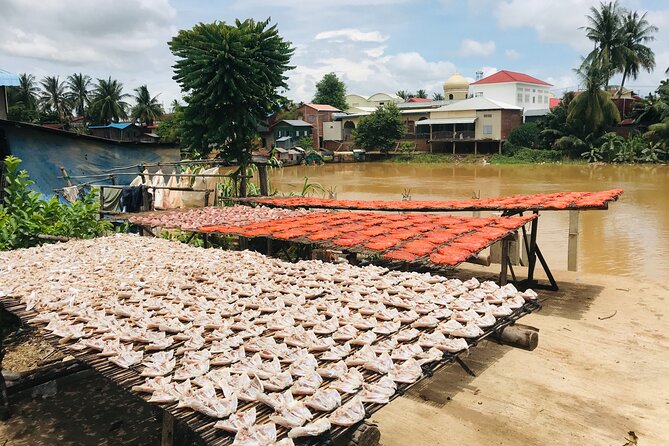
Battambang is known for fruit, and this tour includes multiple banana-related production stops. You will see dried bananas being produced and also how banana chips are made.
I like this section because it is easy to understand in motion. Drying and frying are processes you can visualize quickly, and you can connect the end result to what you watched. When you later taste banana chips, you will know why some are crisp, some are thicker, and why the color matters.
If you are traveling with kids or you just want a more light-hearted moment between heavier food topics, banana production is a good reset. It is also a great reminder that village livelihoods include value-added products, not just selling fruit fresh.
The Traditional Rice Wine Distillery Stop
Cambodia’s traditional drinks are part food culture, part community ritual. This tour offers a visit to a traditional old rice wine distillery.
Even if alcohol is not your focus, this stop adds context. You will see that fermentation and timing are not limited to savory items. The knowledge you pick up at earlier stops about heat, drying, and fermentation will help you understand what is happening here.
There is also a respect factor. If you are sensitive to strong smells or you prefer quieter cultural sites, keep your expectations grounded. Distillery visits tend to be practical and working, not staged.
Optional Wat Samrong Knong Temple Complex and Killing Fields
You can add two more sites depending on how you want to spend the day. The tour notes an option to visit the Wat Samrong Knong temple complex and also the killing fields.
These are very different experiences. The temple complex is a cultural and visual stop. The killing fields are historical and emotionally heavy. If you choose both, I suggest you mentally pace yourself. Taking a rural food tour in the morning can set your brain in a practical mode, and then these sites shift you into reflection.
For many people, this is the best way to balance Battambang. You get everyday life first, then you end with places that explain why history still matters.
Price and Logistics: Is $15 Good Value in Battambang?
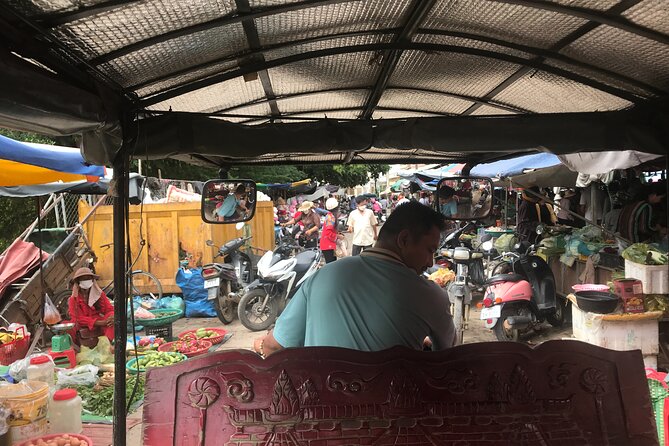
At $15 per person, this is one of the more reasonable half day options you can find in Battambang, especially because you are not just getting a drive-by overview. You are paying for transportation, a guide, and multiple village and workplace stops focused on local products.
The value gets even better because the tour includes tastings tied directly to production demonstrations. Watching rice paper, bamboo cooked sticky rice, fermented fish paste, dried bananas, and banana chips is a lot for one price, and a small group size helps keep the visit from turning into a rush.
Also, pickup being included is important. If you are staying a bit out of the way, you waste less time solving logistics and more time actually learning.
One practical note: the tour requires good weather. If conditions are poor, you may get a different date or a full refund. That is worth considering if you are only in Battambang for a very short window.
Who This Battambang Livelihood Tour Is Best For
This is a strong fit if you want rural context and food culture in one morning. You will likely enjoy it most if you like the idea of seeing how everyday products are made, rice-based foods, fermented flavors, and fruit processing.
It also suits:
- Food travelers who enjoy processes as much as results
- People who like small group tours, max 10 travelers
- Visitors who want local life before adding heavier history stops
If you are only interested in big-ticket sights and prefer a sightseeing-heavy day, you might find this more practical than theatrical. It is built for learning and tasting, not for ticking off famous landmarks.
The Small Details That Make the Experience Easier
A few operational details can matter a lot on a countryside tour. The tour offers pickup, and it is close to public transportation as well. It also uses a mobile ticket, which can save time if you hate paperwork on vacation.
The tour also notes that service animals are allowed, and it says most travelers can participate. That suggests the route is not built around extreme physical challenges, though you should still assume some walking on uneven ground because it is village and workplace focused.
The overall rating is excellent, with a 5 star score and 100 percent recommendation across 36 reviews. You can take that as a signal that the tour style is working for people who want rural Battambang with a local produce angle.
Should You Book This Morning Village Livelihood Tour?
Book it if you want Battambang to feel lived-in. For a reasonable price, you get multiple production-focused stops, tastings, and a small group format that leaves room for questions. The tour is especially worth it if food is your entry point into culture, because rice paper, sticky rice, fermented fish paste, banana chips, and rice wine distillation give you a rounded picture of how local livelihoods turn into meals.
Skip it or rethink if you have no interest in food production and tastings, or if you strongly prefer purely scenic sightseeing. And if your travel schedule is tight, keep the weather dependency in mind so you do not get stuck with a missed morning.
If you are trying to plan one meaningful countryside add-on in Battambang, this is a solid choice. It is practical, hands-on, and focused on the kind of rural work you rarely see from the road.
FAQ
How long is the Battambang morning village tour?
It lasts about 4 to 5 hours.
What time does the tour start?
It runs daily with a start window of 8:00 AM to 8:30 AM.
Is pickup offered?
Yes, pickup is offered.
How many people are in the group?
The tour has a maximum of 10 travelers.
What can I see during the tour?
You can expect demonstrations of rice paper making, sticky rice cooked in bamboo tubes over an open fire, fermented fish paste production, dried bananas and banana chips production, and a traditional old rice wine distillery. There is also an optional add-on to visit Wat Samrong Knong temple complex and the killing fields.
What is the cancellation policy?
You can cancel for free up to 24 hours in advance for a full refund. If you cancel less than 24 hours before the start time, the amount paid is not refunded. If the tour is canceled due to poor weather, you will be offered a different date or a full refund.
Newly listed around Battambang
- Private Taxi Transfer From Siem Reap – Battambang City★ 5.0 · 4 reviews
- Exploring Battambang: A Memorable Tour from Siem Reap★ 5.0 · 7 reviews
- Battambang Day Trip from Siem Reap – Bamboo Train, Killing Cave★ 5.0 · 4 reviews
- Private Battambang Full-Day Guided Tour★ 4.5 · 3 reviews
- Private Transfer : Siem Reap ↔ Battambang★ 5.0 · 31 reviews
- Scenic Boat Journey from Siem Reap to Battambang★ 5.0 · 7 reviews
- Battambang, Bamboo Train, Killing Cave Day Tour From Siem Reap★ 5.0 · 10 reviews
- Battambang Private Day Tour★ 5.0 · 5 reviews
Countryside & Village Tours, compared.
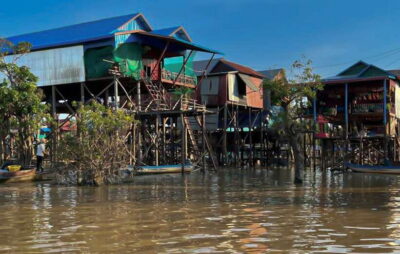
Kampong Phluk Floating Village Tour with Boat
Read our review →
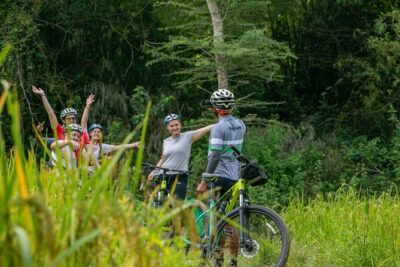
Siem Reap Countryside Bike Tour / E-Bike or Tuk Tuk
Read our review →
Tonle Sap, Kampong Phluk & Floating Village Tour
Read our review →
Afternoon tour by tuk tuk to bamboo train,bat cave,killing cave,countryside.
Read our review →
Browse the lists this tour appears in