
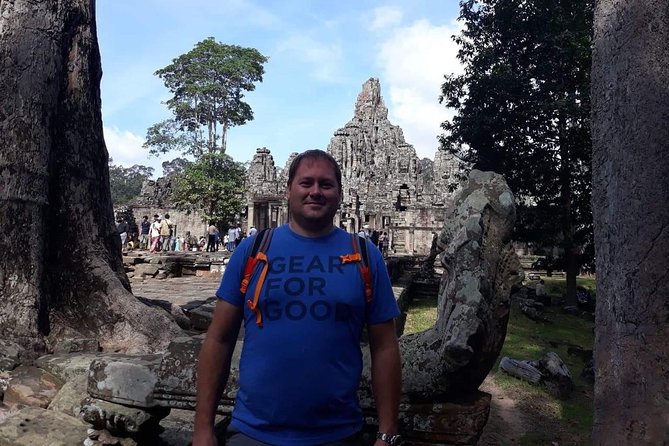
Review · ANGKOR WAT TOURS
Private Tour: Siem Reap Full Day Tour With Angkor Wat Banteay Srei Bayon Temple and Ta Prohm
Angkor in one day can sound like a sprint, but this private tour is a smart way to do it. You get hotel pickup and drop-off plus an English-speaking local guide, so you spend less time figuring out logistics and more time understanding what you are seeing. I also like how the stops are chosen to cover the core “must-sees” of the Angkor complex, from the mega-scale geometry of Angkor Wat to the tangled mood of Ta Prohm. The only real drawback to plan for is that each main temple is given about an hour, so if you want to linger, you will feel a bit rushed.
This is a private day built around one solid 8-hour block, starting at 9:00 am. The guide focus makes a difference, too, since people are helped with practical things like photo tips when traveling solo and with careful explanations of carvings and symbolism. If you are the type who likes to soak in details for hours, you may still want an extra day in the Angkor area later.
In This Review
- Key highlights worth knowing
- A one-day Angkor plan that actually fits 8 hours
- Price and what $178 buys you
- Pickup, start time, and how to pace your temple day
- Angkor Wat: 3.6 km of wall and the long approach
- Banteay Srei: where beauty and fine carving take center stage
- Bayon Temple: the Mahayana state temple story
- Ta Prohm after lunch: Jayavarman VII and the ruin vibe
- Lunch timing and what to carry (so you do not feel wrecked)
- Who this private tour is best for
- Should you book this full-day private Angkor tour?
- FAQ
- What is the duration of the Siem Reap full day Angkor tour?
- How much does the tour cost per person?
- What temples are included in the tour?
- Does the tour include hotel pickup and drop-off?
- Are entrance fees included?
- Is lunch included?
- Is Ta Prohm visited after lunch?
Key highlights worth knowing
- Private, air-conditioned vehicle for a full day of temple hopping without the extra hassle
- Four iconic temple stops in one day: Angkor Wat, Banteay Srei, Bayon, Ta Prohm
- Entrance fees included, so you are not constantly pulling out your wallet
- English-speaking local guide who explains carvings and Khmer temple meaning
- Helpful photo support, especially useful if you are traveling alone
- 1-hour site time blocks that give you enough to see the big stuff without total burnout
A one-day Angkor plan that actually fits 8 hours
Angkor Wat, Bayon, Ta Prohm, and Banteay Srei are all wildly different, and that is why grouping them works so well. One day here is still a lot, but the route is designed to hit major highlights in a logical order. The payoff is clarity: you start to see patterns in Khmer architecture and storytelling across temples, instead of treating each site like a separate random photo stop.
Because this is private, you control the pace more than you would on a big group bus. You can ask questions, pause for viewpoints, and slow down if something catches your eye. You also avoid the awkward “everyone move now” feeling that can make temples blur together.
I also like the built-in comfort. An air-conditioned vehicle matters in Siem Reap heat, especially when your day includes driving between sites and standing outdoors for long stretches.
More Angkor Wat tours in Siem Reap:
- Angkor Wat Sunrise or Sunset Tour with Guide from Siem Reap
★ 5.0 · 12,109 reviews - Siem Reap: Angkor Wat: Small-Group Sunrise or Sunset Tour
★ 5.0 · 9,444 reviews - Siem Reap: Angkor Wat 2-Day Tour with Sunrise and Sunset
★ 4.9 · 4,429 reviews
Price and what $178 buys you
The price is $178 per person for an approx. 8-hour experience. That can sound steep if you are comparing it to self-guided tickets, but the value is in what you are not paying for separately.
Here is what is included:
- Hotel pickup and drop-off in the Siem Reap City area
- English-speaking local tour guide
- Private air-conditioned vehicle
- All entrance fees and admission tickets for each stop
The big deal is that you are buying time and context. Angkor is not just sightseeing. It is a site where the carvings, layouts, and temple history affect what you notice. An English guide helps you see more than shapes and stone faces, and that is where your day turns from photos into understanding.
Lunch is not included, so you will still want to budget for food and drinks. But the core entry and transport costs are handled, which makes the day feel simpler and more predictable.
Pickup, start time, and how to pace your temple day
Your day starts at 9:00 am, with pickup from a Siem Reap City area hotel. There is also a meeting point listed near Park Hyatt Siem Reap, which matters if you are trying to coordinate with a driver for any reason.
An 8-hour day with four major temples usually means tight, but fair, timing. Each site is slotted at about 1 hour. For many people, that is a good balance. You get to walk key areas, find the main viewpoint, and still have time to move on before the day turns into a sunburn marathon.
A practical tip: wear comfortable shoes with good grip. Temple paths can be uneven, and you will be doing more walking than you might expect after you factor in viewpoints. Also bring a small bottle of water and plan to cool down briefly when you can, since you are outdoors most of the time.
If you are sensitive to heat, the morning start is your friend. You are at Angkor Wat early enough that the crowds and temperatures often feel more manageable than later in the day.
Angkor Wat: 3.6 km of wall and the long approach
Angkor Wat is often everyone’s first stop for a reason. It is the biggest and among the most spectacular temples in the Angkor complex, and the layout is designed to be experienced in layers.
You begin with about an hour at Angkor Wat, including admission. What you are looking at is not random grandeur. The temple has a moat and an outer wall that stretches for 3.6 kilometers. Within those walls, there is a large open area and then a long path leading toward the main temple. That design creates a slow reveal. Even if you have seen photos, walking the approach helps you understand the scale.
This is also the moment to let your guide do their thing. When someone explains bas-reliefs and the way scenes are arranged, you usually start noticing details you would otherwise miss. The guide approach matters here, because Angkor Wat can feel overwhelming if you do not have a few “what to look for” cues.
What to watch for:
- The way the long approach funnels you toward the main structure
- Carved narrative details along the sides
- How the temple’s geometry makes you feel both small and part of a bigger plan
You will probably want a few photos here, but give yourself time to look up while you are walking. The carvings are part of the experience, not decorations you can ignore.
More Ta Prohm and Bayon visits:
- Siem Reap Tour: Angkor Wat Sunrise, Bayon, Ta Prohm, Banteay Srei
★ 5.0 · 931 reviews - Angkor Wat Private Driver Tours to Angkor Wat Sunrise, Angkor Thom & Ta Prohm
★ 5.0 · 98 reviews - Angkor Wat Sunrise and Angkor Thom Sunset Tour
★ 5.0 · 89 reviews - Angkor Wat, Angkor Thom Ancient Capital, Ta Promh Temple
★ 5.0 · 85 reviews
Banteay Srei: where beauty and fine carving take center stage
Next up is Banteay Srei, one of the prettiest temples in the Angkor region. It also has a special connection to the surrounding area because it gives its name to the district.
Banteay Srei can feel more “human scale” than Angkor Wat, even though it is still a major monument. The reason it hits so well on a day tour is that it shifts your attention from grand layout to close-up craftsmanship. You are there for about an hour, which is enough time to walk the core areas, spot key carvings, and appreciate why people call it one of the most beautiful temples in the region.
Since the guide is English-speaking and focused on temple interpretation, this is often where questions pay off. Ask about symbolism or what certain carvings represent. A good guide will help you connect what you see to Khmer culture rather than leaving you with a list of dates.
Possible drawback: because the time is limited, you might not catch every carving. If you are the kind of person who wants to study stone like it is an art book, consider saving extra time for Banteay Srei on a separate trip. On a one-day route, it is best treated as your “quality over quantity” stop.
Bayon Temple: the Mahayana state temple story
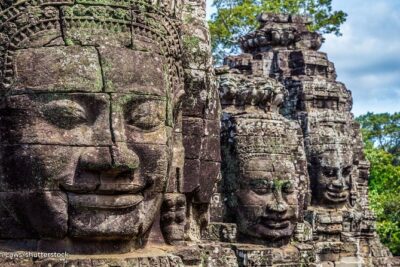
Then you move on to Bayon Temple, one of Angkor’s richly decorated Khmer temples. Bayon is built in the late 12th or early 13th century as the official state temple of the Mahayana Buddhism period.
This stop is famous for its iconic imagery, but the best part is how the meaning becomes clearer when your guide connects the architecture to the era. When you know it was tied to the state temple context, you start to see Bayon less as a random ruin and more as political and spiritual statement in stone.
You are there for about an hour. That is enough to do the main circuits and get the big photo angles without feeling like you missed the core things. It also gives you time to ask questions about the temple’s background, especially if you like historical context.
Practical photo tip: plan for your angles. The most dramatic views often require repositioning, so move a bit with intention rather than snapping one shot and moving on. If you are traveling solo, guides on this tour have been noted as helpful with photos, which can save you from awkward tripod-less moments.
Ta Prohm after lunch: Jayavarman VII and the ruin vibe
After lunch at your own cost, you head to Ta Prohm, one of the most recognizable Buddhist temples in Siem Reap. It was built by King Jayavarman VII in 1186, and it was dedicated to the king’s mother.
This temple has a different mood than Angkor Wat or Bayon. It tends to feel more like a living ruin, with the kind of visual chaos that makes your brain relax. Because you are given about an hour here, it is a good stop for slower looking and more casual wandering.
The history angle matters here, too. When you know it is tied to Jayavarman VII and dedicated to the king’s mother, the “why was this built” question becomes easier to answer. You will likely notice carvings and structural details more readily, instead of only focusing on the most photographed views.
One thing to note: since lunch is not included, your experience at Ta Prohm depends partly on how you time your meal. If you end up eating too late or too heavy, your energy might dip during the final temple stop. Aim for something quick and not overly heavy, then settle in.
Lunch timing and what to carry (so you do not feel wrecked)
Lunch is your responsibility on this itinerary, and the Ta Prohm stop happens after lunch. That means you should plan for a real break, even if it is a shorter one.
Because the tour includes entrance fees and transport, your main “spend” risk is food and drinks. If you want the day to feel smooth, pick a lunch spot before you are starving. Also budget for water, especially on warmer days.
What to bring:
- Water and sun protection
- Comfortable shoes
- A light layer for AC time in the car, if you get cold easily
- Your camera gear, plus patience for getting the best angles
The vehicle is private and air-conditioned, which helps your afternoon a lot. Use that time to reset, even just for a few minutes. It makes the final temple stop feel easier.
Who this private tour is best for
This tour makes a lot of sense if:
- You want the core Angkor highlights in one day
- You prefer an English-speaking local guide who explains what you are looking at
- You want to reduce hassle with transport by using hotel pickup and drop-off
- You like history and culture, not just pictures
- You are traveling as a solo traveler and want photo help and guidance where to stand
The temple selection is balanced. Angkor Wat gives you scale and structure. Banteay Srei shifts to fine craftsmanship. Bayon adds the Mahayana state temple angle. Ta Prohm gives you mood and ruin charm.
If you are very detail-obsessed and hate rushing, you might still feel limited by the 1-hour blocks. In that case, consider using this tour as your “first pass” and then planning extra time later for the temples you want to study longer.
Should you book this full-day private Angkor tour?
I would book this if you want a guided, efficient day that covers the names you came for, with entrance fees included and a guide who can explain what the carvings and layouts mean. The best part is not just seeing famous temples. It is understanding them well enough that your photos stop looking like random stops and start telling a story.
Skip it or think twice if your dream Angkor day is slow. If you want to sit for long stretches, sketch, or read every carving as if it is a museum exhibit, you may want a more open itinerary across multiple days.
If you are short on time in Siem Reap and you want to get your bearings fast, this private route is a solid value for the experience it delivers.
FAQ
What is the duration of the Siem Reap full day Angkor tour?
The tour is listed as approximately 8 hours.
How much does the tour cost per person?
The price is $178.00 per person.
What temples are included in the tour?
The tour includes Angkor Wat, Banteay Srei, Bayon Temple, and Ta Prohm.
Does the tour include hotel pickup and drop-off?
Yes, hotel pickup and drop-off are included for hotels in the Siem Reap City area.
Are entrance fees included?
Yes. All entrance fees and admission tickets for the temple stops are included.
Is lunch included?
No. Lunch food and drinks are not included, and you will have lunch before visiting Ta Prohm.
Is Ta Prohm visited after lunch?
Yes. After lunch at your own cost, the tour proceeds to Ta Prohm.
More Banteay Srei trips
- Full-Day Banteay Srei & 4 Temples – Grand Tours Join-in Tour
★ 5.0 · 1,155 reviews - 2-Day Angkor Wat With Small, Big Circuit and Banteay Srei Tour
★ 5.0 · 545 reviews - From Siem Reap: Banteay Srei Temple & Grand 5 Temple Tour
★ 4.8 · 262 reviews - 3-Days Discovery Of Angkor: Waterfalls,Floating Village and Banteay Srei temple
★ 5.0 · 214 reviews
Newly listed around Siem Reap
- Sambor Prei Kuk Off Beaten Track★ 5.0 · 3 reviews
- Siem Reap Airport Taxi Transfer – City Center Hotels★ 5.0 · 5 reviews
- Short Cycling at Countryside★ 5.0 · 29 reviews
- Unveiling the Mystical Beauty of Phnom Kulen National Park★ 5.0 · 6 reviews
- Angkor Wat at Sunrise★ 4.0 · 7 reviews
- Bakong Temples & Floating Village Tour★ 4.5 · 3 reviews
- Rooftop Romantic Dinner – 4 Courses Set Meal & Wine★ 3.5 · 5 reviews
- Khmer Cooking Class in Cambodia★ 5.0 · 36 reviews
Angkor Wat Tours, compared.
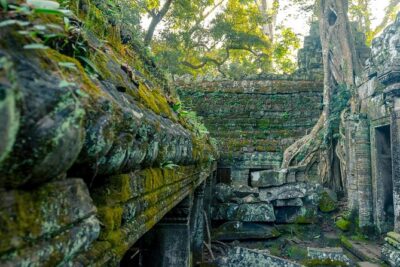
Angkor Wat Sunrise or Sunset Tour with Guide from Siem Reap
Read our review →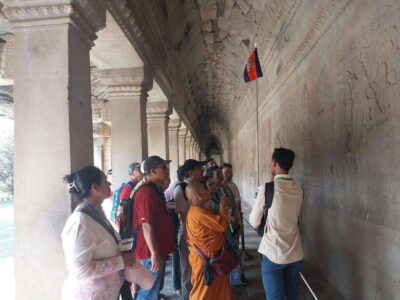
Angkor Wat: Small-Group Sunrise or Sunset Tour
Read our review →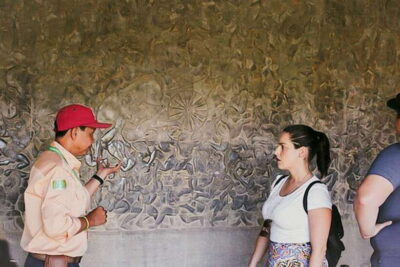
Angkor Wat 2-Day Tour with Sunrise and Sunset
Read our review →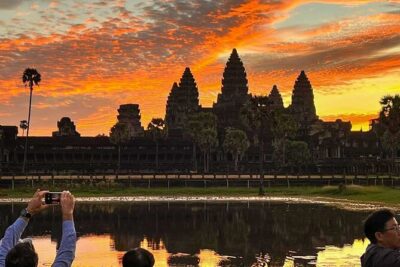
Angkor Wat Sunrise tour with Small – Group and Guide tours
Read our review →
Angkor Wat Highlights and Sunrise Guided Tour from Siem Reap
Read our review →
Angkor Wat Sunset Small Group Tour with Lunch Included
Read our review →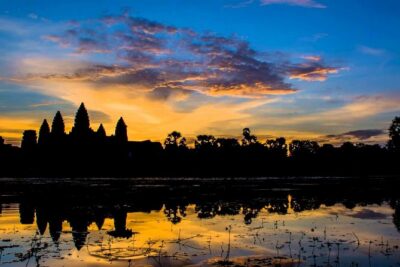
Full-Day Angkor Wat Sunrise Private Tour with Guide from Siem Reap
Read our review →Browse the lists this tour appears in